Bueng Kan's entire advertised rental market is four buildings and its entire for-sale inventory is eleven listings, so rather than estimate we publish both in full, with prices and dates. Here is what we found, what it means, and the household costs we deliberately did not invent a table for.
Share
4Rental buildings advertised across the whole province
฿2,000–3,000The band quoted by the three that give a monthly rate at all
11Properties advertised for sale province-wide: 0 of them condominiums
฿800,000The cheapest property advertised anywhere in Bueng Kan
Rent, the entire advertised market, all four buildings
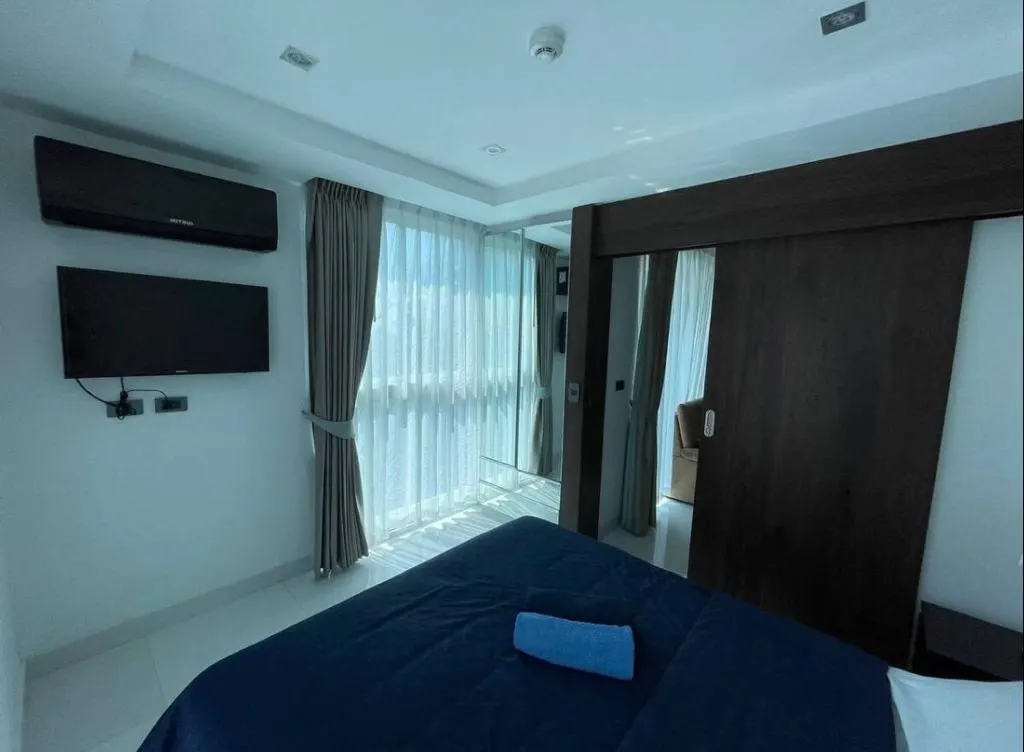
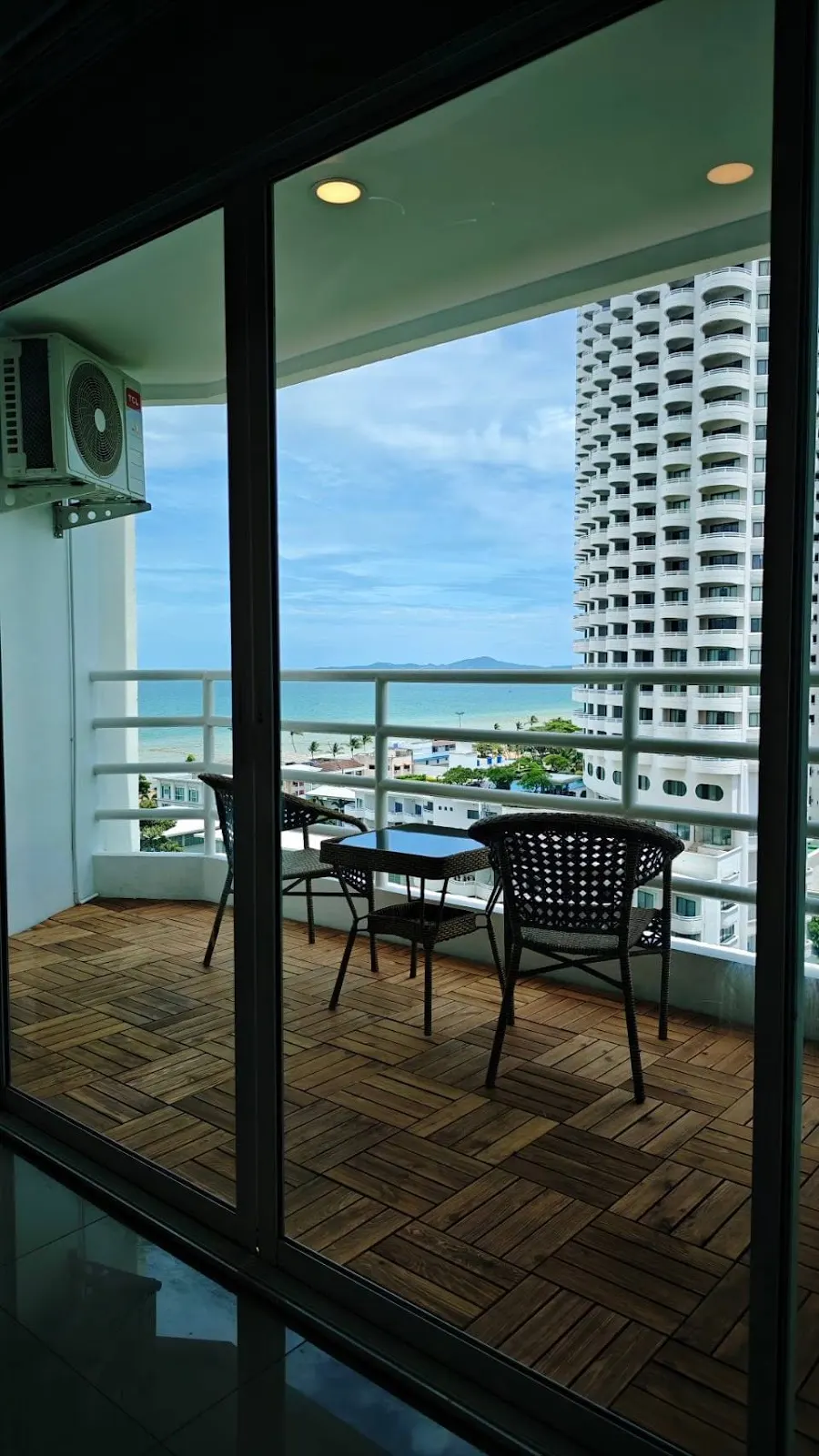
We checked a Thai apartment portal for Bueng Kan on 18 August 2026. It stated four buildings for the entire province and rendered four, and because four is small enough to publish whole, here they are. Baanyoosabai in Bueng Khong Long district quotes NO monthly rate at all, only ฿600 to ฿800 a day, last updated 30 October 2024. Wattana Sleep D in Phon Charoen district asks ฿2,000 to ฿3,000 a month or ฿390 to ฿500 a day, last updated 3 October 2022. Daungtawan in Mueang Bueng Kan asks ฿2,000 to ฿2,500 a month, last updated 29 June 2019. And Namthip Apartment in Pak Khat asks ฿2,000 to ฿2,500 a month, last updated 24 July 2018. That is the whole dataset. Three of the four quote a monthly figure and all three fall between ฿2,000 and ฿3,000, the narrowest observed band of any province in this rotation, and narrow because the sample is three. Two of the four also quote a nightly rate, and one of those quotes ONLY a nightly rate. Freshness is poor even by the standards of Thai rental portals: the two cheapest were last touched in June 2019 and July 2018, which makes them a phone number rather than a live price. Treat every figure on this page as a starting point for a conversation in person, not as a price you can book.
The shape of that market is the opposite of everywhere else
Four buildings in four DIFFERENT districts, one each: Mueang Bueng Kan, Pak Khat, Bueng Khong Long, Phon Charoen. Every other province in this launch rotation concentrated its advertised rental stock in the capital. Mukdahan, the province launched immediately before this one, put seventeen of its nineteen buildings into a single district. Nakhon Phanom put three of seven in its capital. Bueng Kan's capital has exactly one, which is the same as everywhere else that has any. There is no center of gravity here because there is not enough market to have one, and the practical consequence is that the usual advice, base yourself in the capital where the supply is, is not supported by supply in this province. It is still the right advice, but for other reasons: the hospital, the college, the bus terminal and the border crossing are all there. One methodological warning we want on the record because we have argued the opposite elsewhere. The portal's district facets for Bueng Kan read Mueang Bueng Kan 1, Pak Khat 1 and Bueng Khong Long 1, three, against a stated total of four, because Phon Charoen has NO facet row at all, despite the portal serving a live Phon Charoen page. In other provinces we have inferred that an absent facet means no listing, on the grounds that the facets summed exactly to the stated total. That inference does NOT hold here. The same portal's short-term page compounds it: header states three, page renders two, and the district facet claims two in Bueng Khong Long when only one of the two rendered listings is in that district. Three counts, three answers, and we publish the disagreement rather than the tidiest number.
Buying, the whole eleven-listing inventory
The sale side is small enough to publish in full too, and unlike the rental side it is genuinely current. A property portal stated 11 listings for the province, rendered exactly 11, and closed the set with the line that it had shown all the matches. The composition is six plots of land, four detached houses and one townhouse, and no condominium, no shophouse and no apartment anywhere in it. By district: five in Mueang Bueng Kan, three in Seka, two in Si Wilai, one in Bung Khla. Ten of the eleven were posted or reposted between 29 July and 18 August 2026. The set runs: a three-bedroom townhouse of 80 square meters on 20 square wa in Wisit, Mueang, at ฿2,000,000; a detached house on 7 rai 2 ngan 52 sq wa of rubber plantation at Chumphu Phon, Si Wilai, at ฿3,800,000; 120 square wa of Mekong riverside land at Bung Khla at ฿2,800,000; two 398-square-wa plots at Non Sombun, Mueang, at ฿1,050,720 and ฿1,182,060; 6 rai 2 ngan 8 sq wa in Bueng Kan subdistrict at ฿3,500,000; a three-bedroom detached house on 94.8 square wa at Tha Kok Daeng, Seka, at ฿2,000,000; a two-bedroom detached house of 264 square meters on 113 square wa at Tha Kok Daeng at ฿800,000, the cheapest thing in the province; a 23 rai 1 ngan 20 sq wa eucalyptus plot at Tha Kok Daeng at ฿2,300,000; and a four-bedroom, 600-square-meter detached house at Chumphu Phon, Si Wilai, at ฿3,800,000. Two cautions before you treat eleven as eleven properties. One listing's title says 2-2-52 rai while its own land field says 7 rai 2 ngan 52 sq wa, and its price per square meter confirms the larger figure, the title is the wrong element. And there appear to be two duplicate pairs from the same agents: the two Non Sombun 398-sq-wa plots at different prices, and the two ฿3,800,000 Chumphu Phon rubber properties at near-identical addresses. If those are duplicates the distinct count is nearer nine.
A second portal, a different number, which is the useful part
We checked a second, genuinely independent property portal for the same province and it stated 21 listings and rendered 21: sixteen plots of land, three houses, two villas and, again, zero condominiums. The instinct is to worry that 11 and 21 disagree. The opposite is true, and it is worth explaining because it changes how you should read any Thai property portal. Several of the large Thai property sites are white-labels or feeds of a single operator, and when two of them return the EXACT same count for a province that is a shared-feed tell rather than corroboration, it means you have one source, twice. Here the counts differ, which tells us these are separate inventories with different agent relationships, and that the agreement between them on the thing that matters, no condominium in Bueng Kan, is real agreement from two sources rather than one source echoing. A third portal's provincial zone page rendered a single land plot. Where we fall short, and we would rather say it than imply completeness: the Department of Lands condominium register could not be retrieved. So the honest form of our claim is that no condominium appears on any portal we could render, NOT that none is registered in the province.
What we still do not publish, and why
Most cost-of-living pages carry a table of monthly household costs, electricity, water, internet, a bowl of noodles, a beer, a gym membership. We still have not published one for Bueng Kan, because we could not source one for Bueng Kan specifically. There is no shortage of Thailand-wide averages, and it would have been easy to reprint them under a provincial heading; that would have been an invention with a table around it. Two lines that ARE set nationally and therefore apply here exactly as written, the regulated electricity rate and the pump price of fuel, now have their own sections below, checked in November 2026. Beyond those, what we can say with sources is narrower and more useful. Rents where anything is advertised sit at ฿2,000 to ฿3,000 a month. Nightly accommodation in and around the town runs from about $14 a night at the cheapest of the named hotels up to roughly $31 at the most expensive, though we would add a caution about that data too, because the booking sites' 'Bueng Kan City' region mixes in properties in Pak Khat, Bueng Khong Long, Seka and Phon Charoen, so a list of ten hotels is not a list of ten hotels in the town. One booking site states 54 hotels province-wide. And the structural facts that will shape your budget are not prices at all: no airport, no railway station, one hospital, and roughly 190 to 220 kilometers to the nearest scheduled flight or tertiary care. Fuel and vehicle costs are not a line item in this province; they are the line item.
Electricity, the regulated rate, and who is allowed to charge you more
Bueng Kan is on the Provincial Electricity Authority grid, and the regulated rate is lower than it was a year ago. The Energy Regulatory Commission set an average of 3.95 baht a unit for September to December 2026, then cut bills from September onward to about 3.89 baht a unit before VAT by taking roughly six satang of street-lighting cost out of the tariff, and capped the energy charge on a household's first 200 units at no more than 3 baht a unit. The same decision widened the household tariff to cover rental homes, dormitories and apartments (The Nation, 12 August 2026). The government release of the commission's 13 August statement (Government Public Relations Department, in Thai) gives the new average across all customer types as 3.86 baht before VAT, with the Ft charge fixed at 16.23 satang a unit for September to December 2026, and the PEA notice of 11 September 2026 (in Thai) confirms the household rates from the September bill onward: 3 baht a unit up to 200 units, 4.1584 baht for units 201 to 400 and 4.3583 baht above 400, before Ft, the monthly service charge and VAT. So these figures cover the whole September to December 2026 period, not one month. Both sources are listed below and were opened on 14 November 2026. Whether you actually pay that rate depends on what kind of building you rent in. Under the Contract Committee's residential leasing notification of B.E. 2568, in force since 4 September 2025, an operator letting three or more residential units, online listings included, may not charge electricity or water above the rate the utility charges the operator, and may not take a deposit plus advance rent totalling more than three months' rent. But the notification expressly excludes dormitories registered under the Dormitory Act and hotels under the Hotel Act, and in Bueng Kan that exclusion is not a technicality. Of the four rental buildings advertised in the whole province, two quote a nightly rate alongside or instead of a monthly one, which is how hotel-type and serviced-room operators price. So before you sign, ask which category the building is in, get the per-unit electricity rate and the water arrangement in writing either way, and compare the electricity figure with the PEA rate above. In a building the rule covers, a markup on the meter is something you can complain about to the Office of the Consumer Protection Board on its 1166 hotline; in one it does not cover, expect a private-meter rate above the PEA tariff and budget for it. We did not confirm which water supplier serves each district, so we quote no water rate.
Fuel, groceries and the doctor, the running costs, indicatively
Because a vehicle is the one line in a Bueng Kan budget we call unavoidable, fuel is the running cost to watch, and it is one of the few prices in this guide set nationally rather than locally. National reference pump prices on 3 November 2026 were ฿41.54 a liter for Gasohol 95, ฿41.17 for Gasohol 91, ฿33.50 for E20, ฿42.54 for standard diesel and ฿33.50 for B20 diesel at PTT, Bangchak, PT, Susco and Caltex, with Shell a few tenths of a baht higher on its standard grades (Thairath, 3 November 2026). Those reference prices exclude a local maintenance levy that varies by area, so a Bueng Kan pump can read slightly above them, and they move every few weeks. Now the arithmetic, which is ours and labelled as such rather than a quoted figure. A round trip to Udon Thani, the airport, the private hospitals, the larger shops, is roughly 400 kilometers; at an assumed 15 kilometers a liter that is about 27 liters, or roughly ฿1,100 at the Gasohol 95 price on that date. A round trip to Nong Khai for the train is roughly 290 kilometers, about 19 liters, or roughly ฿800. Make either run twice a month and fuel alone is ฿1,600 to ฿2,200, comparable to a month's advertised rent in this province, which is the clearest way we know to say that the driving, not the rent, is the expensive part of living here. For groceries, Mueang Bueng Kan has a Makro wholesale store at 680 Moo 7, Wisit subdistrict, on Highway 212 (telephone 042 492 600; Makro states 6am to 10pm opening for its branches), and a Lotus's branch listed in Lotus's own branch directory, alongside the town's fresh markets. We could not confirm a Big C in the province and so name none, and we found no published grocery price index for Bueng Kan and do not invent one. For the doctor, Bueng Kan Hospital is the provincial public general hospital, and the Healthcare Accreditation Institute records it inside a re-accreditation survey cycle running from 7 April 2026 to 6 April 2029; we found no published outpatient price list, so we quote no consultation fee, and we could confirm no private hospital in the province, private-sector care means the Udon Thani drive priced above.
The wage floor, the one hard, province-specific number this page has
Everything above is a small sample of advertised prices. Here is the one figure that is set province by province by law, published in a single national table, and therefore genuinely comparable across borders: the statutory minimum wage. Under Wage Committee Announcement No. 14, dated 17 June 2025 and in force from 1 July 2025, Thailand's minimum wage runs in SEVENTEEN bands from 337 to 400 baht a day, and BUENG KAN SITS AT 349 BAHT, band 13 of 17, in the group with Kalasin, Nakhon Si Thammarat, Phetchabun and Roi Et. We read that off the banded table itself rather than off a search result, and we would encourage you to do the same, because the first summary we were shown placed Bueng Kan at 351 and was wrong about two of its neighbors in the same sentence. Now the shape, which is the useful part. Bueng Kan has exactly THREE Thai land neighbors and every one of them is dearer: Nong Khai at 355 (+6), Sakon Nakhon at 352 (+3) and Nakhon Phanom at 352 (+3). There is no direction you can drive out of this province into Thailand without the floor stepping up, and the largest step, six baht, is west to Nong Khai, the province with the railway station, the older bridge and the established foreign community, the one this hub already tells you to fall back on. The province's fourth boundary is not a Thai border at all: the Mekong forms its entire northern and eastern edge, facing Bolikhamsai in Laos, where no Thai band applies. So Bueng Kan is a basin with only three walls, and its open side is an international frontier. Two cautions we attach to this figure everywhere we publish it. A wage floor is a labor-cost indicator, not a price index, cheap labor and cheap groceries are related but they are not the same measurement, and nothing here should be read as a cost-of-living index. And the floor does not cover everyone: work in plantations, livestock, forestry, salt pans and non-sea fishery sits outside it. In a province where roughly 80 per cent of the workforce is in agriculture and the dominant crop is para rubber, that exclusion is not a footnote, it is a large share of the people whose wages you might otherwise assume the 349 describes. Separately, the 400-baht top rate applies nationwide to type 2, 3 and 4 hotels operating under a hotel permit and to permitted entertainment venues, so a hotel job in Bueng Kan sits on a different floor from a rubber job in Bueng Kan.
Three things to add to any Bueng Kan budget
First, a vehicle, without qualification. There is no airport and no railway station anywhere in the eight districts. The nearest train is Nong Khai, around 145 kilometers west; the nearest scheduled flights are Udon Thani at roughly 194 to 200 kilometers, Nakhon Phanom at about 188 and Sakon Nakhon at about 190, and note the encyclopaedia gives Sakon Nakhon as 172, so even the distances disagree. Every journey out of the province begins with a drive of two to three and a half hours. Buses exist and are cheap, daily air-conditioned services run to Bangkok from the riverside terminal, with Udon Thani about three hours forty-five away and Bangkok ten and a half to twelve hours depending on operator and route, but they will not solve a hospital appointment or a school run. Second, the full cost of an international curriculum if you need one, because we could find no international-curriculum school anywhere in Bueng Kan and record that as unconfirmed rather than as a proven absence, since we did not run a name-by-name check against the full national register. Boarding elsewhere in Thailand is the realistic answer, and it is a large number. Third, private health insurance and a realistic travel allowance for care. The province has one hospital of size and no private hospital we could confirm, and tertiary referral runs to Udon Thani Hospital 221 kilometers away. If you have a condition needing regular specialist review, the recurring cost is not the consultation; it is the seven hours of driving around it.
FAQ
Bueng Kan cost-of-living FAQ
How much does it cost to rent in Bueng Kan?
Where anything is advertised at all, ฿2,000 to ฿3,000 a month, and we want to be honest that this figure rests on three listings. An 18 August 2026 check of a Thai apartment portal stated four rental buildings for the entire province and rendered four. Three quote a monthly rate: Wattana Sleep D at Phon Charoen at ฿2,000–3,000 (last updated October 2022), Daungtawan in Mueang Bueng Kan at ฿2,000–2,500 (June 2019) and Namthip Apartment at Pak Khat at ฿2,000–2,500 (July 2018). The fourth, Baanyoosabai at Bueng Khong Long, quotes only ฿600–800 a night with no monthly price at all. So the band is real but the sample is three, two of them years stale, and none of it constitutes a market rate you can rely on. What it does tell you is the order of magnitude, and the order of magnitude is very low, a room in this province costs roughly what a coffee-shop lunch costs in central Bangkok, per week. Assume you will find the actual place by asking on the ground, and treat any figure quoted online here as an opening position from several years ago.
How much does a house cost in Bueng Kan?
From ฿800,000, on the evidence of the province's entire advertised sale inventory. A property portal listed 11 properties for sale in the whole province on 18 August 2026, six land, four detached houses and one townhouse, with no condominium of any kind, and rendered all 11. The four houses were: ฿800,000 for a two-bedroom of 264 square meters on 113 square wa at Tha Kok Daeng in Seka, which is the cheapest property of any type in the province; ฿2,000,000 for a three-bedroom on 94.8 square wa also at Tha Kok Daeng; and two at ฿3,800,000 each in Chumphu Phon, Si Wilai, a three-bedroom on 7 rai 2 ngan 52 sq wa of rubber plantation and a four-bedroom of 600 square meters, which are from the same agent at near-identical addresses and may well be the same property listed twice. The one townhouse was ฿2,000,000 for three bedrooms and 80 square meters on 20 square wa in Wisit, Mueang Bueng Kan. Land ran from ฿1,050,720 for 398 square wa up to ฿3,500,000 for 6 rai 2 ngan 8 sq wa. One warning that matters more than the prices: foreign ownership of Thai land is restricted, and the corporate and lease structures commonly used around that restriction carry genuine legal risk. Take Thai legal advice specific to your situation before money moves.
Why isn't there a table of monthly household costs on this page?
Because we could not source one for Bueng Kan, and we would rather leave a gap than fill it with a national average dressed up as local data. Thailand-wide figures for electricity, water, internet, street food and beer are easy to find and would have made a convincing-looking table; none of them would have been about this province. What we have instead is the advertised housing data published in full, with dates, so you can see exactly how thin it is; the observed nightly hotel range in and around the town, with the caveat that the booking sites' 'Bueng Kan City' region also contains properties in four other districts; and the structural costs, which are the ones that actually differ here, a vehicle, because there is no airport and no railway; international schooling elsewhere, because we found none here; and the travel around tertiary healthcare, because the referral hub is 221 kilometers away. There are now three exceptions to the gap, each because the figure is set by a national rule and so applies here exactly: the statutory minimum wage, set province by province, which for Bueng Kan is 349 baht a day; the regulated electricity rate, which the government release puts at an average of 3.86 baht a unit before VAT across all customer types for September to December 2026 (3.95 before the August cut); and the national reference pump price of fuel, ฿41.54 a liter for Gasohol 95 on 3 November 2026. Both of the last two have their own sections above. If you want a household-costs table for this province, the honest way to get one is to spend a month here and keep receipts.
What is the minimum wage in Bueng Kan, and does it tell me anything about prices?
349 baht a day, and it tells you something real but narrower than most people assume. The figure comes from Wage Committee Announcement No. 14, dated 17 June 2025 and in force from 1 July 2025, which sets seventeen bands from 337 to 400 baht; Bueng Kan is in band 13, alongside Kalasin, Nakhon Si Thammarat, Phetchabun and Roi Et. We took it from the banded table rather than from a search summary, and that mattered, the first summary we were shown put Bueng Kan at 351 and also misstated two of its neighbors. The comparison that is actually useful is with the border. All three of Bueng Kan's Thai land neighbors are dearer: Nong Khai 355, Sakon Nakhon 352, Nakhon Phanom 352. Nothing you can drive to inside Thailand is cheaper, and the biggest step, six baht, is to Nong Khai, which is also the province this hub keeps telling you to use for a railway station, an established foreign community and a longer-running border crossing. The province's remaining boundary is the Mekong itself, facing Bolikhamsai in Laos, where no Thai band applies at all. Two limits on what the number means. It is a labor-cost floor, not a price index, so do not read it as 'Bueng Kan is 1.7 per cent cheaper than Sakon Nakhon'. And it excludes plantation, livestock, forestry, salt-pan and non-sea-fishery work, which in a province where about 80 per cent of the workforce is in agriculture and para rubber is the dominant crop, means a very large share of local earners are not covered by the 349 at all.
Is Bueng Kan cheaper than Nong Khai or Udon Thani?
Almost certainly, and for a reason that is worth understanding rather than just accepting: there is less of everything to pay for. Bueng Kan was carved out of Nong Khai only in 2011, its town municipality has around twenty thousand residents, and its entire advertised rental stock is four buildings against Nong Khai's and Udon Thani's far deeper markets. Advertised rents here sit at ฿2,000 to ฿3,000 a month, which is at or below the bottom of what a comparable room costs in a provincial capital with an airport. But the saving is not free. Udon Thani gives you an international airport with flights to Bangkok, Chiang Mai, Phuket and U-Tapao, a level-A regional hospital with 1,155 beds, an established foreign community and a proper retail economy. Nong Khai gives you a railway station and the First Friendship Bridge. Bueng Kan gives you none of those and asks you to drive between two and three and a half hours to reach them. The 2022 Human Achievement Index actually places Bueng Kan reasonably well, 34th of 77, in the 'average' band, with housing ranked 7th in the country, so this is not a poor province by regional standards. It is a thin one. Price the driving before you price the rent.
Can a Bueng Kan landlord charge more than the PEA rate for electricity?
It depends on the building. The Contract Committee's residential leasing notification of B.E. 2568 says an operator letting three or more residential units, online lettings included, may not set electricity or water charges above the rate the utility bills the operator, and may not take advance rent and a deposit that together exceed three months' rent. But it expressly excludes dormitories registered under the Dormitory Act and hotels under the Hotel Act, and two of the four rental buildings advertised in Bueng Kan quote nightly rates, which is how hotel-type and serviced-room buildings price. So ask the landlord which category the building is in, get the per-unit electricity rate in writing either way, and compare it with the regulated PEA figure, which for bills from September 2026 onward is 3 baht a unit for a household's first 200 units, 4.1584 baht for units 201 to 400 and 4.3583 baht above 400, before the Ft charge of 16.23 satang a unit set for September to December 2026, the monthly service charge and VAT. As an all-in yardstick, the average was reported at about 3.89 baht a unit before VAT when the change was announced, and the government release of the Energy Regulatory Commission's 13 August statement puts the average across all customer types at 3.86 baht. Both cover the whole September to December 2026 period, not September alone, so check again for bills from January 2027. If you believe a covered landlord is overcharging, the Office of the Consumer Protection Board takes complaints on its 1166 hotline.
What does it cost to run a car in Bueng Kan?
Fuel is priced nationally, so Bueng Kan pays roughly what the rest of the country pays: on 3 November 2026 the national reference prices were ฿41.54 a liter for Gasohol 95, ฿41.17 for Gasohol 91, ฿33.50 for E20 and ฿42.54 for standard diesel at the major chains, before a local levy that varies by area and can put a Bueng Kan pump slightly higher. Prices move every few weeks, so treat those as a snapshot. What makes fuel a large line here is distance, not price: there is no airport and no railway station in the province, and the airport, private hospitals and larger shops are in Udon Thani, roughly 200 kilometers away. On our own arithmetic at an assumed 15 kilometers a liter, a round trip to Udon Thani is about 27 liters, or roughly ฿1,100, and a round trip to the train at Nong Khai about 19 liters, or roughly ฿800. Insurance, servicing and the annual tax and compulsory third-party cover come on top, and we do not quote them because they depend entirely on the vehicle.
Primary and official sources are cited above. Government rules, fees and procedures in Thailand change over time and vary by office; always confirm current requirements with the relevant authority before relying on them. BAANLYY never takes paid placement in editorial content.
Hero photo by Qing Luo on Pexels. Indicative pricing observed on 18 August 2026 and reproduced as advertised, including where a listing contradicts itself; electricity and fuel figures checked on 3–4 November 2026 and move regularly. Not legal, tax or financial advice, confirm current details with individual listings or qualified professionals.