Which city fits you?
Answer 3 quick questions and see the Thailand city guide worth researching first.
Try it free →The complete starting point for Chumphon — Thailand's Gateway to the South on the Isthmus of Kra — with an overview, where to live, transport, the coast and relocation.
Chumphon is the northernmost of Thailand's southern provinces and the country calls it, without much argument, the Gateway to the South. It sits on the Isthmus of Kra where the peninsula pinches to about forty-four kilometres of land between the Gulf and the Andaman, with the Tenasserim and Phuket ranges to the west and a 222-kilometre coastal plain to the east. It covers 5,998 km² and had a population of 508,053 in 2024. What makes it unusual is that a province with almost no condominium market has genuinely good connections: an airport with daily flights to Bangkok, a main Southern Line station, and the fastest boats to Ko Tao. What it does not have is an expat scene or a property market to speak of — and every page in this hub says so plainly. What it does have, contrary to almost every guide written about it including our own until August 2026, is two international schools and a private general hospital.
 Photo: Walter Coppola / Pexels
Chumphon's living options split into five broad choices. The town centre in tambon Tha Taphao is the walkable, service-dense core — the provincial hospital, the railway station, the night market and the bus terminals. The Mueang coast around Hat Sai Ri puts you on the water beside the Prince of Chumphon shrine, the Pak Nam fishing port and the Ko Tao piers. Thung Wua Laen and Saphli in Pathio are the province's resort beaches, with the airport and the KMITL campus alongside them. Lang Suan, Sawi and Lamae make up the southern half — a separate province until 1932, and the province's durian and banana country. And inland, Tha Sae and Phato climb into the robusta coffee valleys and rainforest. The full where-to-live guide compares all five.
 Photo: Valeria Drozdova / Pexels
Chumphon punches above its weight here. Chumphon Airport sits about thirty kilometres north of the city in tambon Chum Kho, Pathio district, with daily direct flights to Bangkok's Don Mueang taking around an hour — Nok Air and Thai AirAsia both fly the route. Chumphon railway station is a main station on the Southern Line, 485 kilometres south of Bangkok, and the province holds twenty-six further stations and halts, including Lang Suan, the last stop of the service that starts from Thon Buri. By road the town is 463 kilometres from Bangkok on Highway 4, roughly seven hours, with buses from both the Southern and Northern terminals. And from Thung Makham Noi pier, high-speed catamarans reach Ko Tao in about two hours. Locally, though, there is no mass transit at all: songthaews and motorbike taxis in town, and a vehicle everywhere else.
 Photo: Frank van Dijk / Pexels
The province's defining figure is Prince Abhakara Kiartivongse, the Prince of Chumphon, regarded as the father of the Royal Thai Navy; his shrine stands at Hat Sai Ri beside the preserved torpedo boat HTMS Chumphon. The provincial motto names the rest of the identity in a line: gateway to the south, worship the Prince, see the coffee plantations and Sai Ri beach, famed for lady finger bananas and birds' nests. Those are all real. Chumphon grows around sixty per cent of Thailand's coffee — robusta, centred on the Ban Panwal valley in Tha Sae — is the country's second-largest durian province after Chanthaburi, and carries five GI-registered products, more than any other province in the south. Offshore, Mu Ko Chumphon National Park covers a scatter of the province's forty-four islands, and the limestone stacks off Lang Suan and Sawi are worked for edible birds' nests.
 Photo: Pixabay / Pexels
Chumphon suits long-stayers who want a real Gulf coastline at provincial-Thailand prices, an airport and a train, and who do not need an expat community or an international school. The standard Thai long-stay routes apply — retirement, marriage, DTV, education and LTR — with extensions, 90-day reporting and re-entry permits handled through the Chumphon Immigration Office. The rental market is thin and informal: owner-let apartment rooms and townhouses in town, houses across the districts, and bungalows and small resort units along the coast that can often be taken long-term outside the high season. There is no meaningful agency-led sector, and BAANLYY has verified no condominium buildings in the province.
 Photo: Marta Branco / Pexels
Chumphon is inexpensive by any national measure — an agricultural and fishing province whose tourism is mostly domestic and mostly passing through on the way to Ko Tao. There is no expat premium on anything, and very little community-contributed cost data either, because the price trackers that cover Phuket or Chiang Mai depend on foreign residents who are not here in numbers. Rather than publish false-precision figures, our cost-of-living guide gives clearly-labelled indicative ranges typical of an inexpensive southern province and says where the uncertainty is. With no mass transit, a motorbike or car is a fixed line in almost every budget.
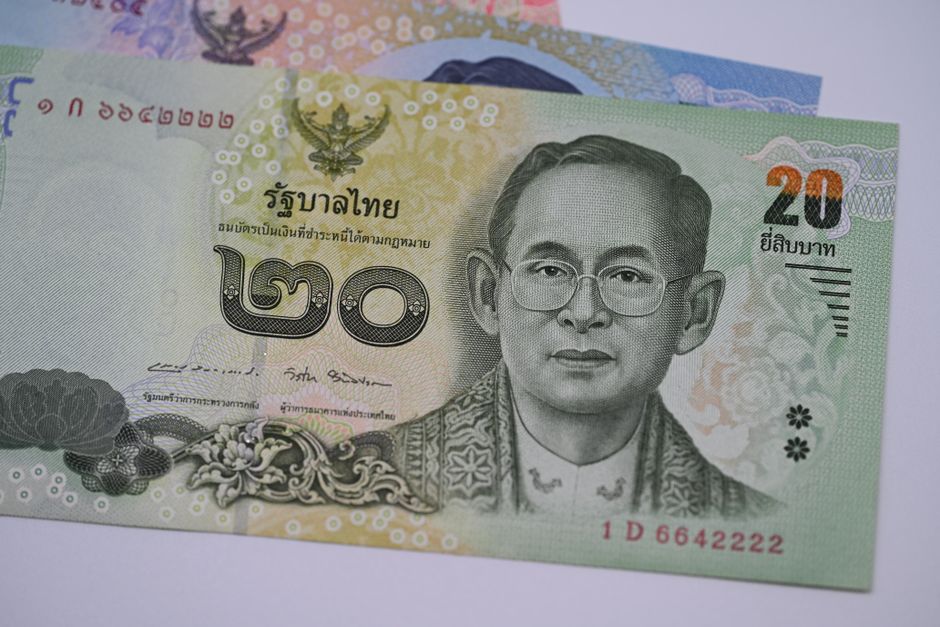 Photo: Qing Luo / Pexels
Chumphon Khet Udomsakdi Hospital in Tha Taphao is the province's main public hospital — classified by the Ministry of Public Health as a Level S general hospital with 542 beds in service, handling the province's emergency, surgical and inpatient load. The southern half has its own M2 hospital at Lang Suan with around 208 beds, with community hospitals in the remaining districts below that. On the private side, Princ Hospital Virajsilp on Poraminthara Makka Road in the town is a full private general hospital in the PRINC group, alongside the usual clinics and pharmacies. What Chumphon does not have is an internationally accredited hospital or a deep sub-specialist bench, so for the most specialised treatment residents still travel — most often south to Surat Thani, or to Bangkok, which the airport puts an hour away.
 Photo: RDNE Stock project / Pexels
Chumphon has two university campuses, one at each end: King Mongkut's Institute of Technology Ladkrabang's Prince of Chumphon Campus at Chum Kho in Pathio — land granted in 1985, first students admitted in 1996, formally opened by Princess Maha Chakri Sirindhorn in 1998, renamed in 2013 — and Maejo University – Chumphon at Lamae in the far south, which awards full bachelor's degrees in fields including coastal aquaculture innovation, plant science, tourism and business. Seven vocational and technical colleges sit under them, and two of those teach to degree level: the fisheries college at Pak Tako, and Chumphon Technical College, whose Bachelor of Technology in Automotive Technology comes through the Institute of Vocational Education, Southern Region 1. In schools, the English-medium state option is two schools on the same town-centre road, not one: Sriyaphai School at 149 Phisit Phayaban Road, running IEP and EIS special-classroom streams alongside SMTE and SMT, and Sa-at Phadoem Wittaya School at 196, which has run a full English Programme since 2001. And there are two international schools, both in Mueang district — Legacy of Grace International Christian School at Bang Luek and Theodore International School on the town's outskirts. Read the schools guide for what each actually offers.
 Photo: Tima Miroshnichenko / Pexels
The short version: Chumphon is not a condominium market. Property portals show a handful of small low-rise projects around the town and its bypass, but BAANLYY has verified none of them building-by-building, and we do not publish a developer, completion year, floor count, unit count or coordinate we have not individually confirmed. So rather than a directory, the housing page tells you honestly what actually exists — owner-run apartment rooms and townhouses in town, detached houses across the districts, and bungalows and small resort units along the coast that are frequently available long-term outside the high season. Anyone who specifically wants a modern condo with a pool and gym is looking at Surat Thani, Hua Hin or Ko Samui rather than Chumphon.
 Photo: Pixabay / Pexels
There is no organised foreign community in Chumphon, and it would be dishonest to imply otherwise. What exists is a thin, dispersed scattering of long-term residents — foreign spouses in Thai families, a handful of retirees along the Pathio and Sai Ri coasts, and dive-industry people passing through on the way to and from Ko Tao. BAANLYY can point to no verified clubs, meet-ups or English-language groups in the province. The nearest genuine community is on Ko Tao itself, two hours by boat; beyond that, Ko Samui, Hua Hin and Surat Thani. Anyone who needs a network around them should treat that as the deciding factor.
Editorial analysis compiled and periodically refreshed by BAANLYY’s research team — not a live data feed.
Analysis last reviewed August 2026.
The core Chumphon relocation guides are below, with more being added. In the meantime, see the general Thailand visa and relocation guides too.
Chumphon neighbourhood & areas guide →
Chumphon Area Score — every area ranked & rated →
Condos & housing in Chumphon →
See our Thailand visa guides, then talk to us about relocating.
Primary and official sources are cited above. Government rules, fees and procedures in Thailand change over time and vary by office; always confirm current requirements with the relevant authority before relying on them. BAANLYY never takes paid placement in editorial content.
General information and indicative pricing, not legal, tax, immigration or financial advice. Hero photograph via Pexels. Confirm current details — especially flight and train schedules and ferry times, which change — with official sources, individual listings or licensed professionals.

Free tools for this
Answer 3 quick questions and see the Thailand city guide worth researching first.
Try it free →Build a realistic monthly budget by lifestyle tier.
Try it free →