Which city fits you?
Answer 3 quick questions and see the Thailand city guide worth researching first.
Try it free →The complete starting point for Mae Hong Son — Thailand's westernmost and most mountainous province, the city of three mists — with an overview, where to live, transport, heritage and relocation, honestly scoped.
Mae Hong Son is Thailand's westernmost province and the one furthest from everything else. It is 12,765 square kilometres of the Shan Hills — the seventh largest province in the country and the most mountainous — with 10,915 km2 of that under forest, 85.5 per cent, and 288,082 registered residents scattered across it at 23 people per square kilometre, the lowest population density of any Thai province. Its nickname is Mueang Sam Mok, the city of three mists, and it earns it: the valleys hold cloud in the cool season, rain in the wet, and — the part nobody puts on a postcard — smoke in the burning season. The province was part of the Shan state of Mawkmai before the Anglo-Siamese Boundary Commission of 1892–93 ceded it to Siam, and it still feels Shan: Tai Yai people are the largest group, seven hill peoples make up 63 per cent of the population, and the temples by the lake in the capital are built in the Burmese manner rather than the Lanna one. BAANLYY covers Mae Hong Son because people genuinely want to live here — and because they deserve to be told plainly what that involves.
 Photo: Pexels contributor / Pexels
Mae Hong Son splits into five honest choices. Chong Kham is the provincial town itself — 7,066 people at the 2018 count, a lake with two Burmese-Shan temples on it, the chedi on Doi Kong Mu above, the provincial hospital, the airport, and the only advertised long-stay apartment in the province. Pang Mu and the northern valleys hold the immigration office and the road on to Pang Ung, Ban Rak Thai and the Kayan villages. Pai and Pang Mapha, north-east over the mountains, are the tourist half of the province — Pai busy enough to have become a local political issue, Pang Mapha almost empty. Khun Yuam and Mae La Noi are the quiet Route 108 middle, and the bua tong hillsides that fill the province's guesthouses every November. And Mae Sariang and Sop Moei to the south are the second town and the Salween frontier. The full where-to-live guide compares all five.
 Photo: Valeria Drozdova / Pexels
This is the single most important practical fact about the province, so we will not bury it: as of 19 August 2026 there is no scheduled passenger flight to Mae Hong Son. Bangkok Airways suspended its service from 1 July 2025 after grounding it that March for smoke; Ezy Airlines published a two-a-day Chiang Mai–Mae Hong Son schedule and a daily Chiang Mai–Pai schedule to begin on 1 October 2026, and then postponed all three of its northern routes indefinitely on 19 August 2026 while awaiting Chiang Mai Airport's approval for its own ground handling. There is no railway and there never has been. What there is, is road: Route 108 from Hot in Chiang Mai province, 345km; Route 1095 from Mae Taeng through Pai, 246km and famously more than 1,864 curves. Buses run Chiang Mai–Mae Sariang–Mae Hong Son in about eight hours, Chiang Mai–Pai–Mae Hong Son in about six, and Bangkok–Mae Hong Son in about seventeen.
 Photo: Quang Nguyen Vinh / Pexels
Mae Hong Son's provincial seal is an elephant standing in water, and the story behind it is the province's founding story: in the second quarter of the nineteenth century Kaeo Mueang Ma was sent over the hills to capture elephants for the Lord of Chiang Mai, and while he was there he gathered the scattered Shan settlements into two villages — Ban Pang Mu and Ban Mae Hong Son. That Shan inheritance is still the culture. Tai Yai is the largest population group and speaks its own language in a round-lettered script closer to Mon and Burmese than to Thai; Poy Sang Long, the Shan novice-ordination procession in which boys are carried through the streets in princely costume, is the province's signature festival; Chong Phara marks the end of Buddhist Lent. Seven hill peoples — Karen, Lahu, Lisu, Lua, Hmong, Yunnanese Chinese and Pa-O — make up 63 per cent of the population between them. And the religious mix is unlike anywhere else in Thailand: 77.5 per cent Buddhist, but 20.9 per cent Christian, a legacy of long missionary work among the hill communities.
 Photo: Pexels contributor / Pexels
The standard Thai long-stay routes apply here — retirement, marriage, DTV, education and LTR — and the province runs its own immigration office, listed by third-party directories at 202 Moo 11 in Pang Mu subdistrict just north of the capital, so extensions and 90-day reporting should not require a trip to Chiang Mai. Confirm that with the office directly before you rely on it; we could not verify the address against an Immigration Bureau page. Beyond the paperwork, be clear-eyed. There is one advertised long-stay building in the entire province. There is no registered condominium. There is no international-curriculum school. There are no scheduled flights. There is a burning season that has grounded aircraft for visibility. And Chiang Mai, the nearest city with any of those things, is six to eight hours away by mountain bus rather than the three or four that most Thai provinces manage. People still choose this place, and the ones who are happy here chose it knowing all of that.
 Photo: Marta Branco / Pexels
Mae Hong Son was reported as Thailand's poorest province, and its 2022 Human Achievement Index score of 0.5974 ranked it 76th of 77. Provincial GDP was about ฿13 billion in 2019. For a resident that cuts both ways: goods and services are cheap, and the reason they are cheap is that local incomes are very low. The one advertised rental in the province is quoted at ฿2,500–3,000 a month on one portal and ฿3,000–3,500 on the other, which is a real data point about the top of an extremely thin market and nothing more. Our cost-of-living guide is explicit about which figures are Mae Hong Son-specific and which are northern-regional benchmarks, because inventing precision for a province with almost no published housing data would be worse than useless. The line item most people underestimate: with no mass transit, no flights and mountain roads in every direction, a vehicle is a fixed cost here, not a choice.
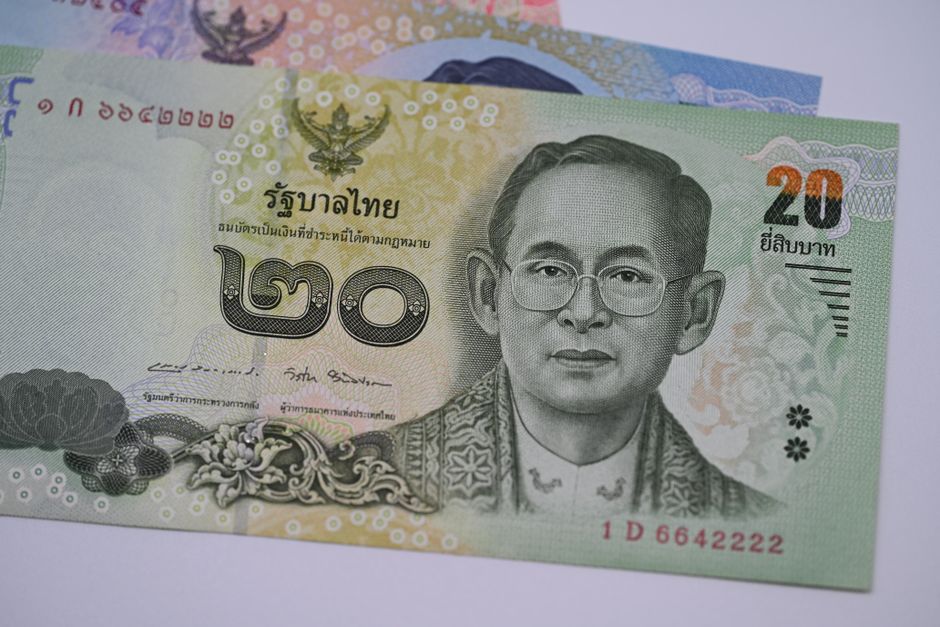 Photo: Qing Luo / Pexels
Srisangwan Hospital in tambon Chong Kham is the Ministry of Public Health provincial hospital and the referral centre for the province. It was named by King Bhumibol Adulyadej for Princess Srinagarindra, who provided personal funds toward its construction, and it serves not only Mae Hong Son residents but border communities and people in the displacement camps along the frontier. Every district has a hospital, backed by 72 subdistrict health-promoting hospitals and 63 public health centres. Two details are worth naming honestly. First, the province also operates 15 malaria clinics and 21 community malaria centres — a border-province reality that does not exist in most of Thailand. Second, there is no private general hospital that we could identify anywhere in the province, and complex care is referred to Chiang Mai, which is a long mountain drive rather than a short one.
 Photo: RDNE Stock project / Pexels
The province has eight secondary schools in total, one university campus — Chiang Mai Rajabhat University's Mae Hong Son campus — plus Mae Hong Son Community College and two industrial and community education colleges, at Mae Hong Son and Mae Sariang. What it does not have, and what we could not find any trace of, is an international-curriculum school: no IB, no Cambridge, nothing. The northern international-school cluster is in Chiang Mai, which is six to eight hours away over the mountains and therefore not a school run under any circumstances. For a family with school-age children who need an international curriculum, Mae Hong Son is not a province to base yourself in, and we would rather write that plainly on the hub page than let you discover it later.
 Photo: Tima Miroshnichenko / Pexels
Mae Hong Son has the thinnest advertised housing market BAANLYY has recorded anywhere in Thailand, and the number is one. RentHub's province index returned exactly one long-stay apartment — Kanda House in Chong Kham — and its Pai district page returned zero, offering districts of Chiang Mai province as the nearest alternatives. Hongpak returned exactly one building too, and it is the same building, priced differently and last updated in June 2018. DDproperty's province-bounded condo directory for Mae Hong Son returned nothing at all, and FazWaz returned zero condo units with a trends box that agreed with its own empty grid. Rather than publish a building directory with unverified developers, years, floor counts or coordinates, BAANLYY populates its Mae Hong Son records only as each one is verified — which, here, may be a very short list for a long time.
 Photo: Pixabay / Pexels
There are two very different foreign populations in Mae Hong Son and they barely overlap. In Pai there is a large and visible transient one: Thai Immigration Bureau figures reported in early 2025 put foreign arrivals in Pai district at 221,776 for 2024, and a share of those stay for months. In the rest of the province there is almost nobody — a scatter of people married into Thai families, a few retirees, and the NGO and mission workers that a long border with Myanmar attracts. There is no expat association we could verify, no English-language local media, and no international school. What the province does have is its own immigration office and, in Pai at least, other foreigners to talk to. The expat guide sets out what exists and what does not.
Editorial analysis compiled and periodically refreshed by BAANLYY’s research team — not a live data feed.
Analysis last reviewed August 2026.
The core Mae Hong Son relocation guides are below, with more being added. In the meantime, see the general Thailand visa and relocation guides too.
Where to live in Mae Hong Son →
Mae Hong Son neighbourhood & areas guide →
Mae Hong Son Area Score — every area ranked & rated →
Cost of living in Mae Hong Son →
Condos & housing in Mae Hong Son →
Schools & education in Mae Hong Son →
See our Thailand visa guides, then talk to us about relocating.
Primary and official sources are cited above. Government rules, fees and procedures in Thailand change over time and vary by office; always confirm current requirements with the relevant authority before relying on them. BAANLYY never takes paid placement in editorial content.
General information and indicative pricing, not legal, tax, immigration or financial advice. Hero photograph via Pexels. Confirm current details — especially flight service, bus schedules, air quality and immigration procedures, all of which change — with official sources, individual listings or licensed professionals.

Free tools for this
Answer 3 quick questions and see the Thailand city guide worth researching first.
Try it free →Build a realistic monthly budget by lifestyle tier.
Try it free →