Which city fits you?
Answer 3 quick questions and see the Thailand city guide worth researching first.
Try it free →The complete starting point for Nakhon Nayok — the province that calls itself the city of dreams near the capital, where the central plain climbs into Khao Yai's mountains — with an overview, where to live, transport, heritage and relocation.
Nakhon Nayok is a small central province about 110km northeast of Bangkok, and it markets itself with unusual honesty: the official provincial motto translates as "Nakhon Nayok. City of dreams near the capital. Beautiful mountains. Gorgeous waterfalls. Rich in nature. Free of pollution." That is genuinely what it is. Four districts, roughly 260,000 registered residents, a flat rice plain in the middle and south, and a northern third that climbs into the Sankamphaeng Range and disappears into Khao Yai National Park — Thailand's oldest national park. Thirty percent of the province is forest. For a relocator the appeal is specific: mountains, waterfalls and clean air within a two-hour drive of Bangkok, plus — unexpectedly for somewhere this small — a 500-bed university teaching hospital and a major public university campus. The honest counterweight is that this is a thin market with no passenger rail service, no airport and no verified condominium stock.
 Photo: Pixabay / Pexels
Nakhon Nayok breaks into five practical choices. Nakhon Nayok town on the river is the provincial seat — the 314-bed hospital, the market, the bus terminal and the only walkable core. The Sarika and Wang Takrai foothills north of town are the scenic option: waterfalls, resort villas and the Khao Yai fringe, with almost nothing formal to rent. Ongkharak, west along Highway 305 toward Rangsit, is the deepest rental market in the province thanks to Srinakharinwirot University's campus and the medical centre next to it. Ban Na, northwest along Suwannasorn Road, is the military-academies belt and the route to Khun Dan Prakan Chon Dam. And Pak Phli in the east is the smallest, quietest, most purely rural district. The full where-to-live guide compares all five.
 Photo: Valeria Drozdova / Pexels
Nakhon Nayok is a road province, and that is not a stylistic observation — there is no commercial airport anywhere in it, and although a State Railway line crosses Ongkharak district it has carried freight only since 1995, so there is no train you can board. Two highways do the work. Highway 305, the Rangsit–Nakhon Nayok Road, runs about 76km from Future Park Rangsit through Ongkharak to the provincial town and is the standard approach from Bangkok, typically an hour to an hour and a half depending on traffic. Highway 33, Suwannasorn Road, crosses the province east–west, linking Saraburi and the Northeast to Prachinburi and the East. Buses and minivans run from Bangkok's Mo Chit terminal, and locally you are looking at songthaews, motorbike taxis and your own vehicle. For anything beyond the town centre, a car or motorbike is not optional.
 Photo: Quang Nguyen Vinh / Pexels
The name is a puzzle worth unpicking. Nakhon comes from the Sanskrit nagara, 'city'; nayok is usually traced to the Sanskrit nāyaka, 'leader' — but the province's own traditional reading takes na as 'rice field [tax]' and yok as 'exempted', giving "tax-free city", a reference to rice-tax exemptions granted to draw settlers to a hard frontier. The city itself is old: a Dvaravati-era settlement probably founded in the 11th century, whose ruins survive at Mueang Boran Dong Lakhon south of the modern town. Originally called Mueang Lablae, it was renamed Nakhon Nayok in 1350 when it became an Ayutthaya garrison town guarding the kingdom's eastern boundary. The provincial seal — an elephant holding an ear of rice in its trunk, with straw stacks behind — reads as a summary of the place: rice fields and forest. There are 222 Buddhist temples across the four districts.
 Photo: Quang Nguyen Vinh / Pexels
Nakhon Nayok suits a narrow but real set of people: someone attached to Srinakharinwirot's Ongkharak campus or the medical centre, a military-adjacent household near the academies in Ban Na, a Bangkok-fringe household that wants hills and clean air over city convenience, or a long-stayer who has decided that waterfalls beat malls. It does not suit anyone who needs an established foreign community, international schooling inside the province, or a rental market with agencies and listings. The standard Thai long-stay routes apply (retirement, marriage, DTV, education and LTR); there is no international border in the province, and extensions, 90-day reporting and re-entry permits route through the provincial immigration office. Expect to find housing by driving, asking and negotiating directly with owners rather than by browsing.
 Photo: Marta Branco / Pexels
Nakhon Nayok is inexpensive by Thai standards and very inexpensive next to Bangkok, but the reason matters: it is cheap because it is small and rural, not because it is undervalued. Housing is the biggest saving, food is ordinary provincial-Thai cheap, and the province's fruit — especially marian plum (ma-yong-chid) in season — is a genuine local pleasure rather than a line item. The costs people underestimate are transport, since a vehicle is effectively mandatory, and the occasional Bangkok trip for anything the province cannot supply. Structured, province-specific cost data is thin here, so our cost-of-living guide is explicit about which figures are Nakhon Nayok-specific and which are indicative regional benchmarks rather than inventing precise numbers.
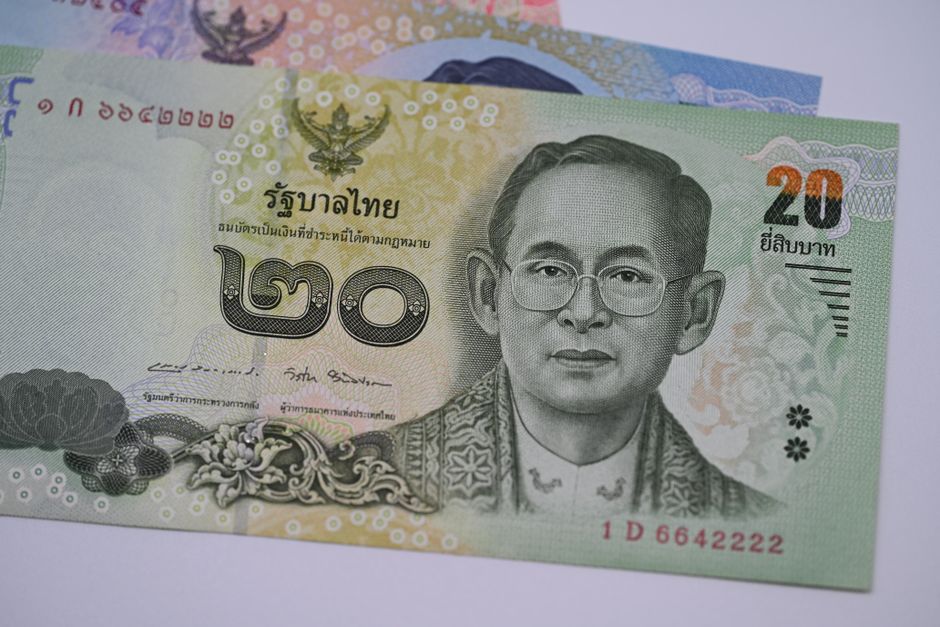 Photo: Qing Luo / Pexels
This is Nakhon Nayok's genuine surprise. For a province of roughly 260,000 people you would expect one modest provincial hospital; instead there are six hospitals, and the largest is the 500-bed HRH Princess Maha Chakri Sirindhorn Medical Center at Ongkharak, the teaching hospital of Srinakharinwirot University's Faculty of Medicine. Alongside it are the 314-bed Nakhon Nayok Hospital in the provincial town, the 90-bed Chulachomklao Royal Military Academy Hospital, and community hospitals at Ban Na (70 beds), Ongkharak (31 beds) and Pak Phli (10 beds), plus 55 sub-district health-promoting hospitals across the four districts. Bed capacity per head here is well above what a province this size normally gets — a real argument for the Ongkharak side in particular.
 Photo: RDNE Stock project / Pexels
Nakhon Nayok punches above its weight in tertiary education and below it in international schooling. Srinakharinwirot University's Ongkharak campus is one of the university's two campuses and brings a medical faculty and its teaching hospital with it. St Teresa International University at Klong 14 on the Rangsit–Nakhon Nayok Road is an English-medium private institution established in 2001. And the province hosts two national military schools: the Armed Forces Academies Preparatory School at Si Ka-ang in Ban Na, and the Chulachomklao Royal Military Academy west of the town. At school level, the provincial flagship Nakhon Nayok Witthayakhom School runs an English Program special classroom admitting at M.1, and Piyachat Phatthana School — founded by royal initiative at the gates of the Chulachomklao academy — is the secondary school the province's military and civil-service families use. Less well known, and missing from every previous account here: Nakhon Nayok Technical College on Highway 305 awards eight Bachelor of Technology degrees, and the Institute of Vocational Education, Central Region 3 — the degree-awarding body for seven colleges across Nakhon Nayok, Prachinburi, Chachoengsao, Sa Kaeo and Samut Prakan — has its head office on that same site, so a province of about 260,000 people hosts a five-province degree-awarding institute. What the province does not have is a full international-curriculum day school, so families needing an IB, British or American track generally look toward Rangsit and Bangkok's northern and eastern suburbs, or to Khao Yai-adjacent options in neighbouring provinces. The schools guide is explicit about where that line falls.
 Photo: Tima Miroshnichenko / Pexels
Nakhon Nayok is a house-and-apartment province, not a condominium province, and we would rather say that clearly than imply a tower market that does not exist. The formal rental supply is small apartment blocks and rented rooms around the university and medical-centre corridor at Ongkharak, a scatter of similar blocks in the provincial town, owner-let houses and townhouses everywhere else, and resort-style villas in the foothills that are usually short-let but sometimes negotiable long-term. BAANLYY publishes building records only as each one is individually verified, so the condos overview describes the real market honestly rather than listing invented developers, years, floor counts or coordinates.
 Photo: Pixabay / Pexels
There is no organised foreign community in Nakhon Nayok, and pretending otherwise would be doing you a disservice. The foreigners here are mostly attached to something specific: teaching or studying at St Teresa International University or Srinakharinwirot's Ongkharak campus, married into a Thai family, or running a resort or adventure-tourism business in the foothills. Weekend visitor traffic from Bangkok is heavy, which keeps cafés and rafting operators alive, but weekend traffic is not a community. Most foreign residents who want social infrastructure drive to Bangkok or Rangsit for it. If you need a ready-made network on arrival, Chiang Mai, Phuket and Pattaya have one and this province does not.
Editorial analysis compiled and periodically refreshed by BAANLYY’s research team — not a live data feed.
Analysis last reviewed August 2026.
The core Nakhon Nayok relocation guides are below, with more being added. In the meantime, see the general Thailand visa and relocation guides too.
Where to live in Nakhon Nayok →
Nakhon Nayok neighbourhood & areas guide →
Nakhon Nayok Area Score — every area ranked & rated →
Cost of living in Nakhon Nayok →
Condos & housing in Nakhon Nayok →
Schools & universities in Nakhon Nayok →
See our Thailand visa guides, then talk to us about relocating.
Primary and official sources are cited above. Government rules, fees and procedures in Thailand change over time and vary by office; always confirm current requirements with the relevant authority before relying on them. BAANLYY never takes paid placement in editorial content.
General information and indicative pricing, not legal, tax, immigration or financial advice. Hero photograph via Pexels. Confirm current details — especially national park access, waterfall conditions and rafting seasons, which are seasonal — with official sources, individual listings or licensed professionals.

Free tools for this
Answer 3 quick questions and see the Thailand city guide worth researching first.
Try it free →Build a realistic monthly budget by lifestyle tier.
Try it free →