Which city fits you?
Answer 3 quick questions and see the Thailand city guide worth researching first.
Try it free →The complete starting point for Thailand's southeastern corner — where the Southern Line railway ends at the Malaysian border, a provincial capital carries a medical faculty and its own teaching hospital, and the largest peat swamp forest in the country sits half an hour inland — with an overview, where to live, transport, heritage, relocation and a straight account of the security situation.
Read this first. Narathiwat is one of the three provinces of the South Thailand insurgency, and it carries the widest emergency-decree coverage of the three. As of August 2026 the Emergency Decree remains in force over ten of its thirteen districts under an extension running to 19 October 2026, and the UK, the US and Australia all carry standing travel advice about the province. This is also where the Tak Bai incident of 25 October 2004 took place, in which 85 people died and for which nobody has been prosecuted. BAANLYY publishes this guide because information about a place is more useful than silence about it, and because the province has a real resident, academic and medical population — but nothing on this site is a recommendation to travel against your own government's advice. Section 02 below sets out the decree, the advisories and the published incident data in full. Check your own government's current advisory and your insurance before you plan anything.
Narathiwat is the last province in this rotation and the far corner of the country: the southeastern end of Thailand, on the Gulf of Thailand and the Malay Peninsula, bordering Kelantan and Perak, and one of only four Thai provinces that touch Malaysia. It is where the Southern Line railway stops — Su-ngai Kolok is the furthest railway station from Bangkok in the kingdom. Thirteen districts, 77 subdistricts and 551 villages across 4,475 square kilometres, roughly 1,140 kilometres south of Bangkok, with forest covering 1,196 square kilometres or 26.6 per cent on the Royal Forest Department's count and the province's own tourism material describing three-quarters of the land as jungle and mountain. The Bang Nara river is the main watercourse and reaches the sea at the provincial town beside Narathat Beach. The name is recent and deliberate: the Malay name was Menara, minaret or tower, which became Bang Nara or Bang Nak in Thai, and King Rama VI renamed the town Narathiwat by Royal Gazette announcement on 8 August 1915 — from Sanskrit, the residence of wise people. About 82 per cent of the population is Muslim and 17.9 per cent Buddhist, and 80.4 per cent speak Patani Malay as a first language, closely related in ethnicity and culture to the Malays of Kelantan across the river. Two things make Narathiwat unlike its two neighbours for anyone reading a relocation guide, and they run in opposite directions. It has the best higher-education and clinical position in the Deep South: Princess of Naradhiwas University with seven faculties including a Faculty of Medicine, its own university teaching hospital, and a CPIRD medical education centre at the provincial hospital. And it has the thinnest housing market we have measured anywhere — three advertised rental buildings in thirteen districts, and no condominium at all. The honest framing: this is not a retirement destination and this guide does not pretend it is. Ten of the thirteen districts sit under an Emergency Decree, three Western governments carry standing travel advice, there is no international school in this province or either neighbour, and this is the province where the Tak Bai incident happened. It is also the greenest of the three, the best connected by air, and home to a Ramsar peat swamp where a crocodilian thought extinct in Thailand turned up again in 2026.
 Photo: Walter Coppola / Pexels
This section exists because leaving it out would be dishonest, and because the facts are specific enough to be useful rather than frightening. Narathiwat is one of the three provinces of the South Thailand insurgency, and it carries the widest emergency-decree coverage of the three: the Cabinet extended the decree from 20 July to 19 October 2026 over every district EXCEPT Yi-ngo, Waeng and Sukhirin, so ten of thirteen districts remain inside it, against four of eight in Yala and five of twelve in Pattani. Three governments carry standing advice. The US State Department's Thailand advisory of 7 July 2026 rates the country Level 1 overall but tells travellers to exercise increased caution in Narathiwat, Yala and Pattani, and notes that US government employees need special authorisation to travel there. The UK FCDO, updated 30 June 2026 and still current in August 2026, advises against all but essential travel to all three provinces, to four named districts of southern Songkhla, and to the Hat Yai–Padang Besar rail line. Australia's Smartraveller says reconsider your need to travel. On numbers: the Southern Border Provinces Administrative Centre's compensation-committee data, reported in January 2026, records 10,116 certified incidents and 5,999 deaths across the three provinces between January 2004 and December 2025 — 3,661 civilians and 2,338 state personnel — with 13,519 injured. The trend is clearly downward: 2007 was the peak at 1,407 incidents and 892 deaths, 2020 the low at 57 and 36, and 2025 recorded 150 incidents and 48 deaths, of which 38 were state personnel. Historically incidents have been more frequent in Narathiwat than in either neighbour. On 11 January 2026 a coordinated bomb and arson attack hit eleven PTT petrol stations across the three provinces, five of them in Narathiwat, and a curfew was imposed in Narathiwat only and lifted the next day. And this province carries the single worst state-violence episode of the conflict: the Tak Bai incident of 25 October 2004, in which 85 Malay Muslims died — seven shot during the dispersal of a protest and 78 by crushing or asphyxia during a seven-hour truck transfer to an army camp in Pattani. The twenty-year statute of limitations expired on 25 October 2024 and the criminal case was dismissed three days later with nobody prosecuted. Read the Tak Bai section of our where-to-live guide for the full sequence. Nothing on this site is a recommendation to travel against your own government's advice.
 Photo: Quang Nguyen Vinh / Pexels
Thirteen districts sort into nine honest choices, and the practical answer for almost everybody is the capital. Narathiwat town — tambon Bang Nak in Mueang Narathiwat, at the mouth of the Bang Nara — holds the provincial hospital with its CPIRD medical education centre, the university teaching hospital, Princess of Naradhiwas University, the Central Mosque, the airport at Khok Khian, Narathat Beach and two of the province's three advertised rental buildings. Just south of it, Khao Kong and the Ao Manao headland hold Thaksin Ratchaniwet Palace, the southernmost royal residence in Thailand, and the 24-metre Phra Buddha Thaksin Ming Mongkol. The second real town is Su-ngai Kolok on the Golok river, opposite Rantau Panjang in Kelantan — a border-trade centre, a town municipality since 2004, the terminus of the entire Southern Line, and the one advertised rental outside the capital. Tak Bai is the coastal district where a temple redrew the 1909 border and where the 2004 incident happened. Su-ngai Padi and Cho-airong hold Pa Phru To Daeng, Thailand's largest peat swamp forest. Ra-ngae and Tanyong Mat hold the railway station the capital does not have. Bacho and Yi-ngo run north toward Pattani. Rueso, Si Sakhon and Chanae climb into the Budo range. And Waeng and Sukhirin sit on the mountain frontier with Malaysia. Eleven of the thirteen districts advertise no long-stay rental stock at all.
 Photo: Valeria Drozdova / Pexels
Narathiwat is the exact inverse of Yala: the flights are good and the railway is in the wrong place. Narathiwat Airport, IATA NAW and ICAO VTSC, is in Khok Khian subdistrict inside the capital district — not eighty-five kilometres away like Yala's — with a runway of around 2,500 metres, built in 1974 at the same time as Thaksin Ratchaniwet Palace. As of January 2026 the province's own encyclopaedia entry records two daily direct flights each way to Bangkok's Don Mueang plus one to Suvarnabhumi, all operated by AirAsia, all arriving and departing between late morning and early afternoon, and AirAsia is the only airline serving it. It was previously an international airport and once ran seasonal charters to Medina. Worth knowing: the nearest airport of any kind is not Thai. Kota Bharu in Kelantan is 72 kilometres away; Betong is 104; Sultan Abdul Halim at Kepala Batas in Kedah is 153; and Hat Yai International, the airport most residents of the other two Deep South provinces use, is 156. On rail, the good news and the catch arrive together. The Southern Line ends in this province at Su-ngai Kolok — class 1, 1,142.993 kilometres from Thon Buri, opened 17 September 1921, the furthest station from Bangkok in Thailand — but no line reaches Mueang Narathiwat. The station nearest the capital, and the one the province calls its main station, is Tanyong Mat in Ra-ngae district: class 1, 1,099.503 kilometres from Thon Buri, opened March 1920, served by the Thaksin Special Express 37/38, Rapid 171/172 and local workings from Surat Thani, Nakhon Si Thammarat, Yala and Phatthalung. Rueso, Su-ngai Padi and Cho-airong are the other stops. Cross-border rail into Malaysia is closed: services once ran over the Harmony Railway Bridge to Rantau Panjang, and the link fell into disuse. Note before booking that the UK advisory specifically names the Hat Yai–Padang Besar line through these provinces. On the road, Highway 42 is the province's main highway and terminates at Su-ngai Kolok, and there are three statutory crossings into Malaysia, not the two we previously listed — the bridge at Su-ngai Kolok into Rantau Panjang, the Provincial Administrative Organisation's vehicle ferry at Tak Bai into Pengkalan Kubor in Tumpat, and the second Golok bridge at Buketa in Waeng district, opposite Bukit Bunga in Jeli, reached on Highway 4057. The Ministerial Regulation on Customs Houses and Border Checkpoints B.E. 2560 of 13 November 2017 gives this province three customs houses, one at each.
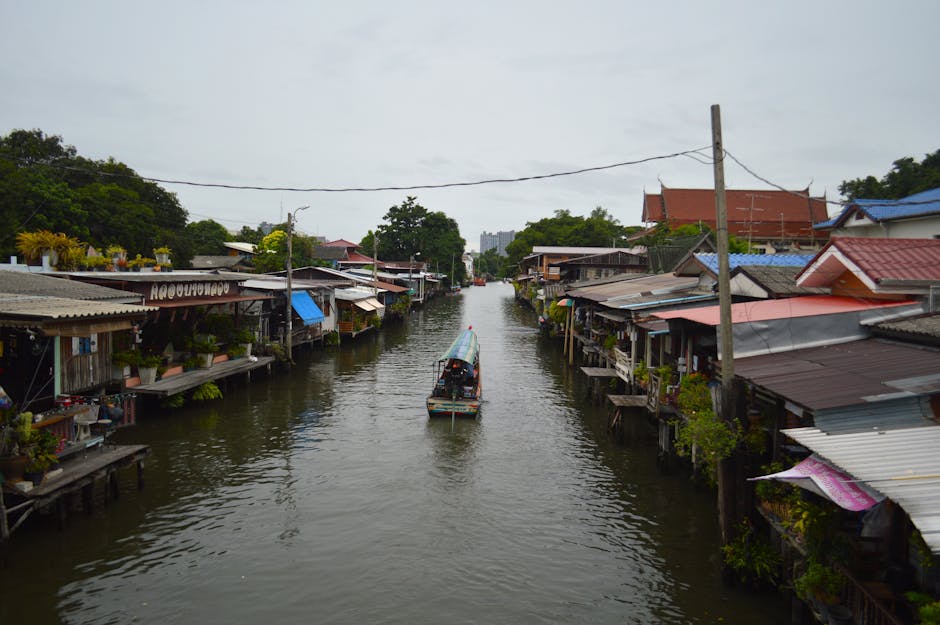 Photo: Valeria Drozdova / Pexels
Narathiwat's history is Patani's history, and on the decisive question it sits with Yala rather than with Pattani. This was part of the semi-independent Malay Sultanate of Patani, paying tribute to Sukhothai and then Ayutthaya; when Ayutthaya fell to the Burmese in 1767 the sultanate became fully independent, returned under Thai control under Rama I eighteen years later, and was divided into seven smaller kingdoms in the early 1800s. Narathiwat was then fully integrated into Siam under the Anglo-Siamese Treaty of 1909 negotiated with the British Empire, and it and Yala became part of Monthon Pattani. That is the reverse of Pattani's position, whose sovereignty had been settled earlier under the 1826 Burney Treaty and which the 1909 treaty did not cover — the three provinces are routinely given one story and they do not have one. The 1909 line runs through this province in the most physical way imaginable. Britain and Siam agreed to use the Kolok river near Wat Chonthara Sing-he in Tak Bai as the boundary between British Malaya and Siam, and the recorded reason was the Thai Buddhist culture and art inside the temple: this ground had been part of Mueang Kelantan, and the temple was the argument that kept it Thai. Its other name is Wat Phithak Phaen Din Thai — the temple that protects Thai soil. The province's religious landscape is a genuine two-hander, and its own motto leads with it: Thaksin Ratchaniwet Palace, religious people, pleasant Narathat Beach, fascinating Pacho Waterfall, a great source of gold and mineral, and fragrant sweet longkong. The Central Mosque on Pitchitbamrung Road, three storeys with a tall minaret, was built in 1981; nine kilometres away at Khao Kong, a 142-rai Buddhist park holds Phra Buddha Thaksin Ming Mongkol, 17 metres wide and 24 metres high, in South Indian style, described as the largest outdoor Buddha image in southern Thailand. The provincial seal shows a sailing boat with a white elephant on its sail, commemorating Phra Sri Nararat Rajakarini, a white elephant caught here and presented to the king. The provincial symbol is the longkong fruit, the tree is chengal, the flower Odontadenia macrantha, and the provincial aquatic animal is the harlequin rasbora — a fish found in Thailand only in Pa Phru To Daeng.
 Photo: Quang Nguyen Vinh / Pexels
The standard Thai long-stay routes apply — retirement, marriage, DTV, education and LTR — and Narathiwat has a provincial immigration presence, though we did not open the Immigration Bureau's own page for it and therefore publish no address or phone number rather than repeat one from a directory. Beyond the paperwork, be realistic about what relocating here means, in both directions. Against it: the advertised rental market is three buildings across thirteen districts at ฿1,800 to ฿4,000 a month, and not one of the three carries a 2026 date; there is no condominium in the province at all, on a portal route that demonstrably worked; there is no international-curriculum school here or in either neighbour, which we established by reading the national list in full; and ten of thirteen districts sit inside the Emergency Decree to 19 October 2026 with three Western governments carrying standing travel advice over all of them. For it, and these are real: this is the only Deep South province with a medical school, a university teaching hospital and a CPIRD clinical education centre, which means the clinical staffing here is deeper than the hospital tier alone suggests. The airport is inside the capital district with daily AirAsia flights to both Bangkok airports. The Malaysian border is minutes away at three statutory crossings in three different districts, and Kota Bharu airport is closer than Hat Yai. Princess of Naradhiwas University gives the town a student population, seven faculties and an Institute of Islamic and Arabic Studies. And the cost of living is among the lowest in the country. Two things we will not give you. We publish no foreign-resident count, because none exists that we could verify. And unlike Pattani next door, Narathiwat has no resident-written teachers' region guide: we read Ajarn.com's region-guide index in full in August 2026, counted 47 entries from Ang Thong to Uttaradit including Pattani, Hat Yai, Songkhla and Phatthalung, and neither Narathiwat nor Yala is among them.
 Photo: Marta Branco / Pexels
Narathiwat is cheap, and it is the least poor of the three Deep South provinces — which is a low bar, and we will say so. The National Economic and Social Development Council's 2024 poverty report, released in September 2025, put the province's poverty rate at 21.07 per cent, measured against a national poverty line of ฿3,078 per person per month, with 3.43 million poor nationally or 4.89 per cent of the population. That is materially better than Yala at 25.41 per cent (second-highest of 77 provinces) and Pattani at 25.39 (third), and materially worse than the national average. Alongside that sits a deliberate blank. We publish no Human Achievement Index figure and no gross provincial product figure for Narathiwat at all. The province's encyclopaedia article cites both — a NESDC HAI databook for 2022 and a Gross Regional and Provincial Product edition — but our fetch stripped the tables that carry the numbers, and we do not reprint a figure we did not read. We are equally explicit about the population: the same article cites a 2024 Department of Provincial Administration count, the infobox carrying it was stripped, and rather than take a number from a search rendering we publish none. Readers who want those figures should go to the NESDC and DOPA sources directly, which we link. What we can say about housing costs is measured and small: three advertised long-stay buildings at ฿1,800 to ฿4,000 a month, one at ฿3,500–4,000 in the capital, one at ฿2,000–3,500 in Su-ngai Kolok and one at ฿1,800–2,800 in the capital. On the sale side, the province-bounded route on the independent portal carried exactly three properties: a two-bedroom townhouse in Su-ngai Kolok at ฿2.2 million (150 sqm floor on 17 sq wah, ฿32,353 per square metre), one rai in the centre of Tanyong Mat at ฿12.7 million (฿6,198 per square metre), and 26 sq wah of vacant land at Lochut in Waeng at ฿4,704,750 (฿45,238 per square metre). That is the entire published price evidence for a province of thirteen districts.
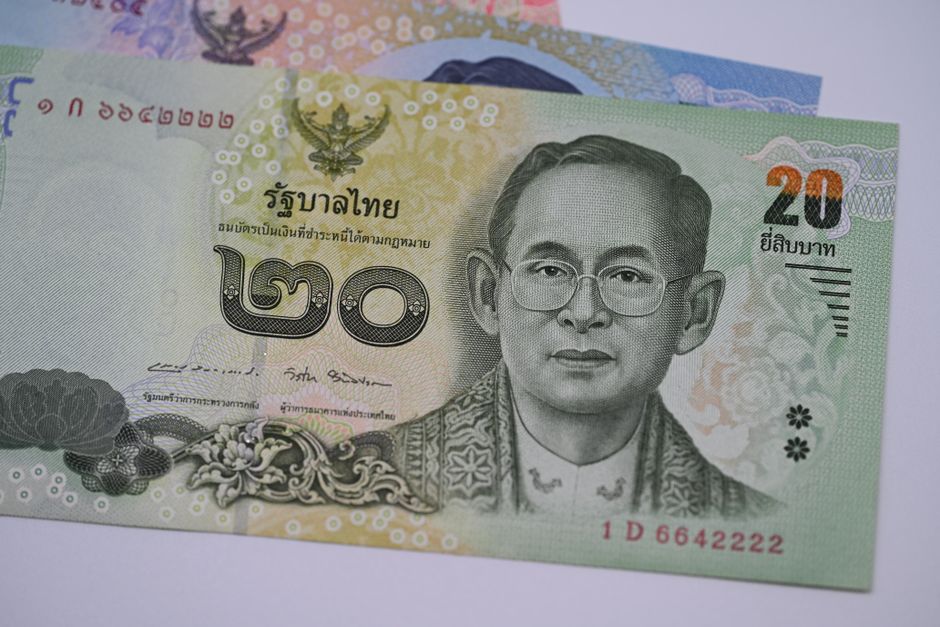 Photo: Qing Luo / Pexels
This is where Narathiwat quietly outperforms its headline tier. Naradhiwas Rajanagarindra Hospital, in Mueang Narathiwat, is classified by the Ministry of Public Health as a GENERAL hospital — a tier below Yala's regional hospital — but it runs a CPIRD Medical Education Centre that trains doctors for the Faculty of Medicine of Princess of Naradhiwas University, which is a capability neither neighbour publishes. Its history is worth knowing: the governor Mom Rajawongse Taweewong Thawansak, who judged that the far south was not receiving the healthcare the rest of the country got, worked with his successor Luang Charoon Burakij to build a two-storey health station named Taweecharoon that opened on 24 June 1941 with two full-time doctors; it was expanded into a hospital in 1952 as Narathiwat Hospital under its first director Dr Sem Pringpuangkaeo, later classified a general hospital, and renamed Naradhiwas Rajanagarindra Hospital on 28 February 1997 after King Bhumibol conferred the royal title Princess of Naradhiwas on Princess Galyani Vadhana in 1995. Alongside it stands Galyanivadhanakarun Hospital, the teaching hospital of the university's Faculty of Medicine, close to the new provincial government office: construction began in 2009, it opened on 15 December 2014 with 22 outpatient beds, it was renamed by royal decree on 15 March 2015, and its stated purpose is to be a clinical training site and a medical research centre for the far south and for nearby ASEAN countries such as Malaysia and Indonesia. It plans to expand to 150 beds. What we could not find, and therefore do not publish: a bed count for Naradhiwas Rajanagarindra Hospital, a per-district table of community-hospital beds, a count of subdistrict health-promoting hospitals, any English-language international-patient department, any insurer direct-billing arrangement, or any interpreter provision at either hospital. Su-ngai Kolok has its own hospital — the rental portal carries a facet for it — but we verified nothing about it beyond existence. Phone before you rely on any of this. And read the point nobody else makes: many travel and health insurance policies void cover where the holder's own government advises against travel, and three governments carry standing advice about this province. That is a contractual question worth asking your insurer in writing before you move.
 Photo: RDNE Stock project / Pexels
Narathiwat has the strongest tertiary sector of the three Deep South provinces and no international school at all. Princess of Naradhiwas University was founded by act on 9 February 2005 by merging every post-secondary institution in the province into one body — Narathiwat Technical College, Narathiwat Agricultural and Technology College, Takbai Vocational College and Boromarajonani College of Nursing Narathiwat — with the explicitly stated aim of distributing equality, equity and opportunity to local citizens. King Bhumibol granted the name in honour of his sister, Princess Galyani Vadhana, Princess of Naradhiwas. It runs seven faculties: Agriculture, Engineering, Liberal Arts, Management Science, Medicine, Nursing, and Science and Technology, alongside an Institute of Islamic and Arabic Studies and the three colleges it absorbed. Its address is 49 Rangaemaraka Road, Bang Nak, Mueang Narathiwat 96000, and it holds memoranda of understanding with institutions including the University of Illinois at Chicago, Universiti Utara Malaysia, Al-Azhar University, Alexandria University, Kunming University, the University of Baguio and Jenderal Soedirman University. A medical faculty in a province of this size, with its own teaching hospital, is genuinely unusual. On international curricula the answer is a clean, enumerated absence: we read the national list of international schools in Thailand in full in August 2026, and it contains no school in Narathiwat, none in Yala and none in Pattani. The nearest are all in Songkhla province at Hat Yai — Bloomsbury International School Hatyai, Southern International School Hatyai and American Prep International School Hatyai — about 156 kilometres from Narathiwat by the airport-to-airport measure. Families needing an international curriculum are looking at Hat Yai, or across the border. That is not the same question as whether there is an English-medium classroom here, so we tested it separately: both of Mueang Narathiwat's provincial secondary schools publish a selective Intensive English Programme. Narasikkhalai School's own admissions site gives 30 IEP places against 320 mainstream at M1, an entry bar of a 3.00 overall grade average and 2.50 in English, and an entrance paper in five subjects plus a Thai and English reading test; a third-party directory reports the same IEP and SMTE streams at Narathiwat School, which we could not confirm on the school's own site and flag as second-hand. An IEP is the Thai curriculum taught with far more English, not an international one, it selects on grades already earned in Thai schools, and it is entered at M1 or M4 — around twelve or fifteen. We could not verify any English-intensive stream below secondary anywhere in the province and publish none. Alongside the state system — three primary educational service areas and one secondary office, with Primary Area 1 listing 148 schools — Narathiwat shares the Deep South's dense network of ponoh or pondok Islamic private schools and mosque tadika centres; we publish no count, but the register is held by the Office of the Private Education, Narathiwat Province, in the Golden Leaf Building on Phichit Bamrung Road, on 073 513035.
 Photo: Tima Miroshnichenko / Pexels
There is no condominium in Narathiwat, and for once the zero is properly canaried. DDproperty's geo-bounded all-residential route for the province, /en/property-for-sale/in-narathiwat-th96, returned 'Properties Sale in Narathiwat total 3' in its heading, three listings in its meta description and 'There are 3 properties for sale here on DDproperty' in its own FAQ — three counts agreeing — and none of the three is a condominium. They are a two-bedroom townhouse in Su-ngai Kolok, one rai of land in the centre of Tanyong Mat, and 26 sq wah of vacant land at Lochut in Waeng. Because the route demonstrably resolved and returned non-condominium results, the condominium count of zero is a live zero rather than a broken filter, which is exactly the canary Pattani's launch could not obtain. One trap is worth recording for anyone repeating this work: 'Narathiwat' is also the name of a major Bangkok arterial, Naradhiwas Rajanagarindra Road through Sathorn, Yannawa and Rama 3, so any portal search matching on the NAME rather than the province code returns Bangkok stock — a 31-storey tower called The Complete Narathiwat and a 493-unit project called Condo One X Sathorn-Narathiwat, both in Bangkok 10120. Every figure in this launch comes from a route bounded by the province code th96 or the portal's Narathiwat province slug. For renting, RentHub's Narathiwat province index stated three advertised long-stay buildings, rendered all three on one page, and its district facets read Muang Narathiwat (2) and Su Ngai Ko Lok (1) — facets that SUM to the stated total, which licenses reading the other eleven districts as genuine zeros. Rents ran ฿1,800 to ฿4,000 a month, and not one of the three listings carries a 2026 date. PropertyHub is not a second source: it is the same company as RentHub, Zimple Media, named in RentHub's own footer with PropertyHub links in its own header. Rather than publish a building directory with unverified data, BAANLYY populates its Narathiwat records only as each one is verified.
 Photo: Pixabay / Pexels
Very small, and as in Yala we do not have the source that carried the earlier launches. Ajarn.com, whose teacher-written region guides have been the one independent resident voice for provinces like Pattani and Samut Songkhram, has no Narathiwat guide: its region-guide index carried 47 entries in August 2026, covering everywhere from Ang Thong to Uttaradit and including Pattani, Hat Yai, Songkhla and Phatthalung, and neither Narathiwat nor Yala appears. We would rather report that absence than substitute a guide written about somewhere else, and the absence is itself informative about how far outside the expat map this province sits. What can be said with confidence is structural. The foreign presence in Narathiwat is academic, clinical and institutional rather than social: Princess of Naradhiwas University with its seven faculties and its international memoranda, the university teaching hospital, the CPIRD medical education centre and the provincial administration are where English is spoken in quantity. The second pole is entirely different and entirely Malaysian: Su-ngai Kolok and Tak Bai are border-trade towns whose weekday and weekend traffic comes from Kelantan, and Kota Bharu is 72 kilometres from Narathiwat airport — closer than any Thai airport other than Betong. Narathiwat Malays are described as very similar in ethnicity and culture to the Malays of Kelantan, which makes the border less of a cultural line than a political one. On daily life: about 82 per cent of the province is Muslim and 80.4 per cent speak Patani Malay first, so the rhythms are Friday prayers and Ramadan. We make no legal claim about alcohol beyond ordinary national Thai law — we found no Narathiwat-specific rule — but fewer venues sell it and public culture is conservative, which is a practical reality rather than a regulation. One genuine exception worth knowing about: Phukhao Thong subdistrict, settled from 1963 under a government resettlement programme, was still mostly Isan-speaking and ninety per cent Theravada Buddhist as of 2019. We publish no foreign-resident count because we could not verify one.
Editorial analysis compiled and periodically refreshed by BAANLYY’s research team — not a live data feed.
Analysis last reviewed August 2026.
The core Narathiwat relocation guides are below, with more being added. In the meantime, see the general Thailand visa and relocation guides too.
Narathiwat neighbourhood & areas guide →
Narathiwat Area Score — every area ranked & rated →
Cost of living in Narathiwat →
Condos & housing in Narathiwat →
See our Thailand visa guides, then talk to us about relocating.
Primary and official sources are cited above. Government rules, fees and procedures in Thailand change over time and vary by office; always confirm current requirements with the relevant authority before relying on them. BAANLYY never takes paid placement in editorial content.
General information and indicative pricing, not legal, tax, immigration, security or financial advice. Hero photograph via Pexels. Security conditions, emergency-decree coverage, flight schedules and government travel advisories change — always check your own government's current advisory before travelling, and confirm hospital services, train times and immigration procedures with official sources or licensed professionals.

Free tools for this
Answer 3 quick questions and see the Thailand city guide worth researching first.
Try it free →Build a realistic monthly budget by lifestyle tier.
Try it free →