Which city fits you?
Answer 3 quick questions and see the Thailand city guide worth researching first.
Try it free →The complete starting point for Nong Bua Lamphu — a Lan Xang principality that spent most of a century as a district of Udon Thani before becoming a province on 1 December 1993, sitting about forty-five kilometres west of that city and a long way below it on price, with a lotus lake, a shrine to King Naresuan, an elephant-shaped mountain full of stalactites, and an honest account of a rental market of exactly ten advertised buildings.
Nong Bua Lamphu did not exist as a province until the Nong Bua Lamphu Provincial Act was promulgated on 1 December 1993, when five districts were separated from Udon Thani; a sixth, Na Wang, followed. It is one of Thailand's four newest provinces, alongside Amnat Charoen, Sa Kaeo and Bueng Kan. It sits in upper Isaan on the Khorat Plateau, bordered clockwise from the north by Udon Thani, Khon Kaen and Loei, and it is one of eight Thai provinces that are quadruply landlocked — every one of its neighbours is itself triply landlocked, so you are four provinces deep from any coast in every direction. Registered population was 504,379 in 2024, 54th of 77, at 123 people per square kilometre. Forest cover is 480 square kilometres, 11.7 per cent. And the area figure is where the standard reference contradicts itself, so we print both and then do the arithmetic: the province's Wikipedia infobox gives 4,099 square kilometres while the agricultural land-use section of the same article gives 3,859. Adding the six districts' own published areas — Mueang 907.562, Si Bun Rueang 830.643, Na Klang 570.656, Suwannakhuha 646.1, Non Sang 577.736 and Na Wang 326.4 — gives 3,859.097. That is our own sum and we label it as ours, but the parts add up to the smaller figure and miss the infobox by 240 square kilometres. The single most useful fact about living here is geographic rather than statistical: Udon Thani is about forty-five kilometres east, roughly an hour to its international airport, and everything this province lacks is there.
 Photo: Valeria Drozdova / Pexels
On the province we launched immediately before this one we made a methodological claim and meant it generally: that when two supposedly separate property portals report exactly the same listing count for a province you have found one syndicated feed twice, and — the converse — that when their counts DIFFER you are looking at genuinely independent inventories. The first half survives. The converse does not, and Nong Bua Lamphu is the case that breaks it. One portal states 20 for-sale listings here and renders exactly 20, closing with 'we've shown you all the matches' and offering no pagination. A second states 15 and renders 15. Different counts. But laid side by side, at least EIGHT of the twenty are unmistakably the same properties as eight of the fifteen: the 36-rai farmland at Hua Na at ฿2,840,000; both ฿2,590,000 three-bedroom houses in Nong Bua subdistrict; the 25-rai kratom plantation at ฿10,900,000; the 1-rai-12-square-wa plot at Pho Chai at ฿1,800,000; the 1,004-square-metre highway-frontage plot at ฿2,950,000; the two-storey house on Soi Ban Don Han at ฿1,990,000; and a ฿750,000 three-bedroom townhouse in Nong Bua. The mechanism is not syndication — it is that three or four local agencies, one of which accounts for six of the twenty and seven of the fifteen, post the same property to both sites, while each site carries a different set of other agents besides. So the corrected rule, which we will apply from here on: an exact count match is still a shared-feed tell, but a differing count proves only that the two sites are not mirroring one feed. It says nothing about whether the properties underneath are the same. The only way to know is to compare the listings themselves. The honest union for this province is at most 27 distinct listings, not 35.
 Photo: Pixabay / Pexels
The 2022 Human Achievement Index puts Nong Bua Lamphu at 0.6098, 75th of 77 provinces, inside the NESDC's 'low' band. That is the worst placing of any province in this launch rotation and it is the number most summaries of this province will lead with. It is also, on its own, misleading, because the index is a composite of eight sub-indices and this province's eight are spread across sixty-three places. Family ranks 13th in the country. Transport ranks 18th. Housing ranks 20th. Health ranks 34th. All four of those are in the index's own 'average' band or better, and three are in the 'high' band. Then employment 52nd, education 64th, income 73rd and participation 76th. Read that shape rather than the headline and you get a coherent and quite specific picture: this is not a place where life is uniformly hard, it is a place where people are decently housed, well connected by road, and stably familied — and are paid very little and participate very little in civic life. Gross provincial product was ฿32.332 billion in 2023, about ฿69,000 per head; the province's own infobox still carries an older ฿25 billion figure for 2019, and both are printable because they are different years. Agriculture is 23.7 per cent of that output and 45.9 per cent of employment, which is the productivity gap in one line. For someone bringing income from outside the province, the sub-index that matters is housing at 20th, and the one that does not apply is income at 73rd. That combination is precisely why a foreign resident's experience of a province can diverge so sharply from the province's own index placing.
 Photo: Pixabay / Pexels
This is a new province and a very old town, and the gap between those two facts explains most of what is odd about it. Under the Lao kingdom of Lan Xang, from 1354 to 1707, Nong Bua Lam Phu was traditionally granted to the crown prince — the uparat — to govern, and it carried the name Nakhon Khuean Khan Kap Kaeo Bua Ban, which survives today as the final clause of the provincial motto. It was the maternal home of Chao Anouvong: his mother was a princess of this principality and his father Siribunyasan was the last independent king of Vientiane. In 1827, at the onset of the Lao rebellion, Chao Anou appointed Phagna Narin as governor here. Earlier still, in 1574, the future King Naresuan camped at the lotus lake while gathering troops, and learned here of the outcome of fighting between the Lao and the Burmese around Vientiane; the shrine built to commemorate that visit is the device on the provincial seal, with the lotus pond behind it. Then the long flattening: under Siamese and then Thai administration the principality became simply an amphoe of Udon Thani, and stayed one until 1993. That is why a place with a Lan Xang royal lineage has a town municipality rather than a city, one general hospital, no railway, and higher education that arrived as a Ramkhamhaeng regional campus and two colleges rather than as a campus university of its own. The province is thirty-two years old. The town is roughly four hundred and fifty.
 Photo: Quang Nguyen Vinh / Pexels
Six districts group into five practical choices, and here — unlike on several provinces in this rotation — the rental data does help decide, because it is small but it is real and its facets reconcile. Mueang Nong Bua Lamphu is the only town, holding the 353-bed general hospital, the province's one private hospital, Pitchayabundit College, Nong Bua Pittayakarn School, the Naresuan shrine and the lotus lake, and six of the ten advertised rental buildings. Na Klang and Na Wang are the road northwest toward Loei, holding the other rental cluster of three buildings and the Erawan Cave — a chamber inside a mountain shaped like a resting elephant, up six hundred steps past a large seated Buddha. Non Sang is the southeastern district on the Ubol Ratana reservoir, holding this province's share of the 322-square-kilometre Phu Kao–Phu Phan Kham National Park and prehistoric rock paintings in its western caves. Si Bun Rueang is the big southern district on the Khon Kaen side, with the province's largest community hospital at 90 beds and 112 of its 475 temples. And Suwannakhuha is the northernmost, named for a cave temple credited to a Vientiane king in 1572, in the country of the forest-tradition master Luang Pu Khao Analayo. The full where-to-live guide compares all five.
Photo: Pixabay / PexelsAn 18 August 2026 check of a Thai apartment portal stated TEN rental buildings for Nong Bua Lamphu and rendered ten, with district facets of Mueang Nong Bua Lamphu 6, Na Klang 3 and Si Bun Rueang 1 — summing exactly to ten. We note that they reconcile; we do not turn it into a rule, because the same portal's facets summed to three against a stated four on the province next door, and the warning we published there stands. The ten are: baanploy5 at Pho Chai, ฿1,500–2,500 a month, updated 29 May 2026; Baanploy1 at Pho Chai, ฿2,000, 29 May 2026; baanploy7 at Pho Chai, ฿1,200–1,500, 29 May 2026; a house at Na Klang, ฿3,000, 9 February 2026; a room at Pho Chai, ฿1,500, 24 April 2023; Leelawadee in Mueang, ฿1,200–1,500, 19 July 2019; rungrod in Mueang, ฿3,500–4,000 a month or ฿400–450 a day, 25 May 2018; Luca-Nascha Hometown at Na Klang, ฿3,000–4,000 a month or ฿490–800 a day, 9 December 2017; prateep Garden place at Si Bun Rueang, ฿1,500–2,000, 6 September 2017; and Thongpool apartment at Na Klang, ฿2,500–3,000, 2 February 2017. Three things about that list. The floor is ฿1,200 a month, quoted by two separate buildings — the cheapest advertised monthly rent we have recorded anywhere in this rotation, and less than a third of the province's own top asking rent. The freshness is bimodal rather than simply bad: four listings are from 2026 and six were last touched between 2017 and 2023. And the three most recent share a name, a subdistrict and an update date, so the baanploy cluster is almost certainly one operator's three buildings rather than three landlords — which makes the effective competitive supply in the capital smaller than six.
 Photo: Quang Nguyen Vinh / Pexels
We could verify no condominium building anywhere in Nong Bua Lamphu, and after the overlap finding above we want to be careful about how strong that is. The first portal's 20 rendered listings are 10 plots of land, 9 detached houses and 1 townhouse, with no condominium. The second portal's 15 are 6 land, 3 houses, 3 commercial, 2 townhouses and 1 warehouse, again with no condominium — and its own property-type refinement block for this province offers only Property, Houses, Commercial and Land, so there is not even a condo link to click. That is real agreement, but because at least eight listings recur across the two sets it is weaker evidence than the same finding was next door, and we grade it that way. Now the trap, and it is a good one. That second portal renders a 'Nong Bua Lamphu condo Market insight' panel on the same page: median condo list price ฿7,424,104, ฿85,316 per square metre, median condo rent ฿48,100 a month, gross yield 7.8 per cent. The panel is internally consistent — ฿48,100 times twelve over ฿7,424,104 is 7.78 per cent — and it is attached to a province in which that very page lists no condominium at all. For scale: the highest monthly rent asked by any of the ten advertised rental buildings in this province is ฿4,000. A median condo rent of ฿48,100 would be twelve times the most expensive thing actually advertised here. Those four numbers are national boilerplate rendered under a provincial heading, and anyone quoting them as a local price signal is quoting nothing. Where we fall short: the Department of Lands condominium register could not be retrieved, so the honest claim is that no condominium appears on any portal we could render, not that none is registered.
Photo: Pixabay / PexelsThe six-clause provincial motto is the reliable index of what this place is proud of: the shrine of King Naresuan the Great; Phu Kao National Park; Phu Phan Kham; the land of Dharma and Luang Pu Khao; the famed Erawan cave; Nakhon Khuean Khan Kap Kaeo Bua Ban. Tham Erawan, in Na Wang district near the Loei boundary, sits inside a limestone mountain called Pha Tham Chang that from a distance reads as an elephant at rest and from the front as an elephant's forehead; you climb about six hundred concrete steps past a large golden seated Buddha to a chamber of stalactites and stalagmites, roughly 47 kilometres from the town. Phu Kao–Phu Phan Kham National Park covers 322 square kilometres in two sections across the Ubolratana and Phu Wiang districts of Khon Kaen and the Non Sang district of this province, taking in part of the Ubol Ratana Dam reservoir, with prehistoric rock paintings in the caves of its western section at Tham Palan Hai, Tham Muem and Tham Rakha Khanit. Wat Tham Klong Phen, at the foot of the Phu Phan range about thirteen kilometres from the town, was settled in 1958 by the forest-tradition master Luang Pu Khao Analayo, who died there in 1983; it holds a cave with an ancient two-faced drum, a Buddha engraved in stone, and a museum to him. Wat Tham Suwannakhuha, about fifty kilometres out, is credited to a king of Vientiane in 1572. And the strangest entry on the list is not in the motto at all: Chalawan thailandicus, an extinct crocodilian, is known from a single holotype collected in the early 1980s from a road-cut near Nong Bua Lam Phu town, in the Phu Kradung Formation — the best-preserved vertebrate fossil ever recovered from that formation, named for the crocodile lord of Thai folklore.
Photo: Quang Nguyen Vinh / PexelsThis is the cheapest province we have published on, on the only measure we can actually observe. The advertised rental dataset is ten buildings and we print it in full on the cost-of-living page; the monthly asking rents run from ฿1,200 to ฿4,000, and ฿1,200 is quoted by two separate buildings. For comparison, the equivalent floor on the province next door was ฿2,000. Two of the ten also publish daily rates, at ฿400–450 and ฿490–800. On the sale side, the union of two portals is at most 27 distinct listings and the cheapest house in either set is ฿750,000 for a three-bedroom townhouse in Nong Bua subdistrict, with detached houses from ฿800,000. Three things to add to any budget. First, a vehicle, without qualification: there is no railway station and no airport anywhere in these six districts, and the nearest of both is Udon Thani, roughly forty-five kilometres and about an hour to the airport. Second, the drive to Udon Thani for anything you cannot buy locally — which, given the province recorded ฿32 million of accommodation-and-food-service output across 107 registered establishments, is quite a lot of things. Third, the full cost of an international curriculum if you need one, because there is no international-curriculum school in this province — checked this run against a curated 163-school national directory with no Nong Bua Lamphu heading at all — and Udon Thani is where that provision is, in the form of Udon Thani International School (UDIS), an IB World School charging ฿198,172 to ฿428,480 a year in tuition alone for 2026/2027, whose own school bus covers 'most of Udon Thani' but not the forty-five kilometres out to here.
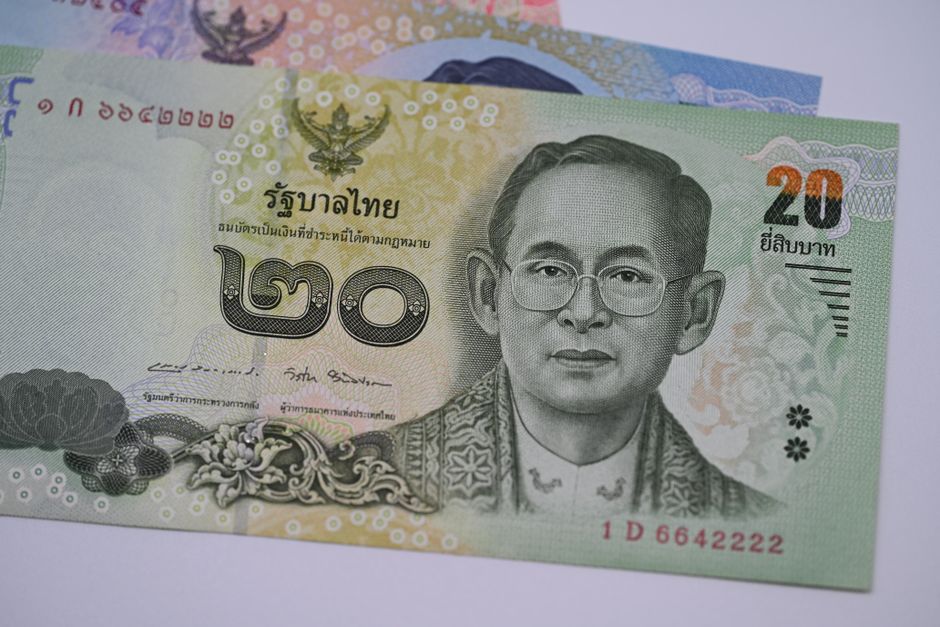 Photo: Qing Luo / Pexels
This province's healthcare structure is materially better than that of the three provinces launched before it, and its staffing is materially worse than that structure suggests. Both halves are now sourced. Mueang Nong Bua Lamphu Hospital publishes itself as a โรงพยาบาลทั่วไป ระดับ S (ตติยภูมิ) — a Level-S tertiary general hospital, the second-highest of the Ministry's seven service-plan tiers — running sixteen named clinical departments including nephrology, psychiatry and orthopaedic surgery, and holding full Healthcare Accreditation Institute certification since 2013, currently valid to 27 January 2028. Each of the other five districts has a community hospital: Si Bun Rueang 90 beds, Na Klang 60, Non Sang 40, Suwannakhuha 40, Na Wang CP 30. With the provincial hospital that is 613 public beds on the National Statistical Office's count of 353, or 583 on the hospital's own published operating figure of 323 — two credible numbers we publish as a pair rather than reconcile. There is a private hospital, Veerapolkanpat, 50 beds in Mueang district, which is more than Bueng Kan and Nakhon Phanom could show between them — though it has been certified at step 2 of the three-stage accreditation ladder fourteen times since 2007 and has never reached full Accreditation. Underneath sit 83 subdistrict health-promoting hospitals and about 159 clinics, and both reconcile exactly against their district splits. The counterweight: in October 2025 the Permanent Secretary for Public Health named Nong Bua Lamphu among the nine most doctor-short provinces in Thailand by doctors per head of population, and put Health Region 8 at 66 per cent of its approved medical establishment against 72 per cent nationally. Realistic tertiary referral is Udon Thani, about forty-five kilometres east — a short drive rather than the three-hour journey most of this rotation faces.
 Photo: RDNE Stock project / Pexels
There is no organised foreign community in Nong Bua Lamphu, and it would be dishonest to imply otherwise. There is, however, a large and long-established one forty-five kilometres away, and that changes the calculation here more than it does anywhere else in this rotation. Udon Thani has one of the most substantial foreign-resident populations in Isaan, an international airport with scheduled flights, a railway station on the Bangkok–Nong Khai line, private hospitals, malls and a named international school — Udon Thani International School, an IB World School founded in 2013. Nong Bua Lamphu offers none of those and is an hour from all of them, at a fraction of the rent — ฿1,200 to ฿4,000 a month against what you would pay a province east. That is the actual proposition: not a place with an expat scene, but a cheap and quiet base within commuting distance of one. Be clear about what is genuinely absent. No airport, no railway station, no border, no international-curriculum school in the province itself (checked this run against a curated national directory, with no Nong Bua Lamphu heading at all), no verified condominium, and ten advertised rental buildings of which six were last updated before 2024. And be clear about what is present and easy to miss: a 353-bed general hospital, a 50-bed private hospital, five community hospitals, 83 health-promoting hospitals, a private college in the provincial town, 475 Buddhist temples, and a province that ranks 20th in Thailand on housing and 18th on transport even while ranking 75th overall.
Editorial analysis compiled and periodically refreshed by BAANLYY’s research team — not a live data feed.
Analysis last reviewed September 2026.
The core Nong Bua Lamphu relocation guides are below, with more being added. In the meantime, see the general Thailand visa and relocation guides too.
Where to live in Nong Bua Lamphu →
Nong Bua Lamphu neighbourhood & areas guide →
Nong Bua Lamphu Area Score — every area ranked & rated →
Cost of living in Nong Bua Lamphu →
Nong Bua Lamphu rental market →
Condos & housing in Nong Bua Lamphu →
Getting around Nong Bua Lamphu →
Healthcare in Nong Bua Lamphu →
Schools & education in Nong Bua Lamphu →
See our Thailand visa guides, then talk to us about relocating.
Primary and official sources are cited above. Government rules, fees and procedures in Thailand change over time and vary by office; always confirm current requirements with the relevant authority before relying on them. BAANLYY never takes paid placement in editorial content.
General information and indicative pricing, not legal, tax, immigration or financial advice. Hero photograph via Pexels. Several figures on this page are printed as unresolved conflicts between sources rather than as settled facts — including the province's area, whether it is Thailand's 76th or 77th province, and the provincial agricultural tables whose fruit and fishery tonnages are arithmetically impossible as printed. Rents, listing counts, hospital capacity and school provision all change. Confirm current details with official sources, individual listings or licensed professionals.

Free tools for this
Answer 3 quick questions and see the Thailand city guide worth researching first.
Try it free →Build a realistic monthly budget by lifestyle tier.
Try it free →