Which city fits you?
Answer 3 quick questions and see the Thailand city guide worth researching first.
Try it free →The complete starting point for Sisaket — Si Nakhon Lamduan, the tenth most populous province in Thailand and the one nobody counts, in the Mun valley between Surin and Ubon — with an overview, where to live, transport, healthcare and an honest account of the Cambodian border.
Start with the fact that gets missed. Sisaket is the tenth most populous province in Thailand — 1,442,013 people on 2024 registration figures, across 8,936 square kilometres, which is more people than Chiang Mai and more than Surin next door. It is also almost invisible: a spot check of the major Thai property portals in August 2026 returned a single- to low-double-digit rental presence and roughly twenty sale listings for the entire province. A million and a half people and a market you could read in a minute. The second fact that gets missed is that Sisaket is not remote. Ubon Ratchathani sits roughly sixty kilometres east, which puts a full international airport, a university medical school and an international school inside about an hour of the provincial town by road or rail — a completely different proposition from Surin, the province Sisaket is usually lumped in with. What the province is, is poor and agricultural: a 2022 Human Achievement Index of 0.6137, ranked 71st of 77 and classified "low", on a gross provincial product of about 70 billion baht built on hom mali rice, GI-registered garlic and shallots, and volcanic-soil durian. It is also a genuinely four-way cultural province — Kui, Lao, Khmer and Yer — where 26.2 per cent of the population reported being able to speak Khmer in the 2000 census, down from 30.2 per cent a decade earlier.
 Photo: Quang Nguyen Vinh / Pexels
Sisaket's twenty-two districts group into five practical choices. Sisaket town, covering Mueang Nuea and Mueang Tai and parts of four more subdistricts, is one of only two town municipalities in the province and the only walkable, service-dense place — the regional hospital, the Class 1 railway station, the bus terminal, the markets, Wat Maha Phuttharam and Suan Somdet Phra Si Nakharin are all within a short radius. The campus ring immediately outside it, through Nong Khrok, Pho, Ya Plong and Nam Kham, holds Sisaket Rajabhat University, the Thailand National Sports University campus with its 9,500-seat stadium, and Sisaket Technical College — and with them the great majority of the province's actual rental supply. North along the Mun River, Rasi Salai, Yang Chum Noi, Bueng Bun, Sila Lat, Pho Si Suwan and Mueang Chan are rice and wetland country. The rail corridor across the middle — Uthumphon Phisai, Huai Thap Than, Kanthararom, Prang Ku, Phayu and Wang Hin — is the best-connected rural belt and holds the province's finest Khmer sanctuaries. And south toward the Dângrêk escarpment, nine districts run from the volcanic durian orchards up to the Cambodian border, three of which we do not currently recommend. The full where-to-live guide compares all five.
 Photo: Quang Nguyen Vinh / Pexels
Sisaket has no airport of its own and does not need one, which is the reverse of how most thin Thai provinces work. Ubon Ratchathani International Airport is roughly sixty kilometres east — about an hour by road, and the rail equivalent of the sixty kilometres between Sisaket station at 515.09 kilometres from Bangkok and the Warin Chamrap terminus that serves Ubon. Sisaket's own station, in Mueang Nuea subdistrict on the northern edge of the centre, is a Class 1 station on the Northeastern Line, opened in August 1928 as part of the Huai Thap Than–Sisaket section, with the line pushing on to Ubon Ratchathani in April 1930; it is served by the full range of Northeastern Line services including overnight sleepers, and journey times to Bangkok run roughly eight to ten hours depending on the train. Highway 226 runs east–west parallel to the line, west to Surin and Buriram and Nakhon Ratchasima, east to Ubon. Buses run frequently to and from Bangkok's Mo Chit Northern Terminal. In town, Sisaket is flat and compact and songthaews and tuk-tuks cover it; everything beyond the municipal boundary needs a motorbike or a car.
 Photo: Valeria Drozdova / Pexels
The provincial motto is a list, and every item on it is checkable. "Home of Luang Pho To" is Wat Maha Phuttharam in the town. "Lands of the Khmer castles" is literal: Khmer ruins across the province show it mattered to the empire by at least the twelfth century, and the best of them is Prasat Sa Kamphaeng Yai in Uthumphon Phisai, roughly twenty-four kilometres west of the capital — a Baphuon-style sanctuary generally dated to the eleventh century, the largest and best-preserved in the province, now enclosed inside a working Thai temple compound. The provincial seal shows a different one: Prasat Hin Ban Samo in Prang Ku district, about a thousand years old. "Good rice, shallots, garlic" is the economy — hom mali jasmine paddy, and shallots and garlic that took geographical-indication registration in 2020 — to which the modern addition is Sisaket Volcano Durian, GI-registered in 2018 and grown on basalt-weathered soil in Khun Han, Kantharalak and Si Rattana. "Suan Somdet" is the park in the town. And the lamduan, the provincial flower and tree, gives the province its old name of Si Nakhon Lamduan; its six petals stand for the six original districts — Khukhan, Kantharalak, Uthumphon Phisai, Kanthararom, Rasi Salai and Khun Han.
 Photo: Pixabay / Pexels
Sisaket touches Cambodia along the Dângrêk escarpment through three districts — Kantharalak, Khun Han and Phu Sing — and the Thailand–Cambodia conflict of 2025 was fought partly here. When fighting escalated on 24 July 2025, Khao Phra Wihan and Chong An Ma were among the six locations where clashes were reported, alongside Prasat Ta Muen Thom and Chong Chom on the Surin frontier and Chong Bok further east. Thailand shut the crossings at Chong An Ma, Chong Sa-ngam, Chong Chom and Chong Sai Takoo. The governor of Sisaket ordered the evacuation of residents from twelve subdistricts of Kantharalak near the Preah Vihear border, and a BM-21 rocket struck Kantharalak district, killing one person and injuring another. A ceasefire held from 28 July, an expanded framework was signed at the ASEAN summit on 26 October, fighting resumed in December, and a second ceasefire — the Kuala Lumpur accords — was signed on 27 December 2025 and has broadly held. As of the most recent reporting we could verify, the crossings remain closed, martial law remains in force in selected border districts, and the US, UK and Australian governments advise against travel within fifty kilometres of the border. What did not happen matters too: no source we found reports fighting or impacts in Mueang Sisaket district or in Sisaket town, which functioned as a reception area, and whose rail, bus and hospital services were not suspended. Check your own government's live advice before making any decision, and note that a fifty-kilometre "do not travel" band can void standard travel and health insurance inside it.
 Photo: Marta Branco / Pexels
Sisaket is cheap, and the reason is structural rather than anecdotal. A province of 1.44 million people with a gross provincial product of about 70 billion baht, an economy built on rice, garlic, shallots, durian and smallholding with very little industry, and a 2022 Human Achievement Index of 0.6137 that ranks 71st of 77 — that is a low-wage, low-cost base with no foreign-resident population of any scale bidding anything up. What it does not have is a published rent index or a deep listing pool to average, because the portals barely cover the province: our August 2026 spot check found a single- to low-double-digit rental presence province-wide. So our cost-of-living guide gives clearly-labelled indicative ranges rather than an asserted benchmark, and it names the two lines people forget: a motorbike or car, because outside the town centre there is no alternative, and the regular run east to Ubon for the flight, the international school, the specialist appointment or anything the province does not stock.
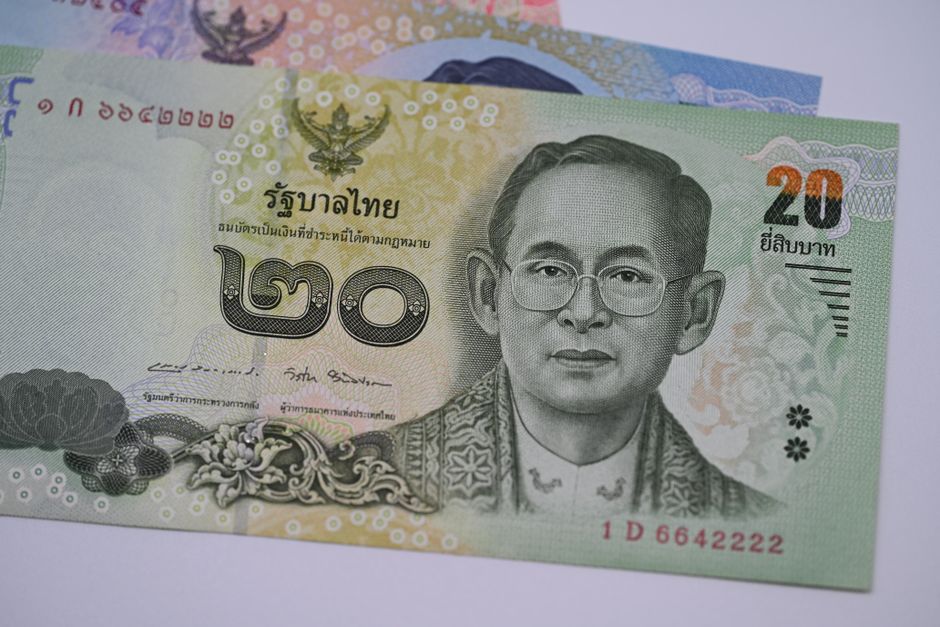 Photo: Qing Luo / Pexels
Sisaket Hospital on Kasikam Road in Mueang Tai is classified by the Ministry of Public Health as a regional hospital, and it teaches. Since a 1998 agreement it has run a CPIRD Medical Education Center training doctors for the College of Medicine and Public Health at Ubon Ratchathani University under the Collaborative Project to Increase Production of Rural Doctors — so the province is a clinical teaching site, not just a service one. Its bed count is one of the few numbers we found in genuine conflict: sources give 809 in one place and 853 as of 2023 in another, and we quote both rather than pick. The institution is older than the province's current name: Khukhan Health Station opened in 1908, was refurbished in 1934, was renamed Sisaket Health Station when the province's name was restored in 1938, and was elevated to hospital status on 1 December 1948. Below it, community hospitals cover the districts, with Kantharalak — the province's second town municipality — as the southern anchor, and subdistrict health-promoting hospitals covering primary care. The point most people miss is the referral geography: Ubon Ratchathani, with its university medical school, is about sixty kilometres east, which is a shorter run to tertiary care than most Isaan provinces manage.
 Photo: RDNE Stock project / Pexels
Sisaket has more of a university sector than its size suggests, and no international school — but unlike most provinces in that position, an English-medium classroom does not require the drive east. Seven institutions in the province award bachelor's degrees under four separate national authorities: Sisaket Rajabhat University, whose founding date is genuinely disputed between a 1973 teacher-training college and a Rajabhat Institute established in 2001 that became a university in 2004, so we quote neither as settled; the Thailand National Sports University's Sisaket campus, which owns the 9,500-seat Sri Nakhon Lamduan Stadium in Nam Kham; Chalermkarnchana University, a private university headquartered in Tambon Pho rather than branched here from elsewhere; a Ramkhamhaeng regional teaching branch; the Mahachulalongkornrajavidyalaya Sisaket Buddhist College, also in Nam Kham, teaching to master's level; and two vocational colleges, Sisaket Technical College and Sisaket Industrial and Community Education College, that both confer Bachelor of Technology degrees through the regional vocational institute. At school level, the flagship girls' secondary, Satri Sirikate, publishes an English Program taught in the national curriculum — a cheaper, if less transferable, alternative to a full international curriculum. What BAANLYY still could not verify is a full international-curriculum school anywhere inside the province — Ubon Ratchathani, sixty kilometres east, has one — and that remains the fact that changes the calculation most for a relocating family. Settle the school run before you sign a lease.
 Photo: Tima Miroshnichenko / Pexels
The short version: Sisaket is not a condominium market, and its portal presence is thinner than its population has any right to be. BAANLYY checked the major Thai portals for this province in August 2026 and found no verified condominium project at all — a single- to low-double-digit rental presence and roughly twenty sale listings across a province of 1.44 million people, dominated by land, houses and townhouses. We do not publish a developer, completion year, floor count, unit count or coordinate we have not individually confirmed, so rather than a building directory the housing page tells you honestly what exists: rooms and mansion-style apartment blocks around the campuses and the hospital, townhouses and detached houses in the town and in Kantharalak, and village houses and farm compounds across the twenty-two districts. Anyone who specifically wants a modern condominium with a pool and a lift is looking at Ubon Ratchathani an hour east, or Nakhon Ratchasima and Khon Kaen further afield. A verified building directory for Sisaket remains on the BAANLYY backlog and is labelled as such on the page — we would rather have nothing there than have something invented.
 Photo: Pixabay / Pexels
There is no expat association, clubhouse or chamber in Sisaket — but there is a community, and it is smaller and more fragile than it is invisible. It keeps its own English-language noticeboard, the Sisaket Area board of the Surin Farang Community Forum, live from an April 2013 sticky through to posts dated 6 July 2026, and it is organised around a handful of owner-run bars and restaurants in the town rather than around any institution. It also contracted hard in the year to July 2026: Hong Kong Garden closed after its owner's stroke and he died that December, the newly opened Londoner shut inside ten months, and the owner of Cuckoo's Nest died of a heart attack in early July 2026 — none of which the review aggregators have caught up with, so check any venue is still trading before you drive out. Beyond that core it is thin and dispersed: foreign spouses in Thai families across the districts, a small number of retirees, and visitors passing through on the Khmer temple circuit. The rental market reflects the scale exactly — demand in Mueang Sisaket is driven by students at the Rajabhat and the sports university, by technical-college students, and by hospital staff, not by foreigners. The difference from a comparable province is what is an hour away: Ubon Ratchathani has the international airport, the international school, the private hospitals, the English-language services and whatever foreign social life lower Isaan offers, and Sisaket residents use it routinely rather than treating it as a trip. Set against that: Sisaket is a welcoming province with a four-way Kui, Lao, Khmer and Yer cultural mix, a teaching regional hospital, and a cost base among the lowest in Thailand. It suits someone with family ties here, or someone who wants to live in Thai rather than in an expat bubble but keep an airport within reach — and it does not suit anyone who needs a peer group on their own doorstep.
Editorial analysis compiled and periodically refreshed by BAANLYY’s research team — not a live data feed.
Analysis last reviewed August 2026.
The core Sisaket relocation guides are below, with more being added. In the meantime, see the general Thailand visa and relocation guides too.
Sisaket neighbourhood & areas guide →
Sisaket Area Score — every area ranked & rated →
See our Thailand visa guides, then talk to us about relocating.
Primary and official sources are cited above. Government rules, fees and procedures in Thailand change over time and vary by office; always confirm current requirements with the relevant authority before relying on them. BAANLYY never takes paid placement in editorial content.
General information and indicative pricing, not legal, tax, immigration, security or financial advice. Hero photograph via Pexels. Border status, travel advisories, martial-law areas, national park access, train and bus timetables, hospital services and school admissions all change — confirm current details with official sources, your own government's travel advice, individual listings or licensed professionals.

Free tools for this
Answer 3 quick questions and see the Thailand city guide worth researching first.
Try it free →Build a realistic monthly budget by lifestyle tier.
Try it free →