Which city fits you?
Answer 3 quick questions and see the Thailand city guide worth researching first.
Try it free →The complete starting point for Yasothon — the small central-Isaan province of the Bun Bang Fai rocket festival, on the Chi River — with an overview, where to live, transport, heritage and relocation, honestly scoped.
Yasothon is a small central-Isaan province on the Chi River, about 500km northeast of Bangkok, split off from Ubon Ratchathani on 1 March 1972 and named by King Rama II in 1814 when the settlement of Ban Singha Tha was raised to mueang status. It is best known nationally for one thing — the Bun Bang Fai rocket festival, the loudest and most photographed of Isaan's rain-calling festivals — and its provincial motto lists the rest of what it is proud of: the rockets, sweet watermelons, mon khit triangle pillows and jasmine rice. What Yasothon is not is a hub. There is no railway station and no airport in the province, no international border, no comprehensive university campus, no shopping mall of the sort every neighbouring provincial capital has, and a town municipality whose census population was 21,134. BAANLYY covers it because that scale is the point for a specific kind of long-stayer, not because it is an emerging market.
 Photo: Quang Nguyen Vinh / Pexels
Yasothon's living options split into four honest choices. Tambon Nai Mueang is the town municipality itself — the old grid on the Chi, with Wat Maha That, the Ban Singha Tha shophouse street, the city pillar shrine and the only genuinely walkable services in the province. The Route 23 belt through Samran and Tat Thong, just outside the town, carries Yasothon Hospital, the technical college, the provincial government centre and most of the purpose-built apartment stock that actually gets advertised. Phaya Thaen Park and the eastern bypass is the rocket-festival side and now where the buses arrive, since the terminal was moved out of the centre. And Loeng Nok Tha and the northern districts, 69km up the road, are rural Isaan with the cheapest advertised rents in the province and the thinnest services. The full where-to-live guide compares all four.
 Photo: Valeria Drozdova / Pexels
Yasothon has no railway station and no airport. The town sits at the intersection of Route 23 and Route 202, at the southern end of Route 2169, and buses are the only scheduled public transport in or out — running frequently to Bangkok's Northern Bus Terminal (Mo Chit Mai) and to terminals across the north and northeast from a bus station that has been relocated from the centre to the Route 23 bypass east of the Ban Kham Noi junction. Ubon Ratchathani, the nearest city with both an airport and a railway, is 100km east on Route 23. Inside the town, transport is genuinely distinctive: samlo cycle rickshaws serve the centre, tuk-tuks are prohibited within it, and yellow-plate motorcycle taxis with identifying vests cover the town and outlying areas. Anyone living outside the walkable core needs their own vehicle.
 Photo: Quang Nguyen Vinh / Pexels
The provincial seal shows two mythical singh lions facing the Phra That Anon chedi, and that chedi — a Lao-style stupa at Wat Maha That said to enshrine relics of Phra Ananda, the Buddha's attendant — is the town's spiritual centre. Nearby sit the Hor Trai scripture hall at Wat Sra Trinurak, raised on stilts above a pond, and Wat Thung Sawang Chaiyaphum with its nine-spire chedi, built on the site where General Sing (later Chao Phraya Bodindecha) regrouped his army after the 1826–1828 Laotian rebellion. Ban Singha Tha preserves a short street of painted Franco-Indochinese wooden shophouses, and the 1987 city pillar shrine, built in Chinese-temple style, reflects a Thai-Chinese community whose annual parade still marks the shrine's lunar dedication date. Outside the town, the brick Phra That Kong Khao Noi shows late-Ayutthaya influence, and Ban Si Than weaves the mon khit triangle pillows found in half the guesthouses in Thailand.
 Photo: Pixabay / Pexels
Yasothon suits long-stayers who actively want a small Thai town rather than a scaled-down version of a big one — typically people already married into or connected to the province, retirees on a tight budget, or remote workers who value quiet and cost over amenity. The standard Thai long-stay visa routes apply (retirement, marriage, DTV, education and LTR), and there is no international border crossing in the province. Extensions, 90-day reporting and re-entry permits route through the Yasothon Immigration Office. Be clear-eyed about the trade: the rental market is measured in dozens of advertised rooms rather than thousands, there is no international school we could identify, and the foreign community is small enough that BAANLYY does not claim a figure for it. For day-to-day detail, and for exactly what we could and could not verify, see the guides below.
 Photo: Marta Branco / Pexels
Yasothon is inexpensive even by Isaan standards, and its advertised rents are among the lowest BAANLYY has recorded anywhere in Thailand — the portal listings we could reach in August 2026, refreshed in September 2026, ran from roughly ฿1,500 a month at the bottom of the northern districts to a ฿7,500 VIP room at the top of the town-centre stock, with most of the supply still between ฿2,000 and ฿4,500. Community-contributed cost data for the province is effectively non-existent, so our cost-of-living guide is explicit about which figures are Yasothon-specific advertised prices and which are indicative Isaan regional benchmarks, rather than inventing precise numbers. With no mass transit of any kind, a motorbike or car is a real and unavoidable budget line for anyone living outside the walkable town centre.
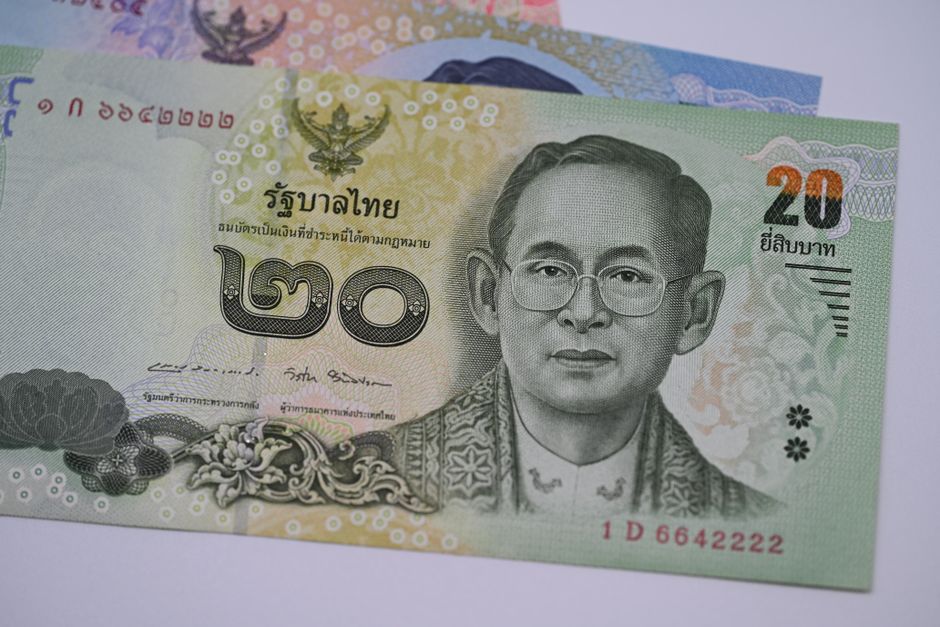 Photo: Qing Luo / Pexels
Yasothon Hospital, the Ministry of Public Health provincial general hospital in Tat Thong, is the province's main public facility, backed by district hospitals including Maha Chana Chai and Kut Chum. On the private side there are two hospitals in the town — Dr. Hann Hospital, established in 1990 on Wittaya Thamrong Road, and Ruampat Yasothon Hospital, a 59-bed general hospital with fifteen dialysis machines. The important thing to understand before relying on that as choice: both private hospitals belong to the same listed group, so Yasothon has two private hospitals but one private operator. Anything genuinely complex is referred toward Ubon Ratchathani, 100km east.
 Photo: RDNE Stock project / Pexels
Three institutions award bachelor's degrees inside Yasothon: Mahamakut Buddhist University's Yasothon Buddhist College at Thung Tae, a constituent college of a state university; Yasothon Technical College, which lists six Bachelor of Technology majors; and the agricultural college at Bak Ruea in Maha Chana Chai, which awards one in animal production. Yasothon Community College adds associate-level provision. What the province does not have is a comprehensive or Rajabhat campus, so a school-leaver wanting law, medicine, engineering or business still travels to Ubon Ratchathani, Roi Et or Mahasarakham. At school level the province runs the standard Thai government system, with Yasothon Phitthayakhom and Yasothon Phitthayasan the best-known secondary schools in the capital, and a small private sector including the Baháʼí-run Santitham Wittayakom primary school. We could not identify an international-curriculum school anywhere in the province, and families needing one should read the schools guide before committing to Yasothon.
 Photo: Tima Miroshnichenko / Pexels
Yasothon's housing reality is houses, shophouse rooms and small purpose-built apartment blocks — typically two storeys and a few dozen rooms — clustered near the hospital, the technical college and the government centre. We did not surface a single registered condominium project in the province on the portals we could reach, and rather than publish a building directory with unverified developers, years, floor counts or coordinates, BAANLYY populates its Yasothon building records only as each one is verified. The condos and housing overview says plainly what is confirmed, what is still being catalogued and what simply does not exist here.
 Photo: Pixabay / Pexels
Yasothon has no organised expat scene, no foreign-run business district and no regular meet-up we could verify. The foreign residents who are here are overwhelmingly people married into Thai families in the province, plus a thin scatter of retirees, and they draw on the much larger and better-served community around Ubon Ratchathani an hour east for anything the province cannot provide. BAANLYY would rather say that plainly than manufacture a community page out of nothing — the expat guide sets out what genuinely exists and where the nearest real infrastructure is.
Editorial analysis compiled and periodically refreshed by BAANLYY’s research team — not a live data feed.
Analysis last reviewed September 2026.
The core Yasothon relocation guides are below, with more being added. In the meantime, see the general Thailand visa and relocation guides too.
Yasothon neighbourhood & areas guide →
Yasothon Area Score — every area ranked & rated →
Condos & housing in Yasothon →
See our Thailand visa guides, then talk to us about relocating.
Primary and official sources are cited above. Government rules, fees and procedures in Thailand change over time and vary by office; always confirm current requirements with the relevant authority before relying on them. BAANLYY never takes paid placement in editorial content.
General information and indicative pricing, not legal, tax, immigration or financial advice. Hero photograph via Pexels. Confirm current details — especially bus schedules and festival dates, which change — with official sources, individual listings or licensed professionals.

Free tools for this
Answer 3 quick questions and see the Thailand city guide worth researching first.
Try it free →Build a realistic monthly budget by lifestyle tier.
Try it free →