If the back of your ABTC lists THA, you can enter Thailand on the card with the passport it was issued against, for short-term business, and stay up to 90 days per visit under the APEC entry table of 18 October 2022. You also get the APEC lane at the airport. The card does not cover your family, tourism or work. You apply in the economy whose passport you hold, so a foreigner living in Thailand applies at home; Thai nationals apply through the Thai Chamber of Commerce, the Federation of Thai Industries or the Thai Bankers' Association, for 8,500 baht, and wait about four to six months.
What the card is
- One application, many economies. The APEC Secretariat describes the ABTC as easing short-term business travel by an "apply once" approach: you apply to your home economy, the other participating economies each decide whether to pre-clear you, and the card lists the ones that did.
- Five years. APEC says successful applicants from fully participating economies receive a five-year card that serves as the entry authority to the economies that pre-cleared them, for short-term business travel of up to 60 or 90 days depending on the economy. The JSCCIB handbook adds that where the passport has less than five years left, the card runs only as long as the passport.
- Who is eligible in general. APEC lists a valid passport from an APEC economy (or permanent residence of Hong Kong, China), regular business travel, and no criminal conviction, and says each economy may add its own criteria.
- Two transitional members. APEC says Canada and the United States are transitional members: they give fast track immigration processing but not reciprocal entry. The JSCCIB page puts it plainly for Thai holders: a US visa is still needed, and the card gives lane facilitation only.
- Scale in Thailand. The Department of Consular Affairs reported on 5 February 2026 that Thailand issued 2,900 physical and 1,147 virtual cards between 1 January 2025 and 4 February 2026, with 22,039 cards active.
Entering Thailand on the card
This is the part that matters to a foreign director, buyer or consultant flying in for meetings, site visits or a property deal.
| Item | Thailand (THA) |
|---|---|
| Card validity | 5 years |
| Stay per visit | 90 days |
| Entry mechanism | Permit |
| Effect of applying for a separate visa | None |
| Fast lane at the airport | Yes |
| Lane help without pre-clearance | Yes |
| Entry on a different passport | Not permitted |
| Ports | All ports |
- THA must be on the back. The Royal Thai Consulate-General in Los Angeles says holders of an ABTC with "THA" on the back of the card can travel to Thailand with the card, and that family members are not included.
- Same passport. The table says entry on a different passport is not permitted, and the JSCCIB page says the card must be used with the passport whose number appears on it. If you renew your passport, update the card before you fly (section 08).
- Business only. JSCCIB warns that the card is for short-term business; if the purpose of a trip is something else, an economy's immigration officers may refuse to let you use the card for that trip. For what officers check at the Thai border, see our refused entry guide.
- The number on your stamp decides. The 90 days comes from the APEC table of October 2022. We found no current Thai Immigration Bureau page stating it, so check the date on your arrival stamp.
Compared with the visa exemption. The Royal Thai Embassy in London states that from 15 September 2026, nationals of the listed countries can enter Thailand without a visa for up to 30 days, for tourism purposes only. For a business visitor whose card lists THA, the card is both longer and meant for business. Our tourist visa and exemption guide covers the exemption in full.
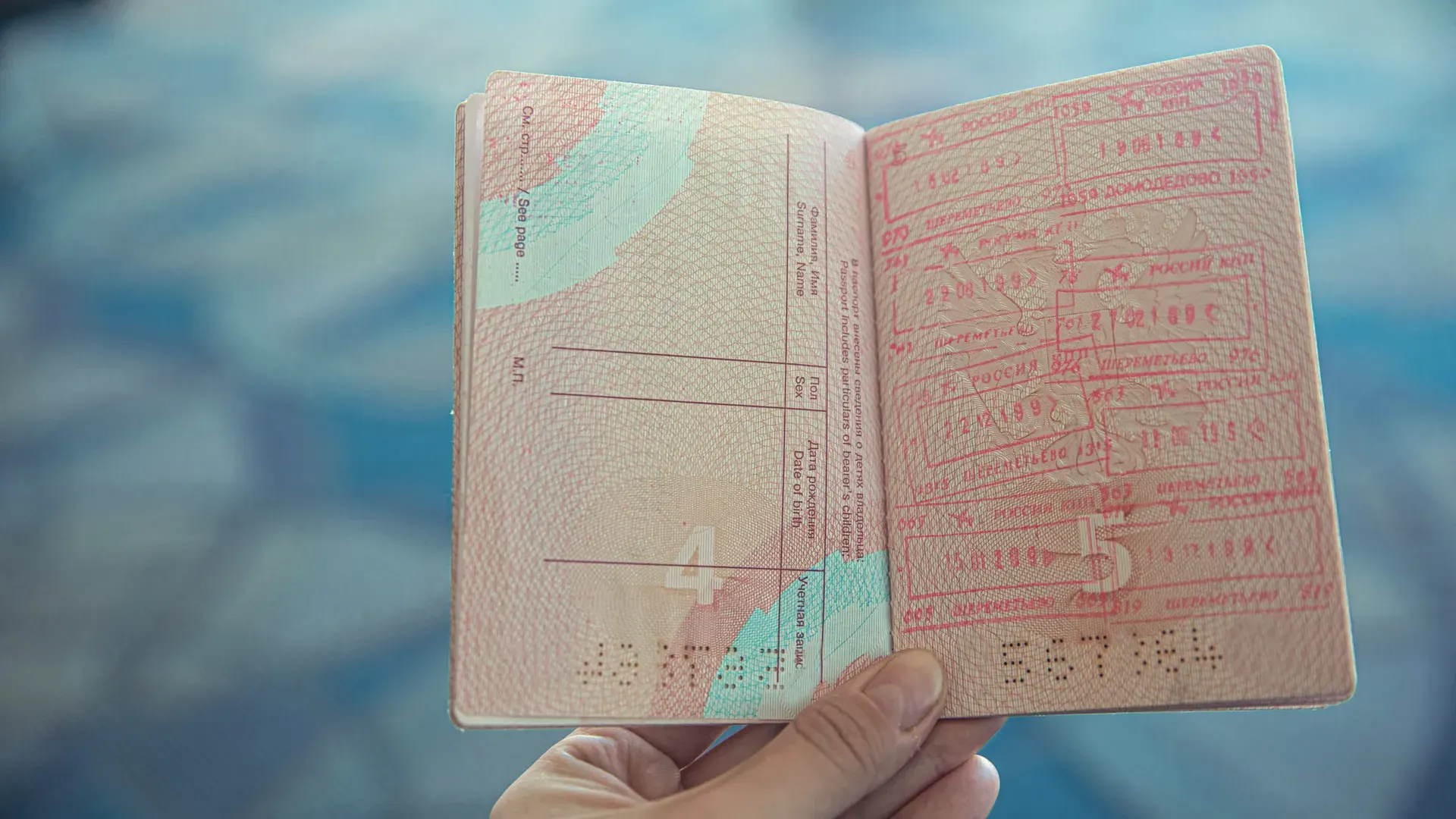
The APEC lane at the airport
- What it is. APEC says the card lets holders fast track immigration processing at each economy's major international airports. The JSCCIB handbook calls it the APEC Lane, a special channel for cardholders at member airports.
- In Thailand. The 2022 entry table marks Thailand's fast lane as available. The only list of Thai lanes we opened dates from 2007 and names an airport by its old name, so we do not list terminals here. Ask at the immigration hall or look for the APEC sign.
- Without pre-clearance. The handbook says an interim card holder may use the APEC Lane even where an economy has not yet pre-cleared them, but must already hold the right visa for that economy. The 2022 table shows Thailand gives this lane help without pre-clearance.
- Transitional members. In Canada and the United States the card brings the lane, not a visa waiver (APEC, JSCCIB).
For getting from the terminal into the city, see our Thailand airport guide.

Who applies where
APEC says you apply once, to the economy whose passport you hold. That splits readers of this guide into two groups.
- Foreigners living in or visiting Thailand. Apply to your own government's ABTC office, even if you live in Bangkok. The APEC page says questions about applying go to your home economy, and questions about traveling to a particular economy go to that economy. Thailand then decides whether to pre-clear you, and THA appears on the card only if it does.
- Thai nationals. Thai partners, directors and managers apply through the Thai system, run by the Joint Standing Committee on Commerce, Industry and Banking (JSCCIB, known in Thai as กกร.): the Thai Chamber of Commerce, the Federation of Thai Industries and the Thai Bankers' Association. The JSCCIB handbook says the member bodies check the application, JSCCIB checks it again, and it then goes to the Department of Consular Affairs at the Ministry of Foreign Affairs.
- Thailand's contact point. APEC's economy information document (updated October 2023) lists the abtc-jsccib.org application system for Thai passport holders and the JSCCIB email address.
If you employ Thai staff who travel in the region for your company, the next section is the one to share with them. If you are setting up the company itself, start with our guide to starting a business in Thailand.
Criteria for Thai applicants
Each body publishes its own list. They agree on most points and differ on a few, so the table credits each one.
| Requirement | Federation of Thai Industries | Thai Chamber of Commerce | JSCCIB |
|---|---|---|---|
| Nationality and age | Thai, 25 or older | Thai passport, 25 or older | Thai only, 25 or older |
| Employer | FTI member company (ordinary or associate juristic-person member), fees paid up | Member of the Chamber or Board of Trade (provincial and foreign chambers and trade associations count), membership with at least 6 months left | Member company of one of the three bodies |
| Company age and capital | Operating at least 1 year, registered capital at least 1 million baht | Operating at least 1 year, capital of 1 million baht or more | Registered at least 3 years, or 1 to 3 years with capital of at least 1 million baht |
| Role | Director; shareholder with 10% (limited company) or 3% (public company); or manager or adviser earning at least 50,000 baht | Operator, business owner, director, shareholder (10% or 3%) or executive; an employee must be a manager or adviser earning at least 50,000 baht | Lists both: a shareholder needs 10% (limited company) or 3% (public company), and the applicant must be in a manager position with a salary of 50,000 baht or more |
| Passport | At least 1 year left | Not stated in the parts read | At least 1 year left |
| Record | No criminal record, never refused entry | Not stated in the parts read | Handbook: no criminal conviction, never refused entry |
Documents. The FTI page asks for a signature image (450 by 150 pixels) and a photo (300 by 400 pixels); the current and previous passports as color PDFs; the company affidavit and shareholder list, no older than six months; an employment letter; a six-month savings statement; the Form 50 Tawi withholding tax certificate; and any old ABTC. The Thai Chamber page asks for ten color files.
Where the sources differ. The 2017 handbook says the passport needs at least six months left; the current FTI and JSCCIB pages say one year. Follow the body you apply through, and if in doubt, renew the passport first.
Fees and timing for Thai applicants
| Item | Fee | Who says so |
|---|---|---|
| Application | 8,500 baht per person | FTI, JSCCIB, handbook |
| Application refused | 1,500 baht kept, 7,000 baht refunded | FTI and Thai Chamber (FTI: if the application is no older than 1 year; Thai Chamber: no full refund once it is over 1 year old) |
| Interim card | 1,000 baht per card, on top of the 8,500 baht | Handbook; JSCCIB says about 2 weeks to issue |
| Moving the card to a new passport | 1,000 baht | Handbook, JSCCIB |
| Lost card | 1,000 baht, with a police report | Handbook, JSCCIB |
| FTI document submission service (optional) | 1,500 baht including VAT, not refunded | FTI |
- How long. The FTI page says review and approval take about four to six months, with an application number about two months after applying; the 2017 handbook says the application number comes about one month after the Department of Consular Affairs receives the file, and the card about four to six months after applying.
- Interim card. JSCCIB says it can be issued for the economies that have already approved you, in about two weeks.
- While you wait. JSCCIB says not to apply for business visas to the participating economies and not to change the company name; FTI says not to change passport or company.
- Collecting. The FTI page lists nine steps, from registering on abtc-jsccib.org and paying, through FTI and JSCCIB checks and the Department of Consular Affairs, to collecting the card on a Thursday or Friday.
The virtual ABTC
- What it is. APEC says the virtual card was launched during APEC Leaders' Week in November 2020, as a way to carry and show the card on a phone with real-time updates and extra security features.
- Where it works. The JSCCIB page says the app replaces the physical card in 18 economies, Thailand among them, with Russia the exception.
- Thai cardholders. The JSCCIB portal asks holders to request activation at least one week before travel. No page we opened shows a fee for the virtual card.
- Foreign cardholders. Your home economy runs your card, physical or virtual; its ABTC office tells you whether you hold a virtual card and how to activate it.
New passports, lost cards and renewal
- New passport. For Thai holders, the handbook says to apply through the ABTC eLodgment system and pay 1,000 baht; the card keeps its expiry date. If the spelling of your name or your date of birth changes, a new application is needed.
- Lost card. File a police report and pay 1,000 baht for a replacement (handbook, JSCCIB). Our police complaint guide covers getting a report in Thailand.
- Renewal. The handbook says to renew six months before the card expires.
- Official passports. The handbook and JSCCIB warn Thai holders that the card must be used with the ordinary passport it was issued against; using it with an official passport breaks the Thai rules on official passports, a warning in force from 30 December 2011.
- Separate visas. The handbook says a separate visa application to Australia or China can cancel the card's rights for that country. The 2022 table shows no such effect for Thailand.
What the card does not do
- Work. The card is for short-term business travel in every source we read. Nothing in them makes it a work permit or a long-stay visa. If you will be employed or run day-to-day operations in Thailand, read our Non-Immigrant B visa guide and work permit guide.
- Family. Family members are not included (Royal Thai Consulate-General, Los Angeles).
- Tourism. Officers may refuse use of the card for a trip that is not business (JSCCIB).
- Housing. A 90-day business stay is too short for most leases. Our corporate housing guide covers serviced apartments and short corporate lets.
A practical checklist
- Check the back of the card (or the app) for THA before you book.
- Carry the passport the card was issued against. Renewed it? Update the card first.
- Travel for business: meetings, site visits, negotiations. Bring a letter or agenda if you have one (our suggestion).
- Book family on their own entry, usually the 30-day exemption or a visa.
- Look at your arrival stamp and leave by the date on it.
- Thai staff applying: confirm the company's membership of the Chamber, FTI or the Bankers' Association, budget 8,500 baht and four to six months, and keep the passport and company name unchanged meanwhile.
Frequently asked questions
Up to 90 days per visit, if the back of your card lists Thailand (THA). That is the figure in the APEC economy entry table dated 18 October 2022, which lists Thailand's entry mechanism as a permit and the card's validity as five years; JSCCIB adds that the card allows multiple entries while it is valid. We found no current Thai Immigration Bureau page that states the number, so treat the stamp you are given on arrival as the final word. The stay is for short-term business, not tourism or work.
For business visitors whose card lists THA, usually yes. Thai embassies state that from 15 September 2026 visitors from the listed countries can enter without a visa for up to 30 days, for tourism purposes only. The ABTC entry table gives cardholders up to 90 days per visit for business, and the card also lets you use the APEC lane at the airport. The exemption is still the route for a holiday, and the card does not cover family members.
No, not through the Thai system. APEC says you apply to the economy whose passport you hold (or, for Hong Kong, China, where you have permanent residence). The Thai applications run through the Thai Chamber of Commerce, the Federation of Thai Industries and the Thai Bankers' Association, and the JSCCIB, Federation and Chamber pages require Thai nationality. An Australian, Japanese or Singaporean running a company in Bangkok applies to their own government's ABTC office, and the card then lists Thailand only if Thailand pre-clears them.
The application fee is 8,500 baht per person on the JSCCIB, Federation of Thai Industries and Thai Chamber pages. If the application is refused, 1,500 baht is kept and 7,000 baht refunded. An interim card costs 1,000 baht, as does moving the card to a new passport or replacing a lost card. The Federation of Thai Industries also offers an optional document submission service at 1,500 baht including VAT, which is not refunded.
About four to six months, on the Federation of Thai Industries page and in the JSCCIB handbook. An application number arrives first: the Federation says about two months after applying, the 2017 handbook about one month after the Department of Consular Affairs receives the file. Do not change your passport or company name while the application is pending, and do not apply for business visas to the participating economies in that time.
No. The Royal Thai Consulate-General in Los Angeles says holders of an ABTC with THA on the back can travel to Thailand with the card, and adds that family members are not included. A spouse or child needs their own visa or visa exemption. Our tourist visa guide covers the 30-day exemption and the tourist visas.
Yes. JSCCIB says the virtual ABTC, a mobile app that replaces the physical card, can be used in 18 economies including Thailand, Russia being the exception. APEC says the virtual card launched in November 2020. Thai cardholders ask JSCCIB to activate it at least one week before travel. Thailand issued 2,900 physical cards and 1,147 virtual cards between 1 January 2025 and 4 February 2026, the Department of Consular Affairs reported.
Flying in for business, or staying on? Find the right base.
Browse homes and serviced apartments listed by partnered agents, with plain-English guides to visas and leases beside every step.
Sources
- APEC Business Travel Card (ABTC and virtual ABTC) page (Last page update: May 2026): apply once to the home economy, five-year card, pre-clearance for short-term business travel of up to 60 or 90 days, fast track at major airports, eligibility, Canada and the United States as transitional members, virtual ABTC launched in November 2020 ↗APEC Secretariat · Accessed 22 November 2026
- APEC ABTC economy information (Updated: October 2023): Thailand's entry, the abtc-jsccib.org application system for Thailand passport holders and the JSCCIB contact ↗APEC Secretariat · Accessed 22 November 2026
- APEC ABTC economy entry information table dated 18 October 2022 (copy hosted by the Thai Chamber of Commerce): Thailand row, 5-year validity, 90 days stay per visit, entry by permit, no effect of a separate visa application, fast lane, facilitation without pre-clearance, entry on a different passport not permitted, all ports ↗APEC Business Mobility Group (copy hosted by the Thai Chamber of Commerce) · Accessed 22 November 2026
- APEC Business Travel Card (ABTC) Handbook (Thai, JSCCIB Secretariat Office, June 2017; linked from the Department of Consular Affairs ABTC page, posted 25 Nov 2019, updated 30 Nov 2022): how Thai applications pass through the member bodies, JSCCIB and the Department of Consular Affairs, 8,500 baht fee, 1,000 baht interim card, new passport and lost card, 4 to 6 months, 5-year card, 90 days per entry, APEC Lane, official passport warning ↗Joint Standing Committee on Commerce, Industry and Banking (JSCCIB) · Accessed 22 November 2026
- JSCCIB ABTC pages (Thai; jsccib.org/apec dates its member count 1 August 2017, with the abtc-jsccib.org application portal, undated): eligibility for Thai applicants, 8,500 baht fee, interim card in about 2 weeks for 1,000 baht, virtual ABTC usable in 18 economies except Russia, activation one week before travel, use only with the passport on the card, business purpose only ↗Joint Standing Committee on Commerce, Industry and Banking (JSCCIB) · Accessed 22 November 2026
- Federation of Thai Industries, APEC Card (ABTC) service page (Thai and English, undated): six eligibility requirements, documents, 8,500 baht fee, 1,500 baht kept on refusal, optional 1,500 baht submission service, about 4 to 6 months, nine steps ↗Federation of Thai Industries · Accessed 22 November 2026
- Thai Chamber of Commerce, APEC Business Travel Card (ABTC) service page (Thai, undated): member eligibility, company age and capital, age 25 and Thai passport, shareholding or manager salary, refund rule, 10 color document files, contacts ↗Thai Chamber of Commerce and Board of Trade of Thailand · Accessed 22 November 2026
- Department of Consular Affairs, Ministry of Foreign Affairs, news item of 5 February 2026 (updated 11 February 2026, Thai): Thailand issued 2,900 physical and 1,147 virtual ABTCs from 1 January 2025 to 4 February 2026, with 22,039 cards active ↗Department of Consular Affairs, Ministry of Foreign Affairs · Accessed 22 November 2026
- Royal Thai Consulate-General, Los Angeles, APEC Card Holder (posted 9 Dec 2021, updated 28 Sep 2022): holders of an ABTC with THA on the back can travel to Thailand with the card; family members are not included ↗Royal Thai Consulate-General, Los Angeles · Accessed 22 November 2026
- Royal Thai Embassy, London, visa exemption page (undated, read 22 November 2026): effective from 15 September 2026, nationals of the listed countries can enter Thailand without a visa for up to 30 days for tourism purposes only ↗Royal Thai Embassy, London · Accessed 22 November 2026
Official primary sources are listed above with the date we last checked them. Thai rules, fees, thresholds and procedures change and can be applied differently by individual offices and embassies, confirm the current requirement with the responsible authority before relying on it. General information only, not legal, tax or medical advice. BAANLYY never takes paid placement in editorial content.