Yes. On 16 November 2026 the Act on Offenses Arising from the Use of Checks B.E. 2534 was still in force. Section 4 sets a fine of up to 60,000 baht, imprisonment of up to one year, or both, for issuing a check for a real, enforceable debt in one of five listed situations when the bank then refuses to pay. The case ends if the check is paid within thirty days of the day the issuer receives a written notice from the holder. A bill to repeal the Act is before a committee of the House of Representatives, and it is not law yet. The debt on the check is a separate civil claim either way.
| Point | Criminal side | Civil side |
|---|---|---|
| Text | Act on Offenses Arising from the Use of Checks B.E. 2534 | Civil and Commercial Code, sections 987 to 1000 and the bill of exchange sections that section 989 applies |
| Who answers | The person who issued the check (s.4) | The issuer and every endorser, together (ss.914 and 967) |
| What it gives | A fine of up to 60,000 baht, imprisonment of up to one year, or both | The amount of the check, with interest on a money debt during default (s.224) |
| How it ends early | Settlement (s.5), or payment within thirty days of receiving the holder's written notice (s.7) | Payment or a settlement between the parties |
| Status on 16 November 2026 | In force; a repeal bill is at the committee stage | In force; the repeal bill does not touch the Code |
Is it still a crime? The position on 16 November 2026
The Act was given on 12 August 1991 and published in the Royal Gazette on 27 August 1991, and its section 2 put it in force on the day after publication. The law search of the Office of the Council of State shows it with the status still in force, and the copy there carries no amendment notes (Act on Offenses Arising from the Use of Checks B.E. 2534, Office of the Council of State).
The same search lists one earlier law on the subject, the Act of B.E. 2497, marked as repealed. Section 3 of the B.E. 2534 Act is what repealed it. We found no Act repealing the B.E. 2534 Act on that search.
What exists is a bill. The House of Representatives has a special committee considering a bill to repeal the Act, and its page carries a news item for a meeting numbered 12 on 12 November 2026 (special committee page, House of Representatives). Section 07 below covers the bill. Everything in sections 02 to 06 is the law as it stood when this page was written.
What section 4 punishes
Section 4 has three parts that must all be present (Act on Offenses Arising from the Use of Checks B.E. 2534, Office of the Council of State).
First, the check was issued to pay a debt that really exists and is enforceable by law. The reason note printed with the Act says it was drafted to make clear that only a check issued so as to bind and to be enforceable as a debt under the law can be an offense.
Second, one of five things is true.
- The issuer intended that the check not be paid.
- At the time the check was issued there was no money in the account from which it was to be paid.
- The check orders payment of an amount higher than the money in that account at the time it was issued.
- The issuer withdrew all or part of the money from the account, so that what was left was not enough to pay the check.
- The issuer forbade the bank to pay the check, with dishonest intent.
Third, the check was lawfully presented for payment and the bank refused to pay it. When that happens the issuer commits an offense and is liable to a fine of not more than 60,000 baht, or imprisonment of not more than one year, or both.
Post-dated checks raise a question of timing. An article by the Senate Secretariat dated 10 April 2024 says the Supreme Court has consistently held that the day a check is written is not yet the day it is issued: the date written on the check is treated as the date of issue, and the offense arises when the bank refuses payment (Senate Secretariat article, 10 April 2024). We did not read the judgments themselves.
The reason note also explains the size of the fine. It was capped at 60,000 baht so that cases under the Act fall within the jurisdiction of the Kwaeng courts.
Settlement, the thirty day notice and release on bail
The offense can be settled (section 5). Section 5 says the offense under section 4 is a compoundable offense, which is the kind the injured person and the accused may settle between themselves.
Payment within thirty days ends the case (section 7). The case is treated as ended under the Criminal Procedure Code in either of two situations:
- the person who committed the offense pays the amount of the check to the holder or to the bank within thirty days from the day the issuer received a written notice from the holder that the bank did not pay the check; or
- the debt for which the check was issued stops binding before the court gives a final judgment.
Section 7 speaks of a written notice from the holder of the check. It prescribes no form and no way of sending it, and this page does not add one.
A three month limit for the complaint. Section 96 of the Criminal Code says that for a compoundable offense, the case is time-barred if the injured person does not lodge a complaint within three months from the day of knowing of the offense and knowing who the offender is (Criminal Code, Office of the Council of State). Section 5 of the Act makes the check offense compoundable, so on our reading the three months apply to it.
Release on bail (section 6). Custody of a suspect or defendant follows the law on criminal procedure in the Kwaeng courts. Where the suspect or defendant applies for provisional release, the inquiry official, the public prosecutor or the court is to order release on bail without security, or on bail with security of not more than one third of the amount of the check.
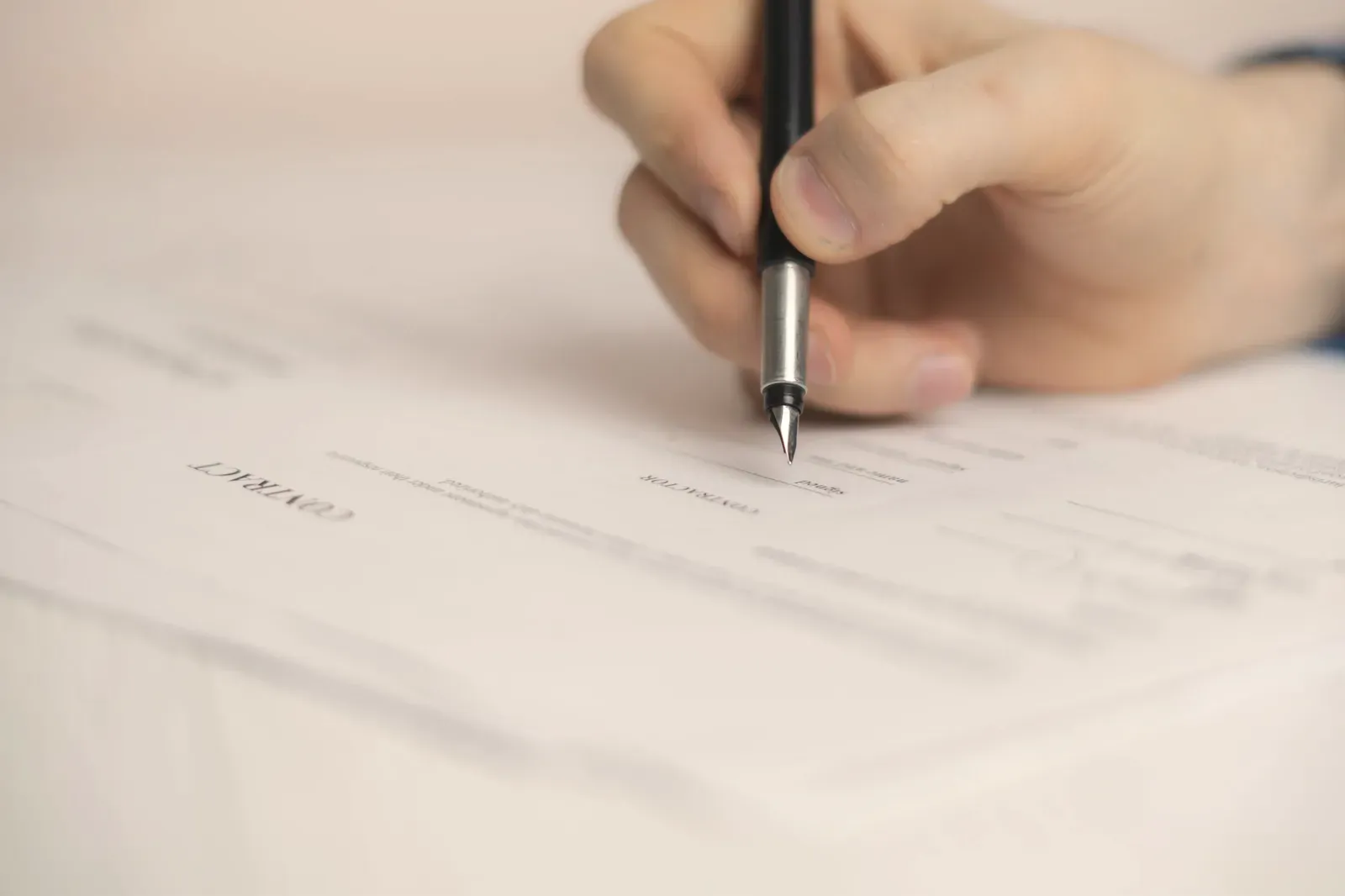
The civil claim on the check
The debt is recovered under the Civil and Commercial Code, whatever happens to the criminal case (Civil and Commercial Code, Office of the Council of State).
- What a check is (section 987). A written instrument by which one person, the drawer, orders a bank to pay a sum of money on demand to another person, or to that person's order, called the payee. This page calls the drawer the issuer.
- Whoever signs is liable (section 900). A person who signs a bill is liable according to its terms.
- The issuer's promise (section 914). A person who draws or endorses a bill promises that it will be paid when duly presented, and that if it is not paid, the drawer or endorser will pay the holder, provided the steps required on non-payment have been taken.
- Recourse on non-payment (section 959). The holder may go against the endorsers, the drawer and the other persons liable on the bill when it is not paid.
- Everyone answers together (section 967). Those who drew, endorsed or backed the bill are jointly liable to the holder, who may pursue them one by one or together and in any order.
Sections 914, 959 and 967 are written for bills of exchange. Section 989 lists them among the sections that apply to checks so far as they fit the nature of a check.
Interest. Section 224 says a money debt bears interest during default at the rate set under section 7 plus two percent a year, and it forbids interest on interest during default. Section 7, as amended in 2021, sets three percent a year where no rate is fixed by a juristic act or by a clear provision of law, and lets a royal decree change that rate. We did not check whether a decree has changed it, so this page prints no total.
Joining the civil claim to the criminal case (section 8 of the Act). Where the amount of one check, or of several checks together, is not more than the amount a single judge has power to decide in a civil case, the civil claim for the money on the check may be filed together with the criminal case in the court hearing it. The civil part then follows the Civil Procedure Code. The Act does not print that amount, and neither does this page.
For smaller sums, our guide to the small claims court in Thailand explains petty cases. If the check secured a loan, see lending money and loan interest limits, and if someone else backed the debt, see guaranteeing a loan in Thailand.
The bank, and the time limits that matter
| Time | Counted from | What it governs | Section |
|---|---|---|---|
| One month | The date of issue | Presenting a check payable in the same town where it was issued | Code s.990 |
| Three months | The date of issue | Presenting a check payable elsewhere | Code s.990 |
| Six months | The date of issue | After this the bank need not pay the check | Code s.991 |
| Thirty days | The day the issuer received the holder's written notice | Payment that ends the criminal case | Act s.7 |
| Three months | The day of knowing of the offense and the offender | Lodging the complaint for a compoundable offense | Criminal Code s.96 |
| One year | See the note below | The holder's action against endorsers and the issuer | Code s.1002 |
| Six months | The day an endorser took up and paid the bill, or was sued | Actions between endorsers, and by an endorser against the issuer | Code s.1003 |
Presenting late (section 990). A holder who does not present the check in the one month or the three months loses the right of recourse against all the endorsers. Against the issuer, the holder loses rights only to the extent that the failure to present caused the issuer some damage (Civil and Commercial Code, Office of the Council of State).
When the bank need not pay (section 991). A bank must pay a check drawn on it by its customer, except where there is not enough money in the customer's account to pay it, where the check is presented more than six months after the date of issue, or where notice has been given that the check was lost or stolen.
When the bank's authority ends (section 992). The bank's duty and authority to pay end when payment is countermanded, when the bank learns that the issuer has died, or when it learns of a court order for temporary receivership or an order declaring the issuer bankrupt, or of a public notice of such an order. A stop order ends the bank's authority to pay. It is also the fifth situation in section 4 of the Act when it is given with dishonest intent.
A check the bank has marked good (section 993). Where the bank writes and signs words such as good for payment on a check, the bank is bound as a principal debtor to pay the holder. If the holder arranged that marking, the issuer and all endorsers are released from liability on the check. If the issuer asked for it, they are not released.
The one year in section 1002. The section bars an action by the holder of a bill against the endorsers and the drawer after one year, counted from the date entered in a protest made in due time, or from the day the bill fell due where it carries a term that no protest is needed. The section is written for bills in general, and this page does not say which day starts the year for a check. Take that question to a lawyer early, and do not wait for the criminal case to finish.
Proof when the paper check stays with the bank. The Bank of Thailand describes a system in which checks are collected between banks by image, in use across the country since 19 December 2013, moved to the operator NITMX from 15 July 2022 and renamed ICS. Its stated aim is collection within one business day. Since 1 April 2016 member banks can give a customer a printout from the check image archive, showing the image and data of a check sent for collection, for use as legal evidence in place of the original check (check image clearing page, Bank of Thailand).

When a bad check is also fraud
Section 341 of the Criminal Code punishes a person who dishonestly deceives another by asserting something false or by concealing a fact that ought to be disclosed, and by that deception obtains property from the person deceived or from a third person, or causes either of them to make, withdraw or destroy a document of rights. The penalty is imprisonment of up to three years, a fine of up to 60,000 baht, or both. Section 348 makes the offenses in that chapter compoundable, except the one in section 343.
Fraud and the check offense are different things. The House Secretariat brief on the repeal bill points out that a prosecution for fraud does not cover every case of issuing a check without funds: on its account, only a check used to deceive and to obtain property by that deception, such as one drawn on no account or on an account already closed, is fraud under the Criminal Code (House Secretariat brief on the repeal bill, December 2023). That is the brief's summary, not a section of the Code.
The bill to repeal the Act, and what it would do
The Cabinet proposed a bill to repeal the Act in full. A Senate Secretariat article records that the House of Representatives of the time, the 26th, voted on Wednesday 20 December 2023 to accept the bill in principle and set up a special committee, and that the bill must pass both the House and the Senate to become law. The page of the special committee of the 27th House shows a repeal bill at the committee stage, with news items for meetings on 8 and 22 October and 5 and 12 November 2026.
The stated reason, in the House Secretariat brief, is that the Act uses a criminal penalty for a civil default. The brief says this does not fit section 77 of the Constitution, under which criminal penalties are to be set only for serious offenses, or article 11 of the International Covenant on Civil and Political Rights, under which no one is to be imprisoned merely for being unable to perform a contractual obligation (House Secretariat brief on the repeal bill, December 2023).
The same brief summarizes the Cabinet bill as it was tabled in 2023. The text now before the committee may differ.
- Start (draft section 2). In force from the day after publication in the Royal Gazette.
- Installment agreements already recorded (draft section 4). Cases where the court record shows the parties agreed to payment by installments, not yet paid in full, are not affected. The agreement is treated as a compromise, and if the debtor defaults the creditor may ask the court for an enforcement order without filing a new case.
- Pending cases with a joined civil claim (draft section 5). Where no judgment has been given, the court strikes out the criminal part and keeps the power to hear and decide the civil part.
- People already sentenced (draft section 6). The Department of Corrections releases those imprisoned for the offense on the day the Act takes effect, without a release warrant from the court, and probation or parole for the offense ends at once. Draft section 7 adds that a person also imprisoned for another offense is released only when the time already served equals or exceeds the sentence for that other offense.
The brief adds that a creditor could still sue in a civil case as before, and that a debtor who issued a check with dishonest intent from the start would still face the offense of fraud. It also reports the scale of the subject: Bank of Thailand figures in the brief show 41,208,501 checks sent for collection in 2021 and 362,356 returned for lack of funds, and Office of the Judiciary figures show 8,961 charges under the Act in 2022.
Until a repeal Act is printed in the Royal Gazette and in force, none of this changes the position in section 01.
What to do with a bounced check, and what this page leaves out
A short checklist for the holder, drawn from the sections above.
- Present the check in time: within one month of its date where it is payable in the same town, and within three months elsewhere.
- Keep any record of the bank's refusal, and ask your bank for the printout from the check image archive if the paper check is not returned to you.
- Send the issuer a written notice that the bank did not pay the check, and keep proof of the day it was received. The thirty days in section 7 run from that day.
- Note the day you learned of the refusal and who issued the check. On our reading of section 96, a complaint must be lodged within three months of knowing both.
- Treat the debt as its own claim. Section 1002 bars the holder's action on the check after one year, so take advice on the civil claim early.
- If the issuer offers installments, put the agreement in writing. Section 5 allows the offense to be settled.
If you issued the check, the same sections show the way out: paying the holder or the bank within thirty days of receiving the written notice ends the criminal case under section 7.
If a collector contacts you about the debt, our guide to debt collection rules in Thailand sets out what a collector may and may not do. For choosing counsel, see hiring a lawyer in Thailand. Tenants and landlords who use post-dated checks for rent can read our guide to security deposits in Thailand.
This page is limited to the sections named above. It does not cover court fees, lawyer fees, bank charges for a returned check, any bank's rules on closing an account, crossed checks in detail (sections 994 to 1000), checks issued abroad, bills of exchange or promissory notes, or the law of any other country.
Frequently asked questions
Yes, as of 16 November 2026. The Act on Offenses Arising from the Use of Checks B.E. 2534 is shown as still in force on the law search of the Office of the Council of State. Section 4 punishes a person who issues a check to pay a debt that really exists and can be enforced by law, where one of five listed situations applies and the bank refuses to pay when the check is lawfully presented. The penalty is a fine of up to 60,000 baht, imprisonment of up to one year, or both. A bill to repeal the Act is before a special committee of the House of Representatives, but a bill is not law.
Not as of 16 November 2026. The Cabinet sent Parliament a bill to repeal the Act, and the House of Representatives of the time accepted it in principle on 20 December 2023. The page of the special committee of the present House, the 27th, carries a news item for a meeting numbered 12 on 12 November 2026, so a repeal bill is at the committee stage in this House. We found no official page showing a final vote of the House, a vote of the Senate or a print in the Royal Gazette. Until a repeal Act is published and in force, section 4 of the B.E. 2534 Act applies.
Section 4 of the Act sets a fine of not more than 60,000 baht, or imprisonment of not more than one year, or both. That is the criminal side only. The debt itself is a separate civil matter under the Civil and Commercial Code: the person who signed the check is liable on it, and section 224 adds interest on a money debt during default. Section 5 of the Act makes the offense one that the two sides may settle, and section 7 treats the case as ended if the check is paid within thirty days of the day the issuer receives the written notice described there.
Section 7 of the Act says that if the person who committed the offense pays the amount of the check to the holder or to the bank within thirty days from the day the issuer received a written notice from the holder that the bank did not pay the check, the case is treated as ended under the Criminal Procedure Code. The same result follows if the debt the check was issued for stops binding before the court gives a final judgment. The section speaks of a written notice from the holder. It does not prescribe a form, and this page does not add one.
No. Section 4 covers a check issued to pay a debt that really exists and is enforceable by law, and only where one of five things is true: the issuer intended that the check not be paid, there was no money in the account when it was issued, the amount was higher than the money in the account at that time, the issuer withdrew money so that not enough was left, or the issuer told the bank not to pay with dishonest intent. The reason note printed with the Act says it was written so that only a check issued to create a binding, enforceable debt can be an offense.
Section 990 of the Civil and Commercial Code says a check payable in the same town where it was issued must be presented within one month from the date of issue, and a check payable elsewhere within three months. A holder who misses that time loses the right of recourse against every endorser, and loses rights against the issuer to the extent that the delay caused the issuer damage. Section 991 adds that the bank need not pay a check presented more than six months after the date of issue.
The civil claim does not depend on the criminal case. Under section 900 of the Civil and Commercial Code a person who signs a bill is liable according to its terms, and sections 914, 959 and 967, which section 989 applies to checks, make the issuer and the endorsers answer to the holder when the check is not paid. Section 1002 bars an action by the holder against endorsers and the issuer after one year, so time matters. Section 8 of the Act also lets a civil claim on the check be joined to the criminal case where the amount is within what a single judge may decide in a civil case.
According to a House Secretariat brief of December 2023 on the Cabinet bill, the bill would repeal the whole Act from the day after it is published in the Royal Gazette. Where the plaintiff joined a civil claim on the check and the court has not yet given judgment, the criminal part would be struck out while the court goes on to decide the civil claim; people imprisoned for the offense alone would be released; and an installment agreement already recorded by a court and not yet paid in full would be treated as a compromise that the creditor can enforce without a new lawsuit. The brief also notes that a creditor could still sue in a civil case, and that fraud under the Criminal Code would remain. The text now before the committee may differ from that summary.
Renting or buying a home in Thailand?
Compare condos and houses listed by partnered agents, and agree how rent and deposits are paid before you sign.
General information only, not legal advice. This page summarizes Thai-language texts in our own words; the Thai texts are the authority, and how an official or a court applies them depends on the facts. The status of the repeal bill is as read on 16 November 2026 and can change. For a decision about a check you hold or issued, consult a lawyer in Thailand.
Sources
- Act on Offenses Arising from the Use of Checks B.E. 2534 (Thai, latest version, status in force, Royal Gazette vol. 108, part 149, special issue, 27 August 1991): s.3 repeal of the B.E. 2497 Act, s.4 the five situations and the penalty of a fine of up to 60,000 baht or imprisonment of up to one year or both, s.5 compoundable offense, s.6 provisional release, s.7 payment within thirty days of the holder's written notice, s.8 joining the civil claim, and the reason note ↗Office of the Council of State · Accessed 16 November 2026
- Civil and Commercial Code (Thai, latest consolidated text, status in force): ss.7 and 224 interest, s.204 default, s.900 liability of a signer, ss.914, 959 and 967 liability of drawer and endorsers and recourse, ss.987-993 checks, presentment within one month or three months, when the bank need not pay and when its authority ends, ss.994-1000 crossed checks, ss.1002-1003 the one year and six month limits ↗Office of the Council of State · Accessed 16 November 2026
- Criminal Code (Thai, latest consolidated text, status in force): s.96 the three month limit for a complaint in a compoundable offense, s.341 fraud and its penalty, s.348 compoundable offenses in that chapter ↗Office of the Council of State · Accessed 16 November 2026
- Special committee considering the bill to repeal the Act on Offenses Arising from the Use of Checks B.E. 2534, House of Representatives, 27th House (Thai): committee home page listing meetings 9 to 12 on 8 October, 22 October, 5 November and 12 November 2026 ↗Secretariat of the House of Representatives · Accessed 16 November 2026
- Brief Or Phor 9/2566 for the bill to repeal the Act on Offenses Arising from the Use of Checks B.E. 2534, proposed by the Cabinet (Thai, PDF, December 2023): principle and reasons, summary of draft sections 1 to 8, note on fraud, Bank of Thailand check collection figures for 2012 to 2021 and Office of the Judiciary charge counts ↗Academic Bureau, Secretariat of the House of Representatives · Accessed 16 November 2026
- Repealing the law on offenses arising from the use of checks (Thai), article dated 10 April 2024: the Cabinet bill, the first reading vote of the 26th House on 20 December 2023, and the Supreme Court approach to post-dated checks ↗Secretariat of the Senate · Accessed 16 November 2026
- Imaged check clearing and archive system, ICAS (Thai): nationwide use from 19 December 2013, transfer to NITMX from 15 July 2022 and the name ICS, collection within one business day, and the printout from the check image archive used as legal evidence in place of the original check from 1 April 2016 ↗Bank of Thailand · Accessed 16 November 2026
Official primary sources are listed above with the date we last checked them. Thai rules, fees, thresholds and procedures change and can be applied differently by individual offices and embassies, confirm the current requirement with the responsible authority before relying on it. General information only, not legal, tax or medical advice. BAANLYY never takes paid placement in editorial content.