
Visa Finder quiz
Answer 3 quick questions and see the Thai visa route worth researching first.
Try it free →A foreign parent can live in Thailand while their child attends school here on a Non-Immigrant O visa, often called the guardian visa. The core test is 500,000 baht per parent and a full-time school place. This guide sets out the rules, documents, fees and the extension, from Thai embassy and Immigration Bureau pages read on 14 November 2026.
Yes, a parent can stay. Thailand has no visa class called “guardian” in law. What families use is a Non-Immigrant O visa issued to the parent of a foreign student, followed by an extension of stay from the Immigration Bureau as a family member of that student. The Royal Thai Embassy in Singapore publishes the visa under the name Non-Immigrant Visa-O (Guardian), which is where the popular name comes from.
It works in two steps, and each step has its own office and its own money test. Most confusion comes from mixing the two.
| Step 1: the visa | Step 2: the extension | |
|---|---|---|
| Who decides | A Thai embassy or consulate, through the Thai e-Visa site | The immigration office in the area where your child studies |
| What you get | A single-entry Non-Immigrant O visa | An extension of stay as a family member of a student |
| Money test | 500,000 baht per parent, shown on bank statements (Singapore: 20,000 SGD or 500,000 baht for the last 3 months) | At least 500,000 baht in a bank in Thailand, in the father's or the mother's name, for the past 3 months (first year only: at least 30 days before filing) |
| Proof of the child's place | A letter from the school on its letterhead, with copies of the school's operating papers | Your child's own permission to stay for study, plus proof of relationship |
| Fee on the official page | 100 SGD in Singapore; 80 USD in Yangon and Washington D.C. | 1,900 baht |
| Work allowed | No | No |
Royal Thai Embassies in Singapore, Yangon and Washington D.C., and the Immigration Bureau public handbook (item 2.11), all read on 14 November 2026. Fees and document lists differ by embassy; use the page of the embassy you apply through.
If your child does not yet have a school place, start there. The parent's visa hangs on the child's enrollment, so the school letter comes first, then the child's education (ED) visa, then yours.
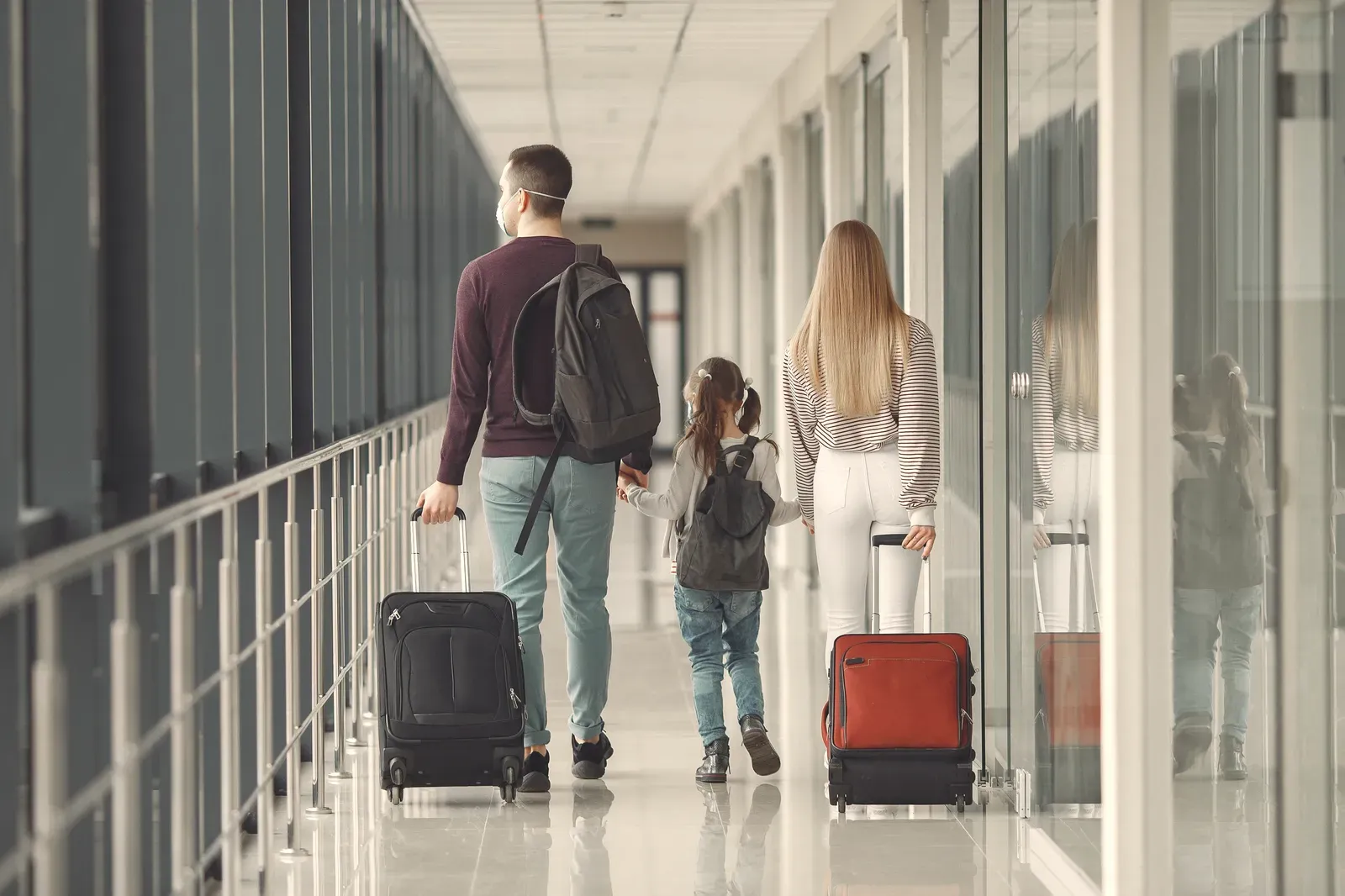
Three things have to be true: you are the child's parent, the child is enrolled full time, and the school is one the authorities recognize.
You must be a parent, with paper proof. Both embassies ask for documents showing the family relationship: a birth certificate and, where relevant, a marriage certificate. The Immigration Bureau handbook lists the same kind of proof for the extension, including a birth certificate, marriage certificate, registration of child legitimization, household registration or adoption registration. Both embassies state that a civil partnership certificate is not accepted.
The course must be full time and long term. Singapore and Yangon both use the words “full-time long-term educational course”. Yangon adds that informal courses, for example Thai language or cultural training courses, do not make a parent eligible.
The school must be a recognized one. The extension rule covers family members of a student who is permitted to stay for study at a government or a private educational institution. For a private school, the Immigration text read on Samut Sakhon Immigration's page says the institution must be permitted to operate by the relevant government agency, and that the enrollment must be confirmed by that agency except in the case of an international school or higher education. In plain terms: the rule names international schools as exempt from that extra confirmation step.
The embassy in Singapore says parents of students under 20 years old. The embassy in Yangon says under 18. The Immigration Bureau extension text we read gives no age for the student at all. We are reporting both rather than picking one. If your child is 18 or 19, ask the embassy you will apply through and the immigration office for the school's area, in writing if you can, before you sign a lease.
Choosing the school: international schools in Thailand, what international schools cost and international vs bilingual schools.
The first visa is applied for outside Thailand, online, through the Ministry of Foreign Affairs e-Visa site. Each embassy publishes its own document list and fee, and they are not identical. Here is what three of them say.
| Singapore | Yangon | Washington D.C. | |
|---|---|---|---|
| Name on the embassy page | Non-Immigrant Visa-O (Guardian) | Dependents, under the Education visa page | Non-Immigrant O (Visiting Non-Thai Family Residing in Thailand) |
| Who it is for | Parents of students under 20 in a full-time long-term course | Parents of students under 18 in a full-time long-term course | Immediate family of a non-Thai family member living in Thailand |
| Entries and validity | Single entry; 90 days after the date of application | Single entry | Single entry; valid 90 days from issue; stay of up to 90 days |
| Money shown | At least 20,000 SGD or 500,000 baht per parent for the last 3 months | Proof of an additional 500,000 baht deposit per parent | Last 3 months of statements, ending balance of at least 1,000 USD each month per person or 2,000 USD per family |
| Fee | 100 SGD | 80 USD | 80 USD |
| Timing | Complete the e-Visa at least 21 working days before travel | Normal processing 2 working days | Apply at least 30 days and no more than 90 days before departure |
| Page last updated | 18 May 2026 | 2 August 2022 | 27 August 2026 |
Each embassy's own visa page, read 14 November 2026. All three state the fee is non-refundable or the application may be rejected if documents are missing.
What to take from the table.
The 500,000 baht figure is per parent. Singapore and Yangon both word it that way. If both parents apply, plan for each to show the amount.
Not every embassy has a page called “guardian”. Washington's closest category is the Non-O for visiting non-Thai family living in Thailand, which asks for the family member's passport with the Thai visa page and proof of an immediate family relationship. Its page does not print the 500,000 baht figure. That figure still applies later, at the extension. Washington also notes that family members of a person who holds a Non-O do not themselves qualify for a Non-O, so the visa is built on the student's permission to stay, not on the other parent's.
The visa is short. The extension is what lets you stay. Singapore states that visa holders contact the Immigration Bureau after entering Thailand for the extension of stay and the re-entry permit. Washington says the same. Treat the visa as the key to the door and the extension as the lease.
Apply from where you live. Singapore requires the applicant to stay in Singapore while the e-Visa is processed and asks for the applicant's Singapore long-term pass. Use the page of the embassy that serves the country you live in.
Related: the Non-Immigrant O visa in full, Thai visa fees and costs and which visa fits you.

Once you are in Thailand, the Immigration Bureau decides how long you may stay. Its public handbook files your case under item 2.11: a family member of a foreigner who has been permitted a temporary stay for study in an educational institution. The item covers parents, a spouse, a child, an adopted child or a spouse's child of the student.
For parents, the criteria on Samut Sakhon Immigration's English page are short:
The detail most guides get wrong. You will often read “500,000 baht for 30 days” as if that were the whole rule. It is the first-year concession. From the second year the wording is the past three months. If you draw the balance down after your first extension, top it back up at least three months before the next one.
It is a deposit, not an income test. The official text we read gives no monthly income alternative for parents of a student and no separate amount per child. It asks for the deposit, in a Thai bank, in a parent's own name. That means opening a Thai account early: see opening a Thai bank account and sending money to Thailand.
Where and what it costs. The handbook says the applicant must contact the immigration office in the area where the student studies, and lists a fee of 1,900 baht.
The two Immigration Bureau pages that opened for us on 14 November 2026 do not print how long each extension lasts. We have left the length out rather than repeat a figure we did not read. Your child's school and the immigration office for its area can tell you the period they are granting now.
Find your office: immigration offices in Thailand. How extensions work in general: extending your stay in Thailand.
Gather these before you book flights. The school letter and the bank evidence take the longest.
| Document | For the visa (Singapore embassy list) | For the extension (Immigration handbook, item 2.11) |
|---|---|---|
| Passport | Valid for no less than 6 months | Original and copy |
| Form and photo | e-Visa application; photograph taken within the last 6 months | Application form TM.7 with photo |
| School evidence | Letter from the school on its letterhead, signed by an authorized person, stating the objective and period of stay; copies of the school's operating permit and business registration, signed and sealed | Copy of the passport of the student who has been permitted to stay for education |
| Money | Bank statement on bank letterhead, all pages, showing at least 20,000 SGD or 500,000 baht per parent for the last 3 months; a foreign statement needs a bank letter stating the balance | Letter from a bank in Thailand confirming the required amount, and a copy of the updated passbook |
| Family relationship | Birth certificate or marriage certificate, translated into English | Marriage certificate, birth certificate, child legitimization, household registration, adoption registration or other government evidence |
| Travel | Copy of flight ticket to Thailand | Not listed |
| Other | Proof of residence status in the country of application | Signed acknowledgment of penalties for a visa overstay |
Royal Thai Embassy, Singapore, and the Immigration Bureau public handbook item 2.11, read 14 November 2026. Officers at both stages may ask for more.
Translations. Singapore asks that documents in languages other than Thai or English be translated into Thai or English and notarized, and that documents issued by a third country be stamped by that country's embassy first. Washington asks for English translations notarized by an embassy or foreign ministry for anything issued outside Thailand and the United States. Start this early, because each step in that chain takes time. Our guide to document legalization and notary services explains the chain.
Children traveling. For applicants under 20, Washington asks for the birth certificate, the parents' marriage certificate or a court order in the case of sole custody, copies of both parents' passports, and a notarized consent letter from a parent who is not traveling with the child. Separated and sole-custody parents should prepare the court papers before anything else.

The visa rules quietly shape the housing decision, in four ways.
The school decides your immigration office. The handbook sends you to the office for the area where the student studies. Living in the same province as the school keeps the school run and the immigration trips in one place.
Sign the lease after the school place, not before. The whole chain rests on enrollment: school letter, then the child's visa, then yours. A twelve-month lease signed before the school confirms a place is the expensive way to find out a year group is full. If you need a base while you visit schools, use a short stay first: see temporary housing and serviced apartments.
Keep the deposit money separate from the move-in money. The 500,000 baht has to sit in a Thai account in a parent's name for the periods above. Rental deposits, school fees and furniture should come from other funds, or the balance will dip below the line at the wrong moment. For what a landlord can ask up front, see security deposits in Thailand.
Ask the landlord about address reporting before you sign. Thailand has rules on reporting where a foreigner is staying, and they involve the owner of the property as well as you. Ask the landlord how they handle it, and get the answer before the lease, not at the immigration counter. Who files what is set out in our guide to TM30 and 90-day reporting.
Start with the city: best cities in Thailand for families, best neighborhoods for families, then homes for rent in Bangkok, Phuket or Chiang Mai.
You cannot work. The embassy in Yangon states that dependents are not eligible to work in Thailand. If you plan to take a job or run a business here, you need a different visa and a work permit: see work permits in Thailand.
Your stay follows your child's. The extension is granted to you as a family member of a student who is permitted to stay for study. If your child changes school or stops studying, ask the immigration office what that means for your own permission before the term ends, not after.
Travel needs a re-entry permit. The visa is single entry, and both embassies point holders to the Immigration Bureau for a re-entry permit. Arrange it before any trip abroad, including a visit home in the school holidays. See re-entry permits.
The usual reporting duties apply. Address reporting and the 90-day report apply to long-stay foreigners in general; they are explained with their own sources on the pages linked above.
Is another visa a better fit? The guardian route suits a parent whose only reason to be in Thailand is the child's schooling and who can park 500,000 baht in a Thai bank. Some families qualify in their own right instead: a parent who works remotely may look at the Destination Thailand Visa, an older parent at the retirement routes, and a parent hired by a Thai employer at the work route above. Each has its own money test and its own limits. Our visa finder compares them for your situation.
Planning the whole move: moving to Thailand with family and the moving to Thailand checklist.

It is the everyday name for a Non-Immigrant O visa given to the parent of a foreign child who is enrolled in a full-time school course in Thailand. The Royal Thai Embassy in Singapore publishes it as Non-Immigrant Visa-O (Guardian). It is a single-entry visa, and once in Thailand the parent asks the Immigration Bureau for an extension of stay as a family member of a student.
500,000 baht per parent is the figure on every official page we read on 14 November 2026. The Thai embassy in Singapore asks for a bank balance of at least 20,000 Singapore dollars or 500,000 baht per parent for the last three months. For the extension inside Thailand, the Immigration Bureau handbook asks for at least 500,000 baht in a bank in Thailand in the father's or the mother's name for the past three months, or at least 30 days before filing in the first year only.
For the extension of stay inside Thailand, yes. The Immigration Bureau text says the funds must be deposited in a bank in Thailand under the father's or the mother's name, and the documents are a letter from that bank and a copy of the updated passbook. For the first visa applied for abroad, the Singapore embassy accepts a foreign bank statement with a bank letter stating the balance.
The official pages do not agree. The Thai embassy in Singapore says parents of students under 20 years old. The Thai embassy in Yangon says under 18. The Immigration Bureau extension text we read states no age for the student. Ask the embassy you will apply through, and the immigration office where your child studies, before you rely on either number.
Not according to the Thai embassy in Yangon, which states that parents are not eligible on the strength of informal courses such as Thai language or cultural training courses. Both embassies describe a full-time, long-term educational course.
No. The Thai embassy in Yangon states that dependents are not eligible to work in Thailand. Working needs its own visa and a work permit, which are covered in our work permit guide.
The embassy pages set the money requirement per parent, which implies each parent who applies shows their own 500,000 baht. The Immigration Bureau text speaks of funds in the father's or the mother's name and does not state how many parents may apply. Confirm with your immigration office before both parents plan around it.
The Immigration Bureau handbook lists a fee of 1,900 baht and says the applicant must contact the immigration office in the area where the student studies. That is one reason to rent near the school: the school's province decides which office you deal with.
Live homes for rent with asking rents, photos and the agency that lists each one. Pick the school first, then the neighborhood.
General information only, not legal or immigration advice. Visa and extension decisions are made by Thai embassies and the Immigration Bureau, document lists differ by office, and officers may ask for more than is listed here. BAANLYY LLC is a Nevada company and a listing portal: homes on this site are listed by independent owners, agents and agencies, and BAANLYY is not a party to their leases or sales. Figures are from the official pages named in the sources, read on 14 November 2026.
Official primary sources are listed above with the date we last checked them. Thai rules, fees, thresholds and procedures change and can be applied differently by individual offices and embassies — confirm the current requirement with the responsible authority before relying on it. General information only, not legal, tax or medical advice. BAANLYY never takes paid placement in editorial content.
Free tools for this
Answer 3 quick questions and see the Thai visa route worth researching first.
Try it free →
The ฿500/day overstay fine, the ฿20,000 cap and re-entry ban tiers.
Try it free →Seven short questions, then the two or three routes worth reading, each with its cost.
Try it free →