Under the Tourism Business and Guide Act B.E. 2551 (2008), a guide needs a guide license and must wear it while working, and a company that sells tours needs a tour business license. The company must give you the tour program in writing with its license number, and must arrange accident insurance for you. Guide license applicants must be Thai nationals aged 18 or over. A problem on a tour goes to the Tourist Police on 1155.
Who may work as a tour guide in Thailand?
The Act defines a guide as a person who, as a regular occupation, takes tourists to places and gives them advice and knowledge. Under section 49 of the Act (consolidated Thai text with the 2016 amendments), anyone who wants to do that must apply to the registrar for a guide license. Section 50 sets who can get one:
- at least 18 years old on the day of applying;
- Thai nationality;
- a degree, associate degree or higher vocational diploma in guiding or tourism with guide subjects the Board accepts, or a certificate from a guide training course the Board sets;
- a pass in the Board's knowledge and ability test.
A guide license lasts five years from issue, and renewing it needs further training and a test (section 56). The license types, and how to apply, are set by ministerial regulation. Two groups are outside section 49: government staff who act as a guide now and then, and students with a letter from their school. In local or community areas the Board has announced, the minister may waive the age, education or test rules for guides who work only in that area (section 51), and other guides may not work there while those local guides are working.
A guide is different from a tour leader, the person who looks after a group traveling abroad. Tour leaders register separately, must be Thai and at least 20 (sections 64 and 64/1), and a Thai company sending a group abroad with a tour leader must use a registered one (section 33).

How do you check a guide, and what may a guide not do?
The simplest check is visible. Section 57 says a guide must wear the guide license at all times while working, in the manner the Board announces, and follow the Board's rules on conduct, dress and health checks. If you cannot see it, ask for it, and ask the tour company for the guide's license number.
The Act also puts these duties on the guide:
- Follow the agreed program and do nothing that harms the tourists (section 59).
- No pay-to-guide. A guide may not pay a tour company, or take on its costs, to get tourists (section 58). This is the practice behind many cheap tours with long shopping stops.
- No stand-ins. A guide may not let someone without a guide license work in their place (section 60).
The registrar can suspend a guide license for up to six months at a time, and revoke it, for example after serious harm to tourists that the guide did not stop when warned (sections 62 and 63).

What must a tour company give you before you book?
A company that takes tourists traveling and arranges any of lodging, food, a guide or other services runs a tour business, and needs a tour business license from the registrar (section 15). It must display that license where customers can easily see it at the office named on it (section 23). When it advertises or offers a tour, section 26 says it must put the program in a document showing at least:
- the operator's name, address and tour business license number;
- how long the tour lasts;
- the price and how to pay;
- the type of vehicles used;
- the destinations, stops and main places visited;
- the type of accommodation and how many meals are included;
- whether a guide or tour leader is provided;
- any minimum number of tourists for the tour to run;
- the accident insurance.
If the company changes the program from what it advertised, it must tell you before you pay (section 27). Section 33 says it must send a guide with tourists under the Board's criteria, and section 34 says it must arrange accident insurance for tourists, guides and tour leaders during the trip; a company that does not is liable to you as an insurer would be. Running a tour business as a company also has nationality rules: at least 51% of a limited company's capital must be held by Thai individuals and more than half its directors must be Thai (section 17).
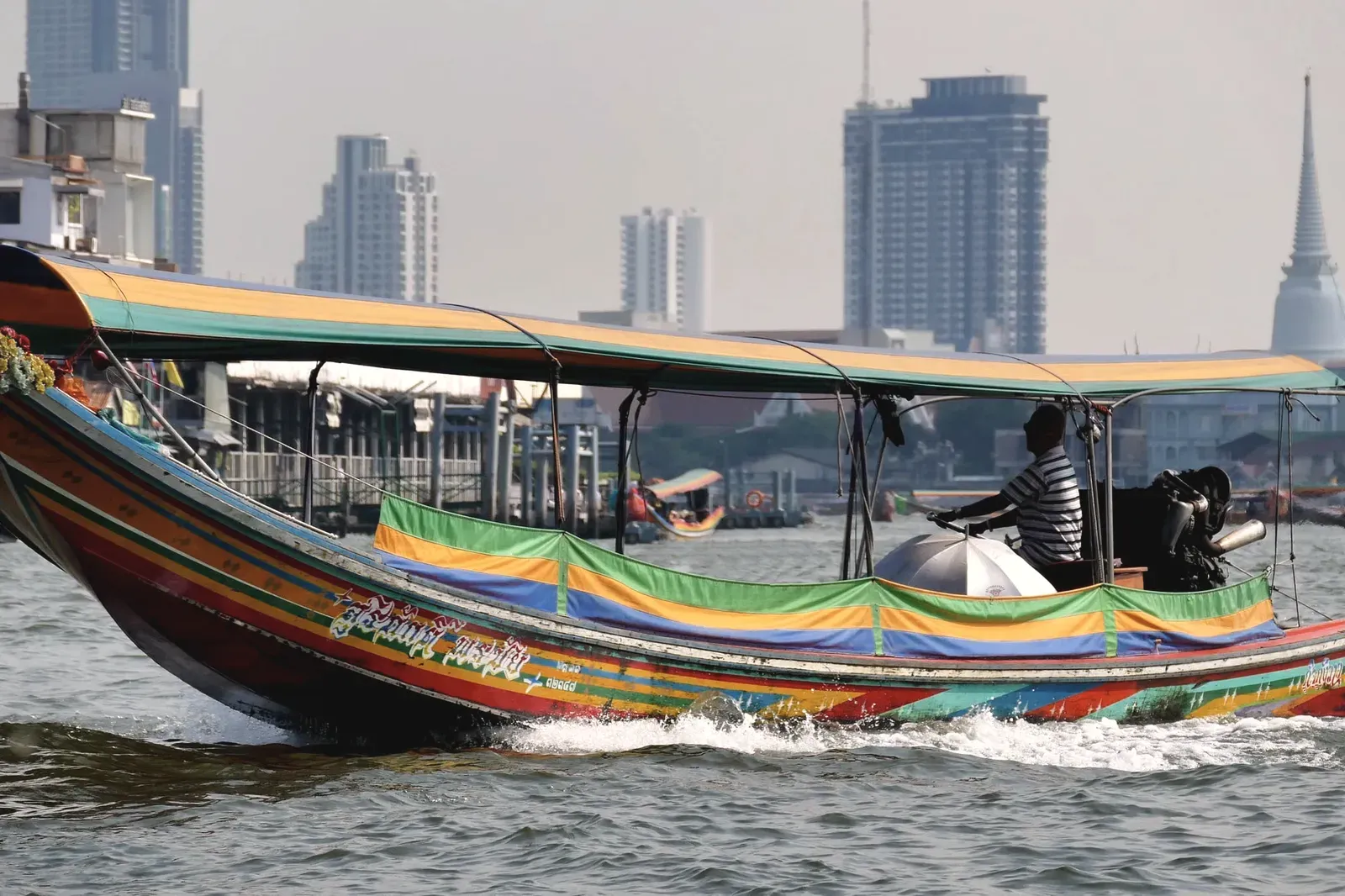
Booking a river trip? Our boats and ferries in Bangkok guide covers the public boats you can take without a tour.
What are the penalties, and where do you complain?
| Offense | Maximum penalty | Section |
|---|---|---|
| Running a tour business without a tour business license | 2 years in prison, a fine of 500,000 baht, or both | 80 |
| Tour company not providing a guide as required, or not arranging accident insurance | A fine of 500,000 baht | 85 |
| Working as a guide without a guide license, or while it is suspended | 1 year in prison, a fine of 100,000 baht, or both | 86 |
| Guide paying to get tourists, or letting someone without a license stand in | 6 months in prison, a fine of 50,000 baht, or both | 89 |
| Guide not wearing the guide license, or breaking the Board's conduct rules | A fine of 10,000 baht | 88 |
Where to complain. On the spot, call the Tourist Police hotline 1155, which the Tourist Police Bureau says runs 24 hours a day in eight languages (post of 22 October 2026); you can also report through the Thailand Tourist Police application. Our Tourist Police guide explains what they handle. Keep the written tour program, the receipt and the guide's license number: they show which company and which guide were responsible.

Frequently asked questions
Yes. Under section 49 of the Tourism Business and Guide Act B.E. 2551 (2008), anyone who wants to work as a guide must apply to the registrar for a guide license. Working as a guide without one carries up to one year in prison, a fine of up to 100,000 baht, or both (section 86). The Act exempts government staff who act as a guide now and then, and students with a letter from their school.
Not under the Act's normal rules. Section 50 requires a guide license applicant to be at least 18 and of Thai nationality, to hold a degree, diploma or training certificate in guiding or tourism the Board accepts, and to pass the Board's knowledge test. Section 16 likewise requires a person who runs a tour business in their own name to be Thai and at least 20.
Look at their chest. Section 57 says a guide must wear the guide license at all times while working, in the manner the Board sets, and not wearing it is a fine of up to 10,000 baht (section 88). Ask the guide or the tour company for the license number if you do not see one.
Yes. Section 34 says a tour business operator must arrange accident insurance for tourists, guides and tour leaders during the trip, under the Board's criteria. An operator who does not is liable to you as an insurer would be, and can be fined up to 500,000 baht (section 85).
Under section 26, any advertisement or offer of a tour program must be a document showing at least the operator's name, address and tour business license number, the length of the tour, the price and how to pay, the vehicles, the destinations and stops, the accommodation and number of meals, whether a guide or tour leader is provided, any minimum group size, and the accident insurance. Changes to the program must be told to you before you pay (section 27).
The Tourist Police hotline 1155, which the Tourist Police Bureau says runs 24 hours a day in eight languages; you can also report through the Thailand Tourist Police application. Under the Act, the registrar at the Department of Tourism can suspend or revoke a guide license.
Planning to stay longer than a tour?
Browse condos and houses listed by partnered agents, and use our guides to settle in.
Sources
- Tourism Business and Guide Act B.E. 2551 (2008), consolidated Thai text with the amendments of the Act (No. 2) B.E. 2559 (2016), Office of the Council of State copy on the Ministry of Tourism and Sports website (PDF, 30 pages): tour business license (s.15), nationality rules (ss.16-17), license display (s.23), what a tour program document must show (s.26), guide and accident insurance duties (ss.33-34), guide license and its qualifications (ss.49-51), five-year term (s.56), wearing the license and guide duties (ss.57-60), penalties (ss.80, 85, 86, 88, 89) ↗Office of the Council of State, published by the Ministry of Tourism and Sports · Accessed 24 November 2026
- Tourist Police Bureau news post (English, 22 October 2026): Tourist Police Hotline 1155, available 24 hours a day with support in eight languages, and reporting through the Thailand Tourist Police application ↗Tourist Police Bureau, Royal Thai Police · Accessed 24 November 2026
Official primary sources are listed above with the date we last checked them. Thai rules, fees, thresholds and procedures change and can be applied differently by individual offices and embassies, confirm the current requirement with the responsible authority before relying on it. General information only, not legal, tax or medical advice. BAANLYY never takes paid placement in editorial content.