An instant shower heater sold in Thailand must meet TIS 1693-2547, a compulsory standard since 23 April 2549 (2006), so look for the TIS mark in a circle. The safety of the installation rests on two things: an earth wire and an RCD (earth-leakage breaker) rated at no more than 30 mA, which the PEA says should be installed together by a skilled technician and tested at least twice a year with its TEST button. If you think a circuit is leaking, MEA's five-step meter check helps you find it; if someone is shocked, cut the power first and never touch them with bare hands.
Are electric shower heaters in Thailand safe?
They are made to a compulsory safety standard, and the rest depends on how they are wired in. The wall-mounted heater beside a Thai shower is typically an instantaneous one: cold water runs through it and is heated as it passes, with no tank. MEA's infographic on appliance running costs, dated 19 May 2563 (2020), puts a water heater at 3,500 to 6,000 watts, among the largest loads in a home.
The standard for these heaters is TIS 1693-2547, “Instantaneous water heaters: safety requirements”. Its clause 1.1 covers heaters for homes and similar use that heat water to below boiling point, with a rated voltage of no more than 250 volts for single-phase heaters and no more than 480 volts for others. For a Class I heater, the standard requires the metal water container and other metal parts in contact with the water to be permanently and reliably connected to the earthing terminal. A note in the scope adds that a higher degree of protection against water may be needed depending on the zone where the heater is installed.
In other words, a Class I heater is designed to be earthed. In our reading, fitted with no earth wire, the part of its protection that depends on earthing has nothing to work with, which is why sections 03 and 04 matter more than the brand on the front.
For the plugs and voltage side of Thai electricity, see our power plugs and voltage guide.
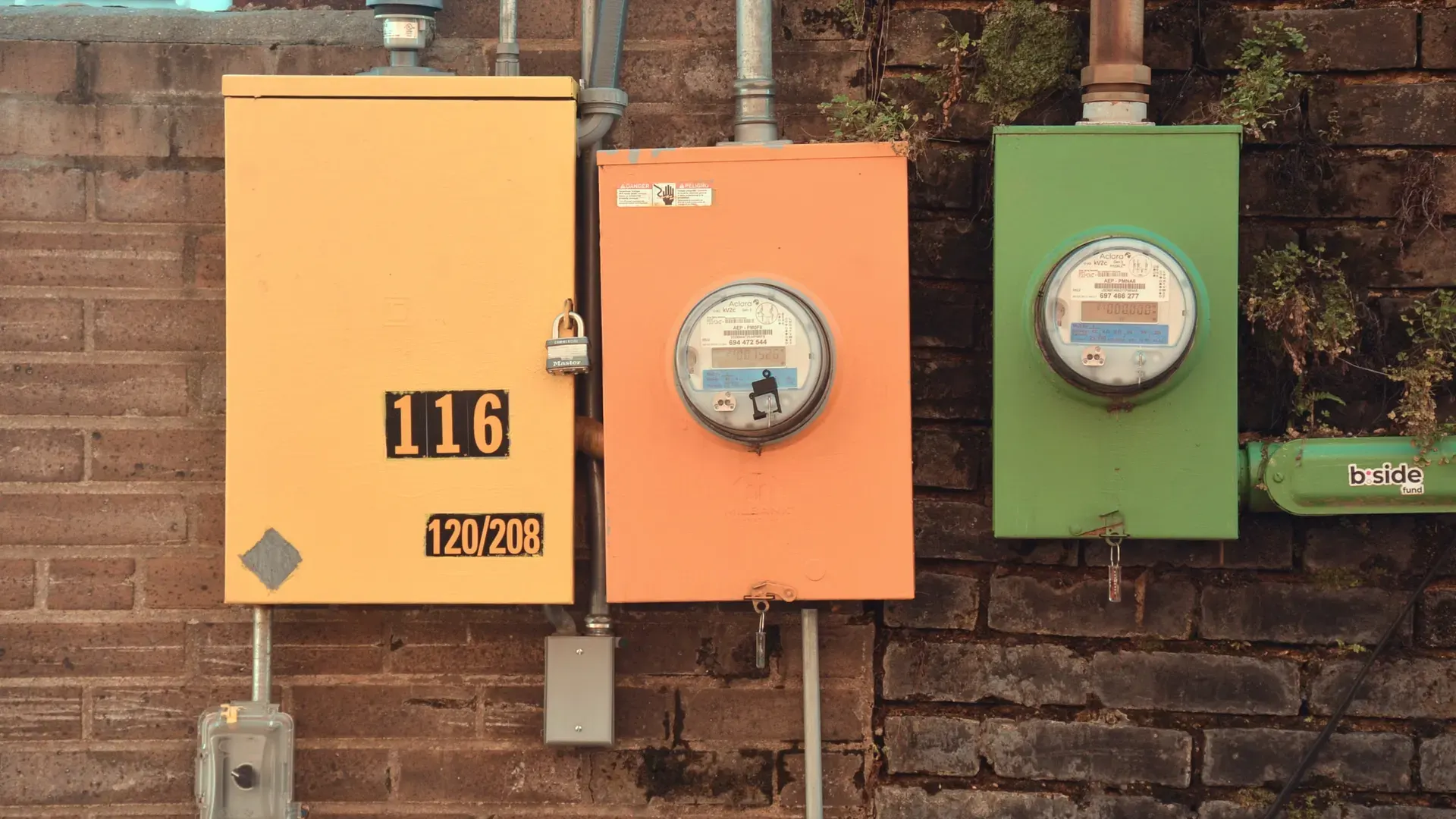
Which marks should a heater, breaker or extension cord carry?
The Thai Industrial Standard mark (TIS, or mor-or-kor). The Thai Industrial Standards Institute (TISI) of the Ministry of Industry keeps a list of products the law requires to meet a standard; when we read it, it held 153 standards. These are the ones you meet when you set up a home's electrics:
| Standard | What it covers | In force since |
|---|---|---|
| TIS 1693-2547 | Instantaneous electric water heaters, safety | 23 April 2549 (2006) |
| TIS 909-2548 | Residual current circuit breakers with overcurrent protection (RCBO), for homes and similar use | 19 November 2550 (2007) |
| TIS 2425-2560 | Residual current circuit breakers without overcurrent protection (RCCB), for homes and similar use, part 1 | 10 January 2564 (2021) |
| TIS 166-2549 | Plugs and socket-outlets rated up to 250 volts | 11 November 2563 (2020) |
| TIS 2432-2555 | Extension cord sets | 24 February 2561 (2018) |
| TIS 1436 part 3-2564 | Distribution boards meant to be operated by ordinary persons (the consumer unit) | 1 October 2568 (2025) |
MEA's article on TIS marks, dated 17 July 2568 (2025), explains how to read them. The compulsory mark has a circle around it; the general, voluntary mark does not. Since 21 January 2564 (2021), TISI has required makers to show a QR code next to the TIS mark on the product or its packaging, so a buyer can scan it to check the product or to complain. The article summarizes the penalties under the Industrial Product Standards Act B.E. 2511 (1968) as up to 2 years in prison, a fine of up to 2,000,000 baht, or both, for making or importing a compulsory product without permission, and, for a shop selling a product that does not meet the standard, up to 6 months in prison or up to 500,000 baht, or both.
When you buy a heater, a breaker or an extension cord, look for the circled mark, the standard number beside it and the QR code before you pay.
What is an RCD, and what should it be rated?
An RCD (residual current device, khrueang tat fai rua in Thai) cuts the power automatically the moment it detects current leaking where it should not, for example through a person to the ground. The Provincial Electricity Authority's advice on RCDs, dated 12 June 2569 (2026), says it protects against electric shock, lowers the risk of a short circuit starting a fire, and guards against current leaking to the ground. Its checklist, in our translation:
- Choose a product with the TIS mark.
- Choose an RCD with a leakage current rating of no more than 30 mA for a home.
- Have it installed together with an earthing system by a skilled technician.
- Test it at least twice a year by pressing its TEST button as the maker's instructions say.
MEA gives the same advice in its announcement on fire risks at home, dated 4 October 2569 (2026): check that each breaker's size matches the size of its wire, and install an RCD, or a breaker that cuts out on shock and leakage, so the power is cut automatically when something goes wrong.
Look at your consumer unit. As a rule of thumb (ours), a breaker with a TEST button and a milliamp rating printed on it is an RCD or RCBO. If there is none, and the heater's own manual does not describe a leakage cut-out in the unit, ask for one before you use the shower. The PEA contact center is 1129; MEA's is 1130.
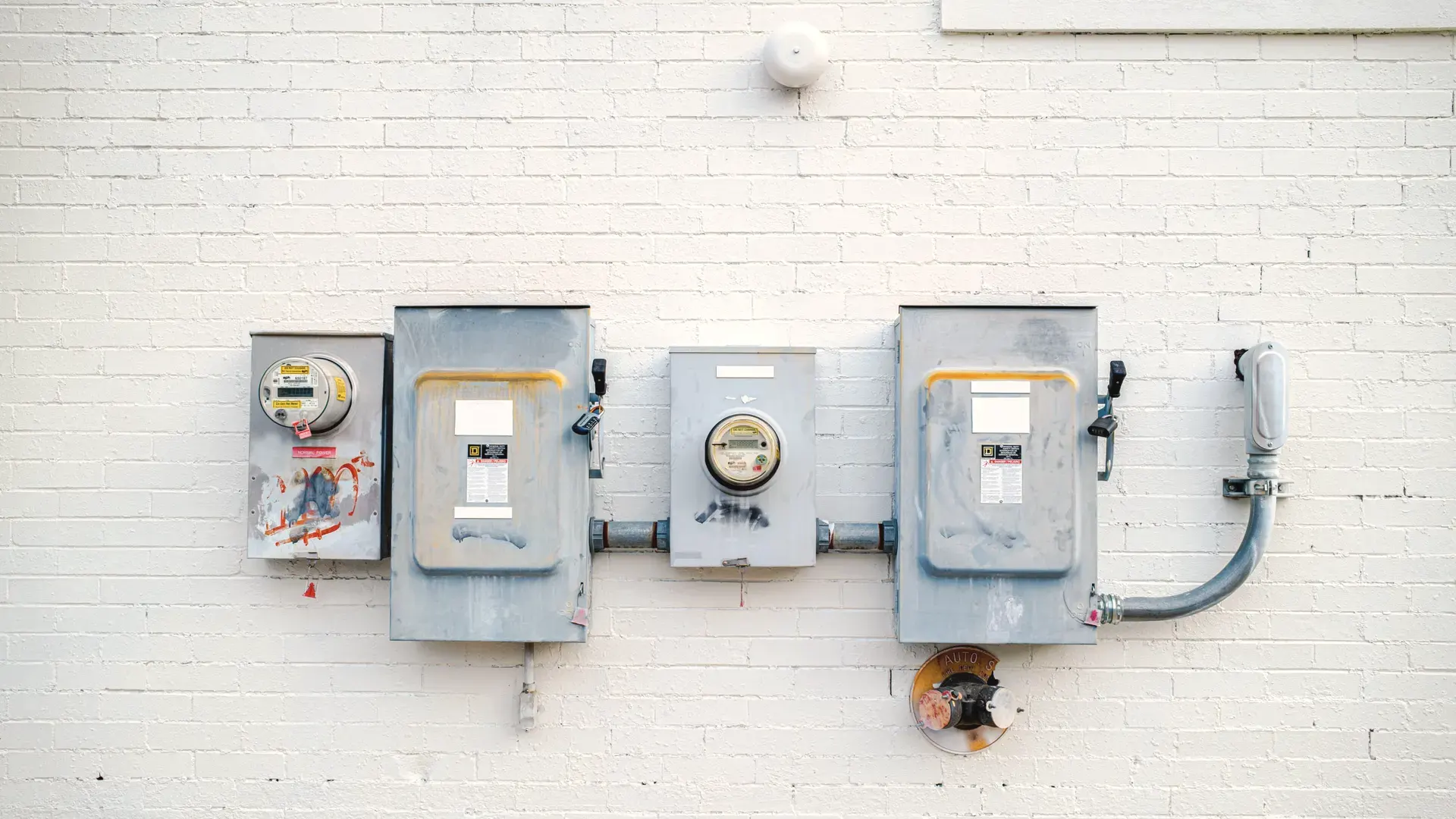
Why does the earth wire matter?
Because the protection in a heater and in an RCD is designed around it. TIS 1693 requires the metal parts of a Class I heater that touch the water to be connected to the earthing terminal (section 01), and the PEA says an RCD should be installed together with an earthing system. MEA's leak check infographic closes with the same reminder: install an earth wire and a breaker that protects against leakage.
What to look for (our suggestions, not an official list):
- A green or green-and-yellow wire running to the heater's earth terminal, not a terminal left empty.
- Three-hole sockets in the kitchen and bathroom. A third hole shows the socket was built for an earth; it does not by itself show that an earth wire is connected behind it, which an electrician can test.
- An earth bar in the consumer unit with wires on it.
If you are buying, have the electrics checked as part of the survey; our property inspection checklist lists what else to look at.
How can you check your home for a current leak?
MEA publishes a five-step check for homes without an RCD, dated 12 February 2566 (2023). In our translation:
- Switch off every appliance and light and unplug the fridge, then look at the meter. If its metal disc is still turning, current is leaking somewhere in the home.
- If the disc is not turning, there may still be a very small leak: note the disc's position and the meter reading, and leave it for about 1 hour. If either has moved, there is a leak.
- Find the circuit. Switch off every branch breaker in the main panel, then switch them back on one at a time, watching the meter each time. If it moves, the leak is on the circuit you just switched on. Unplug every metal-bodied appliance on that circuit and have a skilled electrician fix it quickly.
- Only if you know how to use a test screwdriver safely, switch that circuit back on and touch the metal casing of each appliance and the insulation of each wire on it. If the lamp in the screwdriver lights, that appliance or wire is leaking: leave it unplugged until it is fixed.
- Call MEA on 1130 for advice.
MEA wrote these steps for a meter with a spinning disc. On a digital meter, our suggestion is to watch whether the reading still climbs with everything switched off. Do not open the meter or the panel cover yourself.
What else should you check: wiring, sockets and extension cords?
MEA's announcement of 4 October 2569 (2026) says most fires from short circuits build up over time from heat in worn, damaged or overloaded equipment, and lists five points to check, in our translation:
- Wiring. Ordinary wiring lasts about 15 to 20 years on average. If the outer insulation is dry and brittle, cracked, discolored or gnawed by rats, replace it at once.
- Plugs and sockets that are loose or wobbly or show burn marks: stop using them and replace them.
- Extension cords should carry the TIS 2432-2555 mark and an automatic cut-out. Avoid plugging several high-power appliances into one at the same time, such as an iron, an air fryer, a microwave or a water heater.
- Breakers sized to their wires, with an RCD (section 03).
- Dust on appliances with motors or heating coils, such as fans, fridges and air conditioners: clean the filters and vents so heat does not build up.
MEA adds that if you notice a burning smell, a plug that is unusually hot, or a breaker that trips often, you should cut the power to that circuit at once and consult a qualified electrician or ask MEA to inspect. Our property fire safety checklist covers the rest of the building.
What should you do with the electrics after a flood?
The manual for managing your home after the flood, prepared in November 2554 (2011) by volunteers of the Association of Siamese Architects, the Thai Graphic Designers Association and the Engineering Institute of Thailand, and hosted on MEA's website, gives this advice, in our translation:
- If the water reached the main switch, treat it as very dangerous: contact MEA, the PEA or a capable electrician to inspect the system, since the main switch equipment will very likely all need replacing.
- For more protection against shock, install an earth-leakage circuit breaker in place of ordinary circuit breakers, on each sub-circuit or at the main switch.
- When the power first comes back on, watch for heat, smoke or an unusual smell, and cut the supply at once if you notice any: it means a short circuit, and a small one will not trip an ordinary breaker.
- If the main switch trips again, makes an unusual noise, or the meter keeps turning with the system on, there is still a leak: switch the sub-circuits off one at a time to find it, and call an electrician or the electricity authority if you cannot.
For the flood season itself, see our guide to flooding and the monsoon season.
What should you do if someone gets an electric shock?
The Department of Disease Control's Division of Injury Prevention posted a leaflet on electric shock on 29 January 2567 (2024). Its first rescue steps, in our translation:
- Stay calm. Do not touch the person with your bare hands.
- Cut the power as fast as you can: pull the plug, switch off, or open the cut-out.
- Use something that does not conduct electricity, such as a dry cloth, dry rope, completely dry plastic, rubber gloves or dry wood, to flick the wire away and push or pull the person clear quickly.
The leaflet's later steps, which we could read only in part in the copy we opened, include CPR and the emergency medical number 1669. Keep that number and the others in our emergency numbers guide saved in your phone.
How common are serious accidents? MEA's table of public accidents involving electricity for January to December 2565 (2022) counts 14: 6 deaths, 4 serious injuries and 4 minor ones, half of them (7) in small contracting work. It is MEA's own count for the areas it supplies, not a figure for the whole country.
What should renters and buyers ask?
Questions worth asking at a viewing (our suggestions, not an official list):
- Is there an RCD on the heater's circuit, and when was its TEST button last pressed? Press it with the landlord or agent present if you can.
- Is the heater earthed? Ask to see the earth wire at the heater, or ask the owner's electrician to confirm it.
- Does the heater carry the circled TIS mark with TIS 1693 beside it?
- How old is the wiring? MEA's guide is about 15 to 20 years.
- Who pays to add an RCD or an earth wire if there is none? Agree it in writing before you sign; our guide to who pays for repairs in a Thai rental covers how to raise it.
On running cost, MEA's 2020 infographic put a 3,500 to 6,000 W heater at 13.5 to 23.5 baht an hour at the rates of the time. By our arithmetic, a 4,500 W heater used for a 10 minute shower takes 0.75 of a unit (kWh); multiply by the rate on your own bill, which our utility bills guide explains.
Frequently asked questions
They are built to a compulsory standard. TIS 1693-2547, the Thai Industrial Standard for instantaneous electric water heaters, has been on the Thai Industrial Standards Institute's list of products the law requires to meet a standard since 23 April 2549 (2006). The standard requires the metal water container and other metal parts in contact with the water of a Class I heater to be permanently connected to the earthing terminal. Whether a heater is safe in your bathroom then depends on the installation: the PEA's advice is an RCD of no more than 30 mA, installed with an earthing system by a skilled technician, and tested at least twice a year.
The Provincial Electricity Authority (PEA) says to choose an RCD with a leakage current rating of no more than 30 mA for a home, choose one with the TIS mark, have it installed together with an earthing system by a skilled technician, and press its TEST button at least twice a year as the maker's instructions say.
Both are on the TISI compulsory list. TIS 909-2548 covers residual current circuit breakers with overcurrent protection (an RCBO trips on a leak and on an overload), in force since 19 November 2550 (2007). TIS 2425-2560 covers residual current circuit breakers without overcurrent protection (an RCCB trips on a leak only), in force since 10 January 2564 (2021). Either way, look for the compulsory TIS mark.
MEA's five-step check: switch off every appliance and light and unplug the fridge, then look at the meter. If the disc still turns, there is a leak somewhere. If it does not, note the disc position and the reading and wait about an hour; if they moved, there is a small leak. Then switch off every branch breaker and switch them back on one at a time, watching the meter, to find the circuit. Unplug the metal-bodied appliances on that circuit and call a skilled electrician. MEA's call center is 1130.
Following the Department of Disease Control's leaflet: stay calm and do not touch the person with your bare hands; cut the power as fast as you can by pulling the plug, switching off, or opening the cut-out; then use something that does not conduct electricity, such as a dry cloth, dry rope, completely dry plastic, rubber gloves or dry wood, to flick the wire away or push or pull the person clear. The leaflet's later steps include CPR and calling 1669.
MEA's infographic dated 19 May 2563 (2020) puts a water heater at 3,500 to 6,000 watts, costing 13.5 to 23.5 baht an hour at the time. By our arithmetic, a 4,500 W heater running for a 10 minute shower uses 0.75 of a unit (kWh). Multiply by the rate on your own bill for today's cost.
It depends on your lease and on whether the work counts as a repair or an improvement. Agree it with the landlord in writing before you move in, and see our guide to who pays for repairs in a Thai rental for how to raise it.
Looking for a place that is safe to live in?
Browse condos and houses listed by partnered agents, and ask about the heater, the breaker and the wiring before you sign.
Sources
- Thai Industrial Standards Institute (TISI), Ministry of Industry, list of products the law requires to meet a standard (Thai, read with 153 standards in force): effective dates for TIS 1693-2547 instantaneous electric water heaters (23 April 2549), TIS 909-2548 RCBOs (19 November 2550), TIS 2425-2560 RCCBs part 1 (10 January 2564), TIS 166-2549 plugs and socket-outlets up to 250 V (11 November 2563), TIS 2432-2555 extension cord sets (24 February 2561) and TIS 1436 part 3-2564 distribution boards for ordinary persons (1 October 2568) ↗Thai Industrial Standards Institute, Ministry of Industry · Accessed 24 November 2026
- TIS 1693-2547, Instantaneous water heaters: safety requirements, full text PDF on the TISI website (Thai): clause 1.1 scope (rated voltage up to 250 V single-phase, 480 V others, heating below boiling point) and the Class I requirement that the metal water container and metal parts in contact with water be permanently connected to the earthing terminal ↗Thai Industrial Standards Institute, Ministry of Industry · Accessed 24 November 2026
- Metropolitan Electricity Authority (MEA), article on TIS marks for electrical appliances, dated 17 July 2568 (2025) (Thai): general, compulsory (circled) and community product marks, the QR code required next to the TIS mark from 21 January 2564, and MEA's summary of penalties under the Industrial Product Standards Act B.E. 2511 ↗Metropolitan Electricity Authority · Accessed 24 November 2026
- Metropolitan Electricity Authority (MEA) infographic, five steps to check for a current leak yourself when no earth-leakage breaker is installed, dated 12 February 2566 (2023) (Thai): meter disc check, the 1 hour check, breaker-by-breaker search, test screwdriver, MEA Call Center 1130 ↗Metropolitan Electricity Authority · Accessed 24 November 2026
- Metropolitan Electricity Authority (MEA) announcement on fire from worn electrical equipment, five risk points at home, dated 4 October 2569 (2026) (Thai): wiring life of about 15 to 20 years, loose or burnt sockets, TIS 2432-2555 extension cords with automatic cut-out, breakers sized to wires plus an RCD, dust on motors and heating coils ↗Metropolitan Electricity Authority · Accessed 24 November 2026
- Metropolitan Electricity Authority (MEA) infographic on what household appliances cost to run for 1 hour, dated 19 May 2563 (2020) (Thai): water heater 3,500 to 6,000 W, 13.5 to 23.5 baht an hour ↗Metropolitan Electricity Authority · Accessed 24 November 2026
- Metropolitan Electricity Authority (MEA) statistics page, public accidents involving electricity, January to December 2565 (2022) (Thai): 6 deaths, 4 serious and 4 minor injuries, 14 in all, 7 of them in small contracting work ↗Metropolitan Electricity Authority · Accessed 24 November 2026
- Manual for managing your home after the flood, November 2554 (2011), prepared by volunteers of the Association of Siamese Architects, the Thai Graphic Designers Association and the Engineering Institute of Thailand, PDF hosted on the MEA website (Thai): the main switch after flooding, earth-leakage circuit breakers in place of ordinary breakers, re-energizing and finding a leak ↗Association of Siamese Architects, Thai Graphic Designers Association and Engineering Institute of Thailand volunteers (hosted by MEA) · Accessed 24 November 2026
- Provincial Electricity Authority (PEA) news, install an RCD to protect your home from current leaks, dated 12 June 2569 (2026) (Thai): choose the TIS mark, no more than 30 mA for homes, install with an earthing system by a skilled technician, press TEST at least twice a year, PEA Contact Center 1129 ↗Provincial Electricity Authority · Accessed 24 November 2026
- Department of Disease Control, Division of Injury Prevention, page and leaflet on electric shock, dated 29 January 2567 (2024) (Thai): how to help a person who has been shocked (no bare hands, cut the power, move the wire or the person with dry non-conducting material, CPR, 1669) ↗Department of Disease Control, Ministry of Public Health · Accessed 24 November 2026
Official primary sources are listed above with the date we last checked them. Thai rules, fees, thresholds and procedures change and can be applied differently by individual offices and embassies, confirm the current requirement with the responsible authority before relying on it. General information only, not legal, tax or medical advice. BAANLYY never takes paid placement in editorial content.