Thailand's dangerous snakes are the cobras, the king cobra, the two kraits, the Russell's viper, the Malayan pit viper and the green pit vipers, plus sea snakes and the red-necked keelback. If you are bitten: keep still, wrap the limb firmly with an elastic bandage, do not use a tourniquet, do not cut or suck the wound, and get to hospital fast (ambulance 1669). Thailand makes its own antivenom at the Thai Red Cross's Queen Saovabha Memorial Institute. In Bangkok, 199 sends a rescue team to catch a snake in your home, 24 hours a day.
How common are snakebites in Thailand?
Common enough that the Ministry of Public Health keeps a national guideline for them. The Department of Medical Services' guideline for diagnosing and treating venomous snakebite (first edition, August 2025) gives two sets of figures. The Department of Disease Control's epidemiology division recorded 4,991 venomous snakebites in 2019, a rate of 7.51 per 100,000 people, with no data on deaths. In seven cases out of ten the snake was never identified; of those that were, the Malayan pit viper led with 915 bites, then the cobra with 283 and the Russell's viper with 28.
The second set comes from the National Health Security Office (NHSO). Over fiscal years 2020 to 2023 it recorded 45,257 people bitten by venomous snakes and other venomous animals, an average of 11,314 a year, and 117 deaths from snakebite over the four years, a figure the guideline says is trending upward. The World Health Organization's Thailand office put it more simply in September 2023: about 10,000 snakebite cases are seen every year.
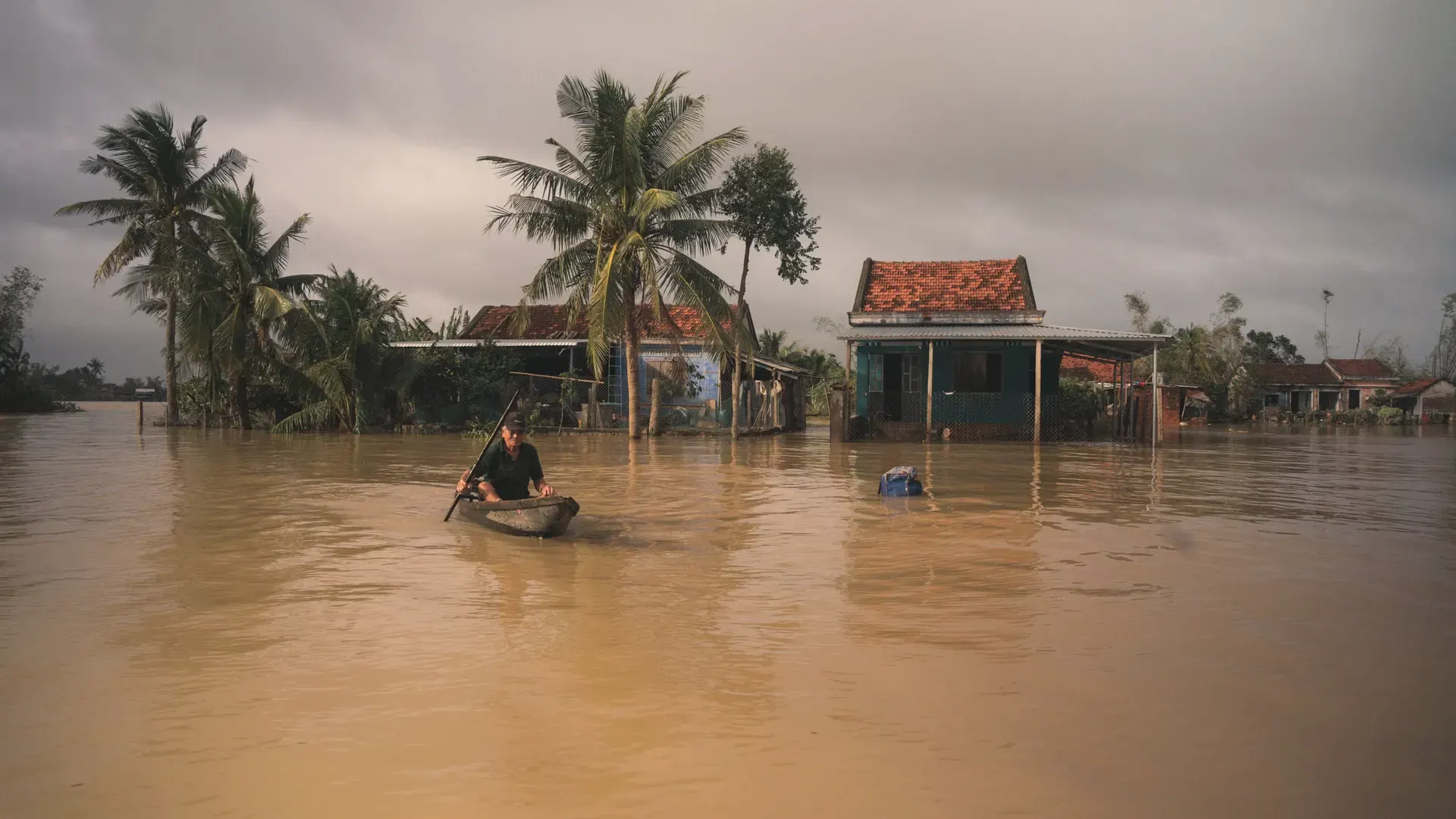
Where and when. The guideline's 2019 figures put the south far ahead, at 17.62 bites per 100,000 people, against 7.53 in the central region, 4.86 in the northeast and 4.35 in the north. Trang had the highest provincial rate (56.91), followed by Yala, Chai Nat, Ratchaburi and Nakhon Nayok. Reports rise from the end of the hot season, peak in the rainy season (June had the most, 601, then May with 589 and September with 470) and fall in the cool season. WHO adds that snakebites rise when floods come, and that snakes increasingly shelter inside homes. If you are renting in the south, near paddy fields or on a flood plain, read this guide alongside our flooding and monsoon season guide.
Which snakes in Thailand are venomous, and where do they live?
The Department of Medical Services guideline groups Thailand's venomous snakes by what the venom does. The English names below are our translation of the Thai names the guideline uses.
| Venom acts on | Snakes the guideline names | What it means |
|---|---|---|
| Nerves (neurotoxic) | Thai cobra (ngu hao), spitting cobra, king cobra (ngu chong ang), banded krait (ngu sam liam), Malayan krait (ngu thap saming khla) | Paralysis and neurological symptoms, in WHO Thailand's words |
| Blood (hematotoxic) | Russell's viper (ngu mae sao), Malayan pit viper (ngu kapa), green pit vipers (ngu khiao hang mai) | Bleeding, in WHO Thailand's words |
| Muscles (myotoxic) | Sea snakes | The guideline's muscle-toxin group |
| Blood (rear-fanged snake) | Red-necked keelback (ngu lai sap kho daeng) | The guideline reports deaths and severe injuries |
Which ones you are likely to meet depends on the region. The guideline lists:
- North: Thai cobra, king cobra, Malayan krait and banded krait.
- Central: spitting cobra, green pit viper and king cobra.
- Northeast: Malayan krait.
- South: king cobra, Russell's viper and Malayan pit viper.
- East: Russell's viper and Malayan pit viper.
- Everywhere: the Thai cobra and the banded krait, which the guideline names as the venomous snakes found throughout Thailand, and the red-necked keelback, which it says occurs in every region.
Two practical points come from the guideline itself. It notes that krait bites may cause only mild swelling and pain, and that the fang marks can be hard to see, so a quiet bite is not proof of a harmless snake. And its case notes warn that people can be bitten while asleep, especially at night, with nobody seeing the snake. Treat every bite as venomous until a doctor says otherwise.

What should you do in the first minutes after a snakebite?
These are the steps in chapter 5 of the Department of Medical Services guideline, for the time before and during the trip to hospital:
- Lie still and stay calm, to slow the spread of venom through the body.
- Limit movement of the bitten part by wrapping it with an elastic bandage, firmly enough. The guideline's illustration wraps the whole leg and adds a splint past the knee before transport.
- Do not tie the limb off or use a tourniquet. The guideline does not recommend it, and its diagnosis chapter warns doctors that releasing a tourniquet can make the patient suddenly worse as venom floods into the blood.
- Do not cut the wound, suck out the venom, massage it or put herbs on it. All of these raise the chance of infection.
- Do not burst blisters that form around the bite, for the same reason.
- Get to hospital as fast as possible, and bring the snake only if you can do it without delaying the trip.
The guideline's history-taking checklist also says a mobile phone photo of the snake can be shown to experts to identify it. From a safe distance, a photo is far better than trying to catch or kill it. Call 1669 for an ambulance; our emergency numbers guide has the rest of the list, and it is worth saving the nearest hospital's emergency number before you need it.
Folk remedies still circulate online. Follow the guideline's list above and ask the hospital, not a neighbor, about anything else.

What happens at the hospital, and is there antivenom?
Thailand makes its own. The guideline says the Queen Saovabha Memorial Institute (QSMI) of the Thai Red Cross Society produces the country's snake antivenom, enough for domestic needs, in two kinds:
- Single-species antivenoms for the cobra, king cobra, banded krait, Malayan krait, Russell's viper, Malayan pit viper and green pit viper.
- Two mixed (polyvalent) antivenoms, one for nerve venoms and one for blood venoms, used when the snake is not known for sure.
The WHO feature on QSMI explains why the institute exists: imported antivenoms did not work well against the region's own species, so Thailand began producing antivenom from local snakes when QSMI was set up in 1923. Doctors pick the antivenom from the symptoms, the location and the fang marks, which is why the snake's identity, or a photo, matters.
What to expect once you arrive, from the guideline's admission criteria:
- A bite by a snake that cannot be identified: admitted for at least 24 hours, with clotting and blood tests repeated every 6 hours. If symptoms and tests stay normal for the full 24 hours, the patient can go home.
- Every Russell's viper bite is admitted, as is anyone with signs of venom spreading through the body, severe swelling or pain, or an infected wound.
- Young children, pregnant women and people who cannot easily communicate or reach a hospital are admitted too.
Not every hospital stocks every antivenom. The guideline describes Ministry of Public Health hospitals holding the types common in their region and a national stock search (online or on 1330) that a hospital uses to borrow from the nearest stock. For a foreign patient in Bangkok and the surrounding provinces, it adds that the hospital can borrow antivenom from the Ramathibodi Poison Center on 1367 first, then buy a replacement from QSMI to return. It also records two gaps: Thailand has no antivenom for sea snake bites, and the pit viper Protobothrops kelomohy (ngu ke-lo Omkoi in Thai) has no specific antivenom yet. In the guideline's case study the patient was given the blood-venom mixed antivenom, and the guideline says its effect could not yet be judged; care rests on supportive treatment and advice from a poison center.
On cost: the guideline describes the NHSO antidote program as covering Thai patients under every coverage scheme. For foreign patients its antidote section describes only the borrowing route set out above. Our reading for foreign residents: expect antivenom and the hospital stay to be billed like any other emergency treatment, and check that your health insurance covers emergency admission. Our guide to private and public hospitals explains the difference in price and in who stocks what.

Who removes a snake from your home?
In Bangkok, call 199. The hotline belongs to the Bangkok Metropolitan Administration's Department of Disaster Prevention and Mitigation. A Huai Khwang District Office article dated 17 June 2024 says it runs 24 hours a day, says its teams can reach any point in the city within 10 minutes, and handles far more than fires: its list includes catching snakes and other dangerous animals and removing wasp, hornet and bee nests. It gave the department's strength at the time as 6 fire and rescue divisions, 41 main stations, 7 sub-stations and 2 water stations.
It is busy work. Thai Press reported on 21 March 2026 that the department's February 2026 figures showed 2,029 snake catches in the month, almost 70 a day, ahead of 401 monitor lizard calls and more than 305 wasp, hornet or bee nests. We could not open the department's own post, so the figure is Thai Press's report of it.
While you wait for the team, our practical advice, in line with the prevention advice above: keep people and pets away, keep the snake in sight from a distance if you can do it safely so you can tell the team where it went, and do not try to catch or kill it yourself; that is how many bites happen. Outside Bangkok, ask your landlord, village office or condo juristic office now which rescue team they call, and save the number. Our pest control guide covers the smaller visitors, and who pays for repairs in a Thai rental covers the gaps and broken screens that let animals in.

How do you keep snakes out of a house or villa?
The Department of Disease Control poster dated 16 July 2024 lists the habits it recommends:
- Check clothes and shoes every time before you put them on.
- Avoid walking where snakes may live: narrow gaps, cracks in walls and crevices between rocks.
- Sleep on a bed raised off the ground and tuck in the edges of a mosquito net.
- Do not reach into holes, overgrown corners, long grass or piles of wood.
- Avoid walking through overgrown ground at night.
- Carry a flashlight and a stick to swing so the noise warns snakes off.
- If you must go out at night, wear long trousers and shoes that cover the heel, or boots that cover the ankle.
For a rental house, our reading of that list turns into a short viewing checklist: cut grass and clear wood piles near the doors, look for gaps under doors and around drain pipes, check the screens, and ask the landlord how the garden is kept. The WHO feature notes that snakes come indoors looking for cooler shelter and food, and that bites rise when floods come, so the rainy months are when this matters most. Rodents draw snakes, which is one more reason to keep rubbish sealed; see our waste disposal guide. For choosing where to live, our flood risk property checklist helps you avoid the lowest ground.

Where can you learn to recognize Thai snakes?
The best-known place is the Snake Farm at the Queen Saovabha Memorial Institute in Bangkok, the same institute that makes the antivenom. The WHO feature describes its exhibitions and live demonstrations for locals and tourists, its snakebite prevention and first aid advice, and its training courses on handling snakes and treating bites. WHO describes the farm as a WHO Collaborating Centre, and its work also covers rabies prevention and treatment; our dog bites and rabies guide covers that side.
Entry is charged by nationality. The Snake Farm's own Instagram account posted announcement 22/2569 on 31 July 2026 with these prices: Thai adults 60 baht, Thai students 40 and children under 110 centimeters 20; foreign adults 300 baht, foreign students 150 and children 100. Opening days and show times did not open on the institute's site when we checked, so confirm them before you go. Our dual pricing guide explains foreigner rates in general.
For families, a visit is the simplest way to teach children what a cobra, a krait and a pit viper look like before a move to a house with a garden. For the wider health picture, see our vaccinations and travel health guide and mosquitoes and dengue.

Frequently asked questions
The Department of Medical Services' 2025 snakebite guideline sorts the dangerous ones into three groups. Snakes whose venom attacks the nerves: the Thai cobra, the spitting cobra, the king cobra, the banded krait and the Malayan krait. Snakes whose venom attacks the blood: the Russell's viper, the Malayan pit viper and the green pit vipers. And sea snakes, whose venom attacks the muscles. The same guideline adds the red-necked keelback, a rear-fanged snake found in every region that has caused deaths and severe injuries. It names the Thai cobra and the banded krait as the venomous snakes found throughout the country.
The guideline's pre-hospital steps: lie still and stay calm; limit movement of the bitten limb by wrapping it with an elastic bandage firmly enough; do not tie it off or use a tourniquet; do not cut the wound, suck out venom, massage it or put herbs on it; do not burst any blisters; and get to a hospital as fast as possible, bringing the snake only if that does not slow you down. A phone photo of the snake helps the doctors, the guideline says, but the patient comes first. Call 1669 for an ambulance.
Call 199. The Bangkok Metropolitan Administration's fire and rescue service answers it 24 hours a day, and a BMA district page dated 17 June 2024 lists catching snakes and other dangerous animals among the jobs it does, and says its teams can reach any point in the city within 10 minutes. Thai Press reported on 21 March 2026 that the department recorded 2,029 snake catches in February 2026 alone, almost 70 a day.
Yes. The guideline says the Queen Saovabha Memorial Institute of the Thai Red Cross makes Thailand's snake antivenom, enough for the country's own needs: single-species antivenoms for the cobra, king cobra, banded krait, Malayan krait, Russell's viper, Malayan pit viper and green pit viper, plus two mixed products, one for nerve venoms and one for blood venoms. It also notes two gaps: Thailand has no antivenom for sea snake bites, and one pit viper, Protobothrops kelomohy (ngu ke-lo Omkoi), has no specific antivenom yet.
Often, yes. The guideline tells doctors to admit anyone bitten by a snake that cannot be identified for at least 24 hours, with blood clotting tests repeated every 6 hours, and to admit every Russell's viper bite and anyone showing signs of venom spreading through the body. If 24 hours pass with normal symptoms and normal tests, the patient can go home.
Looking for a home with a garden?
Browse houses, villas and condos for rent from partnered agents, and use the checklist above when you view them.
Sources
- Department of Medical Services (Medical Academic Division), guideline for diagnosing and treating venomous snakebite in general practice, B.E. 2568, 1st edition, August 2568 (2025) (Thai): snakebite statistics, venomous species and regions, admission criteria, pre-hospital first aid, antivenoms ↗Department of Medical Services, Ministry of Public Health · Accessed 23 November 2026
- Department of Disease Control, Division of Injury Prevention, poster on preventing venomous snakebite, 16 July 2567 (2024) (Thai) ↗Department of Disease Control, Ministry of Public Health · Accessed 23 November 2026
- WHO Thailand feature, Integrating science, education, and public health: The Bangkok Snake Farm, 14 September 2023 ↗World Health Organization, Thailand · Accessed 23 November 2026
- Huai Khwang District Office (Bangkok Metropolitan Administration web portal), article on the 199 hotline, 17 June 2567 (2024) (Thai): 24-hour service, 10-minute response, snake catching ↗Bangkok Metropolitan Administration, Huai Khwang District Office · Accessed 23 November 2026
- Snake Farm QSMI (the farm's own Instagram account), Queen Saovabha Memorial Institute announcement 22/2569 on admission prices, posted 31 July 2026 ↗Queen Saovabha Memorial Institute, Thai Red Cross Society · Accessed 23 November 2026
- Thai Press (Instagram), 21 March 2026 (Thai): BMA disaster prevention department's February 2026 figures, 2,029 snake catches ↗Thai Press · Accessed 23 November 2026
Official primary sources are listed above with the date we last checked them. Thai rules, fees, thresholds and procedures change and can be applied differently by individual offices and embassies, confirm the current requirement with the responsible authority before relying on it. General information only, not legal, tax or medical advice. BAANLYY never takes paid placement in editorial content.