Which city fits you?
Answer 3 quick questions and see the Thailand city guide worth researching first.
Try it free →The complete starting point for Kalasin — the upper-Isaan province that holds Thailand's largest dinosaur excavation site and its first dinosaur museum, that spent sixteen years abolished into the province next door, and that has no airport, no railway station and no condominium market — with an overview, where to live, transport, healthcare, schools and an honest account of what it does not have.
Kalasin has one genuinely national-tier asset and it is not a building. Phu Kum Khao, a haystack-shaped hill of about 240 metres at Wat Sakkawan in Sahatsakhan district, is the largest dinosaur excavation site in Thailand: more than seven individual herbivorous dinosaurs and more than seven hundred bone pieces, including skull fragments, teeth and jaws, plus a near-complete articulated skeleton described as the most complete of its kind in the country. The site produced Phuwiangosaurus sirindhornae, found in 1994 by the abbot of the temple it sits behind, and the museum built over it — the Phu Kum Khao Dinosaur Research and Museum Centre, royally named the Sirindhorn Museum — is Thailand's first dinosaur research centre and its first dinosaur museum. The province's own self-image, though, is older and quieter: the thing on the provincial logo is not a dinosaur but Phra That Yakhu, an octagonal brick chedi standing in the ruins of a Dvaravati town whose excavation produced an Old Mon inscription of the eighth century CE. Around those two things sits a province of about 962,444 people across 6,947 square kilometres and eighteen districts — hilly rather than flat, drained by the Lam Pao into the Chi, with 10.9 per cent forest cover and a registered population that has been falling, down from 968,065 in 2023. What Kalasin has not got is an airport, a railway station, a condominium market, or an international school we could verify. All four of those are answered by the same place, and it is in another province.
 Photo: Quang Nguyen Vinh / Pexels
Eighteen districts group into five practical choices, and for most newcomers the first one is the answer. Mueang Kalasin, with Don Chan adjoining, holds Kalasin Hospital and its medical education centre, Kalasin University's in-town campus, the provincial government centre and the Rice Mill Market — and 17 of the 23 apartment listings one Thai portal returned for the entire province in August 2026, all of them inside a single downtown radius. South, Na Mon, Kamalasai, Khong Chai and Rong Kham carry two more university sites, the province's only other rental cluster, and Phra That Yakhu in the Dvaravati town of Mueang Fa Daet Song Yang. North, Sahatsakhan, Nong Kung Si, Tha Khantho and Sam Chai are the reservoir and dinosaur districts, physically split by the Lam Pao until the 2.4-kilometre Thesuda Bridge was built in 2006. West, Yang Talat and Huai Mek sit on the Highway 12 corridor and buy you a shorter drive to Khon Kaen. And east, Somdet, Huai Phueng, Kuchinarai, Khao Wong, Na Khu and Kham Muang climb into the Phu Phan foothills — Phu Thai country, praewa silk, Khao Wong glutinous rice and a second dinosaur site at Phu Faek. The full where-to-live guide compares all five.
 Photo: Quang Nguyen Vinh / Pexels
Kalasin has no airport anywhere in its 6,947 square kilometres and no railway station anywhere in it either, and unlike its neighbour Maha Sarakham the second absence has no end date attached. This is worth being precise about, because the story next door does not transfer. The 355-kilometre Ban Phai–Nakhon Phanom double-track railway is genuinely under construction, and it does not enter Kalasin: the official project material for Contract 1 states the alignment runs through Khon Kaen, Maha Sarakham and Roi Et provinces, and the line as a whole is reported to pass through Khon Kaen, Maha Sarakham, Roi Et, Yasothon, Mukdahan and Nakhon Phanom. Kalasin is not on that list and receives no station from it. So the honest answer for rail is Khon Kaen station, about 87 kilometres west by road on Highway 12. For flights, there are two useful options and they are not the same answer: Roi Et (ROI) is the closest at about 63 kilometres and just over an hour's drive southeast, but Khon Kaen (KKC) at about 87 kilometres and an hour and a quarter west carries far more traffic and is the practical one. Beyond those, Sakon Nakhon is about 135 kilometres and Udon Thani about 194. On the ground, Highway 12 is the province's spine — Khon Kaen to the west, Somdet and eventually Mukdahan to the east — with Highway 214 running south to Roi Et through Kamalasai and Highway 213 north toward Sakon Nakhon. Bangkok is about 515 kilometres away; the two sources we checked give 513 and 519.
 Photo: Valeria Drozdova / Pexels
The sequence is unusually well documented for a provincial attraction, so here it is in order. In 1994 Phra Khru Wichitsahatsakhun, abbot of Wat Sakkawan on Phu Kum Khao in Sahatsakhan district, found the skeleton of a herbivorous dinosaur in what is now the excavation pit. Late that same year the Department of Mineral Resources began systematic work. The site has since yielded more than seven individual herbivores and more than seven hundred bone pieces, including skull fragments, teeth and jaws, along with a near-complete articulated skeleton — the most complete herbivorous-dinosaur skeleton site in Thailand, and by Wikipedia's account the largest dinosaur site in the country, with most fossils being sauropods of around 120 million years ago. HRH Princess Maha Chakri Sirindhorn visited in 1995 and established the museum development project; a temporary shelter went over the pit, and in 1996 the department built a 375-square-metre research building. The full public opening came in 2007, as the Phu Kum Khao Dinosaur Research and Museum Centre, royally named the Sirindhorn Museum — Thailand's first dinosaur research centre and first dinosaur museum. One date conflict we will not paper over: a separate account reports a trial opening in April 2007 and a formal inauguration on 9 December 2008, which we could not reconcile with the provincial tourism office's 2007 date, so we give both. The museum runs two exhibition buildings and a permanent exhibition in eight zones, and displays a model of Siamotyrannus isanensis and the femur of Isanosaurus attavipachi, a herbivore of roughly 209 million years ago. Kalasin has a second, quite separate fossil site: theropod footprints found in 1996 at Phu Faek Forest Park in the eastern district of Na Khu.
Photo: Valeria Drozdova / PexelsVery few Thai provinces have been deleted from the map and put back, and Kalasin is one of them. The first official town was founded in 1793 and the mueang was upgraded to a province during King Rama V's thesaphiban reforms. Then, in the Depression, Bangkok cut costs: on 21 February 1932 the Royal Gazette demoted Kalasin and absorbed it into Maha Sarakham as a district. It stayed that way for sixteen years. The Act Establishing Changwat Kalasin was published in the Royal Gazette on 12 August 1947, and the province came back into existence on 1 October that year. That episode is not just trivia, because its administrative logic never fully unwound. When Kalasin Hospital established its clinical medical education centre — cabinet approval in principle on 6 May 2009, a memorandum with a university faculty on 31 July 2009, formal establishment by ministry order on 7 August 2009 — the partner was the Faculty of Medicine at Mahasarakham University, not Khon Kaen University, whose Srinagarind Hospital is the region's largest medical centre and closer. Kalasin's doctors are still trained by the province it was once part of. The rest of the province's identity sits in its motto, which names eight things: the revered Luang Pho Ong Dam, the ancient city of Fa Daet Song Yang, pong lang music, Phu Thai culture, praewa silk, the Pha Saweoi cliff on Phu Phan, the great Lam Pao, and million-year-old dinosaurs. Worth noting for anyone quoting it: the English translation carried alongside the Thai in our main source silently drops the first of those eight clauses. We have restored it.
Photo: Quang Nguyen Vinh / PexelsTwo things define Kalasin's geography and economy in ways a map does not show. The first is the Lam Pao. The river rises at Nong Han Kumphawapi lake in Udon Thani, runs the length of Kalasin and joins the Chi on the boundary with Roi Et; the dam built across it between 1963 and 1968, storing 1,430 million cubic metres for flood control and irrigation, created a reservoir that effectively cuts the northern half of the province in two. Until 2006 crossing it meant a long detour. The Thesuda Bridge — 2.4 kilometres of reinforced concrete linking Sahatsakhan on the east to Nong Kung Si on the west — is reported to save up to an hour, and any distance judgement about northern Kalasin has to account for the water. The second is praewa. The brocade silk woven by the Phu Thai people of Ban Phon in Kham Muang district is widely called the queen of Thai silks, and is one of four geographical-indication registrations reported for this province, alongside Khao Wong glutinous rice, Ban Phon milk jujube and the Kalasin giant freshwater prawn. It is a rare case of a national brand mapping to a single village. Thai press accounts describe Queen Sirikit visiting Kham Muang in 1977 and the weaving being taken under the SUPPORT Foundation from 1978; BAANLYY could not confirm the membership figures those accounts give and does not repeat them, and we could not confirm the GI registrations individually against the Department of Intellectual Property register. The province at large is a glutinous-rice, cassava and sugar-cane economy with basketry and silk supplementing household income. Climate is tropical savanna: about 1,360mm a year, August the wettest month at roughly 265mm by rainfall volume, December functionally dry at about 2mm, and April the hardest at an average daily maximum of 35.8°C.
 Photo: Pixabay / Pexels
Kalasin is inexpensive, and the visible rental market is small enough that the honest framing is a band rather than an index. An August 2026 spot check of the Thai apartment portals returned 23 listings province-wide on one and 8 on another, heavily overlapping — a union of roughly 22 to 23 distinct named buildings for a province of nearly a million people — with observed asking rents of about 1,200 to 4,500 baht a month, clustering hard between 2,500 and 4,000. Only one building we saw asked above 4,300, and only one below 1,500; the National Housing Authority stock in the town runs about 1,400 to 3,500. Two qualifications belong with those numbers. Most of those listings were last updated between 2016 and 2021 and only two of nineteen carried a 2026 date, so treat the band as indicative rather than live. And houses and townhouses — what a family actually takes here — barely appear in listing data at all and are negotiated directly. The line this province forces on every budget is a vehicle: there is no airport, no railway station, no mass transit, and the things Kalasin does not have are eighty-odd kilometres away in Khon Kaen. Our cost-of-living guide gives clearly labelled indicative ranges anchored to that observed spread, and it is honest about the line that changes the arithmetic completely, which is international schooling.
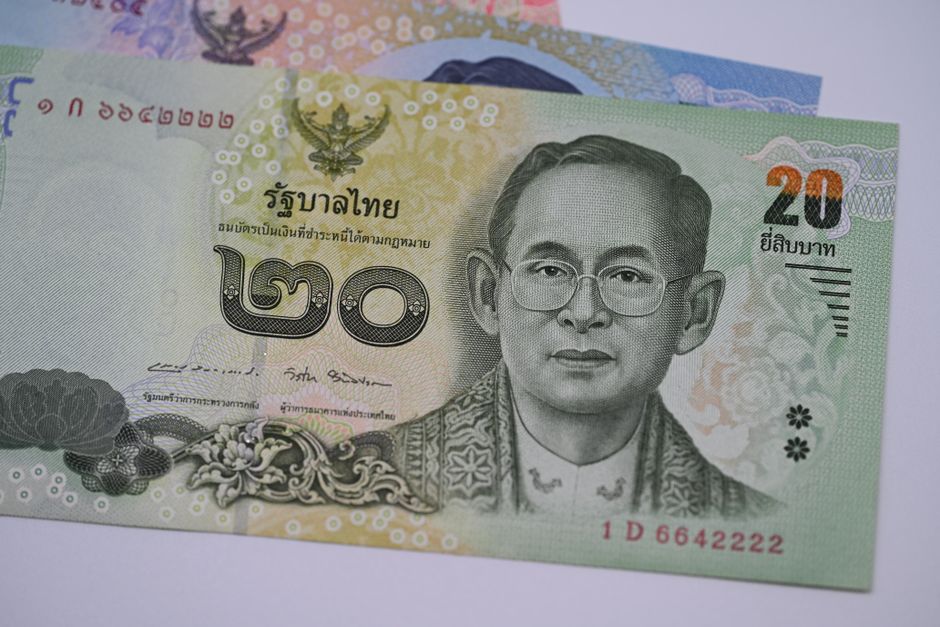 Photo: Qing Luo / Pexels
Kalasin Hospital, at 283 Kalasin Road in tambon Kalasin in the provincial town, is the Ministry of Public Health provincial hospital, and it does something a standard provincial hospital does not: it runs a clinical medical education centre teaching years four to six of the MD programme. The paper trail is unusually clean — cabinet approval in principle on 6 May 2009, a memorandum of understanding signed on 31 July 2009 with the Faculty of Medicine at Mahasarakham University, and formal establishment by Ministry of Public Health order 1056/2552 on 7 August 2009 — and the centre's own partner-university page links to exactly one institution, Mahasarakham University's medical faculty. That is the interesting fact: the obvious guess for an upper-Isaan province would be Khon Kaen University, whose Srinagarind Hospital is the region's super-tertiary centre and is nearer. It is not the answer. One caveat we will state rather than hide: some of the centre's rotation-timetable URLs use a slug that normally denotes a different university, which we could not explain, so we do not claim the Mahasarakham link is exclusive. On the hospital itself, secondary sources describe it as a general hospital at ministry service level S with 540 licensed beds and 562 actually open. We could not confirm either figure on a primary source, so we report both and label them unverified — and we note that a general hospital is not a regional one: the regional-tier hospitals for this part of Isaan are in Khon Kaen and Udon Thani. A private hospital operating under the Thonburi group name appears in directories; we could not verify its scale.
 Photo: RDNE Stock project / Pexels
The short version: there is no condominium market in Kalasin, and we checked hard enough to say that rather than hedge it. Four separate portals were checked in August 2026. One reported zero condos for rent in the province and, more tellingly, offers no condominium category at all in its Kalasin menus — houses and townhouses for rent, land, houses, townhouses, hotels, shophouses and retail for sale, and no condo entry to click. Its project directory returns zero named projects of any type. A second returned no results for condominiums with zone counters reading sixteen for sale and zero for rent. A third returned no results and shows a blank average condominium price for the province, against an average detached house of about 1.73 million baht and an average townhome of about 1.62 million, with land named as the most popular property type. And a fourth listed 23 properties for sale province-wide, overwhelmingly land plus a handful of detached houses and one semi-detached, with zero condominium units. We ran the control that this platform now requires before reading a zero as a fact: the same portal's condominium index for Khon Kaen returns around forty rental listings, counters of 371 for sale and 90 for rent, and a list of named buildings. The filters work. Kalasin's zero is a real zero. What does exist is named house estates — one detached-house project in Mueang Kalasin lists 34 units completed in 2019 — and two further project names whose type we could not verify. BAANLYY does not publish a developer, completion year, floor count, unit count or coordinate we have not individually confirmed, and a verified building directory for this province sits on our data backlog, labelled as such.
 Photo: Pixabay / Pexels
There is no organised foreign community in Kalasin of the kind Chiang Mai, Udon Thani or even Khon Kaen has, and it would be dishonest to imply one. What the province has instead is a university with eleven international memorandums and campuses in four places, a vocational sector large enough to sustain a language-teaching job market, a hospital that trains doctors, and a cost base low enough that a modest income goes a very long way. That suits a specific person: someone with Thai family ties here, someone teaching or researching, or someone who genuinely wants a quiet Isaan province and will drive for what it lacks. Be clear about what it lacks, because the list is long and specific. No airport. No railway station, and none coming — the new line under construction misses this province entirely. No verified condominium. No international-curriculum school anywhere in the province — though both large state secondaries in the town, Kalasinpittayasan and Anukoolnaree, do run a Mini English Program within the Thai curriculum, and for an international one the nearest options are the four English-medium schools in Khon Kaen, 80-odd kilometres west, of which only Khon Kaen Vithes Suksa Bilingual School teaches past the age of twelve. No regional-tier hospital. Against all that, Kalasin also has no international border, no closed crossing and no travel advisory of any kind attached to it — all six of its neighbours are Thai provinces and none of them touches Cambodia, which is worth stating plainly given how much of that story has attached to Isaan since 2025.
Editorial analysis compiled and periodically refreshed by BAANLYY’s research team — not a live data feed.
Analysis last reviewed August 2026.
The core Kalasin relocation guides are below, with more being added. In the meantime, see the general Thailand visa and relocation guides too.
Kalasin neighbourhood & areas guide →
Kalasin Area Score — every area ranked & rated →
See our Thailand visa guides, then talk to us about relocating.
Primary and official sources are cited above. Government rules, fees and procedures in Thailand change over time and vary by office; always confirm current requirements with the relevant authority before relying on them. BAANLYY never takes paid placement in editorial content.
General information and indicative pricing, not legal, tax, immigration or financial advice. Hero photograph via Pexels. Museum opening hours, hospital services, university programmes, bus timetables and festival dates all change — confirm current details with official sources, individual listings or licensed professionals.

Free tools for this
Answer 3 quick questions and see the Thailand city guide worth researching first.
Try it free →Build a realistic monthly budget by lifestyle tier.
Try it free →