Which city fits you?
Answer 3 quick questions and see the Thailand city guide worth researching first.
Try it free →The complete starting point for Phichit — a quiet lower-northern rice province on the Nan River, and the legendary city of Chalawan — with an overview, where to live, transport, heritage and relocation.
Phichit is one of Thailand's quietest provinces — a flat, fertile rice plain in the lower north where the Nan and Yom rivers run south and join shortly before the Chao Phraya is formed. Only about 0.4% of its land is forest; nearly three-quarters is farmland, and rice, sugarcane, pomelo and lime dominate the economy. It has no airport and no national university campus, and it draws almost no foreign visitors: of roughly 280,900 people who visited in 2021, all but around 94 were Thai. What it does have is a Northern-Line rail spine through Phichit, Taphan Hin and Bang Mun Nak, a 400-bed Level S provincial hospital that trains doctors and takes referrals from four neighbouring provinces, its own community college and secondary service area office, an unusually deep well of legend and heritage, and some of the lowest living costs in the country. This is a province for people who genuinely want rural Thailand — not a relocation destination competing with Chiang Mai or the coast, and we say so plainly.
 Photo: Pixabay / Pexels
Phichit's living options come down to four practical choices, and all four are small. Phichit town centre on the Nan riverside (Nai Mueang) is the walkable core — the railway station, Phichit Hospital, the provincial offices and Wat Tha Luang. Bueng Si Fai and the old city at Mueang Kao form the green, house-led edge of town around the lake and the historical park. Taphan Hin, roughly 28 rail-kilometres south, is the province's second town, with its own station and a 90-bed hospital. And Bang Mun Nak and the southern districts are rice country — the cheapest and most rural option in the province. The full where-to-live guide compares all four honestly.
 Photo: Valeria Drozdova / Pexels
Phichit has no airport, but it does have rail — and that is the province's single best connection. The Northern Line runs its full length, with Class 1 stations at Bang Mun Nak (297km from Bangkok), Taphan Hin (319km) and Phichit (347km), all three opened in 1908 with the original extension from Pak Nam Pho to Phitsanulok. Trains run in both directions between Bangkok and Chiang Mai. By road, Highway 117 links the province north to Phitsanulok and south to Nakhon Sawan, and Highway 113 runs east toward Phetchabun. There is no BTS, MRT or city bus network: within and between the towns, life runs on songthaews, motorbike taxis and — for almost everyone who lives here — a private motorbike or car. The nearest commercial airport is Phitsanulok (PHS), around an hour north.
 Photo: Quang Nguyen Vinh / Pexels
For a small province, Phichit carries a remarkable amount of story. It is Mueang Chalawan, the city of the crocodile — the setting of the Krai Thong folk epic in which a commoner hunts down Chalawan, the shape-shifting crocodile lord, and its provincial aquatic animal is still the Siamese crocodile. The old city at Mueang Kao, founded in 1058 and successively called Sa Luang and Okhaburi before it became Phichit, survives as a historical park with earth ramparts, a moat and the cave the legend assigns to Chalawan. Wat Pho Prathap Chang, in the district of the same name, was built in 1701 by King Suriyenthrathibodi — Phra Chao Suea, the 'Tiger King' — at his reputed birthplace, and is still ringed by double walls and trees over two centuries old. Wat Bang Khlan was the temple of Luang Pho Ngoen, who died in 1919 reputedly aged 111 and whose amulets remain among the most sought-after in Thailand. And Wat Tha Luang's Luang Pho Phet anchors the province's signature event, the traditional long-boat races on the Nan.
 Photo: Quang Nguyen Vinh / Pexels
Phichit suits a narrow group very well and almost everyone else poorly. It works for people with a family or land connection to the province, for retirees on a modest budget who want a genuinely rural Thai life near a real provincial hospital, and for anyone whose work brings them here. It does not work for people who need an international school, an organised foreign community, an airport on the doorstep or a modern condominium — none of those exist here. The standard Thai long-stay visa routes apply (retirement, marriage, DTV, education and LTR), there is no international border in the province, and extensions and 90-day reporting route through the Phichit Immigration Office. Housing is let almost entirely by local owners rather than agencies, so expect to arrange things in person and in Thai.
 Photo: Marta Branco / Pexels
Phichit is among the least expensive provinces in Thailand. Its gross provincial product per head ran at roughly ฿93,950 in 2021 — well under half the national average — and with almost no tourism, no expat-premium pricing and an agricultural economy, day-to-day prices stay genuinely low. The flipside is that structured, Phichit-specific cost data is close to non-existent, so our cost-of-living guide gives clearly labelled indicative ranges rather than inventing precise figures. Budget realistically for a vehicle: with no mass transit and real distances between the towns, a motorbike or car is a fixed line in almost every Phichit budget.
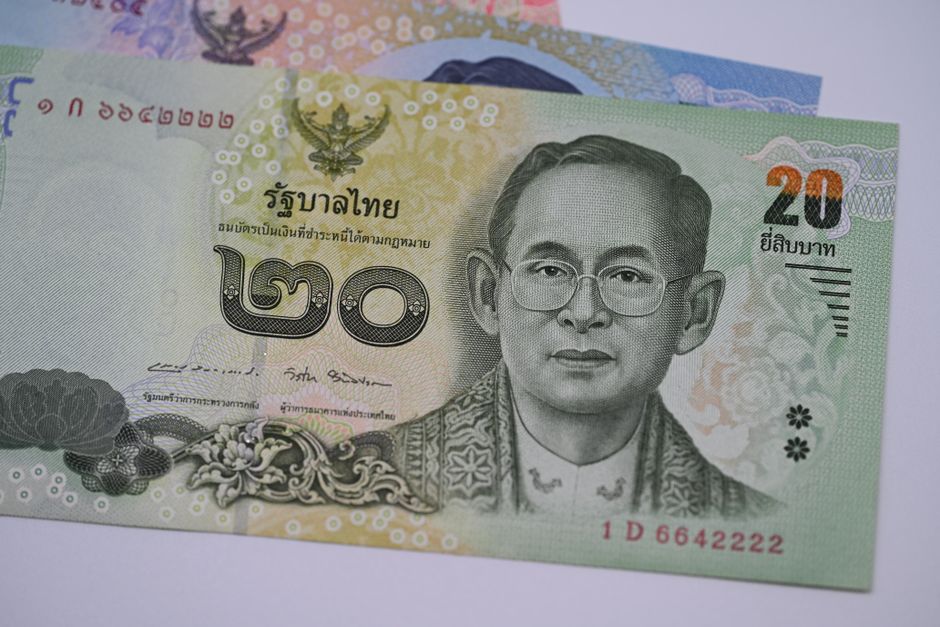 Photo: Qing Luo / Pexels
Phichit's healthcare is stronger than the province's size suggests and plainly not a regional hub. Phichit Hospital in the town centre is the province's only general hospital, graded Level S by the Ministry of Public Health at around 400 beds — one tier below a regional centre — and it takes referrals from the border districts of Phitsanulok, Phetchabun, Nakhon Sawan and Kamphaeng Phet as well as from its own network. Its Clinical Medical Education Centre, approved by cabinet in June 2004 and teaching from March 2005, delivers the clinical years of Naresuan University's medical degree under the national CPIRD rural-doctor programme. The other eleven districts each have a community hospital — Bang Mun Nak and Taphan Hin the largest at 90 beds each — backed by 109 sub-district health-promoting hospitals. On the private side, Chaiaroon Vechagarn and Pitsanuvej Phichit both sit in Mueang Phichit, and Pitsanuvej is part of the SET-listed PRINC group whose network includes the JCI-accredited Pitsanuvej Phitsanulok an hour north. For genuinely complex or specialist care, patients travel to Phitsanulok, and we say so rather than overstating what is here.
 Photo: RDNE Stock project / Pexels
Phichit has a full Thai state school system and no international layer above it. The province runs its own Secondary Educational Service Area Office administering 30 secondary schools in four clusters — Mueang Phichit, Sam Ngam, Taphan Hin and Bang Mun Nak — with Phichit Pittayakom School at 31 Phichit–Kamphaeng Phet Road the town-centre flagship, teaching M.1 to M.6 with selective SMTE and Science–Mathematics–English streams, and Taphan Hin School founded in 1951 serving the south. Behind them sit three government vocational colleges — Phichit Technical College next door to the flagship, the 523-rai College of Agriculture and Technology at Sam Ngam, and Phichit Vocational College at 316 Busaba Road beside Wat Tha Luang, which carried the name Phichit Polytechnic College until a Ministry of Education renaming on 21 December 2021 — plus Phichit Community College at Pho Thale, a state higher-education body created in 2002 precisely because the province has no university. Beyond them the province has one Buddhist-university service unit, MCU's, at Wat Phruksawan Chotikaram in Taphan Hin, and no Ramkhamhaeng presence at all: neither one of its 23 regional campuses nor one of its 41 examination centres, so a distance student registers and sits finals out of province. Families needing a genuine international curriculum will not find one here — that negative has been tested in Thai as well as English — and the realistic options are Phitsanulok an hour north, or Chiang Mai and Bangkok for a full international track.
 Photo: Tima Miroshnichenko / Pexels
Phichit is a house-and-apartment market, not a condominium market. Real estate accounts for about 3.8% of provincial output, there is no student or investor demand of the kind that produces condo towers, and BAANLYY has not verified a single registered condominium building in the province. Rather than fabricate a building directory with invented developers, completion years, floor counts or coordinates, our condos-and-housing overview is explicit about what the supply actually is — apartments above shophouses, townhouses and detached homes let directly by local owners — and leaves the verified building directory to our ongoing data process, clearly labelled as pending.
 Photo: Pixabay / Pexels
There is no organised expat community in Phichit, and BAANLYY will not invent one. In 2021 the province recorded around 280,908 visitors of whom 280,814 — very nearly 100% — were Thai. The foreigners who live here are overwhelmingly individuals married into Thai families, scattered across the districts rather than clustered anywhere, plus a small number of teachers. That is the honest picture: a province where you will be the only foreigner in most rooms, which is exactly what some people are looking for and a dealbreaker for most.
Editorial analysis compiled and periodically refreshed by BAANLYY’s research team — not a live data feed.
Analysis last reviewed August 2026.
The core Phichit relocation guides are below, with more being added. In the meantime, see the general Thailand visa and relocation guides too.
Phichit neighbourhood & areas guide →
Phichit Area Score — every area ranked & rated →
See our Thailand visa guides, then talk to us about relocating.
Primary and official sources are cited above. Government rules, fees and procedures in Thailand change over time and vary by office; always confirm current requirements with the relevant authority before relying on them. BAANLYY never takes paid placement in editorial content.
General information and indicative pricing, not legal, tax, immigration or financial advice. Hero photograph via Pexels. Confirm current details — especially train schedules, which change — with official sources, individual listings or licensed professionals.

Free tools for this
Answer 3 quick questions and see the Thailand city guide worth researching first.
Try it free →Build a realistic monthly budget by lifestyle tier.
Try it free →