Which city fits you?
Answer 3 quick questions and see the Thailand city guide worth researching first.
Try it free →The complete starting point for Phrae — the upper north's teak-and-indigo Lanna province in the Yom valley — with an overview, where to live, transport, heritage and relocation, honestly scoped.
Phrae is an upper-northern province in the valley of the Yom River, ringed by Phayao, Nan, Uttaradit, Sukhothai and Lampang, and it is the province most travellers drive straight through on the way to somewhere more famous. That is precisely its appeal. Its history runs back to the Mon kingdom of Haripunchai and it became part of Lan Na in 1443; its wealth came later, from the teak boom of the late nineteenth and early twentieth centuries, which left the old walled town with one of the finest surviving collections of golden-teak mansions anywhere in Thailand. The province is 6,483 km2, 64.8 per cent of it forest, with 421,745 registered residents across eight districts, 78 subdistricts and 645 villages — and a Human Achievement Index that the national planning council ranked 19th in the country in 2022, which is high for a province this quiet. BAANLYY covers Phrae because it offers something rare in the north: a walkable historic town centre, three hospitals including two non-government ones, its own immigration office and a railhead, at a cost of living well below Chiang Mai's.
 Photo: Quang Nguyen Vinh / Pexels
Phrae's living options come down to five honest choices. Nai Wiang is the walled old city — the moat, the teak mansions, the shophouse grid, and the cluster of newer apartment blocks along Mueang Hit Road and Soi Phrae Thong 4 that make up most of the province's advertised rental stock. Na Chak and the Yantrakitkoson bypass, just southeast, hold Phrae Hospital on Cho Hae Road plus both non-government hospitals and the airport. Thung Hong and Rong Kwang to the north give you the mo hom indigo villages and two university campuses — Maejo's in Rong Kwang district and Mahachulalongkornrajavidyalaya University's fifteen kilometres up the same Route 101 corridor at Mae Kham Mi. Den Chai and Sung Men to the south hold the railway, Wat Suthon and Ban Don Mun's teak workshops. And Song, Long and Wang Chin are the forested, mountainous districts — cheapest, quietest, and furthest from a hospital. The full where-to-live guide compares all five.
 Photo: Valeria Drozdova / Pexels
Route 101 is Phrae's spine, running down from Nan through the province and on toward Sawankhalok, Sukhothai and Kamphaeng Phet. The province has a railway station — but not in the town: Den Chai, about 24km away in Den Chai district, is Phrae's railhead on the Northern Line, and the town itself has never had rail. It also has an airport, Phrae Airport (PRH) in Mueang Phrae district, which has had no scheduled passenger service since Nok Air suspended its Don Mueang route in April 2023; the airport's own passenger history shows it has gone quiet and come back before. In practice that leaves buses and the road: roughly eight to ten hours to Bangkok from the central bus station, and under four hours to Chiang Mai's Arcade terminal. Inside the old city you can walk; outside it you will want a motorbike, and for the outer districts a car.
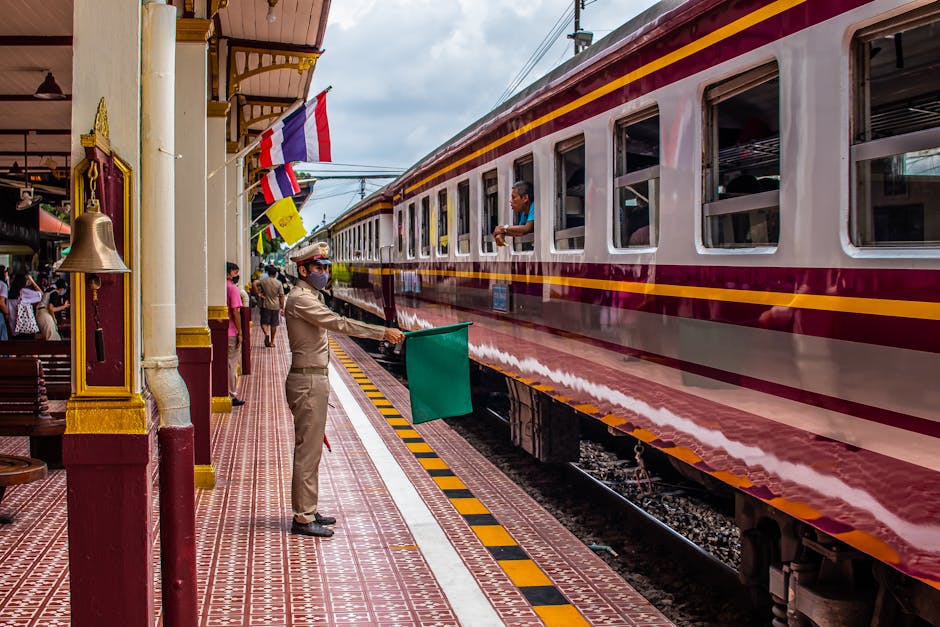 Photo: Pexels contributor / Pexels
The provincial motto lists what Phrae is proud of: mo hom cloth and teak wood, the place of Phra Lo's love, the home of Phra That Cho Hae, the famed Phae Mueang Phi, and the generous people of Phrae. All five are real places you can visit. Mo hom is the indigo-dyed cotton shirt woven at Ban Thung Hong just north of town. The teak is everywhere in the old city — Khum Chao Luang, built for the ruling prince around 1889–1892, and Vongburi House, raised in 1897 and dressed in pale-pink fretwork, are the two set-pieces. Wat Phra That Cho Hae, about nine kilometres southeast, carries the copper-and-gold chedi that rides on the horse in the provincial seal. Phae Mueang Phi is a forest park of eroded earth pillars on the town's northern edge. And Phra Lo is the hero of Lilit Phra Lo, the Lanna courtly romance whose chedi stands at Ban Klang in Song district. The darker chapter is 1902, when Shan rebels sacked the town and the last ruling prince went into exile — the end of semi-independent rule in the north.
 Photo: Pexels contributor / Pexels
Phrae suits long-stayers who want a small northern Thai town with real character and real services, and who do not need an expat scene to enjoy themselves. The standard Thai long-stay routes apply — retirement, marriage, DTV, education and LTR — and Phrae runs its own immigration office at 249 Moo 1, Thung Kwao subdistrict in Mueang Phrae, so extensions, 90-day reporting and re-entry permits are handled in the province rather than in Chiang Mai. Be clear-eyed about the trade-offs: the advertised rental market is about 25 buildings, we found no registered condominium and no international-curriculum school anywhere in the province, and the airport currently has no scheduled flights. What you get instead is a town you can walk, a provincial hospital plus two non-government hospitals within a few kilometres of each other, and Chiang Mai under four hours away by bus.
 Photo: Marta Branco / Pexels
Phrae is inexpensive by northern-Thai standards and markedly cheaper than Chiang Mai. Across the 25 apartment entries RentHub displayed for the province in August 2026, advertised asking prices ran from about ฿1,200 a month for a basic room up to about ฿5,500 for the newest blocks in the old city, with a single home-office house listed at ฿10,000. Community-contributed cost data for the province is thin, so our cost-of-living guide is explicit about which figures are Phrae-specific advertised prices and which are indicative northern-regional benchmarks, rather than inventing precision. One line item to plan for honestly: with no mass transit, a motorbike is effectively compulsory outside the old town, and a car if you intend to use the outer districts or Chiang Mai regularly.
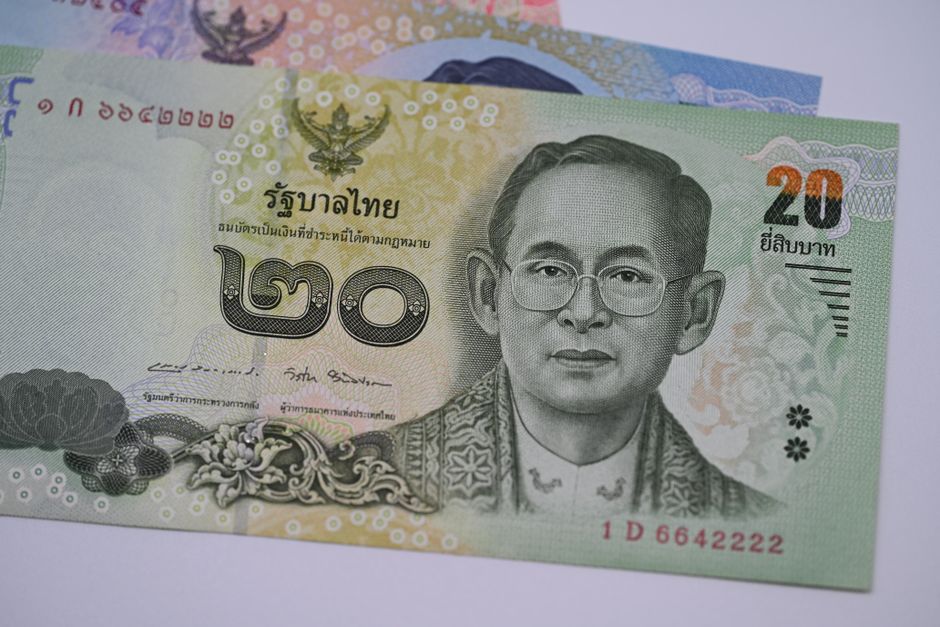 Photo: Qing Luo / Pexels
Healthcare is one of Phrae's genuine strengths for a province of 420,000. Phrae Hospital, the Ministry of Public Health provincial general hospital on Cho Hae Road in tambon Na Chak, is the main facility, backed by a community hospital in each outlying district. Unusually, the capital also has two non-government hospitals within a couple of kilometres of it, both on Yantrakitkoson Road: Phrae-Ram Hospital, and Phrae Christian Hospital, a Presbyterian mission foundation whose original building is over a century old and which the U.S. Consulate General in Chiang Mai lists at around sixty beds. Bed counts published for the provincial hospital differ between directories and we have not verified one against an official Ministry source, so we do not quote a figure for it. Complex tertiary care is generally referred on toward Lampang or Chiang Mai.
 Photo: RDNE Stock project / Pexels
Phrae has four separate degree-awarding institutions teaching across five sites — far more than a province this size usually offers — plus two long-established government secondary schools. Maejo University, Thailand's oldest agricultural institution, founded in 1934, runs its Phrae campus in Rong Kwang district, one of two provincial campuses alongside Chumphon. Fifteen kilometres further up the same Route 101 corridor at Mae Kham Mi, Mahachulalongkornrajavidyalaya University runs a full campus — not an outreach centre — teaching bachelor's and master's degrees since 1987. Two more bodies award degrees without 'university' in the name: the Praboromarajchanok Institute's Boromarajonani College of Nursing at Na Chak, and the Institute of Vocational Education, Northern Region 2, which awards five Bachelor of Technology programmes taught at Phrae Technical College and Phrae Vocational College. In the town, Phiriyalai School traces itself to the Thepwong school opened on 20 July 1900 by the last ruling prince and renamed by royal grant, while Nareerat School dates from 1921 and now runs a special English classroom plus language-excellence streams in four more languages. What we still could not identify anywhere in Phrae province is an international-curriculum school: families needing IB or Cambridge should assume Chiang Mai, which is under four hours away by bus, and should read the schools guide before committing.
 Photo: Tima Miroshnichenko / Pexels
Phrae's housing reality is houses, shophouse rooms and small purpose-built apartment blocks — with no registered condominium that we could surface. DDproperty's province-bounded condo directory for Phrae returned exactly one entry, and it is classified as an apartment rather than a condominium; FazWaz returned zero condo units for the province, and its trend box agreed with its own empty grid rather than contradicting it. The clearest single data point on what the stock is actually like: across all 25 apartment entries RentHub displayed for Phrae, its own amenity filter recorded zero buildings with a lift and zero with a swimming pool. Rather than publish a building directory with unverified developers, years, floor counts or coordinates, BAANLYY populates its Phrae building records only as each one is verified.
 Photo: Pixabay / Pexels
Phrae has no organised expat scene of the kind Chiang Mai or Chiang Rai support — no foreign-run business district, no regular meet-up we could verify, no international school and no English-language local media. The foreign residents here are mostly people married into Thai families, a scatter of retirees drawn by the cost and the old town, and occasional academic traffic around the Maejo campus. What Phrae does have is the practical infrastructure that makes living without a scene manageable: its own immigration office, three hospitals in the capital, a walkable centre, and Chiang Mai's full expat infrastructure under four hours away. The expat guide sets out what exists and what does not.
Editorial analysis compiled and periodically refreshed by BAANLYY’s research team — not a live data feed.
Analysis last reviewed August 2026.
The core Phrae relocation guides are below, with more being added. In the meantime, see the general Thailand visa and relocation guides too.
Phrae neighbourhood & areas guide →
Phrae Area Score — every area ranked & rated →
See our Thailand visa guides, then talk to us about relocating.
Primary and official sources are cited above. Government rules, fees and procedures in Thailand change over time and vary by office; always confirm current requirements with the relevant authority before relying on them. BAANLYY never takes paid placement in editorial content.
General information and indicative pricing, not legal, tax, immigration or financial advice. Hero photograph via Pexels. Confirm current details — especially flight and rail service, bus schedules and immigration procedures, which change — with official sources, individual listings or licensed professionals.

Free tools for this
Answer 3 quick questions and see the Thailand city guide worth researching first.
Try it free →Build a realistic monthly budget by lifestyle tier.
Try it free →