Which city fits you?
Answer 3 quick questions and see the Thailand city guide worth researching first.
Try it free →The complete starting point for Samut Sakhon — Bangkok's coastal neighbour at the mouth of the Tha Chin River, better known as Mahachai — with an overview, where to live, transport, heritage and relocation.
Samut Sakhon — universally called Mahachai by anyone who lives there — is the small coastal province immediately west of Bangkok, at the point where the Tha Chin River empties into the Gulf of Thailand. It is part of the Bangkok Metropolitan Region, covers just 866 km² across three districts, and had a registered population of about 590,000 in 2024, plus one of the largest migrant workforces in the country. Its own provincial slogan sums it up honestly: "fishing city, factory town, agricultural ground, historic site." This is Thailand's seafood-processing heartland and one of its densest industrial belts — not a resort province and not a heritage destination. What it offers a relocator is proximity: you can live on the coast, in a modern estate on Rama II Road, at genuinely lower rents than Bangkok proper, and still be inside the metropolitan region.
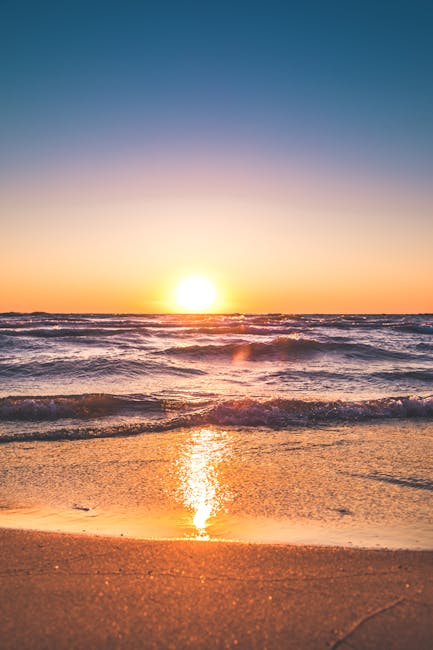 Photo: Quang Nguyen Vinh / Pexels
Samut Sakhon's living options split into five broad choices. Mahachai town and the Tha Chin riverfront is the walkable provincial seat — the fishing port, the seafood market, the railway terminus, the Tha Chalom ferry and the main hospital. The Rama II Road corridor is the modern axis, with Central Mahachai and Porto Chino, the newest estates and most of the province's condominium stock. Krathum Baen and Om Noi, in the north against Bangkok's western edge, are the factory belt and hold the deepest, cheapest rental supply. Ban Phaeo, inland to the west, is orchard country and genuinely rural. And the coastal salt-pan belt around Khok Kham and Phanthai Norasing is the landscape most people picture when they think of the province — beautiful, but with almost no formal rental stock. The full where-to-live guide compares all five.
 Photo: Valeria Drozdova / Pexels
Samut Sakhon's defining road is Highway 35, Rama II Road, which carries every vehicle between Bangkok and the entire southern half of Thailand — convenient in principle, and notoriously congested in practice thanks to years of near-continuous construction. That construction is now producing something: the M82 elevated motorway runs directly above Rama II, its Bang Khun Thian–Ekachai section has been open toll-free since October 2025, and the Department of Highways has said the run through to Ban Phaeo opens on 28 August 2026 — a 25km elevated bypass with four ramps in service, closed to motorcycles. Ekkachai Road (Highway 3242) runs a parallel route into Bangkok's Chom Thong district, and Highway 4 (Phetkasem) passes through the north of the province. Rail is unusual and charming rather than practical: Samut Sakhon sits on the State Railway's Maeklong Line, served by Mahachai station on the east bank of the Tha Chin and Ban Laem station on the west bank, with a passenger ferry — not a bridge — connecting the two halves. There is no BTS or MRT in the province; roughly fifteen bus lines and the usual songthaews, motorbike taxis and ride-hailing fill in locally.
 Photo: Quang Nguyen Vinh / Pexels
The province's oldest recorded name is Tha Chin — "Chinese pier" — from its history as a port where Chinese junks traded, and that inheritance is still visible in Tha Chalom, the old riverside settlement of wooden shophouses and Chinese shrines reached by ferry from Mahachai. Tha Chalom is widely recorded as the site of Thailand's first sanitary district, established during the reign of King Chulalongkorn (Rama V) in 1905 — the seed of local self-government outside Bangkok. Elsewhere, Wat Yai Chom Prasat is an Ayutthaya-period temple known for its finely carved wooden doors; the ruins of Wichian Chodok Fort, built in the Third Reign around 1827 to guard the river mouth, still sit at the estuary; and the Phanthai Norasing shrine, honouring the boatman of Thai folk history whose story became a byword for honesty, is the province's most-visited site.
 Photo: Quang Nguyen Vinh / Pexels
Samut Sakhon suits a specific person: someone tied to the seafood, logistics or manufacturing economy, or a Bangkok commuter who wants metropolitan-region access at provincial rents. It is not a lifestyle relocation destination, and we would rather say so plainly than sell it as one. The standard Thai long-stay visa routes apply (retirement, marriage, DTV, education and LTR), there is no international land border in the province, and extensions, 90-day reporting and re-entry permits route through the Samut Sakhon Immigration Office. The rental market is real and locally run rather than agency-led: newer condos and estates along Rama II, the deepest and cheapest apartment supply in the Krathum Baen and Om Noi factory belt, and owner-let houses everywhere else.
 Photo: Marta Branco / Pexels
Samut Sakhon is cheaper than Bangkok for housing and food while sitting inside the same metropolitan region — that arbitrage is the main financial argument for living here. Seafood in particular is exceptional value, since this is where much of Bangkok's catch is landed and processed. Structured, province-specific cost data is thin, so our cost-of-living guide is explicit about which figures are Samut Sakhon-specific and which are indicative regional benchmarks rather than inventing precise numbers. With no BTS or MRT and a road network built around Rama II, a car or motorbike is a real budget line for almost everyone here.
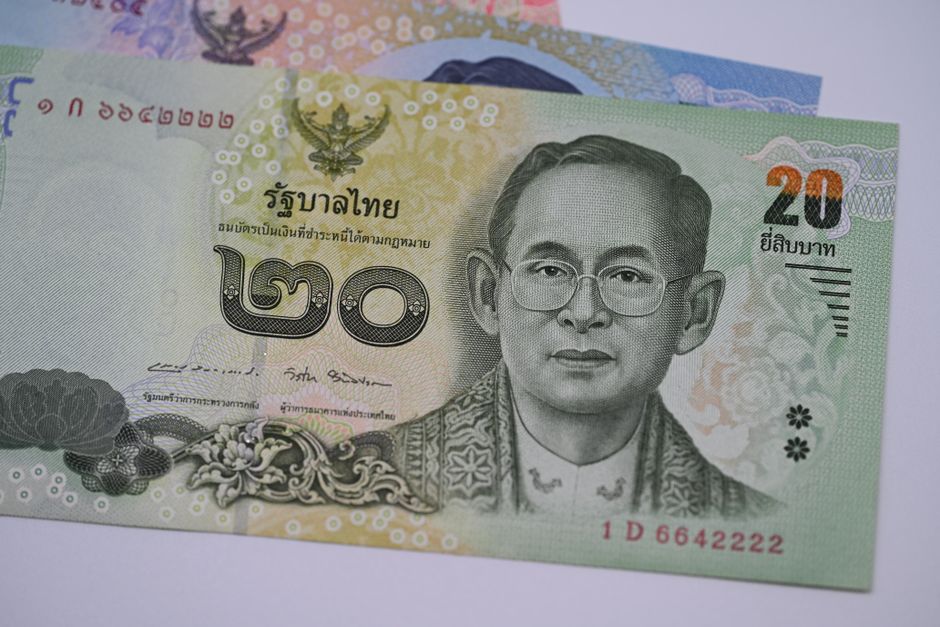 Photo: Qing Luo / Pexels
For a province this small, hospital coverage is solid and unusually well distributed — one general hospital per district. Samut Sakhon Hospital, the 600-bed Ministry of Public Health facility in Mueang district, is the provincial referral centre; Krathum Baen Hospital (300 beds) covers the northern factory belt; and Ban Phaeo General Hospital (323 beds) serves the west and is nationally notable as the only hospital in Thailand run as a public organisation rather than directly by the ministry. Private options in Mueang district include Ekachai Hospital and Mahachai 3 Hospital. For the most specialised care, Bangkok's flagship private hospitals are within an hour by road in normal traffic.
 Photo: RDNE Stock project / Pexels
Samut Sakhon has 146 primary and secondary schools across its three districts, anchored by strong Thai government schools such as Samutsakhonburana School in Mahachai. It also has a British-curriculum international school inside the province — Norwich International School, open since 2014 on Rama II Road at Bang Nam Chuet, running from Nursery through IGCSE to A Level — plus Samut Sakhon Technical College (trades since 1938), Samut Sakhon Fisheries College at Don Kai Di, the National Sports University's Samut Sakhon campus and Samut Sakhon Community College. What it does not have is a large multi-faculty university, or a choice of international campuses: for those, students and families commute to Bangkok, or north to Mahidol University's Salaya campus in Nakhon Pathom. The schools guide names each institution and is explicit about where the line falls.
 Photo: Tima Miroshnichenko / Pexels
Samut Sakhon has a real condominium and apartment market — driven by commuters and by the enormous industrial workforce rather than by tourism — concentrated along Rama II Road and through the Krathum Baen and Om Noi belt. Rather than publish a building directory with unverified developers, years, floor counts or coordinates, BAANLYY populates its Samut Sakhon building records only as each one is verified, and the condos overview is honest about what is confirmed versus still being catalogued.
 Photo: Pixabay / Pexels
Samut Sakhon's foreign population is large but is overwhelmingly a migrant workforce from Myanmar and neighbouring countries employed in the seafood and manufacturing industries — a very different picture from a Western expat scene. Western residents here are typically tied to a specific employer: factory management, quality assurance, export and logistics roles. There is no organised expat social infrastructure of the kind Chiang Mai or Phuket have, and most Western residents socialise across the border in Bangkok. We say that plainly rather than manufacturing a community that isn't there.
Editorial analysis compiled and periodically refreshed by BAANLYY’s research team — not a live data feed.
Analysis last reviewed August 2026.
The core Samut Sakhon relocation guides are below, with more being added. In the meantime, see the general Thailand visa and relocation guides too.
Where to live in Samut Sakhon →
Samut Sakhon neighbourhood & areas guide →
Samut Sakhon Area Score — every area ranked & rated →
Cost of living in Samut Sakhon →
Condos & housing in Samut Sakhon →
Schools & universities in Samut Sakhon →
See our Thailand visa guides, then talk to us about relocating.
Primary and official sources are cited above. Government rules, fees and procedures in Thailand change over time and vary by office; always confirm current requirements with the relevant authority before relying on them. BAANLYY never takes paid placement in editorial content.
General information and indicative pricing, not legal, tax, immigration or financial advice. Hero photograph via Pexels. Confirm current details — especially train schedules and Rama II roadworks, which change — with official sources, individual listings or licensed professionals.

Free tools for this
Answer 3 quick questions and see the Thailand city guide worth researching first.
Try it free →Build a realistic monthly budget by lifestyle tier.
Try it free →