Which city fits you?
Answer 3 quick questions and see the Thailand city guide worth researching first.
Try it free →The complete starting point for Surin — Isaan's City of Elephants, a Khmer-speaking province of silk, stone temples and rice on the southern rim of the Khorat Plateau — with an overview, where to live, transport, healthcare and an honest account of the Cambodian border.
Surin is one of the most nationally famous provinces in Thailand and one of the least prosperous, and holding both facts at once is the only honest way to describe it. Everyone in the country knows the elephants, the silk and the November round-up; the NESDC's 2022 Human Achievement Index ranked the province 77th out of 77, the lowest in Thailand, on a provincial product of about 73 billion baht for 1.36 million people. What that gap actually buys a resident is a large, cheap, deeply rural province with an unusually strong provincial capital at the middle of it — a 914-bed regional hospital that trains doctors, six degree-awarding institutions, a Class 1 station on the Bangkok line, and a walkable low-rise town you can live in for a fraction of what the same life costs on a coast. It is also a Khmer-speaking province: nearly half the population reported being able to speak Khmer in the 2000 census, and the Kuy, regarded as the region's aboriginal people, are the mahouts behind the elephants. What Surin does not have is a condominium market, a commercial airport, an international school or an organised foreign community on the ground — though the Surin Farang forum has served the province's foreign residents in English since 2008 — and every page in this hub says so plainly.
 Photo: Quang Nguyen Vinh / Pexels
Surin's seventeen districts group into five practical choices. Nai Mueang, the town centre, is the province's only town municipality and the only walkable, service-dense place — the hospital, the railway station, the bus station, the markets and the city pillar are all within a short radius. The campus ring immediately outside it, through Nok Muang and Salak Dai and out along the Prasat road, holds Surindra Rajabhat, the RMUTI Surin campus and Surin Technical College, and with them the great majority of the province's actual rental supply. North along the Mun River, Tha Tum, Chumphon Buri, Rattanaburi, Sanom and Non Narai are rice country, and Tha Tum holds Ban Ta Klang, the Kuy elephant village. East along Highway 226 and the railway, Sikhoraphum, Khwao Sinarin, Chom Phra, Samrong Thap and Lamduan are the best-connected rural districts and hold the province's finest standing Khmer temple. And south toward the Dangrek escarpment, Prasat, Sangkha, Si Narong, Kap Choeng, Buachet and Phanom Dong Rak run down to the Cambodian border — the richest history in the province and, in four of those districts, the part we do not currently recommend. The full where-to-live guide compares all five.
 Photo: Quang Nguyen Vinh / Pexels
Surin is a railway town, and that is the single most useful thing to know about reaching it. Surin station, at the top of Thanasarn Road on the northern edge of the centre, is a Class 1 station on the Northeastern Line, 419.75 kilometres from Bangkok, opened in May 1926 as part of the Buriram–Surin section, and it is served by special expresses, expresses, rapids and ordinaries — journey times run roughly six to eight hours depending on the service, with overnight sleepers available. Highway 226 runs east–west from Nakhon Ratchasima through Buriram and Surin to Sisaket and Ubon Ratchathani, parallel to the line; Highway 214 runs north–south. Buses to Bangkok take about nine and a half hours and cost roughly 392 to 592 baht, and minibuses run hourly to Buriram and Sisaket. The one real gap is air: Surin Airport exists southeast of town but has carried no scheduled airline for years, and the nearest airport with commercial flights is Buriram, about eighty kilometres northwest by road, with Ubon Ratchathani further east. In town, Surin is flat and compact — tuk-tuks, samlors and pink songthaews cover it, and everything beyond needs a motorbike.
 Photo: Valeria Drozdova / Pexels
Three traditions define Surin, and all three are still working rather than curated. Around a quarter of all domesticated elephants in Thailand are raised in this province, predominantly by the Kuy, a Mon-Khmer people widely regarded as the region's aboriginal inhabitants, and the centre of that world is Ban Ta Klang in Krapho subdistrict of Tha Tum district. The Elephant Round-up, held in the third week of November at Si Narong Stadium, grew out of medieval royal elephant hunts that were abandoned in 1938 and revived in modest form in the 1950s or 1960s — the sources genuinely disagree on the year — and now runs a procession of some three hundred elephants, a four-hundred-metre elephant buffet that set a Guinness World Record in 2003 with 269 elephants and over fifty tonnes of food, and a stadium show. Silk is the second tradition: Surin has a national reputation for matmee ikat weaving in natural dyes, and Ban Tha Sawang on the edge of the provincial town revives royal-style gold brocade. The third is stone. The provincial motto calls Surin "rich in prasat", and it is: Prasat Sikhoraphum's five prangs east of the town, and Prasat Phum Pon in Sangkha, described by heritage sources as the oldest Khmer site in Thailand.
 Photo: Pixabay / Pexels
Surin province touches Cambodia along the Dangrek escarpment, and the Thailand–Cambodia border conflict of 2025 was real, lethal and fought partly on this frontier. Fighting escalated on 24 July 2025 with the morning's first clash near Prasat Ta Muen Thom on the Surin–Oddar Meanchey line; a ceasefire took effect on 28 July, an expanded framework was signed at the ASEAN summit on 26 October, and fighting resumed on 7–8 December 2025, when Surin evacuated residents from four to five border districts, exchanges were reported at five locations along its frontier, and rockets landed near Phanom Dong Rak Hospital. A ceasefire agreement was signed on 27 December 2025 and has broadly held, with a mortar incident in Ubon Ratchathani on 6 January 2026 the notable violation. As of the most recent reporting we could verify, the land crossings including Chong Chom at Kap Choeng remain closed — into a tenth month as of April 2026, with the Prime Minister stating there had been no reopening and no diplomatic coordination — martial law remains in selected border districts, and the US, UK and Australian governments advise against travel within fifty kilometres of the border. What did not happen is equally important: no source we found reports fighting, shelling or rocket impacts in Mueang Surin district or in Surin city, which functioned as a reception area rather than a target, and whose rail, bus and hospital services were not suspended. Check your own government's live advice before making any decision, and note that a fifty-kilometre "do not travel" band can void standard travel and health insurance inside it.
 Photo: Marta Branco / Pexels
Surin is cheap, and unlike many provinces that claim to be, there is live evidence for it. Apartment listings across Mueang Surin cluster between about ฿2,000 and ฿4,500 a month with the visible range running roughly ฿1,700 to ฿7,000, and detached houses have traded on the portals from around ฿480,000 in a district town to a few million baht in the capital's better subdistricts. That is a function of the province's economics: 1.36 million people, a provincial product of about 73 billion baht, an economy built on rice, silk and smallholding with very little industry, and the lowest Human Achievement Index score in Thailand. There is no foreign-resident base bidding anything up, and no expat-submission price tracker to cite either — so our cost-of-living guide gives clearly-labelled indicative ranges anchored to what is actually listed. Two lines to add to any Surin budget: a motorbike or car, because outside the town centre there is no alternative, and the occasional run to Buriram for a flight or Korat for anything the province does not stock.
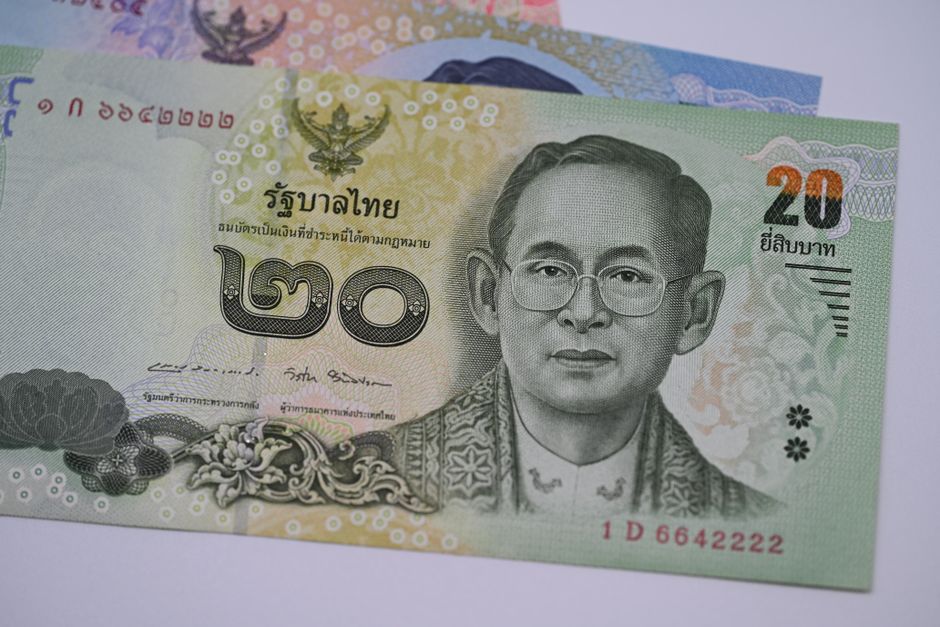 Photo: Qing Luo / Pexels
This is Surin's strongest card and the one most people would not guess. Surin Hospital on Lak Mueang Road is classified by the Ministry of Public Health as a regional hospital — upgraded to that status on 29 April 1997 — with 914 beds and around 2,700 staff, and it runs a CPIRD Medical Education Center that trains doctors for the Institute of Medicine at Suranaree University of Technology. A province that teaches medicine is a different proposition from a province that merely has a hospital. It opened on 1 March 1951 as a fifty-bed wooden building with two doctors, funded by a monk's donation. Below it, community hospitals cover the districts — Prasat, Sangkha, Tha Tum and Rattanaburi act as the inner referral tier, with Kap Choeng and Phanom Dong Rak on the border — and subdistrict health-promoting hospitals cover primary care. Two private facilities operate in the town at different addresses despite near-identical names — Ruampaet Dr. ANAN on Thesaban 1 Road near the government hospital, and Ruamphat Hospital on Thesaban 2 Road by Surin Plaza; we have not verified either's bed count. The tertiary referral axis runs west to Nakhon Ratchasima, because Surin sits in Health Region 9 — not east to Ubon or north to Khon Kaen, which is the assumption most people make.
 Photo: RDNE Stock project / Pexels
Surin has six degree-awarding institutions and no international school, and that combination decides most family relocations here. Surindra Rajabhat University, founded as a teachers' college on 29 September 1973 and a full university since 15 June 2004, runs six faculties from humanities and education through to agriculture. The Rajamangala University of Technology Isan Surin Campus occupies about 1,500 rai on the Prasat road. Mahachulalongkornrajavidyalaya University maintains a Surin campus, and Surin Technical College and Surin Vocational College cover the technical track. At school level, Sirindhorn School — founded in 1941 in the centre of town — and Surawittayakarn School are the province's flagship government secondaries, and Sirindhorn runs an English Program alongside its science-maths and language streams. What BAANLYY could not verify is a single full international-curriculum school anywhere in the province, and we have chased the one candidate down: The Surin International School is a British-curriculum school in Ampang, Kuala Lumpur, Malaysia, with no Thai connection. Wikipedia's by-province list of Thai international schools has zero Surin entries, and the nearest verifiable options are the four in Nakhon Ratchasima plus one each in Khon Kaen, Ubon Ratchathani and Roi Et. Settle that before you sign a lease.
 Photo: Tima Miroshnichenko / Pexels
The short version: Surin is not a condominium market. BAANLYY checked the major Thai portals for this province and found no condominium at all — twenty sale listings on DDproperty across the whole province, all land, houses and townhouses; no occurrence of the word on FazWaz's Surin page; and roughly fifty apartment listings in Mueang Surin with a facility filter returning zero buildings with a lift, a pool or a gym. We do not publish a developer, completion year, floor count, unit count or coordinate we have not individually confirmed, so rather than a directory the housing page tells you honestly what exists: rooms and mansion-style apartment blocks around the campuses and the hospitals, townhouses and detached houses in the town, and village houses and farm compounds across the districts. Anyone who specifically wants a modern condominium with a pool is looking at Nakhon Ratchasima or Khon Kaen, not Surin. One warning that saves an hour: "Surin" is also a beach in Phuket, and every generic condo search returns Phuket projects.
 Photo: Pixabay / Pexels
There is no organised foreign community in Surin — no association, no clubhouse, no regular verified meet-up — but there is a front door, and it is worth naming. Surin Farang, at surinfarang.com, has run since 2008 and carries 28,738 threads and 358,962 messages across 1,204 members, with posts on its visa board dated 22 August 2026 and sponsor boards naming real foreigner-facing businesses in the province. On the ground the presence is thin and dispersed: foreign spouses in Thai families across the districts, a modest retiree population, and visitors who come for the round-up in November and leave in the same week. The rental market reflects it exactly — demand in Mueang Surin is driven by students at the province's university campuses and its technical college, and by staff at the hospitals, not by foreigners. The nearest substantial in-person expat infrastructure, with international schools, private hospitals and English-language services, is in Nakhon Ratchasima two to two and a half hours west by train, with Ubon Ratchathani a similar distance east. Set against that: Surin is a genuinely welcoming province with a distinct Khmer and Kuy culture, an unusually good regional hospital, and a cost base that lets a modest income go a long way. It suits someone with family ties here, or someone who wants to live in Thai rather than in an expat bubble — and it does not suit anyone who needs a peer group inside driving distance.
Editorial analysis compiled and periodically refreshed by BAANLYY’s research team — not a live data feed.
Analysis last reviewed August 2026.
The core Surin relocation guides are below, with more being added. In the meantime, see the general Thailand visa and relocation guides too.
Surin neighbourhood & areas guide →
Surin Area Score — every area ranked & rated →
See our Thailand visa guides, then talk to us about relocating.
Primary and official sources are cited above. Government rules, fees and procedures in Thailand change over time and vary by office; always confirm current requirements with the relevant authority before relying on them. BAANLYY never takes paid placement in editorial content.
General information and indicative pricing, not legal, tax, immigration, security or financial advice. Hero photograph via Pexels. Border status, travel advisories, martial-law areas, train and bus timetables, hospital services and school admissions all change — confirm current details with official sources, your own government's travel advice, individual listings or licensed professionals.

Free tools for this
Answer 3 quick questions and see the Thailand city guide worth researching first.
Try it free →Build a realistic monthly budget by lifestyle tier.
Try it free →