Two systems, two ways to pay. On the BTS (Sukhumvit, Silom and Gold lines) you use a Rabbit card (120 baht to issue, no deposit), a single-journey ticket or the 150 baht One-Day Pass. On the MRT Blue and Purple lines you tap a contactless Visa or Mastercard credit card, Thai or foreign, at the gate; the old MRT and MRT Plus cards stopped working on 1 June 2026 and their balance and 50 baht deposit are refunded in cash at Blue and Purple line ticket offices until 31 December 2027. If you ride the BTS every day, a 35-trip, 30-day package at 1,190 baht brings an adult trip to 34 baht. The senior discounts on both systems are for Thai citizens on the pages we read. For the network itself, see our trains and rail travel guide.
Which ticket works on which line?
Bangkok's rail lines are run by different operators and there is no single ticket that works on all of them yet. As the operators' own pages read on 26 November 2026 put it:
| Line | Ways to pay the operator lists | Source |
|---|---|---|
| BTS Sukhumvit, Silom and Gold lines | Rabbit card (adult, student, senior), single-journey card, One-Day Pass | BTS ticket pages |
| MRT Blue and Purple lines | Contactless credit cards (Visa, Mastercard, named UnionPay cards), contactless debit cards from named Thai banks, MRT EMV card, Mangmoom EMV card, single-journey token | BEM pages |
| MRT Yellow and Pink lines (monorails) | Rabbit card value can be added at their ticket offices; the MRT EMV card works on them once its holder has completed the identity check | BTS Rabbit page; BEM MRT EMV FAQ |
BTS's ticket pages list three tickets, the single-journey card, the One-Day Pass and the Rabbit card, and none of them is a bank card. BEM's pages, by contrast, are built around tapping a bank card. In practice a resident who uses both systems carries a Rabbit card and a contactless credit card. If you are choosing where to live by the line, our BTS and MRT commute calculator and the getting around Bangkok guide cover the routes.
How do you get and top up a Rabbit card?
BTS's page How to purchase a new Rabbit card sets the rules:
- Card issuance fee: 120 baht. The page adds “There is no card deposit.”
- Stored value: add at least 100 baht, up to a maximum stored value of 4,000 baht. Fares are deducted by the published fare table.
- Where to top up: any BTS ticket office, the MRT Yellow Line and Pink Line ticket offices, BRT ticket offices, ticket machines at every station and other authorized top-up providers.
- How long the value lasts: added value is valid for 2 years from the last transaction, and within the card's 7-year validity a new top-up extends it.
- Trips instead of value: adult and student cards can hold stored value, trips or both; a senior card can hold stored value only.
- Top up by phone: through the My Rabbit app (tap the card on the back of the phone and pay from a mobile banking app) or through LINE Pay. To link a card to LINE Pay, BTS says you then present the Rabbit card, an ID card and the registered phone at a BTS ticket office to activate it.
Which card type. BTS's eligibility page gives the Adult Rabbit card to people aged 23 and up but not over 60, the Student card to current full-time students not over 23, and the Senior card to Thai senior citizens aged 60 and over, by the date of birth on their Citizen ID. Misusing a student or senior card means losing the card and a fine of up to 20 times the maximum fare. If you are a foreign resident over 60, ask the ticket office which card it will issue you.
Time limit. On every BTS ticket, you may stay inside the paid area for 300 minutes; overstaying is charged the maximum published fare.
What does a BTS trip cost?
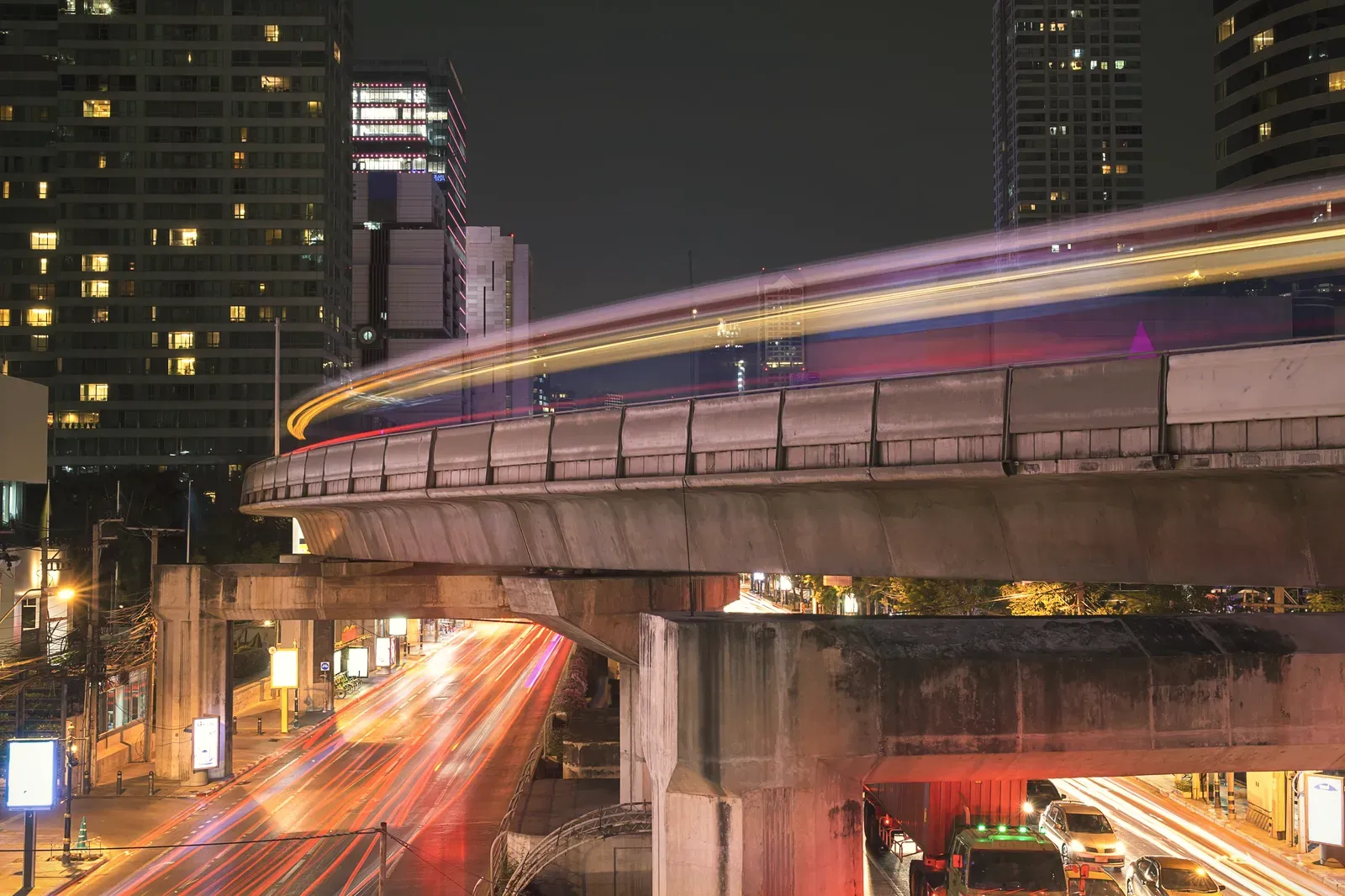
BTS fares are by distance. The adult Rabbit fare chart that BTS's Fare Rate page links to is a PDF headed “Effective from 2nd January 2024”. On it, fares between stations on the core line run from 17 baht for a neighboring station to 47 baht across the core, trips that start and end on the same extension cost 15 baht, and trips that mix the core and an extension reach 62 baht.
BTS's trip packages page adds that fare adjustments announced by the Bangkok Metropolitan Administration apply from 1 November 2025 on the extensions (Mo Chit to Khu Khot, On Nut to Kheha and Wongwian Yai to Bang Wa), describes the usual adult extension charge for 5 or more extension stations as 27 to 45 baht, and gives a maximum of 65 baht for an adult trip that includes the extension. The two documents differ on the extension fares, so check the fare on the machine or the BTS fare calculator for your own trip.
The One-Day Pass. BTS's One-Day Pass costs 150 baht for unlimited rides on the date of issue or registration, on the Green Line only. It is non-refundable and sold at all BTS ticket offices. It pays off when you make several long trips in a day; for a daily commute the trip packages below are cheaper.
What do BTS monthly and weekly trip packages cost?
BTS calls them Xtreme Savings trip packages. The page says the promotion is on sale from 1 April 2026 to 31 March 2027 and is valid between Mo Chit and On Nut and National Stadium and Wongwian Yai. The prices are printed as images on the page; we read them on 26 November 2026.
| Trips | Validity | Adult price | Adult per trip | Student price | Student per trip |
|---|---|---|---|---|---|
| 10 | 7 days | 340 | 34 | 270 | 27 |
| 35 | 30 days | 1,190 | 34 | 945 | 27 |
| 25 | 30 days | 900 | 36 | 725 | 29 |
| 15 | 30 days | 570 | 38 | 465 | 31 |
| 10 | 60 days | 400 | 40 | 320 | 32 |
| Trips | Validity | Price | Per trip |
|---|---|---|---|
| 10 | 7 days | 250 | 25 |
| 35 | 30 days | 875 | 25 |
| 25 | 30 days | 650 | 26 |
| 15 | 30 days | 405 | 27 |
The rules that matter, from the same page:
- When the clock starts. For a 7-day package your first trip must be within 7 days; for 30-day and 60-day packages, within 30 days. The 60-day package then runs 60 days from the first use. Unused trips are forfeited.
- Extensions cost extra. Entering or leaving at a station on the Khu Khot, Kheha or Bang Wa extensions deducts an extra 17 to 25 baht per adult trip (12 to 17 baht for students), and a Gold Line station an extra 17 baht.
- Short-distance packages can only go on a Rabbit card linked to Rabbit Wallet or LINE Pay. A trip of 5 or more stations is charged at the single-journey rate from the card's value instead, and tapping in and out at the same station uses a trip.
- Two packages at once. If you load both kinds on one card, trips are used in the order they were added; use two Rabbit cards to keep them apart. A card takes a second coupon once one trip of the first has been used.
- Refunds. You can cancel within 7 days of buying, before any coupon is used; the refund is processed within 15 days.
- Bank card offer. The page also shows 10 trips in 30 days for 290 baht (29 baht a trip) for Bangkok Bank Rabbit co-branded debit cardholders.
Does a package pay? This is our arithmetic on the prices above. An adult who rides 35 core trips a month at the 47 baht top core fare on the 2024 chart would pay 35 x 47 = 1,645 baht at single fares against 1,190 baht for the package, 455 baht less. On a short hop of up to 4 stations, the 35-trip short package at 875 baht is 315 baht less than the long-distance one (1,190 - 875).
How does paying by bank card on the MRT work?
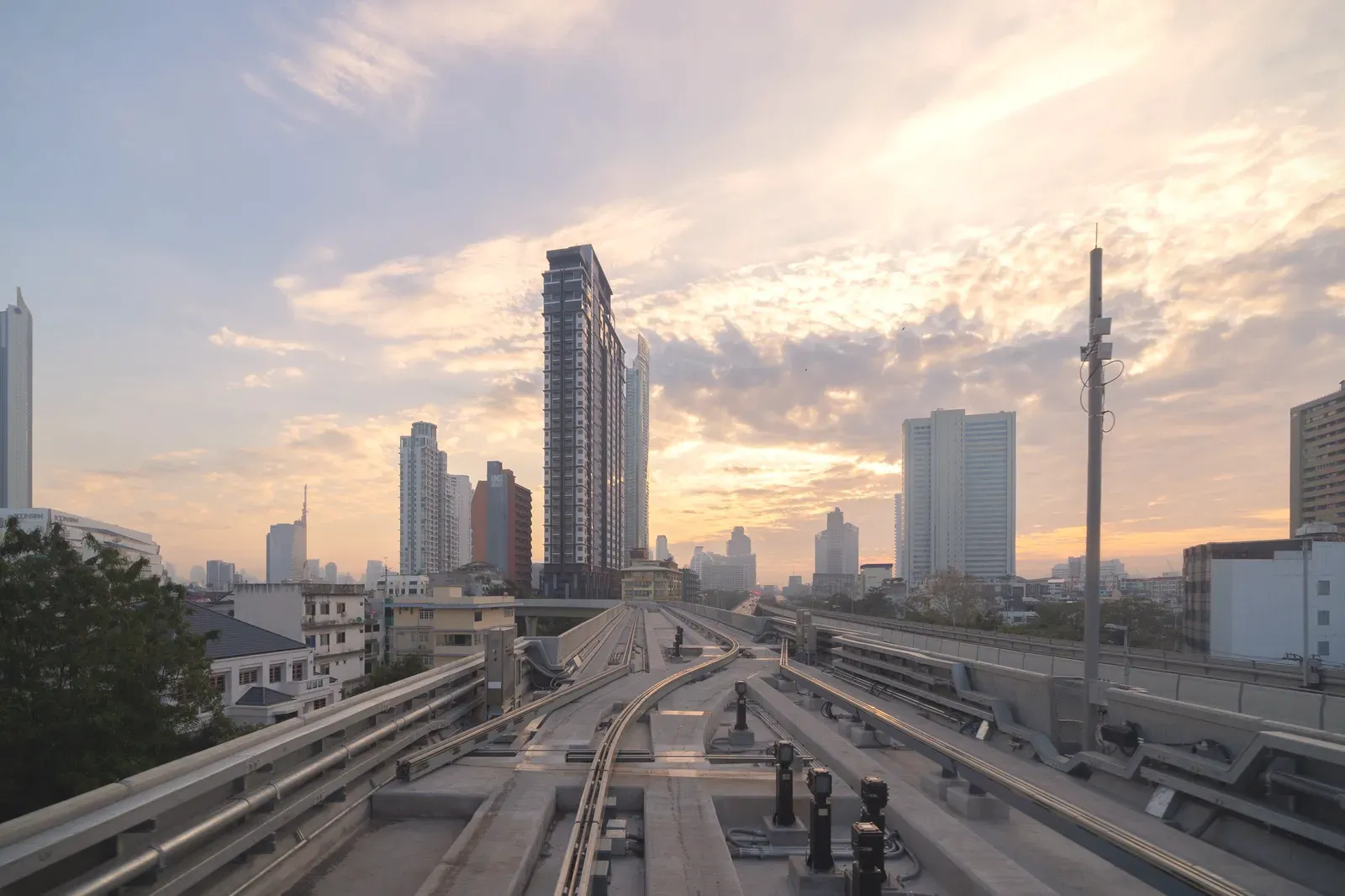
Since 1 June 2026, the MRT Blue and Purple lines run on what BEM calls EMV Contactless: you tap a bank card with the contactless symbol on the gate's reader, once to enter and once to leave. BEM's English EMV page lists what works:
- Credit cards from every Thailand bank and every international bank under Visa, Mastercard or UnionPay (the UnionPay cards are a named list: AEON UnionPay Platinum, Bangkok Bank UnionPay Platinum, KTC UnionPay, ICBC (Thai) UnionPay, KTC PROUD UnionPay Cash Card and two Kasikornbank UnionPay cards).
- Debit cards from Krungthai, Krungsri, Kasikornbank, SCB and UOB under Visa or Mastercard; the English page says this list is for Thailand bank issuers. BEM's Thai-language FAQ adds TTB debit cards and says other banks are in development.
From BEM's EMV Contactless FAQ (in Thai, read 26 November 2026):
- No registration needed to ride. Registering the card afterward at mangmoomemv.com lets you see 60 days of trips (7 days without registering) and is required to dispute a wrong charge; BEM says it decides on a refund of an overcharge within 14 days.
- Phones and watches: other card types such as JCB and smart devices such as phones and watches are still being developed. Carry the physical card.
- One card, one person, same card in and out. A trip with a missing tap, or tapped in and out with different cards, is charged the maximum fare on each card.
- The fare is the adult fare in force; a bank card cannot hold trips or a discount.
- A 1 baht charge may appear the first time you use some Mastercard and UnionPay cards; it is a card check by the issuing bank, and the real fare shows the next day.
- Not enough credit: you can tap out once; after that the card is refused until the unpaid fare is collected.
- Park and Ride: the parking discount at MRT car parks cannot be claimed with a bank card.
What happens to your old MRT or MRT Plus card?
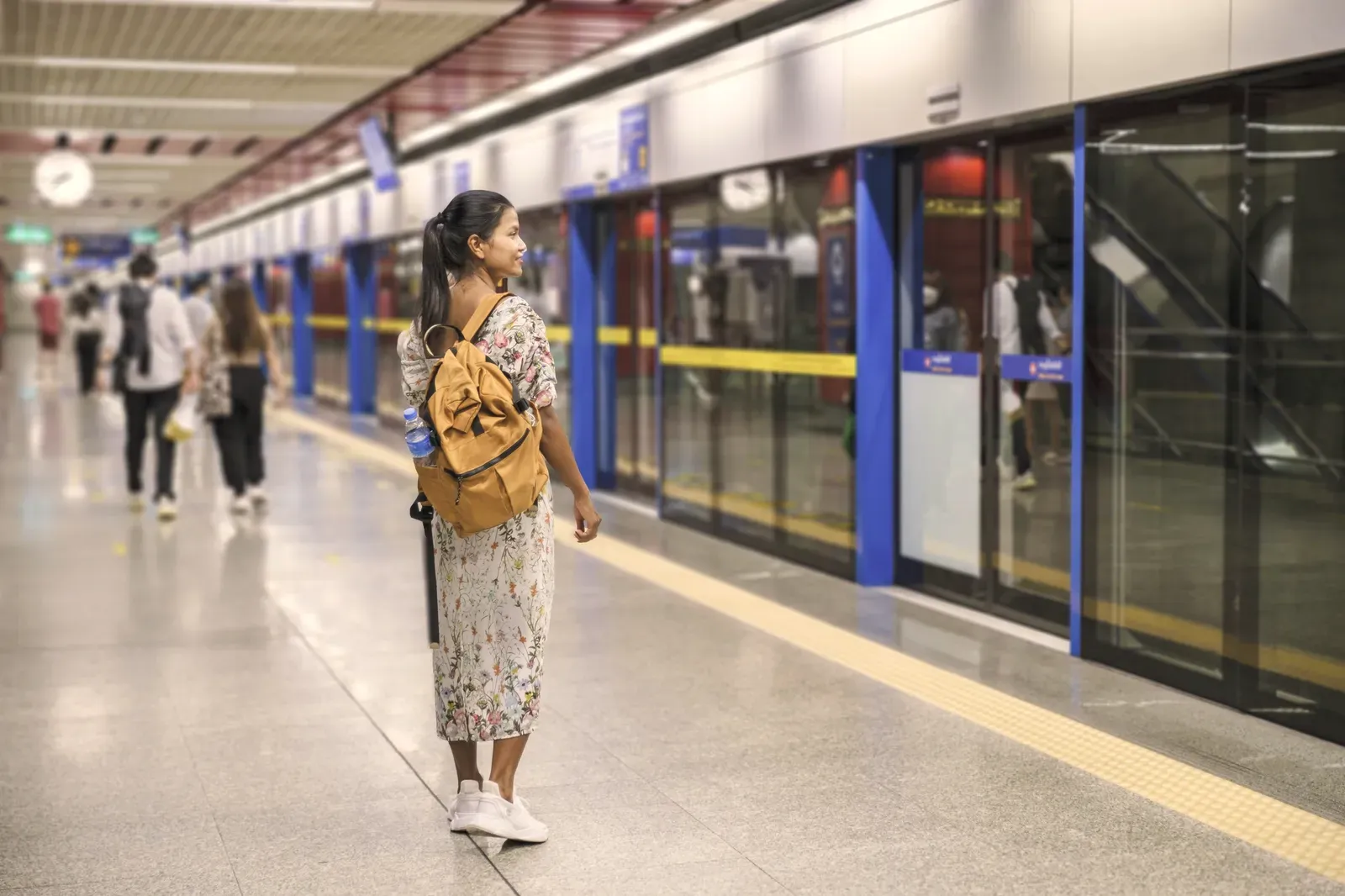
BEM's Discontinuation of MRT and MRT Plus Cards page and its FAQ set the dates:
- 1 April 2026: top-ups ended, online and at ticket offices.
- 1 June 2026: the cards stopped working at the gates.
- Refunds until 31 December 2027: take the card to the ticket office of any Blue Line or Purple Line station with your ID card or identity document. You get the remaining value and the 50 baht card deposit back in cash only, with no fee. Damaged or lost cards are decided case by case.
- Swap for a Mangmoom EMV card with no issuing fee from 1 March to 31 December 2026, limited to one card per person. The new card starts with 100 baht of travel value and the rest of your old balance is paid out in cash. Topping up a Mangmoom EMV card is done through the Pao Tang app and mobile banking, after you open the card and confirm your identity in Pao Tang.
The MRT EMV card FAQ still answers that MRT and MRT Plus cards can be used for now (question 29); the transition pages above, which give the 1 June 2026 date, are the newer statement.
What is the MRT EMV card, and can a foreigner get one?
The MRT EMV card is BEM's own prepaid Visa card for the MRT. Its FAQ says:
- Who can buy one now: “At present, only MRT EMV Student Cards for students aged 14 years or under are available for purchase,” at Blue Line ticket offices.
- Cost: 250 baht the first time, a 150 baht issuing fee and 100 baht of value.
- Identity check (eKYC) in the Bangkok MRT app on the day of issue, with a Thai ID card or, for a foreigner, a passport, and a Thai phone number. Without it the card works on the Blue and Purple lines for 100 baht only; with it, also on the Yellow, Pink and Red lines.
- Top up in the Bangkok MRT app from 1 baht, with no fee by PromptPay QR.
- Fees: 20 baht a month after 180 days without use; 15 baht to transfer money out to your own bank account.
- Changing lines: Blue to Purple charges the entry fee once; the Yellow, Pink and Red lines give an entry-fee discount when you change within 30 minutes.
What does the MRT Blue Line cost now?
The Blue Line fare table changed on 3 July 2026. As The Nation reported on 27 May 2026, the Mass Rapid Transit Authority regulation published in the Royal Gazette sets these fares in clause 5:
| Stations | Fare |
|---|---|
| 1 | 17 |
| 2 | 20 |
| 3 | 22 |
| 4 | 25 |
| 5 | 27 |
| 6 | 29 |
| 7 | 32 |
| 8 | 34 |
| 9 | 37 |
| 10 | 39 |
| 11 | 42 |
| 12 or more | 44 |
The same report says senior citizens pay half, rounded up to the next full baht, and that children no taller than 120 centimeters and disabled passengers who show an official disability identification card ride free. Our living in Thailand with a disability guide covers access on the network.
Who gets senior and student discounts?
- MRT seniors, 50 percent off: BEM's transition FAQ defines a senior as a person aged 60 or over of Thai nationality only, for the discount on the Mangmoom EMV card.
- MRT students, 10 percent off: on a Mangmoom EMV student card (ages 15 to 23, Thai nationality only) or an MRT EMV student card (students aged 7 to 23, though the card FAQ says only cards for students aged 14 or under are on sale now).
- BTS seniors: the Senior Rabbit card is for Thai senior citizens aged 60 and over.
- BTS students: the Student Rabbit card is for current full-time students not over 23, studying at an institution in Thailand or at a foreign institution recognized by the Ministry of Education; student trip packages are in section 04.
For a foreign resident who is not a student, the way to cut the fare is a BTS trip package (section 04); on the MRT a contactless card pays the adult fare.
What is planned for January 2027?
Two changes were reported in November 2026; both are plans, not rules in force:
- QR tickets replace tokens on the Blue and Purple lines. Time Out Bangkok reported on 23 November 2026 that BEM plans single-journey QR code tickets from 1 January 2027, with a trial alongside tokens in December 2026 if gate tests go to plan. Contactless bank cards and Mangmoom EMV cards keep working.
- A 45 baht fare cap. The same report describes a government cap targeted for 1 January 2027, a starting fare of up to 17 baht and a maximum of 45 baht per eligible journey, for Thai passengers using an eligible EMV contactless card registered through the Pao Tang app. QR tickets would not qualify.
In February 2026 the Bangkok Post reported the Transport Ministry's plan to extend the common ticket to metro buses and cross-provincial buses after the rail lines. We will update this page when the operators publish the new rules.
What should a resident carry?
- A Rabbit card for the BTS, with a trip package if you ride most working days.
- A contactless Visa or Mastercard credit card for the MRT Blue and Purple lines. Use the same card every time and register it at mangmoomemv.com so you can dispute a wrong charge.
- Cash for a token if your card is refused at the MRT gate.
- Your old MRT card, if you still have one, to a Blue or Purple line ticket office before 31 December 2027 with your passport.
- Check fares at the station. Fares and promotions here are from the operators' pages on 26 November 2026, and two of the sources disagree with each other on details noted above.
Living near a station changes the monthly budget more than any card: see our living in Silom and living around Nana guides, and Bangkok boats and ferries for the river.
Frequently asked questions
Yes. BTS's own page on buying a Rabbit card lists a 120 baht card issuance fee with no deposit, sold at BTS ticket offices, and a first top-up of at least 100 baht. Its eligibility page gives the Adult Rabbit card to people aged 23 up to 60, the Student card to full-time students not over 23, and the Senior card to Thai citizens aged 60 and over. The card is used on the BTS Sukhumvit, Silom and Gold lines, and BTS says value can also be added at MRT Yellow Line and Pink Line ticket offices.
Yes, on the MRT Blue and Purple lines. BEM, the operator, says credit cards from every Thai and international bank under Visa or Mastercard with the contactless symbol work at the gates, with no registration needed, plus a list of named UnionPay cards and debit cards from named Thai banks. Tap the same physical card in and out. BEM's FAQ says phones, smart watches and other card brands such as JCB are still being developed, so carry the plastic card.
No. BEM stopped top-ups on 1 April 2026 and the gates stopped accepting MRT and MRT Plus cards on 1 June 2026. You can take the card to the ticket office at any Blue Line or Purple Line station with your ID or passport and get the remaining value and the 50 baht card deposit back in cash, with no fee, until 31 December 2027. Until 31 December 2026, BEM also swaps one old card per person for a Mangmoom EMV card with no issuing fee.
BTS sells trip packages rather than an unlimited monthly pass. On its trip packages page read 26 November 2026, an adult pays 1,190 baht for 35 trips in 30 days (34 baht a trip), 900 baht for 25 trips, 570 baht for 15 trips, 340 baht for 10 trips in 7 days and 400 baht for 10 trips in 60 days. A short-distance package for trips of up to 4 stations costs 875 baht for 35 trips (25 baht a trip). The packages cover Mo Chit to On Nut and National Stadium to Wongwian Yai; trips onto the extensions cost extra.
Yes. The BTS One-Day Pass costs 150 baht for unlimited rides on the day it is issued or registered, on the Green Line only. It is non-refundable and sold at all BTS ticket offices. You can stay inside the paid area for up to 300 minutes per trip; overstaying costs the maximum published fare.
On the operators' pages we read, both senior discounts are for Thai citizens. BEM's FAQ defines a senior as a person aged 60 or over of Thai nationality for the 50 percent senior discount on the Mangmoom EMV card, and BTS gives the Senior Rabbit card to Thai citizens aged 60 and over. Ask at the ticket office before you buy if you think another rule covers you.
From 3 July 2026, 17 baht for one station rising to 44 baht for 12 stations or more, under the regulation published in the Royal Gazette as The Nation reported it on 27 May 2026. Senior citizens pay half, rounded up to the next baht, and children no taller than 120 centimeters and disabled passengers who show their disability card ride free.
Want to live a short walk from the BTS or MRT?
Browse Bangkok condos and homes listed by partnered agents, then price the commute before you sign.
General information only. Card rules, fees and package prices are from the BTS and BEM pages as they showed on 26 November 2026; the BTS package prices are read from images on its page, and its adult fare chart is dated 2 January 2024. The Blue Line fare table and the January 2027 plans are as reported by The Nation and Time Out Bangkok, credited where used. Savings figures are our arithmetic. Operators change fares and promotions without notice: check at the station before you buy.
Sources
- BTS Skytrain, How to purchase a new Rabbit card (English, undated, read 2026-11-26): Pay Card issuance Fee 120 bath; There is no card deposit; add minimum value of 100 Baht, up to a maximum value which can be stored of 4,000 Baht; top up at any BTS ticket office, MRT Yellow Line ticket office, MRT Pink Line ticket office, BRT ticket office, ticket vending machines at every station or any other Authorized Top-up service provider; added value is valid for 2 years from date of last transaction, within the validity period (7 years); Senior Rabbit Card can add stored value only; top up via My Rabbit application or LINE Pay; LINE Pay activation: present your Rabbit card, ID card, and registered mobile phone to the BTS ticket office ↗Bangkok Mass Transit System (BTS) · Accessed 26 November 2026
- BTS Skytrain, Eligibility for use of Rabbit cards (English, undated, read 2026-11-26): Adult Rabbit Card aged between 23 and up but not over 60 years old; Student Rabbit card current fulltime students, aged not over 23 years, studying at an academic institution in Thailand or in a foreign country at an institution recognized by the Ministry of Education; Senior Rabbit card may only be used by Thai Senior Citizens aged 60 years and over; misuse: forfeiture of the card and a fine not exceeding 20 times the maximum fare; time limited for staying in the Paid Area: 300 minutes; overstay penalty: the maximum published fare rate ↗Bangkok Mass Transit System (BTS) · Accessed 26 November 2026
- BTS Skytrain, One-Day Pass page (English, undated, read 2026-11-26): Price 150 Baht; valid for unlimited rides on the date of issue or registration only; non-refundable; available at all BTS Ticket Offices; only valid for travel on the Green Line; 300 minutes in the Paid Area ↗Bangkok Mass Transit System (BTS) · Accessed 26 November 2026
- BTS Skytrain, Trip packages (Xtreme Savings) page (English; price tables are images, read from a screenshot of the page 2026-11-26): promotion available to purchase 1 April 2026 - 31 March 2027, valid Mo Chit-On Nut and National Stadium-Wongwian Yai; long distance adult 10 trips 7-day 340 (34 per trip), 35 trips 30-day 1,190 (34), 25 trips 900 (36), 15 trips 570 (38), 10 trips 60-day 400 (40); student 270 (27), 945 (27), 725 (29), 465 (31), 320 (32); short distance up to 4 stations, adult and student, 10 trips 7-day 250 (25), 35 trips 875 (25), 25 trips 650 (26), 15 trips 405 (27), topped up only to Rabbit Wallet or LINE Pay; Bangkok Bank Debit Rabbit Card 10 trips 30 days 290 Baht; extension stations add 17-25 baht per adult trip and 12-17 baht per student trip; usual 27-45 THB, maximum fare including extension is 65 THB; Golden Line additional fare of 17 baht; fare adjustments announced by the Bangkok Metropolitan Administration effective from 1 Nov 2025; 60-day package: first trip within 30 days, remaining trips within 60 days from the date of first use; cancel within 7 days, refund within 15 days ↗Bangkok Mass Transit System (BTS) · Accessed 26 November 2026
- BTS Skytrain, fare chart when using an Adult Rabbit Card (PDF, 1 page, headed Effective from 2nd January 2024, linked from the BTS Fare Rate page, read 2026-11-26): station-to-station matrix from 15 to 62 baht; 17 to 47 baht between core stations; 15 baht within the same extension ↗Bangkok Mass Transit System (BTS) · Accessed 26 November 2026
- BEM (Bangkok Expressway and Metro), EMV Contactless information page (English, undated, read 2026-11-26): EMV Contactless cards can be used to pay for fares on the MRT Blue Line and Purple Line; credit card from every Thailand bank issuer and every International bank issuer under VISA, Mastercard or UnionPay (named UnionPay cards: AEON UnionPay Platinum, Bangkok Bank UnionPay Platinum, KTC UnionPay, ICBC (Thai) UnionPay, KTC PROUD UnionPay Cash Card, Kasikornbank UnionPay Credit Card, Kasikornbank Express Cash UnionPay Card); debit card from Krungthai bank / Bank of Ayudhya (Krungsri) / KASIKORNBANK / The Siam Commercial Bank (SCB) / UOB bank only for Thailand bank issuers; register and check journeys at mangmoomemv.com ↗Bangkok Expressway and Metro (BEM) · Accessed 26 November 2026
- BEM, EMV Contactless FAQ (Thai, undated, read 2026-11-26): Q3 debit cards of Krungthai, Krungsri, Kasikornbank, SCB, UOB and TTB, other banks in development; Q4 other credit cards such as JCB and smart devices such as smart watches and smart phones in development; Q5 some Mastercard and UnionPay issuers show a 1 baht charge on first use; Q7 no registration needed; Q8 no Park and Ride discount; Q9 adult fare in force; Q10 cannot add trips; Q11 registered users see 60 days of journeys, unregistered 7 days; Q28 one card per trip per passenger; Q30 dispute, result of overcharge refund within 14 days; Q32 missing tap or different cards charged the maximum fare; Q34 can exit once when credit is not enough ↗Bangkok Expressway and Metro (BEM) · Accessed 26 November 2026
- BEM, Discontinuation of MRT and MRT Plus Cards page (English heading, Thai body, undated, read 2026-11-26): Transitioning to EMV Contactless: MRT and MRT Plus cards to be discontinued June 1, 2026; top-ups online and at ticket offices end 1 April 2026 (2569); cards no longer accepted at the gates from 1 June 2026; refund of remaining value at Blue Line or Purple Line ticket offices until 31 December 2027 (31 Dec 2570), in cash only, including the card deposit, showing an ID card ↗Bangkok Expressway and Metro (BEM) · Accessed 26 November 2026
- BEM, Discontinuation of MRT and MRT Plus Cards FAQ (Thai, undated, read 2026-11-26): 1.6 seniors 50 percent off, students 10 percent off; 2.1 swap for a Mangmoom EMV card with no issuing fee 1 March - 31 December 2026 (2569), one card per person; 2.2 new Mangmoom card holds 100 baht, the rest refunded in cash only; 2.4 Mangmoom top-up through the Pao Tang app and mobile banking after opening the card and identity check in Pao Tang; 3.1 refund of remaining value and the 50 baht card deposit in cash until 31 December 2027 (2570); 3.3 no refund fee; 3.4 damaged or lost cards case by case; 5.1 Mangmoom EMV student card ages 15-23 Thai nationality only, MRT EMV student card ages 7-23, senior means aged 60 or over of Thai nationality only ↗Bangkok Expressway and Metro (BEM) · Accessed 26 November 2026
- BEM, MRT EMV card FAQ (Thai with one English answer, undated, read 2026-11-26): Q5 At present, only MRT EMV Student Cards for students aged 14 years or under are available for purchase, at operating MRT Blue Line ticket offices; Q6 first issue 250 baht: 150 baht issuing fee and 100 baht value; Q7-Q8 eKYC in the Bangkok MRT app with ID card or passport (foreigners), Thai phone number only; without eKYC Blue and Purple lines only, 100 baht; Q12 Blue-Purple entry fee once, Yellow, Pink and Red entry-fee discount within 30 minutes; Q18 20 baht a month after 180 days without movement; Q23 app top-up from 1 baht; Q29 says MRT and MRT PLUS cards can still be used for now; Q41 no fee for QR PromptPay top-up; Q43 transfer to own bank account 15 baht ↗Bangkok Expressway and Metro (BEM) · Accessed 26 November 2026
- The Nation Thailand, New MRT Blue Line fares set at 17-44 baht from July 3 (27 May 2026, read 2026-11-26), reporting the MRTA regulation in the Royal Gazette: clause 5, 1 station 17 baht up to 12 stations or more 44 baht; senior citizens pay half, rounded up; children no taller than 120 centimeters and disabled passengers with an official disability identification card exempt ↗The Nation Thailand · Accessed 26 November 2026
- Bangkok Post, Contactless payments coming to four MRT lines (28 Feb 2026, read 2026-11-26): EMV contactless across the MRT Blue, Purple, Pink and Yellow lines from June 1; top-up at station booths for the old card stops April 1; card valid until May 31; Mangmoom EMV card at the booths for a fee waiver; ministry to expand common ticketing to metro buses and cross-provincial buses ↗Bangkok Post · Accessed 26 November 2026
- Time Out Bangkok, Bangkok MRT is set to ditch tokens for QR tickets on January 1 2027 (23 Nov 2026, read 2026-11-26): single-journey QR code tickets on the Blue and Purple lines from January 1 2027, December 2026 trial; contactless bank cards and Mangmoom EMV cards still accepted; one fee-free replacement card per person through December 31 2026; old-card refunds through December 31 2027; planned B45 fare cap targeted for January 1 2027, starting fare up to B17, for Thai passengers using an eligible EMV card registered through the Paotang app; QR tickets do not qualify ↗Time Out Bangkok · Accessed 26 November 2026
Official primary sources are listed above with the date we last checked them. Thai rules, fees, thresholds and procedures change and can be applied differently by individual offices and embassies, confirm the current requirement with the responsible authority before relying on it. General information only, not legal, tax or medical advice. BAANLYY never takes paid placement in editorial content.