Is a hotel in Thailand liable for a guest's lost or stolen belongings?
Yes, as the starting point. Book III, Title X of the Civil and Commercial Code is the law of deposit, and its third chapter is headed special rules for hotel proprietors. Section 674 makes the proprietor of a hotel or other such place liable for any loss of or damage to property that a traveler or guest has brought. The same title governs property you hand to someone else to keep, and two other titles of Book III cover carriers (Title VIII) and warehouses (Title XIV). The table gives the rule for each situation.
| Situation | Rule in the Code | Section |
|---|---|---|
| Belongings lost or damaged in a hotel | The proprietor is liable, even where people coming and going at the hotel caused it | 674, 675 |
| Cash, jewelry and other valuables in a hotel | Liability is limited to 5,000 baht unless they were deposited with the proprietor and their value clearly declared | 675 |
| When the hotel is not liable | Force majeure, the nature of the property, or the fault of the guest, a companion or a person the guest received | 675 |
| Reporting a loss to the hotel | Immediately on finding it, or the proprietor is released (property not deposited with a declared value) | 676 |
| A posted notice that limits liability | Void unless the guest expressly agreed to it | 677 |
| Time limit to sue a hotel | Six months from the day the guest left | 678 |
| Unpaid hotel bill | The proprietor may retain the luggage, and may auction it after six weeks and a newspaper notice | 679 |
| Goods left with a paid keeper | The keeper must use the care and skill of an ordinary prudent person, and a professional that of the trade | 659 |
| Time limit on a deposit claim | Six months from the end of the contract | 671 |
| Goods lost or damaged by a carrier | The carrier is liable unless it proves force majeure, the nature of the goods or the fault of the sender or consignee | 616 |
| Time limit to sue a carrier | One year from delivery or from the day delivery was due, except in a case of bad faith | 624 |
Every rule on this page is from the consolidated Thai text of the Code published by the Office of the Council of State, read on 16 November 2026. No court ruling and no other Act was opened, so the page does not say how a court has applied a section to a given set of facts.
What the hotel proprietor answers for
Section 674. The proprietor of an inn, a hotel or another place of that kind is liable for any loss of or damage to property that a traveler or a lodging guest has brought. The section does not ask whether the proprietor or the staff were at fault, and it does not say the property has to be handed over to the front desk first.
Section 675, first paragraph. The proprietor is liable for the loss of or damage to the property of the traveler or guest however it happened, and remains liable even where it was caused by people coming and going at the hotel. In plain terms, a theft by an outsider who walked in is still the hotel’s loss to make good under this paragraph, subject to the limit for valuables and the three exceptions in the second and third paragraphs of the same section, covered below.
Which places are covered. The Code names inns and hotels and adds other places of that kind. It does not define the phrase. The page therefore does not say whether a guesthouse, a hostel, a serviced apartment or a condo unit let by the night falls inside it; no ruling on the point was opened. What each of those is in licensing terms is in the guides to serviced apartments and short-term rental laws.
Who is protected. The sections speak of a traveler or a guest who lodges. A tenant under a lease is in a different contract, hire of property, and the hotel chapter does not mention tenants.

The 5,000 baht limit for cash, jewelry and other valuables
Section 675, second paragraph. Where the liability concerns money, banknotes, bills, bonds, share certificates, debentures, warehouse warrants, jewelry or other valuables, it is limited to five thousand baht, unless the valuables were deposited with the proprietor and their value was clearly declared.
- Two steps lift the limit, and both are needed. The valuables have to be deposited with the proprietor, and their value has to be stated clearly. The section does not say the declaration must be in writing, but a signed receipt that lists the items and the value is the clearest proof that both steps were taken.
- The list is open. It ends with the words other valuables. The Code does not say whether a laptop, a camera or a phone is a valuable in this sense, and no ruling on the point was opened, so the page does not say either.
- Ordinary belongings are not capped by this paragraph. The five thousand baht figure applies to the listed kinds of property. For clothes, luggage and other ordinary items the section sets no figure.
The safe in the room is not mentioned anywhere in the chapter. Whether putting valuables in a room safe counts as depositing them with the proprietor is not answered by the text. Depositing them with the proprietor and stating their value clearly is the route the section describes; in practice that means the front desk, against a receipt that shows the value.
When is the hotel not liable?
Section 675, third paragraph. The proprietor is not liable for loss or damage caused by:
- Force majeure. Section 8 defines it as an event whose happening or whose harmful result could not be prevented even though the person who met it, or was about to meet it, took the care that could be expected of a person in that position and in those conditions.
- The nature of the property itself.
- The fault of the traveler or guest, of the people who accompany them, or of a person they have received. A visitor you let into the room is your side of the line, not the hotel’s.
Section 676: tell the hotel at once. For property that was not deposited with a clearly declared value, the traveler or guest must notify the proprietor immediately on finding that it has been lost or damaged. If they do not, the proprietor is released from the liability set out in sections 674 and 675. The word in the Thai text is immediately; the section gives no number of hours or days.
So the first step after finding something missing is a report to the hotel itself, in a form you can prove later: a written note handed to the duty manager with the time on it, or a message to the hotel’s own address. A police report is a separate matter and does not replace this notice; the tourist police guide explains how to make one.
Disclaimer signs and the six month limit
Section 677. If a notice is posted in the hotel or other such place with words that exclude or limit the liability of the proprietor, those words are void, unless the traveler or guest has expressly agreed to the exclusion or limitation. A sign at reception or a card on the back of the door is a posted notice. The section turns on express agreement by the guest, so read what the registration form you sign says about belongings before you sign it.
Section 678. No action for compensation for the loss of or damage to the property of a traveler or guest may be brought more than six months after the day the traveler or guest left the place. The period runs from departure, not from the day the loss was found and not from the day the hotel refused to pay.
Six months is a short limit. Others are set out in the guide to the statute of limitations in Thailand, and the court route for a modest sum is in the guide to the small claims procedure.
Unpaid bills: when a hotel can hold and sell your luggage
Section 679, first paragraph. The proprietor is entitled to retain the luggage or other property of the traveler or guest that is in the hotel until the proprietor has been paid everything owed for the lodging and for the other services provided to meet the needs of the traveler or guest, including money the proprietor paid out on their behalf.
Second paragraph. The proprietor may sell the retained property at public auction and take from the proceeds the amount owed, together with the fees and costs of the auction. The right cannot be used until both of these are true:
- the property has remained with the proprietor for six weeks without the debt being paid, and
- at least one month before the day of the auction, the proprietor has advertised in one local newspaper the intention to sell, with a short description of the property and the name of the owner if it is known.
Third paragraph. Whatever is left after the debt is deducted must be returned to the owner, or deposited at a deposit office under sections 331 and 333. The section speaks only of a sale at public auction and of handing back the balance; it gives no right to sell privately or to keep the surplus.
What is a deposit of property under Thai law?
Section 657. A deposit is a contract in which one person, the depositor, delivers property to another person, the depositary, and the depositary agrees to keep that property in their custody and then return it. A left-luggage counter, a friend who looks after your motorbike while you are abroad and a firm that takes your boxes into its own store can all fit the definition. Nothing in the section requires writing.
Section 658. If the circumstances show that the property was taken in only in return for a fee, a fee is treated as having been agreed by implication.
Section 659: three standards of care.
| Who is keeping the property | Care the Code requires |
|---|---|
| A person who keeps it free of charge | The care they habitually take in their own affairs |
| A person who is paid to keep it | The care and skill that a person of ordinary prudence would use in those circumstances, including special skill where the task calls for it |
| A person whose trade, business or calling it is | The care and skill that is usual and proper in that trade or calling |
So a friend who stores your things as a favor is held to their own everyday standard, while a business that charges for storage is held to the standard of its trade. Which of the three applies is the first thing to establish when goods come back damaged.
Leaving goods with a keeper: the rules for both sides
Sections 660 to 671 set the working rules of a deposit. Each can matter when you leave furniture, a vehicle or boxes with someone before or after a move.
| Point | What the section says | Section |
|---|---|---|
| Using the goods or passing them on | If, without the depositor's permission, the depositary uses the property, lets a third person use it or gives it to a third person to keep, the depositary is liable for loss or damage even from force majeure, unless they prove it would have been lost or damaged in any case | 660 |
| A third person claims the goods | If a third person claims a right over the property and sues the depositary or seizes it, the depositary must notify the depositor without delay | 661 |
| Returning early | Where a time for return was fixed, the depositary may not return the property before it, except in unavoidable necessity | 662 |
| Taking the goods back | The depositor may demand the property back at any time, even where a time for return was fixed, and the depositary must return it | 663 |
| No time fixed | The depositary may return the property at any time | 664 |
| Who receives the goods | The depositor, the person in whose name the deposit was made, or the person the depositary was duly instructed to return it to; the heirs if the depositor has died | 665 |
| Fruits | Any fruits the property produced are handed over with it | 666 |
| Cost of returning | Borne by the depositor | 667 |
| Upkeep | The depositor must reimburse expenses that were proper for maintaining the property, unless the contract puts them on the depositary | 668 |
| When the fee is due | On return of the property if no time is set by the contract or by custom; at the end of each period if it was fixed by periods | 669 |
| Holding the goods for unpaid fees | The depositary may retain the property until paid everything owed in respect of the deposit | 670 |
| Time limit to sue | Six months from the end of the contract, for the fee, for expenses and for compensation in connection with the deposit | 671 |
Two points to take from the table. First, section 663 means a storage period you agreed does not lock your goods in: you can ask for them back early. The section does not say whether the fee for the rest of the period is still owed, so the contract decides that. Second, section 671 gives both sides the same short period. A claim for goods damaged in storage is barred six months after the contract ends, so inspect everything on the day you collect it.
Money is different (sections 672 and 673). Where money is deposited, the depositary is presumed not to have to return the same notes and coins, only the same amount. The depositary may use the money, and must return the full amount even if the money was lost through force majeure. Where only the amount has to be returned, the depositor cannot call for it before the agreed time and the depositary cannot return it before then.
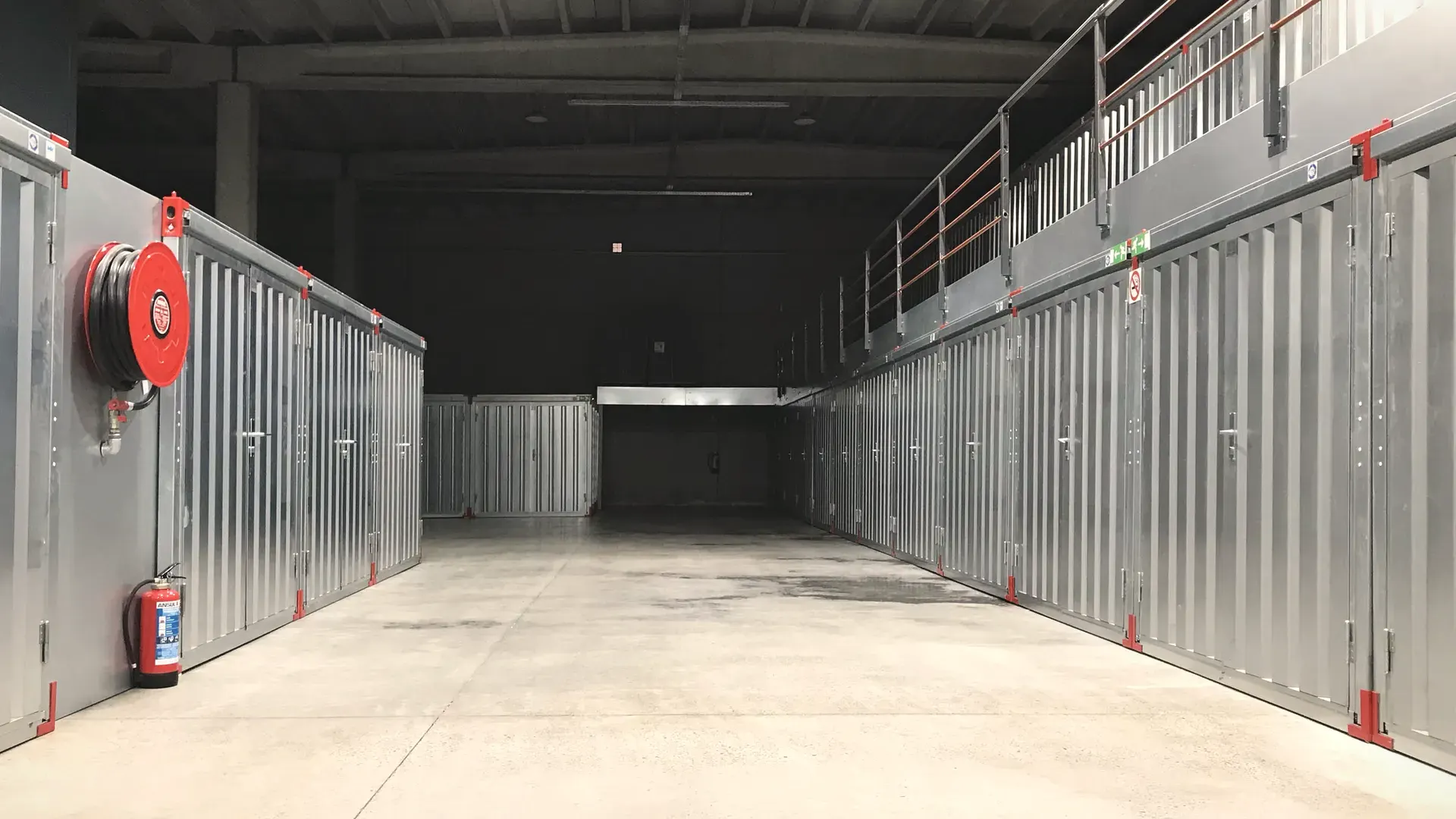
Warehouses and rented storage units
Warehousing (sections 770 to 772 and 774). Section 770 defines a warehouseman as a person who undertakes the storage of goods for a fee as their ordinary business. Section 771 applies the deposit provisions of the Code to warehousing so far as they do not conflict with the warehousing title. Section 772 also applies several carriage sections to warehousing so far as they fit, including section 616 on liability, section 623 on accepting goods without reservation and section 625 on words that exclude liability. Section 774 says a warehouseman cannot require the depositor to remove the goods before the agreed period ends. Where no time for return was fixed, the warehouseman may return the goods only after one month’s notice to the depositor, and the depositor cannot be made to remove them until two months have passed from the day they were delivered.
A unit you rent and lock yourself. Section 657 turns on the keeper agreeing to keep the property in their custody. Section 537 defines hire of property as a contract in which the letter agrees to let the hirer use or benefit from a property for a limited time in return for rent. Our reading, which is BAANLYY interpretation and not a ruling: where a firm rents you a room, you hold the key and the firm never takes charge of the contents, the contract can be a hire of space, and the care duties in section 659 are written for a keeper, not for a letter of space. Which it is depends on the wording of the contract and on who controls access.
Before signing with a storage firm, look for the clause that says whether the firm takes custody of the goods, what it accepts liability for, and whether you must insure the contents yourself. The guide to self storage in Thailand covers the market, and the guide to home contents insurance covers insuring belongings.
Movers and carriers: loss or damage in transit
The moving leg is carriage, Title VIII of Book III. Section 608 defines a carrier as a person who undertakes to transport goods or passengers for a fee as their ordinary business. Section 609 sends carriage by the state railway, by post and by sea to their own laws, so those kinds of carriage are outside the sections below.
- Liability (section 616). The carrier is liable where goods entrusted to it are lost, damaged or delivered late, unless it proves that this was caused by force majeure, by the nature of the goods themselves, or by the fault of the sender or the consignee.
- Subcontractors (sections 617 and 618). The carrier is liable for loss, damage or delay caused by the fault of another carrier or other person to whom it passed the goods on. Where the goods went through several carriers in stages, all of them are jointly liable.
- Valuables (section 620). The carrier is not liable for money, banknotes, bills, bonds, share certificates, debentures, warehouse warrants, jewelry and other valuables unless it was told their value or nature when they were handed over. If the value was declared, the carrier’s liability is limited to that declared value.
- Accepting delivery (section 623). The carrier’s liability ends when the consignee has accepted the goods without reservation and the freight and extras have been paid. That does not apply where the loss or damage could not be seen from the outside of the goods, if the carrier is notified within eight days of delivery. It also does not apply in a case of bad faith or gross negligence attributable to the carrier.
- Small print (section 625). Words in a receipt, consignment note or similar document issued by the carrier that exclude or limit its liability are void, unless the sender expressly agreed to the exclusion or limitation.
- Time limit (section 624). No action for loss, damage or delay may be brought more than one year after delivery, or one year after the day delivery should have been made, except in a case of bad faith.
In practice: write any visible damage on the delivery sheet before you sign it, open the boxes within the week and send the mover a dated written notice of anything found inside. The moving company contract checklist and the guide to relocation services and movers cover choosing a firm, and shipping household goods to Thailand covers the international leg, which this page does not.
A checklist for guests, storage customers and people moving home
- Hand valuables to the front desk and get a receipt with the value on it. Without a deposit and a clearly declared value, section 675 limits the hotel to 5,000 baht for cash, jewelry and other valuables.
- Report a loss to the hotel the moment you find it, in writing. Section 676 releases the proprietor if you do not notify immediately.
- Do not rely on, or be put off by, a sign. A posted disclaimer is void under section 677 unless you expressly agreed to it. Check what you signed at check-in.
- Count six months from the day you checked out. After that, section 678 bars the claim.
- Make a dated inventory with photos before goods go into storage or onto a truck. It is the evidence of condition for a claim under section 659 or section 616.
- Declare valuables to a mover in writing, or carry them yourself. Section 620 frees the carrier where it was not told the value or nature.
- Note damage on the delivery sheet and give written notice of hidden damage within eight days. That is the window in section 623.
- Check your insurance. A travel or contents policy pays on its own terms whatever the hotel or the mover owes; see the guides to travel insurance and insurance contract law. For a contested claim, a lawyer in Thailand can act before the six months or the year runs out.
Frequently asked questions
Section 674 of the Civil and Commercial Code says the proprietor of a hotel or other such place is liable for any loss of or damage to property that a traveler or guest has brought. Section 675 adds that the proprietor stays liable even where the loss or damage was caused by people coming and going at the hotel. The proprietor is not liable for loss or damage caused by force majeure, by the nature of the property, or by the fault of the guest, the guest's companions or a person the guest received.
Under section 675, where the property is money, banknotes, bills, bonds, share certificates, debentures, warehouse warrants, jewelry or other valuables, the proprietor's liability is limited to five thousand baht, unless the valuables were deposited with the proprietor and their value was clearly declared.
At once. Section 676 says that for property that was not deposited with a clearly declared value, the traveler or guest must notify the proprietor immediately on finding that it is lost or damaged. If not, the proprietor is released from the liability in sections 674 and 675.
Section 678 says no action for compensation for loss of or damage to the property of a traveler or guest may be brought more than six months after the day the traveler or guest left the place.
Section 677 says that a notice posted in a hotel or other such place that excludes or limits the proprietor's liability is void, unless the traveler or guest has expressly agreed to the exclusion or limitation.
Yes. Section 679 lets the proprietor retain the luggage or other property of the traveler or guest that is in the hotel until everything owed for the lodging and other services is paid. The proprietor may sell the property at public auction only after it has stayed with the proprietor for six weeks without payment, and after advertising the sale in one local newspaper at least one month before the auction. Any money left after the debt and the costs of the sale must be returned to the owner or placed with a deposit office.
For a deposit of property, section 671 says no action for remuneration, for reimbursement of expenses or for compensation in connection with the deposit may be brought more than six months after the end of the contract. For a carrier, section 624 bars an action for loss, damage or delay more than one year after delivery, or one year after the day delivery should have been made, except in a case of bad faith.
Protect what you bring and what you store
Compare storage and movers, or find a lawyer to look at a claim before the time limit runs out.
General information only, not legal or insurance advice. Rules are from the Civil and Commercial Code, Book III, Title X, deposit (sections 657 to 679), with sections 8, 331, 333, 537, 608, 609, 616 to 625 and 770 to 774, read in Thai in the consolidated text on the Office of the Council of State law search on 16 November 2026. The Hotel Act, consumer protection law, court rulings, and carriage by sea, rail and post are not covered. Sentences marked as our reading are BAANLYY interpretation, not an official ruling. Laws change; confirm with a lawyer before you rely on a time limit.
Sources
Official primary sources are listed above with the date we last checked them. Thai rules, fees, thresholds and procedures change and can be applied differently by individual offices and embassies, confirm the current requirement with the responsible authority before relying on it. General information only, not legal, tax or medical advice. BAANLYY never takes paid placement in editorial content.