The short answer
Every parcel that enters Thailand from abroad now goes through customs with no value below which it is free. Import duty is collected on goods priced from 1 baht, and value added tax is charged on top. The recipient is the importer and pays. What differs is who works out the bill and who hands it to you: Thailand Post for mail, the courier for express.
| Question | The rule | Source |
|---|---|---|
| Is a low value parcel free of duty? | No. From 1 January 2026 import duty is collected on goods priced from 1 baht, with excise tax if any and VAT | Cabinet meeting summary, 10 November 2026, item 6 |
| What was the rule before? | Goods with a price including freight and insurance (CIF) of more than one baht but not more than 1,500 baht were exempt from duty, from 1 January 2025 to 31 December 2025 | Ministry of Finance notice (No. 2), 25 December 2567 |
| VAT rate on imports | 7 percent, on the C.I.F. price plus import duty, plus excise tax and other taxes and fees if any | Revenue Department, Value Added Tax |
| Duty rate | Set by the customs tariff heading of the goods. A draft notice approved in principle on 10 November 2026 would apply the Part 2 tariff rate, cut to 30 percent where it is higher, to post and express parcels | Cabinet meeting summary, 10 November 2026, item 6 |
| Post, FOB value not more than 40,000 baht | Customs officers work out the duty and taxes; Thailand Post delivers and collects them on behalf of the Customs Department | Customs Department, Postal import procedure |
| Express, FOB value not more than 40,000 baht per house air waybill | The express consignment operator makes the import declaration in its own name and pays the duty and tax in place of the importer | Customs Department, Thai page on express consignment |
| Above 40,000 baht | An import declaration filed electronically | Customs Department, Postal import procedure |
| You disagree with the valuation of a postal parcel | File a Request Form at the post office named in the notification. Duty and tax are not paid at that stage | Customs Department, Postal import procedure |
All sources read on 15 November 2026. English wording of Thai documents is our own rendering.
This guide is about goods arriving by post or courier. For what you may carry through the airport yourself, see customs allowances when arriving in Thailand, and for a container or a shared shipment of your own belongings see shipping household goods to Thailand.

What changed on 1 January 2026?
The exemption for low value goods ended. Until the end of 2025 a parcel worth up to 1,500 baht came in free of duty. The last version of that rule was a Ministry of Finance notice issued under section 12, first paragraph, of the Customs Tariff Decree B.E. 2530 with cabinet approval of 3 December 2024. It had a fixed life.
| Period | Goods with a price including freight and insurance of up to 1,500 baht | Source |
|---|---|---|
| 1 January 2025 to 31 December 2025 | Exempt from customs duty where the price for each recipient in the country was more than one baht but not more than 1,500 baht | Ministry of Finance notice (No. 2), clauses 1 and 2 |
| From 1 January 2026 | Import duty collected on goods priced from 1 baht, with excise tax if any and VAT | Cabinet meeting summary, 10 November 2026, item 6 |
Ministry of Finance notice on the customs duty exemption for goods valued at not more than 1,500 baht (No. 2), dated 25 December 2567 (2024), on the Customs Department site.
- The announcement. On 10 November 2025 the Government Public Relations Department reported that from 1 January 2026 the Customs Department would collect import duty and VAT on all foreign goods sold online, including items as low as 1 baht, ending the exemption for items under 1,500 baht. It reported the Director-General of Customs as saying the policy aligns with global practices to close tax loopholes and ensure fair competition between overseas sellers and Thai businesses.
- The first results. NBT World reported on 17 September 2026 that more than 4 billion baht in import duties had been collected on low value online purchases in the first 11 months of fiscal 2026, on about 225 million imported items worth about 41 billion baht. The government said the 4 billion baht is import duty, not total VAT.
- The reason given in the notice. The 2024 notice itself says the government wanted to deal with unfairness between sellers abroad, who do not pay VAT, and sellers in Thailand, who do.
When this guide was written, the Customs Department's own postal import page, in English and in Thai, still described a first category of postal goods worth no more than 1,500 baht as exempt. Those pages carry no note about 2026. The dated documents above are later and more specific, and this guide follows them. If a notification you receive shows no charge, that is a matter for the officer who assessed it, not a rule you can rely on.
The same NBT report passes on a reminder from the government: paying import duty says nothing about the quality or safety of a product, so check the seller, the labels and the warnings as you would for any online order. Our guide to online shopping in Thailand covers buying from sellers that hold stock inside the country.
What is the 30 percent ceiling approved in November 2026?
It is a second step, and it raises the duty on many small orders. On 10 November 2026 the cabinet approved in principle a draft Ministry of Finance notice that sets the duty rates for three channels: inbound express goods, goods leaving the electronic commerce duty free zone for use or sale in the Kingdom, and goods imported by international post.
- What it removes. Many goods today pay a reduced rate, or none, under a Ministry of Finance notice of 28 December 2021 on the reduction of duty rates and exemption from customs duty under section 12 of the Customs Tariff Decree. The draft takes that reduced rate away from goods in these three channels.
- What applies instead. The rate in Part 2 of the Customs Tariff Decree B.E. 2530, the import duty tariff. Where that rate, charged on the price, is higher than 30 percent, it is cut to 30 percent. Where it is lower than 30 percent, the lower rate is used.
- Which parcels. The summary describes dutiable goods priced at not more than 40,000 baht that are not prohibited or restricted and that are declared on a consolidated import declaration, bought through online platforms and brought in as express goods or by international post.
- When. Fifteen days after the notice is published in the Royal Gazette. When this guide was written we had not found the published notice, so no start date is printed here.
- A way to keep the reduced rate. An importer who wants the reduced or exempt rate can ask the express operator to bring the goods in as express goods of the fourth category with an ordinary import declaration. A person importing by international post can ask to file an ordinary import declaration and go through general import formalities.
| Goods (tariff heading) | Reduced rate now | Part 2 rate | Rate once the notice is in force |
|---|---|---|---|
| Bags (4202) | 20 percent | 100 percent | 30 percent |
| Women's suits, skirts and trousers, not knitted (6204) | 30 percent | 100 percent | 30 percent |
| Interchangeable tools used by hand, such as workshop tools (8207) | 10 percent | 25 percent | 25 percent |
| Equipment for exercise, gymnastics, athletics and others (9506) | 10 percent | 50 percent | 30 percent |
Examples given in item 6 of the cabinet meeting summary of 10 November 2026. The summary carries a line asking readers to check the official resolution with the Secretariat of the Cabinet.
The Ministry of Finance held a press conference the same day and described the change as duty under the customs tariff at a rate of not more than 30 percent, meant to give Thai small and medium businesses fairer competition. The cabinet summary puts the extra duty at about 519.67 million baht a month and says plainly that consumers who order through online platforms will carry a higher tax bill.
Two limits on what is known. The summary says the draft does not concern imports under Thailand's free trade agreements, and it does not say whether a parcel that is not an online purchase, such as a box from a relative, is treated differently once it travels by international post. Ask the Customs Care Center on 1164 once the notice is published.
How are duty and VAT worked out?
In two layers. Duty is charged first, at the rate for the tariff heading of the goods. VAT is then charged on a base that includes the duty. The Revenue Department gives the base for imported goods as the C.I.F. price plus import duty, plus excise tax if any, plus other taxes and fees if any, and gives the general VAT rate as 7 percent.
- Start from the value. The Ministry of Finance notice describes CIF as the price including freight and insurance, so the cost of sending the parcel counts as well as the price of the goods.
- Apply the duty rate. The rate comes from the customs tariff and differs by product.
- Add excise tax if the goods carry it. The cabinet summary lists excise tax, where it applies, among the charges collected since 1 January 2026.
- Charge VAT on the total. Seven percent of the value plus the duty and any excise tax.
| Step | At a duty rate of 10 percent | At a duty rate of 30 percent |
|---|---|---|
| Value including freight and insurance | 2,000 baht | 2,000 baht |
| Import duty | 200 baht | 600 baht |
| VAT base (value plus duty) | 2,200 baht | 2,600 baht |
| VAT at 7 percent | 154 baht | 182 baht |
| Duty and VAT together | 354 baht | 782 baht |
Our own arithmetic on a made-up parcel with no excise tax, to show how the two layers stack. The two duty rates are illustrations, not the rate for any product.
- Registered or not, the importer pays. The Revenue Department says an importer is subject to VAT whether or not the person is a VAT registrant, and that the Customs Department collects it when the goods are imported.
- Freight when there is no invoice. For express goods, the Customs Department uses the freight shown on the invoice or on proof of payment. Where neither shows it, the department applies an average air freight rate by zone that it publishes for express goods.
- Some goods are outside VAT. The Revenue Department lists exemptions that include the import of newspapers, magazines and textbooks and of unprocessed agricultural products.
The Revenue Department page was last updated on 23 November 2020. For how VAT shows up on bills inside Thailand, see VAT and service charge in Thailand.
What happens to a parcel that comes by post?
It is opened and sorted by customs before Thailand Post delivers it. The Customs Department lists five kinds of postal import, by air, by road and sea, EMS, registered post and normal post, and says importation by post is mostly operated by Thailand Post Co., Ltd.
The Postal Customs Service Division describes the route on a page last updated on 25 March 2022. Thailand Post takes the mail bags from the carrier at an office of exchange, under a customs office or customs house posted there: at the Suvarnabhumi mail center, the Hat Yai mail center, the Udon Thani mail center and the Aranyaprathet post office. Parcels by air and by surface then go to the Bangkok mail center, and EMS, registered and ordinary items go to the Lak Si mail center. There customs officers and Thailand Post staff open the items and sort them by type of customs formality. The day the mail bag is opened counts as the day the import is complete, and the recipient is treated as the importer.
| Category on the Customs Department page | What it covers | What happens |
|---|---|---|
| Category 1 | As still printed: goods with a customs value including freight and insurance of no more than 1,500 baht, or samples with no commercial value, that are not prohibited or restricted | Handed to Thailand Post for delivery. See section 02: duty has been collected from 1 baht since 1 January 2026 |
| Category 2 | Goods liable for duty, sent from one sender to one recipient at the same time, with an FOB value not exceeding 40,000 baht whatever the number of packages, that are not prohibited or restricted and need no sample analysis before release | Customs officers work out the customs value, duty and taxes and hand the goods to Thailand Post, which delivers them and collects the duty and taxes on behalf of the Customs Department |
| Category 3 | Other goods not in category 1 or 2 | Stored at Thailand Post or at a Customs Bureau or Customs House. The recipient is notified to collect the goods and pay at the Postal Customs Service Division or a designated Customs Bureau or Customs House |
Customs Department, Postal import procedure, English page, with detail from the Thai page.
- The notification. For a category 2 parcel the recipient receives a notification that says how and where to collect the goods and pay. The Thai page calls it the notice to collect an item sent by international post and says the parcel is sent to a post office near the recipient's address, where the duty and tax are paid.
- Opened in front of postal staff. The Thai page says the customs officer opens and examines a category 2 parcel in the presence of Thailand Post staff and assesses the price and every kind of duty and tax.
- No declaration to file. For category 3 goods with an FOB value of not more than 40,000 baht, the Customs page says the recipient does not prepare an import declaration. For category 2 it describes no declaration step: the officer assesses the parcel and Thailand Post collects the duty and tax.
The pages we read give no Thailand Post handling charge and no storage fee, so this guide prints none. The Postal Customs site has a page on storage fees that did not open as text. For sending mail out of Thailand and receiving ordinary letters, see sending a parcel and post in Thailand.
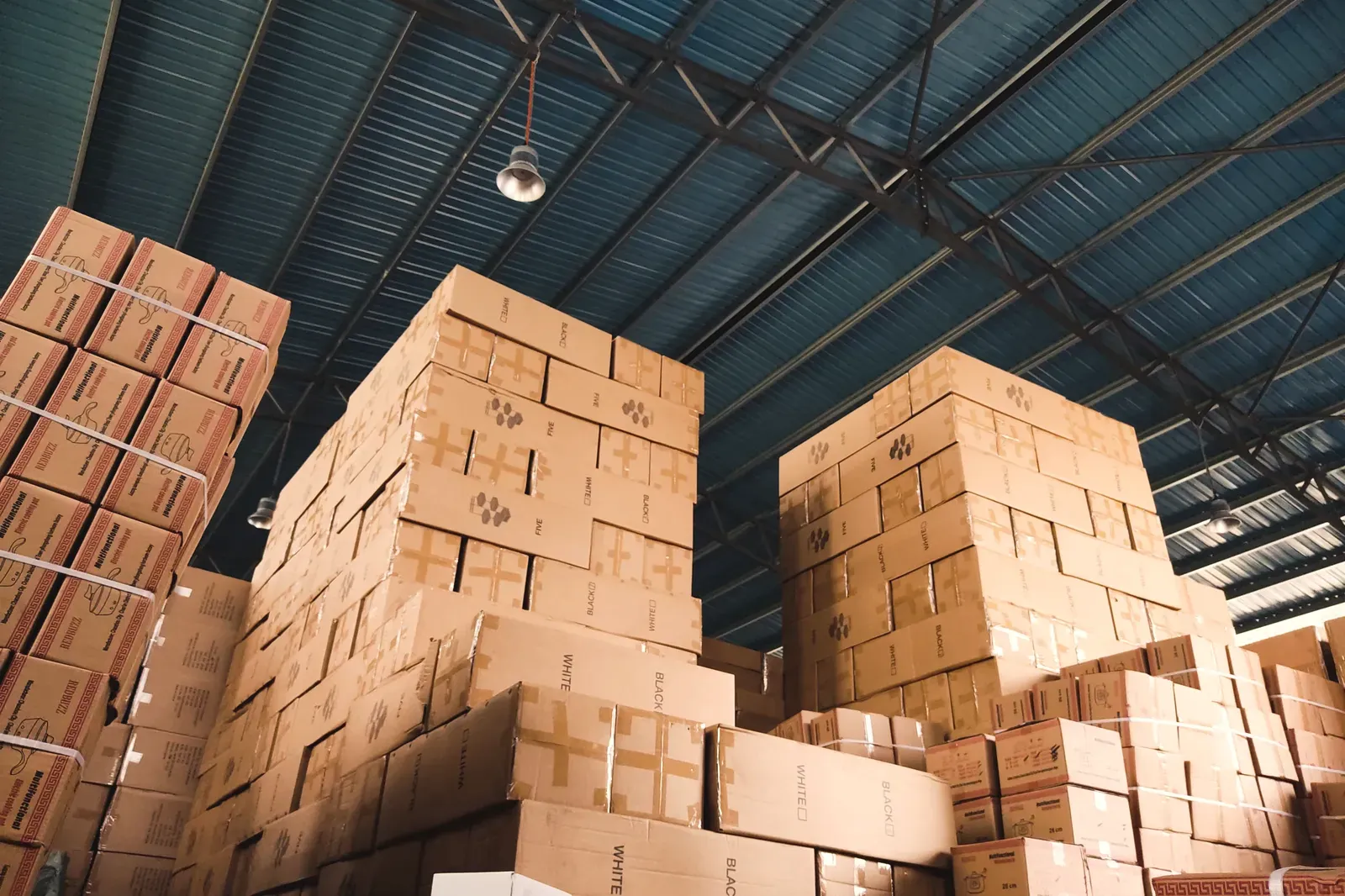
What happens to a parcel that comes by express courier?
The courier deals with customs for you. The Customs Department describes an express consignment operator as a business it has registered to carry goods into or out of the Kingdom door to door, which must carry out customs formalities in place of the importer or exporter. It names FedEx, UPS, DHL and TNT as examples.
| Category of inbound express goods | What it covers | Who declares |
|---|---|---|
| Category 1 | Documents that are not dutiable under Part 2 of the Customs Tariff Decree and are not prohibited or restricted | The express operator, in its own name |
| Category 2 | As still printed: goods not dutiable under Part 2, goods with a CIF price of not more than 1,500 baht under category 12 of Part 4 of the Decree, and trade samples with no commercial value | The express operator, in its own name |
| Category 3 | Dutiable goods with an FOB value of not more than 40,000 baht per house air waybill, not prohibited or restricted, not exempt under Part 4, not using a tax privilege and not needing sample analysis | The express operator, in its own name. The operator pays the duty and tax under the customs tariff in place of the importer |
| Category 4 | Everything else: dutiable goods outside category 3, restricted goods, goods using a tax privilege, goods that need a sample taken | The importer, in the electronic customs system, before the goods leave customs custody |
Customs Department, Thai page on post and express consignment, which cites Customs Department Notice No. 66/2561 for these categories.
For a private buyer, category 3 is the usual case. The operator pays customs and delivers after the customs check. The page does not say how or when the operator recovers the duty and tax from the recipient, or what service charge it adds, so those are questions for the courier or the seller before the parcel leaves. Whether duties are collected at checkout or in Thailand is set by the shop's terms and the courier's, so read both.
Express volumes explain the policy. The cabinet summary counts 134.1 million inbound express items in fiscal 2024, 168.4 million in fiscal 2025 and 192 million in the first nine months of fiscal 2026, most of them everyday goods and low priced clothing.
What do I need to collect a parcel held for duty?
The notification and proof of who you are. The Customs Department lists the documents for three cases.
| Who collects | Documents |
|---|---|
| The recipient named in the notification | The notification letter, and a national identification card, an official card issued by the Thai government, or a passport for a foreign recipient |
| Another person, on the recipient's authority | The notification letter with the details of the authorization and the signatures of both people on the back; a photocopy of the recipient's identification signed as a true copy; a photocopy of the authorized person's identification card signed as a true copy |
| A company or limited partnership | The notification letter signed by the authorized signatory with the company stamp on the back; a signed photocopy of the identification card of the owner, manager or authorized signatory; a signed and stamped photocopy of the company registration certificate, which the Thai page says must be no more than 6 months old; a signed photocopy of the attorney's identification card |
Customs Department, Postal import procedure. The page adds that an attorney may not pass the authority on to anyone else.
- Where. At the post office named in the notification for category 2. For category 3, at the Postal Customs Service Division or the Customs Bureau or Customs House named in the notification.
- The Postal Customs Service Division. Bangkok Customs House, 111 Soi Chang Wattana 5, Chaengwattana Road, Laksi, Bangkok. The page gives office hours of Monday to Friday, 08.30 to 16.30, except public holidays, and the telephone number 02 575 1002-3.
- Other agencies on site. The page lists a Food and Drug Administration station (02 575 1008) and a Plant Quarantine Station (02 575 1014-5) at the same office, which matters when the parcel holds food, medicine or plants.
- Booking. The Customs Department runs an online booking service for collecting items sent by international post, listed on its site as Postal Booking. We did not test it.
The page does not say how long a parcel is held before it is returned or treated as unclaimed, or how duty may be paid at the counter, so this guide prints neither. The notification is the document to read for both.
How do I object to the duty on a postal parcel?
In writing, at the post office, before paying. The Customs Department sets out the steps for a recipient who wants to object to the customs valuation or to ask for a duty and tax exemption on a category 2 parcel.
- Fill in the Request Form. The form is available at post offices. Hand it to the post office named in the notification, with the notification and the papers that support your case, such as evidence of the purchase and receipts. The Thai page gives proof of payment as another example. Duty and tax are not paid at this stage.
- Say how you want the answer. You can wait to be told by Thailand Post and then collect at the post office in the notification, or ask to be told and collect in person at the Parcel Screening and Examination Sub-division of the Postal Customs Service Division, in the EMS center building on Soi Chang Wattana 5, Chaengwattana Road.
- The parcel goes back to customs. The post office hands the parcel and all the documents to customs.
- The result. The Postal Customs Service Division tells the post office its decision so that the post office can tell you. The Thai page adds that where you stated no preference, the result goes back to the post office where you went to collect.
The page names evidence of purchase and receipts as the supporting papers, so keep the order confirmation, the invoice and the payment record, showing the price and the postage. The page gives no time limit for the objection and no time for the decision.
This route is described for postal parcels. For an express parcel the import declaration is the operator's, and the pages we read set out no objection procedure for the recipient, so raise a wrong valuation with the courier and ask what it filed.
What cannot be posted to me, and what needs a permit?
Customs law splits controlled goods in two. Prohibited goods may not be imported at all: the Postal Customs Service Division says the importer commits an offense and the goods are seized. Restricted goods may be imported only with written permission from the agency responsible, shown when the goods go through customs or sent through the electronic system.
| Restricted goods | Agency that issues the permit |
|---|---|
| Buddha images, artifacts and antiques | Fine Arts Department |
| Guns, bullets, explosives and items equivalent to guns | Department of Provincial Administration, Ministry of Interior |
| Plants and their parts | Department of Agriculture |
| Living animals and carcasses | Department of Livestock Development |
| Food, medicine, cosmetics and food supplements | Food and Drug Administration |
| Vehicle parts | Ministry of Industry |
| Cigarettes, tobacco and alcoholic beverages | Excise Department |
| Radio communication devices and telecommunications equipment | Office of the National Broadcasting and Telecommunications Commission |
Customs Department, Restricted and Prohibited Items, English page, last update 27 February 2025. The page calls these examples.
- Prohibited, in the Customs Department's examples. Narcotics, pornographic materials, counterfeit trademark goods and goods that infringe intellectual property, fake notes or coins, and reserved animals or wildlife listed under CITES.
- Prohibited, in the Postal Customs examples. Baraku, electronic baraku and e-cigarettes, narcotics, goods that infringe intellectual property, obscene objects or media, and counterfeit or altered currency, bonds and coins.
- Restricted, in the Postal Customs examples. Food, medicine, cosmetics, medical devices, plants and parts of plants, chemical fertilizer, liquor, tobacco, cigarettes and cigars, drones, radio communication devices, firearms, ammunition, explosives, fireworks and imitation firearms.
- These parcels leave the simple route. Category 2 for post and category 3 for express are open only to goods that are not prohibited or restricted. A restricted item sent by express falls into category 4, declared by the importer, and the permit has to be shown.
Everyday items such as food supplements, medicine and cosmetics sit on the Food and Drug Administration line of that table. Read bringing medication into Thailand and pharmacies and medicine in Thailand before asking anyone to post medicine, vaping and e-cigarette laws before ordering a device, and drone laws and registration before buying a drone abroad.

What if the parcel is worth more than 40,000 baht?
Then it needs a full import declaration. Forty thousand baht FOB (free on board, broadly the price of the goods without international freight and insurance) is the line the Customs Department draws for both channels.
- By post. Goods sent from one sender to one recipient, or arriving at the same time, are added together. Where the total FOB value is above 40,000 baht, the recipient has to prepare and submit an import declaration electronically to the customs electronic system, whatever the number of packages. The Thai page says the Postal Customs Service Division has officers who advise on preparing the declaration and a service counter that sends the data.
- By express. Goods above the category 3 line fall into category 4, where the importer makes the import declaration in the electronic customs system and the goods are checked by a customs officer before they leave customs custody.
- Splitting does not help. Because several packages from one sender to one recipient that arrive together are counted as one, dividing a purchase into boxes does not bring it under the line.
The same route is the one the cabinet summary points to for an importer who wants the reduced duty rate after the new notice takes effect: an ordinary import declaration in place of the consolidated one. Our note: that usually means help from a customs broker or from the courier, and their fees are theirs to quote.
A whole household is a different case with its own rules. See shipping and moving your belongings, bringing a car to Thailand and importing pets to Thailand.
Before you order or ask someone to post a box
- Assume duty and VAT on everything. There has been no free value since 1 January 2026. Add the two layers in section 04 to the price before deciding.
- Check whether the item is restricted. Food, supplements, medicine, cosmetics, plants, alcohol, tobacco, drones and radio equipment need a permit. E-cigarettes are prohibited.
- Ask the seller how duties are handled. Paid at checkout, or collected in Thailand, and by whom.
- Have the invoice in and on the parcel. A clear description, the price paid and the postage give the officer a value to use and give you evidence if you object.
- Use your name as it appears on your passport. The notification is collected with identification in the name of the recipient.
- Keep the order confirmation and the payment record. They are the kind of papers that go in with the Request Form.
- Watch for the notification. For a postal parcel it names the post office and the amount. Tell the juristic office or reception at your building to expect it.
- Check the 30 percent notice. Once it is in the Royal Gazette, many goods ordered online will carry a higher duty rate than the one on your last order.
Everything here comes from the pages listed under Sources, read on 15 November 2026. The Customs Department pages on procedure have not been revised for the 2026 change. The cabinet item is a summary published by the government, which itself asks readers to check the official resolution, and the Ministry of Finance notice it approves had not been found in published form. No duty rate is given beyond the four examples in that summary, and no storage fee, handling charge, holding period or gift allowance is printed because none appeared in the pages read.
Be wary of a message that says a parcel is held and asks for a payment through a link. The Customs Department route runs through a notification, a post office, or a courier you can call on its published number. See scams in Thailand, and for the rest of settling in, your first 30 days.
Frequently asked questions
Yes, unless the goods themselves are duty free. The official summary of the cabinet meeting of 10 November 2026 says that from 1 January 2026 import duty is collected on goods priced from 1 baht, together with excise tax where it applies and value added tax. Before that date, goods priced at not more than 1,500 baht were exempt. The rate depends on the customs tariff heading of the goods.
No. The Ministry of Finance notice that exempted goods with a price including freight and insurance of more than one baht but not more than 1,500 baht ran from 1 January 2025 to 31 December 2025. The Government Public Relations Department announced that from 1 January 2026 duty and VAT would be collected on items as low as 1 baht. Some Customs Department pages still print the 1,500 baht wording, so check the date of anything you read.
The Revenue Department's English page on value added tax gives the general rate as 7 percent and says VAT on imports is collected by the Customs Department when the goods are imported, whether or not the importer is registered for VAT. The tax base for imported goods is the C.I.F. price plus import duty, plus excise tax and other taxes and fees if there are any, so VAT is charged on the duty as well.
On 10 November 2026 the cabinet approved in principle a draft Ministry of Finance notice for inbound express goods, goods leaving the electronic commerce duty free zone and goods imported by international post. Those goods would stop using the reduced rates in the Ministry's notice of 28 December 2021 and pay the rate in Part 2 of the Customs Tariff Decree, cut to 30 percent where that rate is higher. Where the Part 2 rate is below 30 percent, the lower rate applies. The notice takes effect 15 days after it is published in the Royal Gazette.
Thailand Post, on behalf of the Customs Department. For a postal parcel with an FOB value of not more than 40,000 baht, customs officers work out the customs value, duty and taxes and hand the parcel to Thailand Post, which delivers it and collects the money. The recipient receives a notification saying how and where to collect the goods and pay.
The Customs Department's Thai page says that for dutiable express goods with an FOB value of not more than 40,000 baht per house air waybill, the express consignment operator makes the import declaration in its own name and pays the duty and tax in place of the importer, then delivers the goods after the customs check. The page does not say how the operator recovers the money from the recipient, so ask the courier before the parcel ships.
Yes, for a postal parcel. The Customs Department says a recipient who objects to the customs valuation completes a Request Form, available at post offices, and hands it to the post office named in the notification together with the notification and documents such as evidence of purchase and receipts. Duty and tax do not have to be paid at that stage. The post office passes the parcel and papers to customs, and the Postal Customs Service Division sends back the result.
It needs an import declaration. For post, the Customs Department says that where goods sent from one sender to one recipient, or arriving at the same time, have a total FOB value above 40,000 baht, the recipient has to prepare and submit an import declaration electronically, whatever the number of packages. For express, goods outside the first three categories are declared by the importer in the electronic customs system before they leave customs custody.
Prohibited goods cannot be imported at all. The Postal Customs Service Division gives examples that include e-cigarettes, narcotics, goods that infringe intellectual property, obscene material and counterfeit currency. Restricted goods need a written permit from the agency responsible, shown at customs. Its examples include food, medicine, cosmetics, medical devices, plants, liquor, tobacco, drones, radio communication devices and firearms.
Moving more than a parcel?
Compare sea and air freight for a household, or plan the first month after you land.
General information only, not legal, tax or customs advice. Rules are from the Customs Department pages on postal import, express consignment and restricted and prohibited items, the Postal Customs Service Division, the Ministry of Finance notice of 25 December 2567 on goods valued at not more than 1,500 baht (No. 2), the Government Public Relations Department release of 10 November 2025, the NBT World report of 17 September 2026, the summary of the cabinet meeting of 10 November 2026, the Ministry of Finance release of the same day and the Revenue Department page on value added tax, all read on 15 November 2026. Duty rates and procedures change: confirm with the Customs Care Center on 1164, Thailand Post or your courier before you order.
Sources
- Postal import procedure (English): the two channels of post and Express Consignment Operators, the three categories of goods arriving by post, the 40,000 baht FOB line, collection of duty and taxes by Thailand Post, the Request Form for objecting to a customs valuation, documents for collecting goods, and the Postal Customs Service Division contact details ↗The Customs Department, Kingdom of Thailand · Accessed 15 November 2026
- Sending goods by post and express parcel (Thai): the three postal categories, the notice to collect an item sent by international post, objection steps, the four categories of inbound express goods citing Customs Department Notice No. 66/2561, and the freight used for the customs value of express goods ↗The Customs Department, Kingdom of Thailand · Accessed 15 November 2026
- Postal customs formalities, general principles (Thai, last updated 25 March 2022): offices of exchange and the customs offices posted at them, sorting at the Bangkok and Lak Si mail centers, the recipient as importer, and examples of prohibited and restricted goods ↗Postal Customs Service Division, Bangkok Customs Office, The Customs Department · Accessed 15 November 2026
- Ministry of Finance notice on the customs duty exemption for goods valued at not more than 1,500 baht (No. 2), dated 25 December 2567 (Thai, one page): issued under section 12 paragraph one of the Customs Tariff Decree B.E. 2530, in force from 1 January 2568 to 31 December 2568, exempting imported goods with a CIF price of more than one baht but not more than 1,500 baht for each recipient ↗Ministry of Finance, published by The Customs Department · Accessed 15 November 2026
- Thailand to Apply Import Tax on All Online Goods from Jan '26 (English, 10 November 2025): import duty and VAT on all foreign goods sold online from 1 January 2026, including items as low as 1 baht, ending the exemption for items under 1,500 baht ↗The Government Public Relations Department, Kingdom of Thailand · Accessed 15 November 2026
- New Import Duty Rules Bring Over 4 Billion Baht in Revenue (English, 17 September 2026): duties on imports valued at 1 baht or more in force from 1 January, about 225 million items worth about 41 billion baht in the first 11 months of fiscal 2026 ↗NBT World, National News Bureau of Thailand · Accessed 15 November 2026
- Summary of the cabinet meeting of 10 November 2026 (Thai, Word file), item 6: approval in principle of a draft Ministry of Finance notice setting the duty rates for inbound express goods, goods leaving the electronic commerce duty free zone and goods imported by international post, with the 30 percent ceiling, four worked examples, the 15 day start after Royal Gazette publication and express import volumes. The file asks readers to check the official resolution with the Secretariat of the Cabinet ↗Royal Thai Government · Accessed 15 November 2026
- Press conference on the cabinet decision to change the duty collected on e-commerce goods imported by express and international post, at a rate under the customs tariff of not more than 30 percent (Thai, 10 November 2026) ↗Ministry of Finance, Kingdom of Thailand · Accessed 15 November 2026
- Value Added Tax (English, last updated 23 November 2020): importers subject to VAT whether registered or not, collection by the Customs Department at import, the tax base for imported goods, the 7 percent general rate and exemptions ↗The Revenue Department, Kingdom of Thailand · Accessed 15 November 2026
- Restricted and Prohibited Items (English, last update 27 February 2025): examples of prohibited goods and the table of restricted goods with the agencies that issue permits ↗The Customs Department, Kingdom of Thailand · Accessed 15 November 2026
Official primary sources are listed above with the date we last checked them. Thai rules, fees, thresholds and procedures change and can be applied differently by individual offices and embassies, confirm the current requirement with the responsible authority before relying on it. General information only, not legal, tax or medical advice. BAANLYY never takes paid placement in editorial content.