The Naga fireballs (bang fai phaya nak) are lights said to rise from the Mekong in Nong Khai on Ok Phansa, the full-moon night of the eleventh lunar month, usually in October. In 2026 Ok Phansa fell on 26 October, the province ran its festival from 22 October to 3 November, and its official tally was 316 fireballs over two nights (208 on 26 October, 108 on 27 October) with 193,200 visitors. The main viewing areas are Phon Phisai and Rattanawapi districts. Local belief says the naga send them up to honor the Buddha; a Chulalongkorn biologist argued in 2012 that they are tracer rounds fired from the Lao bank. No source settles it.
What are the Naga fireballs?
The Tourism Authority of Thailand describes them as an annual event in which mysterious glowing balls of light rise out of the river, believed to be sent by the naga king to honor the Buddha, and calls it the liveliest event of Nong Khai, the province that TAT says has the longest stretch of the Mekong, 320 km.
The Phon Phisai Town Municipality, in a page that is undated and whose text refers to the festivals of 2010 and 2011, gives the fullest description from the riverbank:
- Pinkish-red balls of light that rise from the Mekong.
- They climb to about 50 to 150 meters for about 5 to 10 seconds, then vanish in the air, without arcing back down like fireworks.
- No smell, no smoke, no sound. In size, from a thumb to a hen's egg.
- They appear from after sunset until about 23:00.
People used to call them bang fai phi, "ghost rockets". The municipality says the people of Nong Khai renamed them bang fai phaya nak, "the naga king's rockets", as a more auspicious name; the Department of Cultural Promotion register also gives bang fai phi as the old name. For the province itself, see our Nong Khai guide and things to do in Nong Khai.
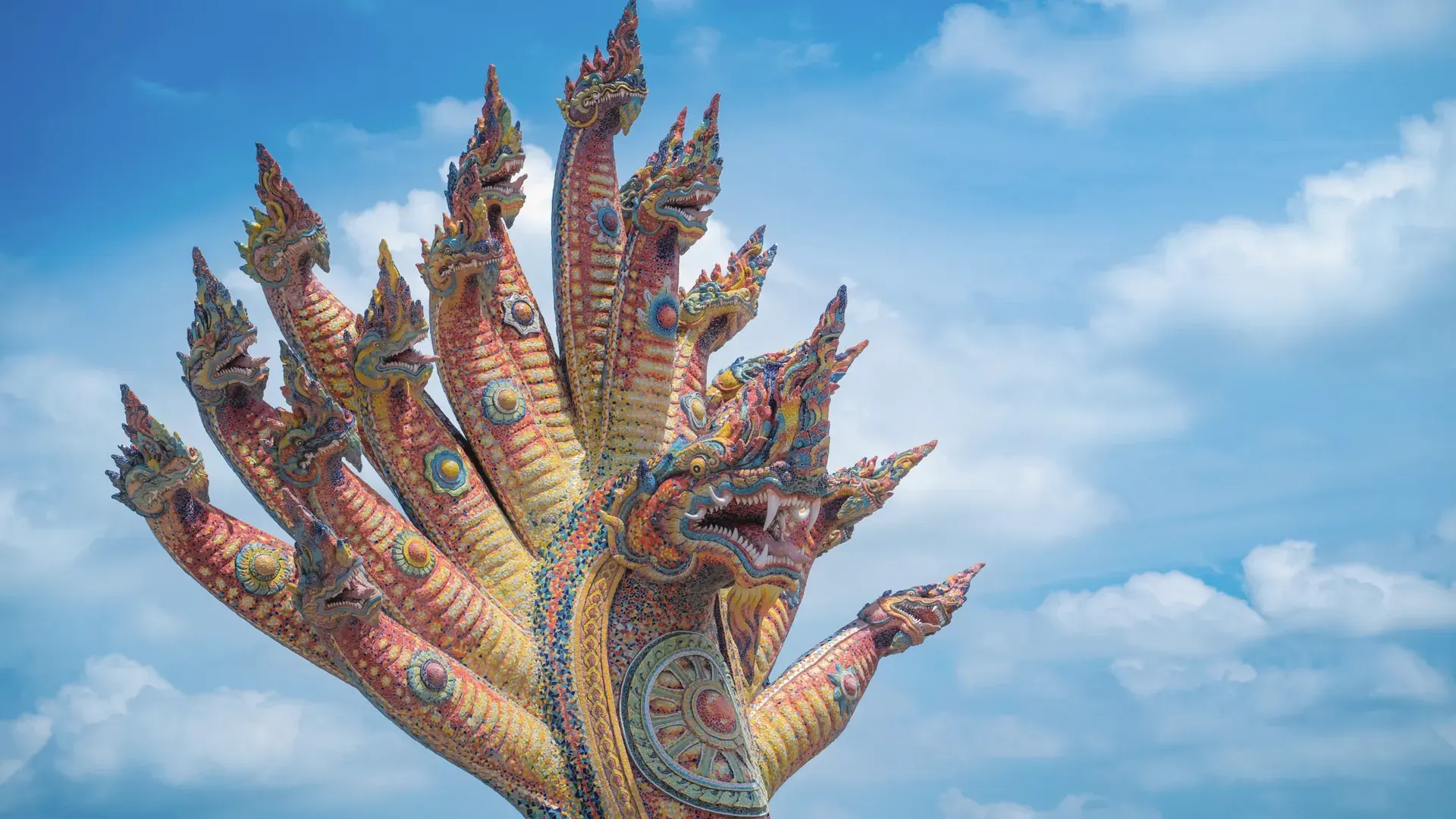
The legend: why the naga send up fire on Ok Phansa
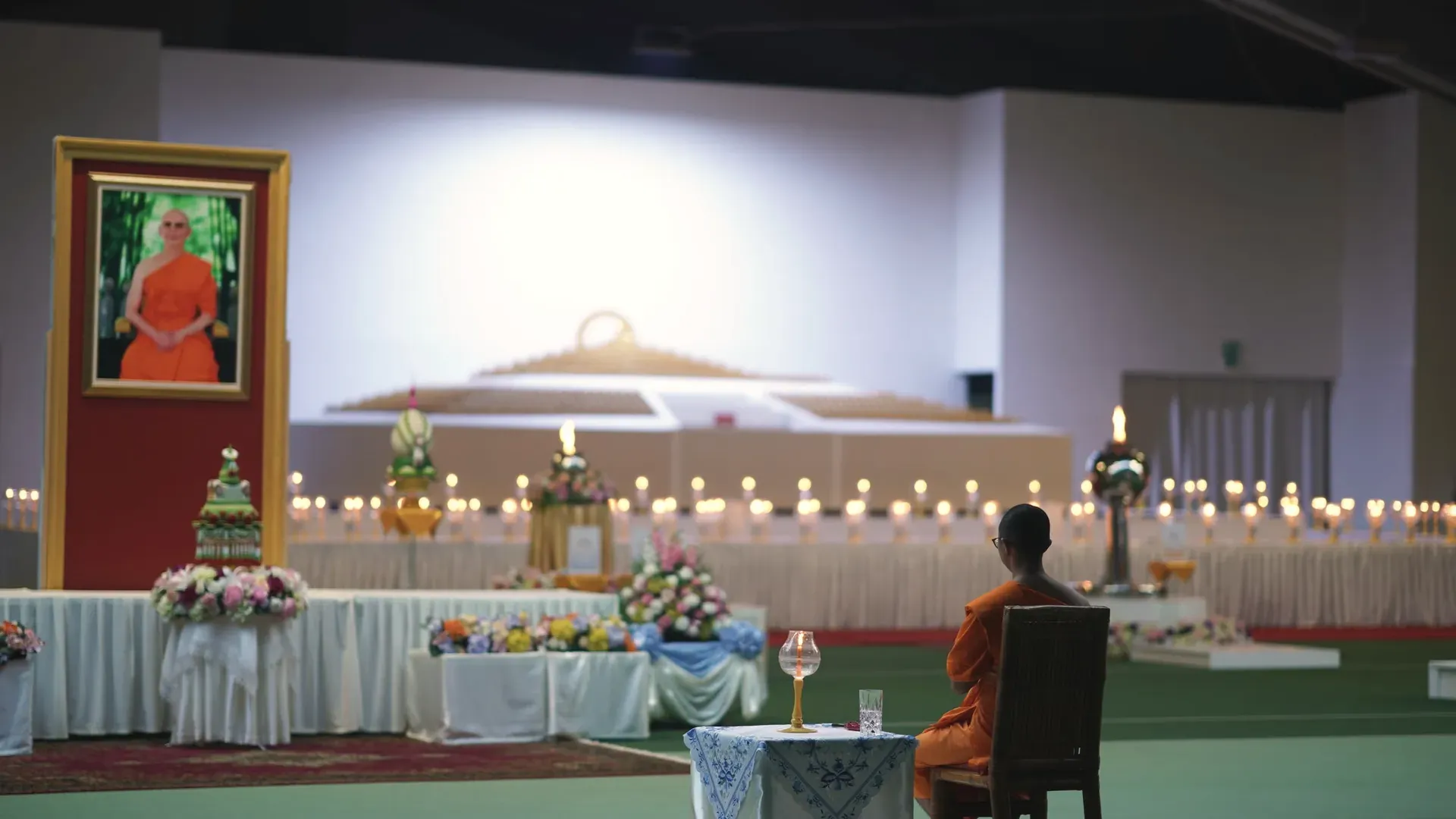
The fireballs belong to Ok Phansa, the day the three-month Buddhist rains retreat ends. The Department of Cultural Promotion listed "the Ok Phansa tradition and the Naga fireball phenomenon, Nong Khai" on its intangible cultural heritage register at provincial level in B.E. 2567 (2024), with the status "widely practiced", as one of the old Isaan customs of the Heet Sip Song Khong Sip Si, the twelve monthly merit-making customs and fourteen codes of conduct.
The register tells the legend this way. On the fifteenth waxing day of the eleventh month, the Buddha came down from the Tavatimsa heaven to bring the teaching to the three worlds, heaven, earth and the underworld, and on the next day, the first waning day, the three worlds could all see one another. The naga living along the Mekong cried out sathu in praise of the Buddha, and with their great power fireballs shot from their mouths. The register records the belief, along the river, in Phaya Si Sutthonakharat as the head of all the naga of upper Isaan, and the belief that Wat Luang in Phon Phisai district is the naga's city.
The Phon Phisai municipality adds the older story behind it: a naga who took the form of a man to be ordained as a monk, was found in serpent form while asleep and had to leave the order, and asked that every man about to be ordained be called nak in his honor, which is why an ordinand is still called nak. When the Buddha returned from the Tavatimsa heaven after three months preaching to his mother, the naga and their followers made offerings and sent up fireballs to welcome him.
For Ok Phansa among the other Buddhist holy days, and what each one changes for daily life, see our guide to Buddhist holy days in Thailand. For the region's wider beliefs, see Isaan culture.
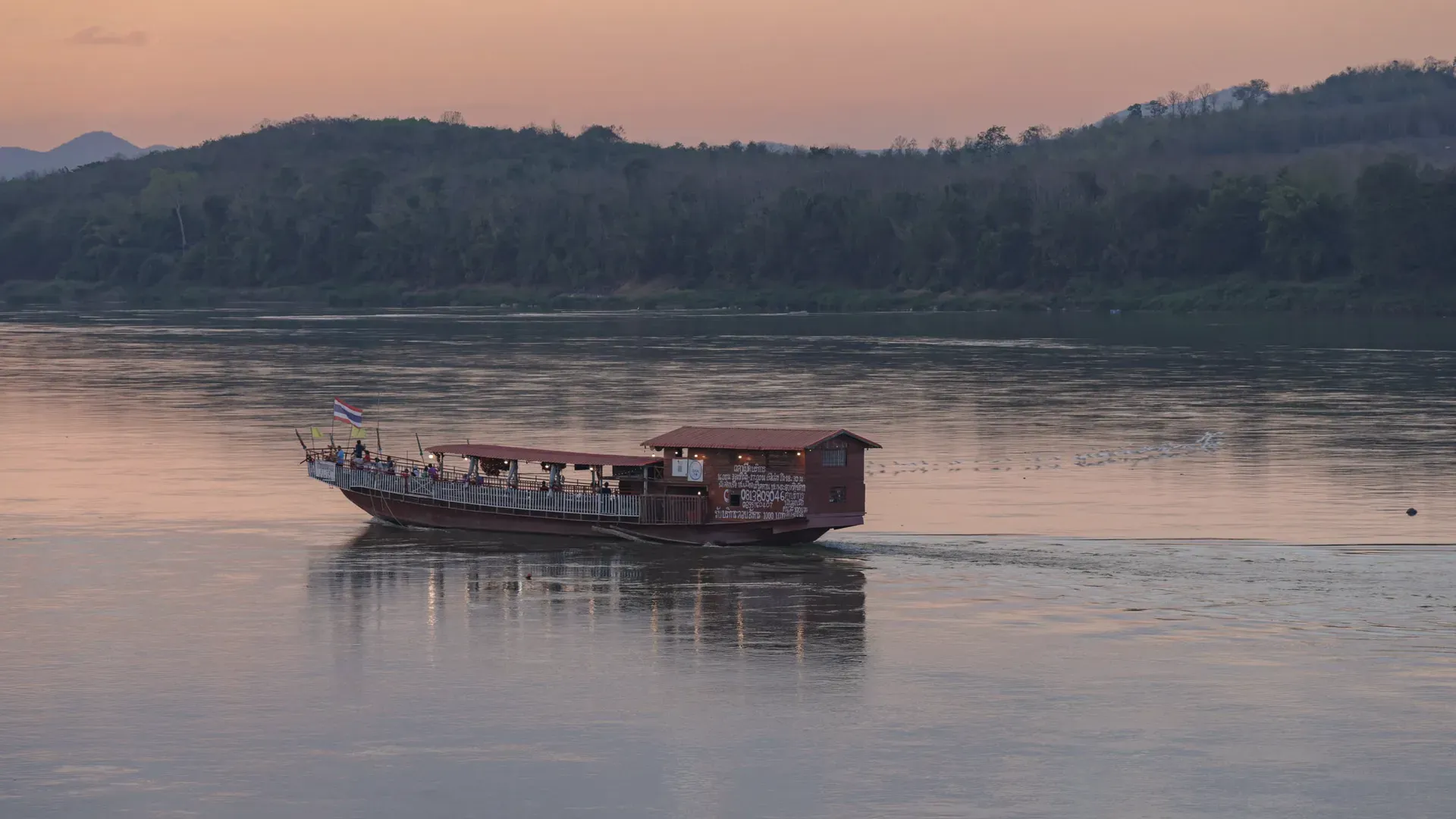
When do the fireballs rise?
The Tourism Authority of Thailand says the fireballs appear most often on Wan Awk Pansa (Ok Phansa), the full-moon night of the eleventh month of the lunar year, usually in October. Because the day follows the lunar calendar, the date moves every year.
The double-eighth-month rule. The Phon Phisai municipality says that in a year with two eighth months in the lunar calendar the night moves one day later, to the first waning day of the eleventh month, which it says matches the fifteenth waxing day in Laos. Our reading: in such a year, plan for the night after Thai Ok Phansa as well.
In 2026. The province expected the fireballs on the night of Ok Phansa, 26 October 2026, according to the Nong Khai Provincial Community Development Office, and the official tally later counted them on two nights, 26 and 27 October (section 05).
The province announces the festival dates each year, so treat any date for next year as unconfirmed until the province or TAT prints it. For the time of year, see weather in Nong Khai and our guide to weather and seasons in Thailand.
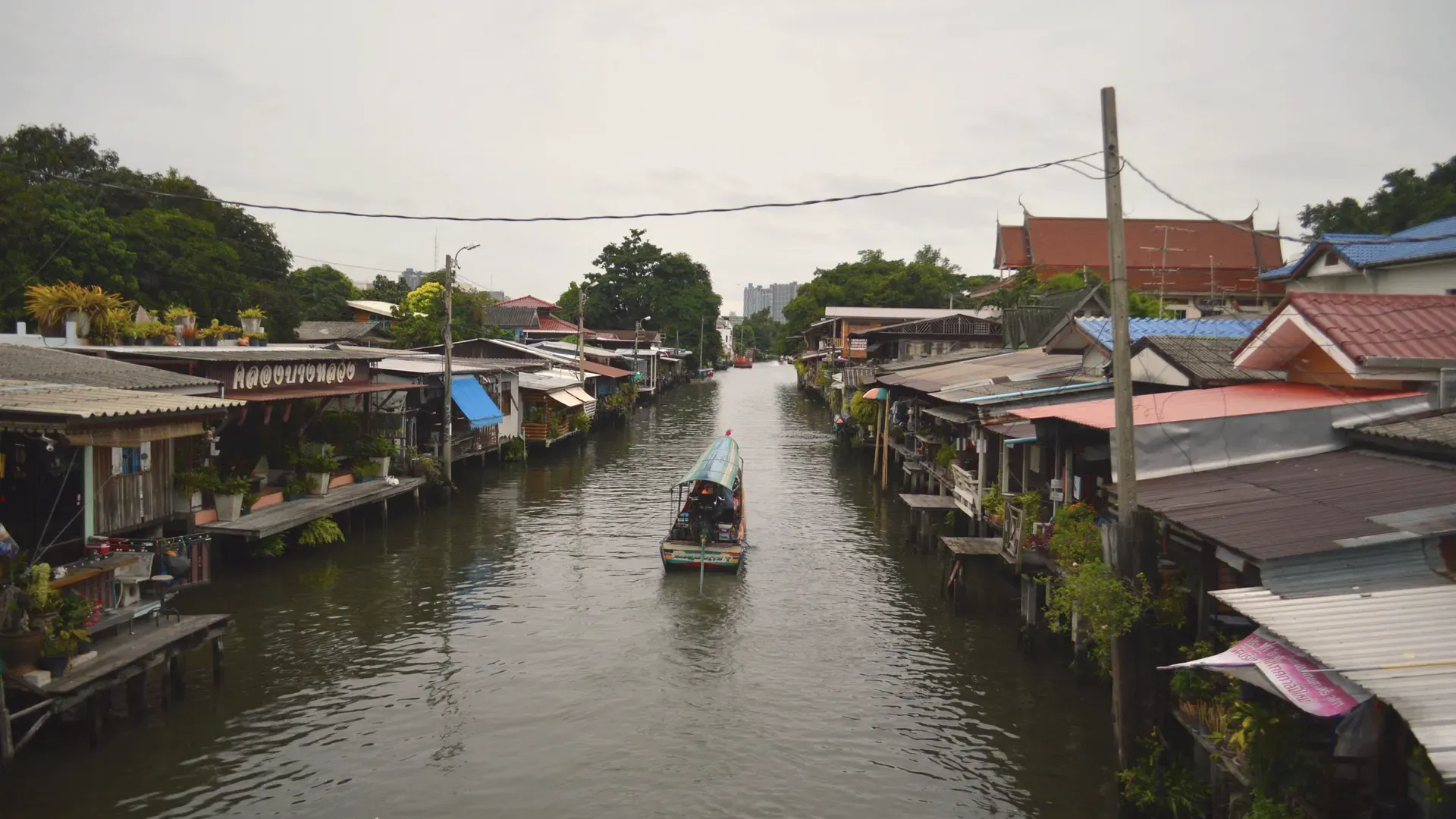
The 2026 festival: dates, districts and program
The province announced the 2026 festival, "Ok Phansa and the World Naga Fireballs", at a press conference on 24 September 2026 on the riverside cultural ground by the twin naga statues in front of Wat Lamduan in Nong Khai town, led by the governor with the TAT Udon Thani office, the Phon Phisai and Rattanawapi district chiefs and the provincial and town administrations. The Community Development Office report (25 September 2026) set out the dates:
| Where | When | Source |
|---|---|---|
| Whole festival | 22 October to 3 November 2026 | Community Development Office |
| Mueang Nong Khai (the town) | 22 to 28 October, in the Community Development Office report; 22 to 26 October, along the riverside from Wat Lamduan to the Wat Yot Kaeo pier, in Siam Rath's report of the opening | Community Development Office; Siam Rath, 23 October 2026 |
| Rattanawapi district | 24 to 26 October | Community Development Office |
| Phon Phisai district | 25 October to 3 November | Community Development Office |
| Ok Phansa night | 26 October 2026, the night the fireballs were expected, with Phon Phisai and Rattanawapi as the main viewing areas | Community Development Office |
The program. The province listed a procession to worship the naga, a propitiation ceremony and dance for the naga king, the floating of glowing naga fire boats, a light-and-sound show, "Opening the Legend of the Naga Fireballs", ceremonies for Chao Mae Song Nang and for the Phra That Klang Nam (the chedi in the river), banana-sheath krathong, a waterborne procession of beeswax castles in the old way, a food street and music ground, OTOP goods, a walking street, long-boat races, a bike ride "in the naga's footsteps", the Tak Bat Thewo alms-giving and cultural shows.
The opening. Siam Rath reported that the governor opened the town festival, billed as "Miracle of NAGA: The Essence of NongKhai 2026", at 18:00 on 22 October 2026 on the same riverside ground, with processions from all nine districts and more than 1,000 people of Nong Khai dancing in homage to the naga. Its program list adds fireworks and the floating of kapo fai, lamps in coconut shells, beside the banana-sheath krathong.
How many fireballs: the official 2026 count
The province counts the fireballs place by place. Khaosod reported the official tally on 29 October 2026:
| Night | Fireballs (official total) | Visitors |
|---|---|---|
| 26 October 2026 (Ok Phansa) | 208 | 181,200 |
| 27 October 2026 | 108 | about 12,000 |
| Two nights | 316 | 193,200 |
Where they were counted on 26 October. In Rattanawapi district: Ban Tha Muang and the Rattanawapi boat station 28, Ban Tan Chum 28, Ban Peng Chan 27, Ban Nong Kaeo 26, behind Wat Nong Khon 13, the Ban Dong Dan bridge 11, Ban Dong Mot Daeng 10, and smaller counts at three more places. In Phon Phisai district: Nong Kung Tai and the Buddhist park 29, Ban Woen 4, Ban Ang Kep Nam 3, Ban Daen Mueang 2 and Ban Wat Luang 2. In Sangkhom district: 11 at Ang Pla Buek, Ban Pha Tang.
A note on the arithmetic. Our sum of the place-by-place figures in the same report is 198 for 26 October and 109 for 27 October, not the 208 and 108 the report gives as totals. We print the province's totals as reported and the list as printed; we have not found a second official copy of the tally to say which is right.
Crowds. Before the festival the Community Development Office report said about 250,000 visitors came to Nong Khai the year before and that the province expected more in 2026. The two figures may not count the same thing, one being visitors to the province and the other viewers counted on the two nights. The first fireballs of 2026, three of them, were reported at 18:21 at Ban Tha Muang in Rattanawapi, according to a Khaosod headline linked from the tally report.
What causes them? The argument, both sides
The fireballs have been argued over for decades. The clearest record of the two positions is a public debate held on 26 November 2012 at Sanpasitthiprasong Hospital in Ubon Ratchathani, reported by MGR Online the next day.
A natural phenomenon. Dr Manat Kanoksin, then director of the hospital, who said he had watched the fireballs for 25 years, argued that they are natural: bubbles of phosphine and methane gas in the right mix that ignite on reaching the air. His team interviewed 127 people on both the Thai and Lao banks who had seen the fireballs from within 15 meters, and 55 of them said they had seen them from within 5 meters; they described colors, mostly pinkish-red, red, pink and green. He also presented a study tying sightings to days of high oxygen readings in the air near the ground.
Tracer rounds. Dr Jessada Denduangboripant of the biology department at Chulalongkorn University argued that they are tracer rounds fired from the Lao bank. He cited a 15-minute long-exposure photograph taken from the Thai side by a team from the Pantip forum, in which every trail rose from the Lao bank and none from the water, and a 2002 iTV program that filmed gunfire on the Lao side followed about three seconds later by cheering on the Thai side, across a river about 1 kilometer wide. He also showed video of marsh gas, in soap bubbles and in a large bag, flaring and vanishing when lit. MGR reports him saying that the name was changed from bang fai phi to bang fai phaya nak by a Nong Khai member of parliament, Phithak Sritabut, a different account from the municipality's, which credits the people of Nong Khai (section 01).
Where they met. By MGR's account, Dr Manat said fake fireballs exist but real ones are very few, and that making fakes should stop; Dr Jessada said fewer light shows and fireworks would make it easier to look for real ones, and invited viewers to take their own photographs to help settle it.
Our reading: nothing we read this run settles the question. The province's own seminar before the 2026 festival was titled "Naga beliefs: faith, miracle and economy" (Community Development Office). Go for the night on the river, the temples and the crowd, and make up your own mind.
The river traditions of the same nights
The fireballs are the famous part, but the nights around Ok Phansa on the Mekong are full of older customs. The Department of Cultural Promotion register and the Phon Phisai municipality describe them:
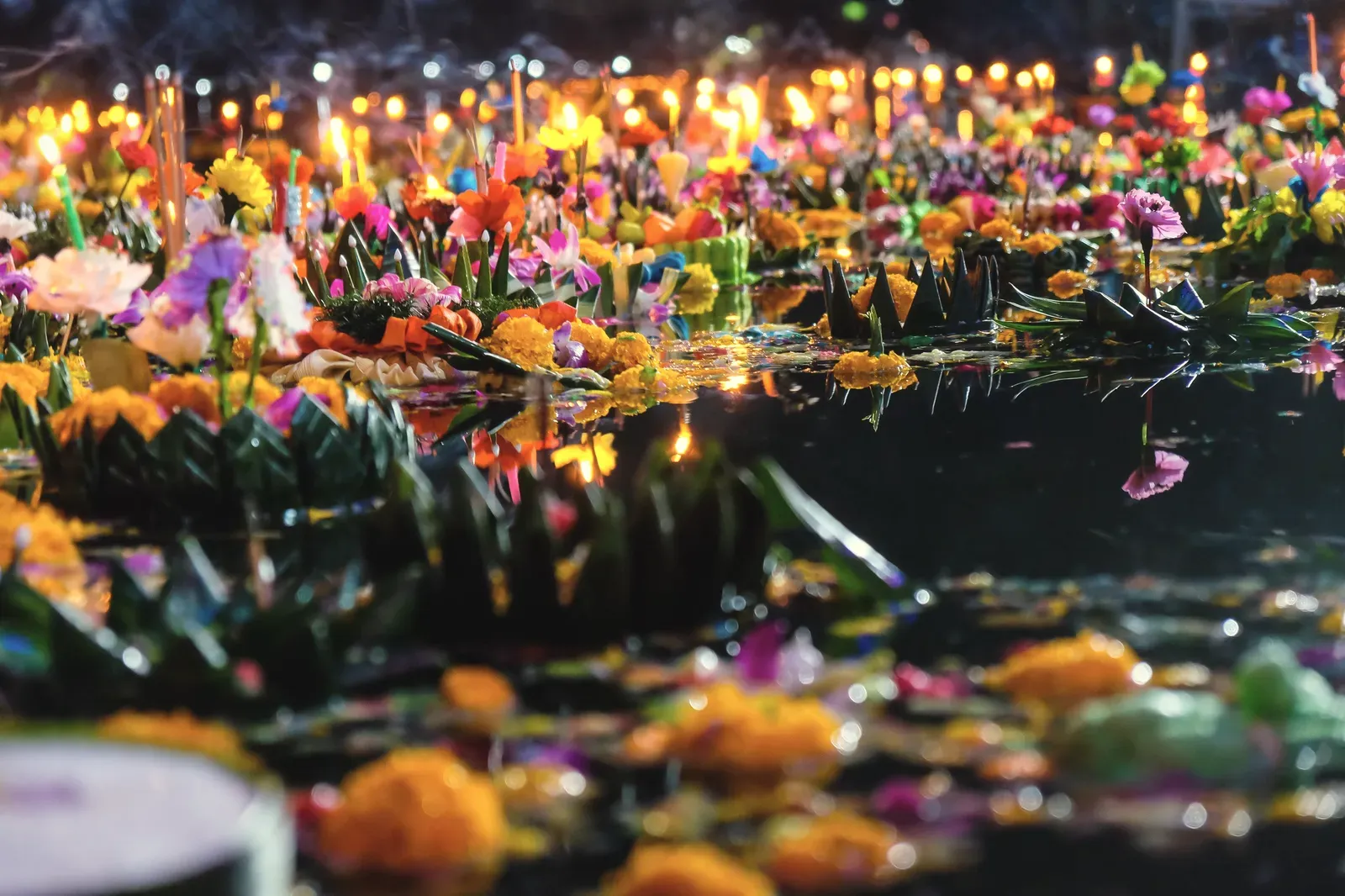
- Lai ruea fai (fire boats). On Ok Phansa, boats made of banana trunks, logs, sugar cane or bamboo, loaded with offerings, incense, candles and flowers, are lit and floated down the river as an offering to the Buddha and to the naga. Homes far from the water light candles or oil lamps in banana-sheath boats along their porches instead.
- Prasat phueng (beeswax castles). An old Nong Khai custom of making castles of beeswax as an offering to welcome the Buddha. The municipality says the day before Ok Phansa, the fourteenth waxing day, is wan hom, when the castles from each neighborhood are brought together at Wat Phra That La Nong, and riverside temples brought theirs by water.
- Tak Bat Thewo. The alms-giving on the first waning day of the eleventh month, the day after Ok Phansa, marking the Buddha's descent from heaven. The municipality says Nong Khai treats it as another important Buddhist day, and that in the year its page was written the province opened several routes in the town for visitors to give alms.
- Long-boat races. TAT lists a Thai-Lao rowing festival at the end of Buddhist Lent, with food offered to monks and long-boat races on the Mekong, which Thailand and Laos take turns to host.
- Chao Mae Song Nang. The municipality describes shrines to Chao Mae Song Nang, a pair of serpent water spirits that it says river people regard as one with the naga, at Wat Hai Sok in Nong Khai town and at Pak Huai Luang and Ban Chom Nang in Phon Phisai, with a ceremony each year for the safety of those who work on the river.
Elsewhere in Thailand the same weeks bring other festivals of light: see our guides to Loi Krathong and Yi Peng, which the municipality's page notes falls on the full moon of the twelfth month, and the Vegetarian Festival.
Where to watch, and practical tips
Where. For 2026 the province named Phon Phisai and Rattanawapi districts as the main viewing areas (Community Development Office), and the town of Nong Khai as the center of the festival program. The official tally (section 05) shows where the fireballs were actually counted in 2026, with Rattanawapi's riverside villages at the top. The Phon Phisai municipality lists viewing places along the river in Sangkhom, Si Chiang Mai, Mueang, Phon Phisai and Rattanawapi, and further downstream at Pak Khat, Bueng Kan and Bueng Khong Long; for that stretch, see things to do in Bueng Kan.
Book early. TAT's own travel tip is that hotel rooms fill quickly before the Naga fireballs, so book in advance. The province reported 181,200 people on the river on the night of 26 October 2026.
Our reading for the night. Arrive in daylight, because the fireballs are watched from after sunset and the riverside roads fill early. Bring water, insect repellent and something to sit on, keep to the banks the organizers open, and keep children close near the water. Expect fireworks and light shows in the festival areas: if you want to look for the fireballs themselves, the quieter villages on the official list are the places people count them.
Getting there. See getting around Nong Khai, trains and rail travel in Thailand and domestic flights in Thailand. TAT notes that the Thai-Lao Friendship Bridge links Nong Khai with Vientiane; for border rules, see visa runs and border runs.
Living in Nong Khai. If the river has you thinking of staying longer, the where to live in Nong Khai and cost of living in Nong Khai guides cover the neighborhoods and the costs. For the rest of the Isaan festival year, see the Bun Bang Fai rocket festival, Phi Ta Khon and Songkran, and for the region's past, Isaan history.
Frequently asked questions
On Ok Phansa, the end of Buddhist Lent: the full-moon night of the eleventh lunar month, usually in October, according to the Tourism Authority of Thailand. In 2026 Ok Phansa fell on 26 October, and Nong Khai ran its festival from 22 October to 3 November across Mueang Nong Khai, Rattanawapi and Phon Phisai districts, according to the Nong Khai Provincial Community Development Office. The province announces the dates each year.
Nong Khai's official tally, as Khaosod reported it on 29 October 2026, was 316 fireballs over two nights: 208 on 26 October and 108 on 27 October, with 181,200 visitors on the first night and about 12,000 on the second, 193,200 in all. The place-by-place figures printed in the same report add up to 198 and 109, so the totals and the list do not quite match.
The province named Phon Phisai and Rattanawapi districts as the main viewing areas for the night of 26 October 2026. In the official 2026 tally the most fireballs on the first night were counted in Rattanawapi, at Ban Tha Muang and the Rattanawapi boat station, Ban Tan Chum, Ban Peng Chan and Ban Nong Kaeo, and in Phon Phisai at Nong Kung Tai and the Buddhist park. Sangkhom district also counted 11.
After dark. The Phon Phisai Town Municipality says the fireballs appear from after sunset until about 23:00. In 2026 the first three were reported at 18:21 at Ban Tha Muang in Rattanawapi district, according to a Khaosod headline linked from its tally report.
The lights are seen every year; what makes them is argued over. In a 2012 debate reported by MGR Online, Dr Manat Kanoksin, then director of Sanpasitthiprasong Hospital, argued they are a natural phenomenon of phosphine and methane gas, while Dr Jessada Denduangboripant of Chulalongkorn University's biology department argued they are tracer rounds fired from the Lao bank, citing a long-exposure photograph and a 2002 iTV program. No source we read settles it.
Local belief holds that the naga of the Mekong send up the fireballs to honor the Buddha on Ok Phansa, the day he returned to earth from the Tavatimsa heaven after spending the rains retreat there preaching to his mother. The Department of Cultural Promotion's register adds the belief that Wat Luang in Phon Phisai district is the naga's city.
Thinking of living in Nong Khai?
A Mekong river town on the border with Laos, at a slower pace than the big cities. Browse homes for rent from partnered agents and compare neighborhoods before you move.
Sources
- Nong Khai Provincial Community Development Office, Community Development Department: report of the 24 September 2026 press conference on the "Ok Phansa and World Naga Fireballs 2026" festival (published 25 September 2026): festival 22 October to 3 November 2026, Mueang Nong Khai 22 to 28 October, Rattanawapi 24 to 26 October, Phon Phisai 25 October to 3 November, fireballs expected on Ok Phansa night 26 October 2026, the program, and about 250,000 visitors the year before ↗Nong Khai Provincial Community Development Office · Accessed 23 November 2026
- Siam Rath: opening of the Nong Khai Ok Phansa and Naga fireball festival 2026, "Miracle of NAGA: The Essence of NongKhai 2026", on 22 October 2026 at the riverside cultural ground by the twin naga statues, Wat Lamduan; town program 22 to 26 October from Wat Lamduan to the Wat Yot Kaeo pier (23 October 2026) ↗Siam Rath · Accessed 23 November 2026
- Khaosod: Nong Khai's official Naga fireball tally for 2026, 208 fireballs and 181,200 visitors on 26 October, 108 and about 12,000 on 27 October, 316 and 193,200 in all, with the place-by-place counts (29 October 2026) ↗Khaosod · Accessed 23 November 2026
- Department of Cultural Promotion, Ministry of Culture, intangible cultural heritage register: the Ok Phansa tradition and the Naga fireball phenomenon, Nong Khai, provincial-level listing of B.E. 2567 (2024): Heet Sip Song, Tak Bat Thewo, fire boats, the old name bang fai phi, and the legend of the naga and the Buddha's descent (undated entry, read 23 November 2026) ↗Department of Cultural Promotion, Ministry of Culture · Accessed 23 November 2026
- Phon Phisai Town Municipality: "The legend and wonder of the Naga fireballs": description of the fireballs, the naga ordination legend, the fire boats, beeswax castles, Tak Bat Thewo, long-boat races, Chao Mae Song Nang shrines and viewing places (undated page; its text refers to the festivals of 2010 and 2011) ↗Phon Phisai Town Municipality, Nong Khai · Accessed 23 November 2026
- Tourism Authority of Thailand: Nong Khai province page: the longest stretch of the Mekong (320 km), the naga fireballs most often on Wan Awk Pansa, usually in October, the Thai-Lao rowing festival at the end of Buddhist Lent, and the tip to book hotel rooms in advance (undated page) ↗Tourism Authority of Thailand · Accessed 23 November 2026
- MGR Online science desk: "Two views clash: do the Naga fireballs happen by themselves or are they man-made?", the 26 November 2012 debate at Sanpasitthiprasong Hospital, Ubon Ratchathani, between Dr Manat Kanoksin (natural phosphine and methane gas) and Dr Jessada Denduangboripant (tracer rounds from the Lao bank), with Dr Manat's study abstracts (27 November 2012) ↗MGR Online · Accessed 23 November 2026
Official primary sources are listed above with the date we last checked them. Thai rules, fees, thresholds and procedures change and can be applied differently by individual offices and embassies, confirm the current requirement with the responsible authority before relying on it. General information only, not legal, tax or medical advice. BAANLYY never takes paid placement in editorial content.