Bun Bang Fai is the rocket festival of Isaan, held in the sixth lunar month to ask Phaya Thaen, the sky god, for rain before rice planting. The best-known festival is in Mueang Yasothon, over three days in May: in 2026 it ran from 8 to 10 May, in 2025 from 16 to 18 May. Day one shows off the decorated rockets, day two is the big parade (moved to 16:00 in 2026 to avoid the heat), and day three is the launch competition at Phaya Thaen Park. Watch from where the organizers put you: these are large rockets, and the official rules keep people at least 100 meters from the launch base.
What is Bun Bang Fai, and why fire rockets for rain?
The Department of Cultural Promotion of the Ministry of Culture describes Bun Bang Fai, also called Bun Duean Hok (the merit-making of the sixth month), as an important merit-making tradition of the people of Isaan, practiced since ancient times. It is one of the twelve monthly customs set down, together with the old rules of government, in what Isaan people call Heet Sip Song Khong Sip Si. The Tourism Authority of Thailand puts it the same way: one of the Heet Sip Song, the twelve-month customs of Isaan, held in the sixth month.
The purpose is rain. The department says the festival reflects a way of life bound to rice farmed on rainfall, in which people relied on nature but also believed a power above nature could make it behave. So when the planting season came, they fired rockets to tell Phaya Thaen, so that he would send rain for the fields. TAT describes Phaya Thaen as the god who controls the sky and rain for the people of Isaan, and the festival as a way to honor the deities and ask for rain in its season through dance and rocket launches.
It is also about neighbors. The department notes that host villages invite related villages to bring rockets of their own, which makes the festival a way to keep ties between communities and to bring a village together. Bun Bang Fai was listed as national intangible cultural heritage in 2013 (B.E. 2556).
Rockets also turn up in other northeastern festivals. Our Phi Ta Khon guide explains how Dan Sai in Loei folds Bun Bang Fai into its Bun Luang festival, and Isaan history covers the region it comes from.
The legend of Phaya Khankhak, the toad king
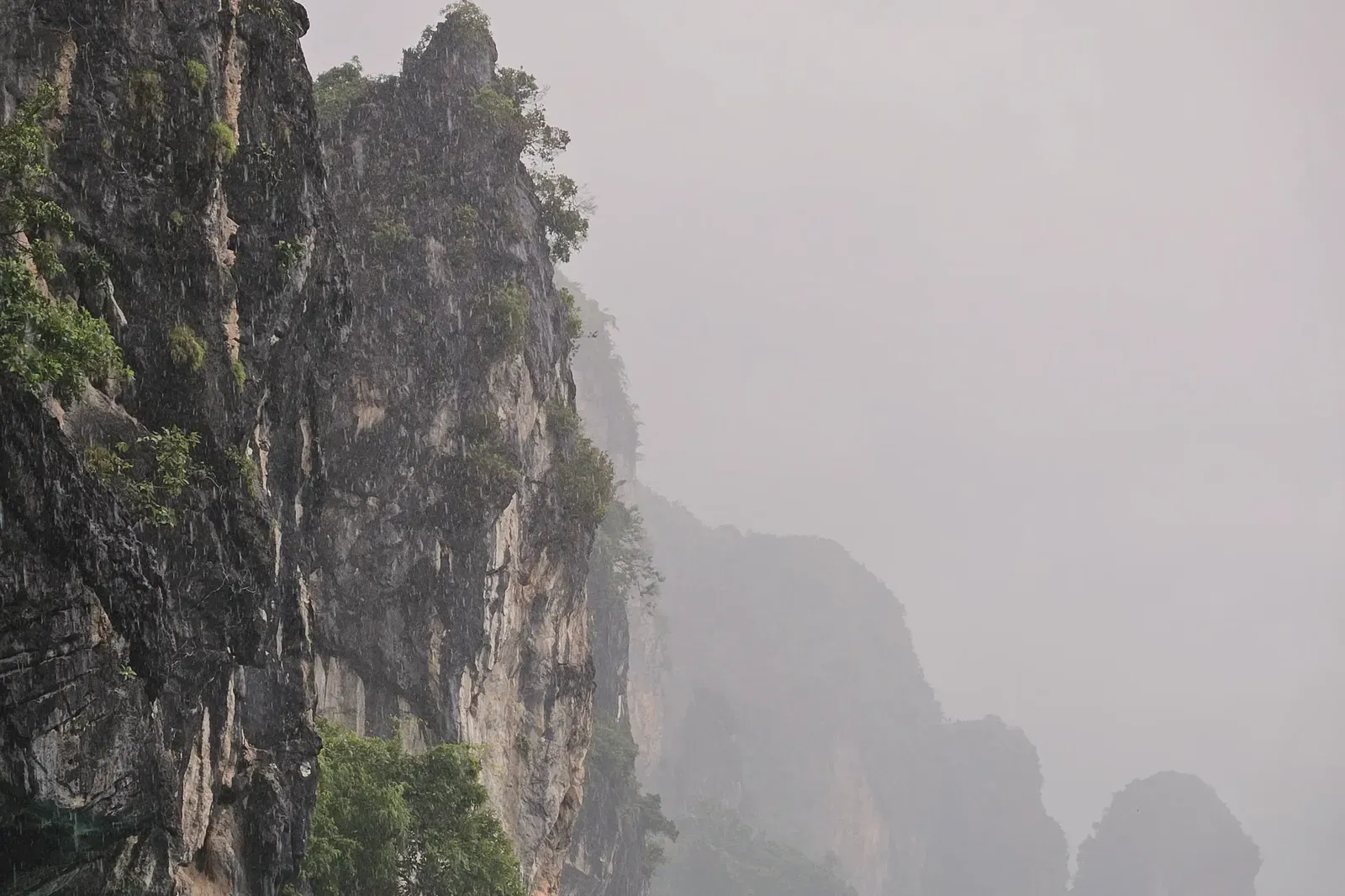
In Yasothon the festival is explained by a folk tale. The Department of Cultural Promotion lists the legend of Phaya Khankhak as provincial-level intangible heritage of Yasothon, registered in 2017 (B.E. 2560), and calls it the legend behind the province's famous rocket festival. "Khankhak" is the Isaan word for a toad.
In the department's telling, the people believed in three worlds: the human world, the world of the gods and the underworld, with the human world under the sway of the gods. The sky god, Phaya Thaen, controlled rain, sky and wind. A queen of the city of Chomphu gave birth to a son who looked like a toad. The god Indra later turned him into a handsome young man, and as king, Phaya Khankhak was so loved that the people forgot to make offerings to Phaya Thaen. The angry sky god held back the rain, and the land dried out for years.
The toad king raised an army of animals, with the nagas building a road to the sky, and went to war with Phaya Thaen. After long battles he won. Phaya Thaen asked how he would know when the human world needed water. The answer, in the department's text: the nagas would ride rockets up to tell him, and when he heard the noise and saw a rocket with a naga head, he would send rain down at once. The entry says the story is told to explain the custom of firing rockets in the sixth month, and that monks preach the Phaya Khankhak story at rain-asking rites and at rocket launches.
The 2026 festival kept the story at its center: the Yasothon Community Development Office reported that a mor lam folk opera would retell the Phaya Thaen legend in a modern form on the night of the parade, and TAT's 2025 program listed a light-and-sound show of the Phaya Khankhak legend.
When is the rocket festival, and where?
The Department of Cultural Promotion places Bun Bang Fai in the sixth lunar month. Villages hold their own festivals (section 06 describes one), and the 2013 Ministry of Interior letter on rockets asked provinces to seek cooperation for rocket festivals to be held between April and June each year. The big provincial festival in Yasothon falls in May, on different dates each year:
| Year | Dates | Venue named | Source |
|---|---|---|---|
| 2026 (B.E. 2569) | 8 to 10 May 2026 (Friday to Sunday) | Yasothon municipality and Phaya Thaen Public Park | Yasothon Provincial Office; Radio Thailand Yasothon |
| 2025 (B.E. 2568) | 16 to 18 May 2025 | Chaeng Sanit Road in front of the Mueang Yasothon district office, and Phaya Thaen Public Park | Tourism Authority of Thailand |
| 2023 (B.E. 2566) | 19 to 21 May 2023 | In front of Yasothon City Hall and Phaya Thaen Public Park | Tourism Authority of Thailand (English) |
The 2026 dates were announced at a press conference on 24 April 2026, held at Wiman Phaya Thaen park, according to the Community Development Office report, and the Yasothon Provincial Office posted its notice on 20 April 2026. Our reading: dates for the next festival are likely to appear only in the spring before it, so treat any date for next year as unconfirmed until the province or TAT prints it.
The season matters for planning. In 2026 the Thai Meteorological Department expected the hot season to end around mid-May and declared the rainy season open from 15 May, after the festival, so the Yasothon dates fall at the hot end of the year. Our guides to heat stroke and the hot season and Thailand's weather and seasons cover both.
What happens on each of the three days?
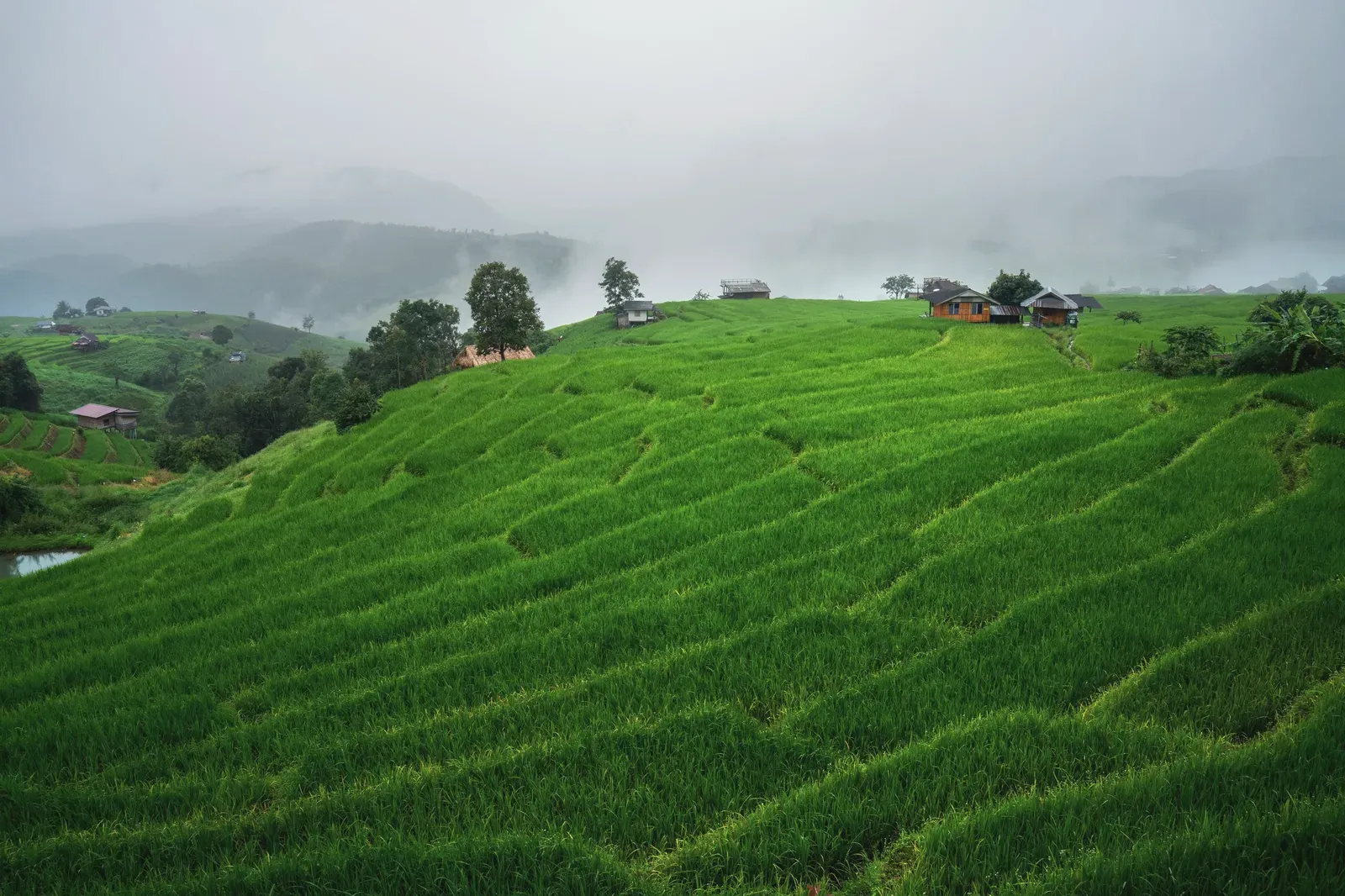
The program below is the 2026 schedule published by Radio Thailand Yasothon on 8 May 2026, with details from the press conference report. The 2025 program on TAT followed the same shape: rockets on show on day one, the parade on day two, launches on day three.
| Day | What happened |
|---|---|
| Friday 8 May Gathering day | From 16:00, ancient rockets and decorated rockets on show at the Chao Pho Mahesak Lak Mueang shrine; the press conference said the decorated rockets (bang fai eh) would be parked all over town. In the evening, the cheer-squad contest and the Thida Bang Fai Ko pageant at the central stage in front of the Mueang Yasothon district office, with a stage along Chaeng Sanit Road and free concerts. |
| Saturday 9 May Parade day | 07:30, the royal trophy is brought in, with the offering dance of the Mahesak Lak Mueang procession in its traditional form. 09:00 to 14:30, a culture camp and the kap seng (rocket chant and dance) contest of teams from 9 districts at the Yasothon municipality dome. 16:00, the official opening and the parade of decorated and ancient rockets along Chaeng Sanit Road to Wat Si Trai Phum. At night, a mor lam folk opera of the Phaya Thaen legend. |
| Sunday 10 May Launch day | From 08:00, the high-flying rocket competition at Phaya Thaen Public Park; the press conference also named the fancy rockets and the bang fai saen. 16:00, the royal trophies are presented. |
What changed in 2026. The press conference said the opening and parade were moved from the morning to 16:00 and later, to avoid the extreme heat and prevent heat stroke among marchers and visitors, and to let the 22 processions use lights and sound after dark. It also announced a show of laab Yasothon for visitors to taste, round-the-clock staffing with CCTV support, and a web app built by private-sector partners in Thai, English, French, Japanese, Korean, Chinese and Lao.
TAT's 2025 list of activities gives a fuller picture of what to look for: the parade of beautiful rockets, the kap seng contest, demonstrations of rocket carving that visitors could try, ancient rocket carts, the cheer-squad stages, the Thida Bang Fai Ko pageant, the inaugural and fortune-telling rockets, fancy rockets that come down on a parachute trailing colored smoke, the parachute and high-flying competitions, and OTOP goods from the province. In 2023, TAT's English page also listed a Rocket Street Food event at the municipality dome.
How big are the rockets, and how are they decorated?
The Department of Cultural Promotion gives three usual sizes, named by the weight of saltpeter packed into them:
| Name | Saltpeter |
|---|---|
| Ordinary rocket (bang fai thammada) | No more than 12 kilograms |
| Bang fai muen | 12 kilograms |
| Bang fai saen | 120 kilograms |
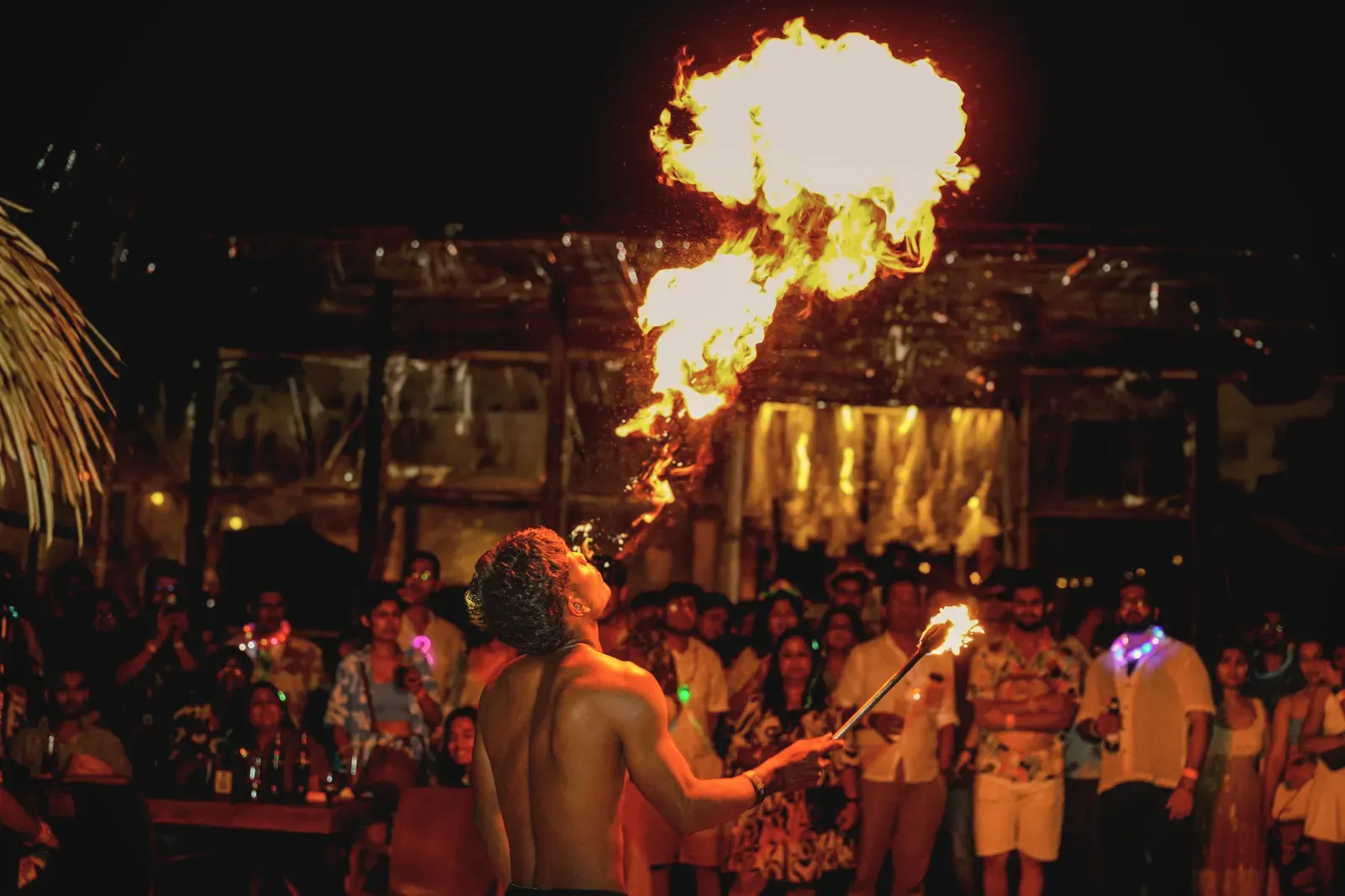
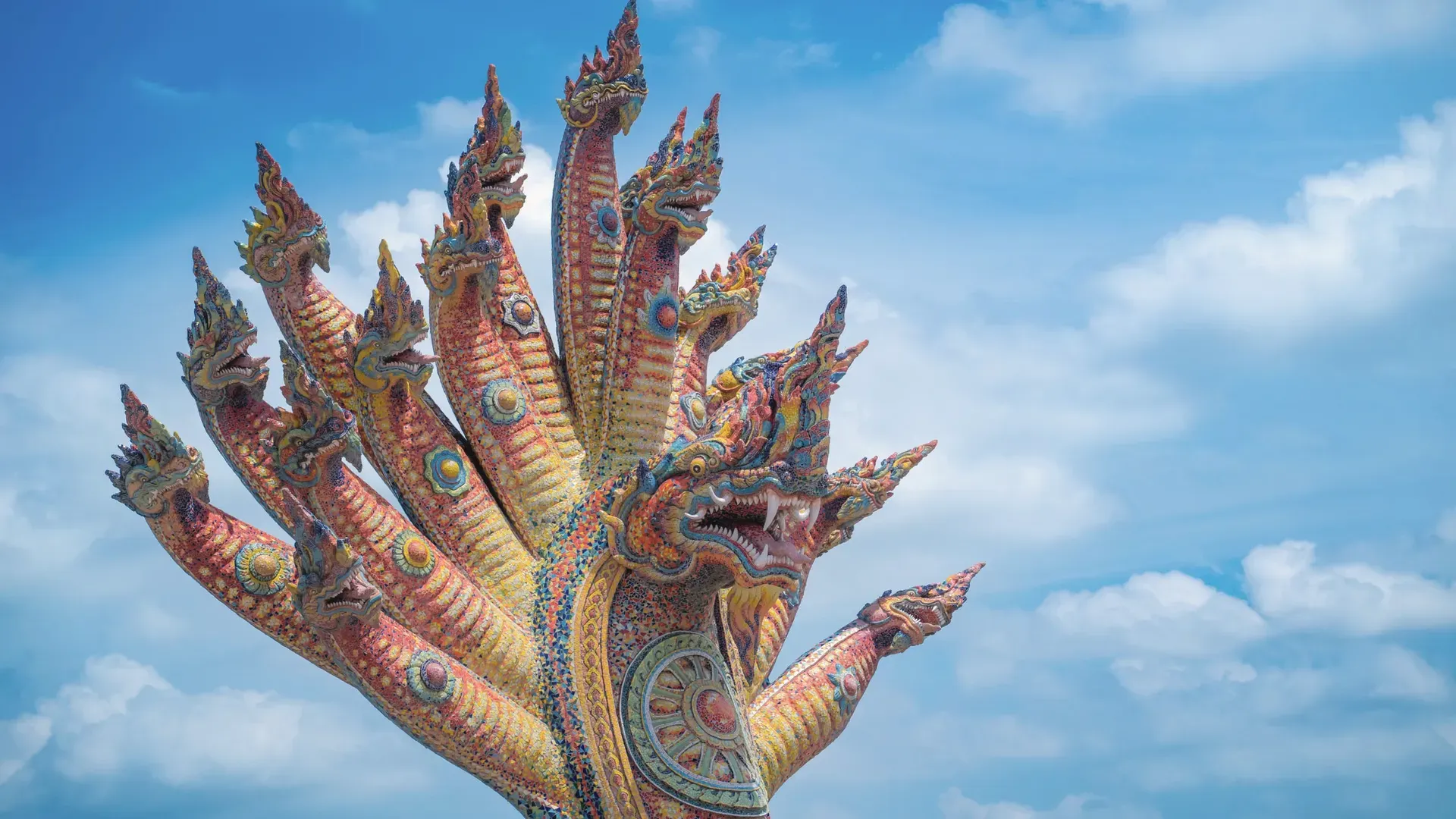
Once a rocket is made, it is dressed in colored paper, which the department says is called eh in the local language; that is why the parade rockets are called bang fai eh. The head and tail are shaped into whatever the makers want, most often the head of a naga, the serpent that in the Phaya Khankhak legend rides the rocket up to the sky god.
The Yasothon program adds two kinds you will see at the park: fancy rockets, which TAT describes as rockets fitted with a parachute and colored smoke, and the high-flying rockets of the main competition. The 2013 Ministry of Interior letter asked that launches be no bigger than a bang fai saen.
How does a village Bun Bang Fai run?
Away from Yasothon's main stage, the Department of Cultural Promotion describes a two-day village festival:
- Wan hom, the gathering day. Villages with ties to the host village bring their own rockets. At the agreed time, around four or five in the afternoon, every procession from the host and guest villages carries its rockets into the temple grounds. The procession has seng dancing and plays showing local life, such as casting a fishing net. Some groups play sexual jokes, which the department says are taken as part of the color of the parade, while the main seng troupe dresses in old-style costume and chants verses with Buddhist morals.
- Hosting the guests. The host village looks after each guest village, splitting into groups or neighborhoods (khum), each caring for one village. The department names the food: khao pun (rice noodles) with a curry sauce made with grilled fish, along with liquor and tobacco rolled in dried banana leaf.
- The launch day. The next morning, villagers in their best local dress, silk sarongs for men and silk sinh skirts for women, bring food to offer the monks at the temple, then eat together with their guests. The rockets are then taken to the launch ground, to a rack built on a tall tree about 20 to 30 meters high so that the rocket's tail is clear of the ground, and fired in an order drawn by lot. When the last rocket has gone up, the year's festival is over.
If you are invited to a village festival, our reading is to treat the morning at the temple as worship, dress as you would for any temple visit, and accept the food: hosting guests is the point. Our larb guide and som tam guide cover the Isaan dishes you will be offered.

Is it safe, and what are the official rules on rockets?
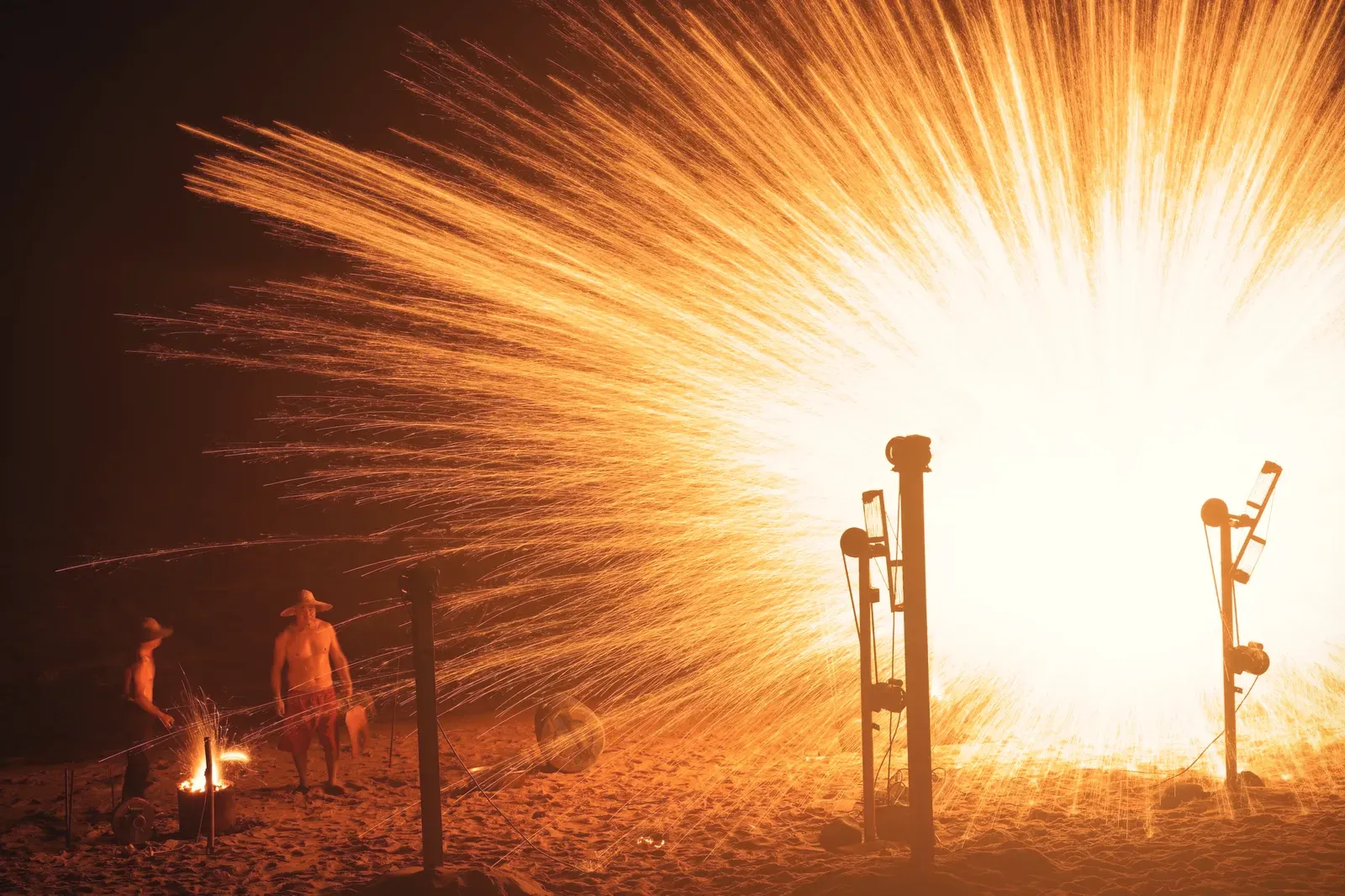
The government's own heritage entry is blunt. The Department of Cultural Promotion says the festival has changed a great deal, with modern technology used to make rockets fly ever higher, until rockets have exploded and endangered the lives and property of the people at the festival "time and again".
The Ministry of Interior letter of 30 July 2013 (B.E. 2556) to every provincial governor, written after media reports of rocket explosions injuring and killing people, including one on 7 July 2013 at a ceremony at Wat Pa Kham Yai in Huai Mek district, Kalasin, set out these measures. Some are worded as rules ("must"), most as what organizers should do:
- Ask for rocket festivals to be held between April and June.
- Launch sites must be at least 100 meters from a village or community, placed so they do not endanger anyone's life or property.
- Anyone launching should tell the district chief at least 7 days before, saying for what event, where, and who is responsible.
- Launch between 09:00 and 17:00, with rockets no bigger than a bang fai saen and no more than 15 of them.
- Mark a zone keeping people at least 100 meters around the launch base, and have rockets fired by people with knowledge and skill. The person who fires a rocket carries criminal and civil liability for the harm it does.
- No betting on the competitions or launches, which the letter says is punishable under the Gambling Act of 1935 (B.E. 2478), and no obscene dances or costumes.
- Districts should coordinate with the police and with air transport agencies.
The same letter notes a limit on that power: a district chief cannot issue an order banning rocket launches outside the festival season, because no law gives that authority; officials can only ask people not to.
Air traffic. The Civil Aviation Authority of Thailand says anyone who wants to launch rockets must ask the local officials of the subdistrict, district or province for permission 7 to 15 days ahead, give the time, place, size and number of rockets, and follow each province's own announcement. The details go into a NOTAM, a notice that lets air traffic controllers and pilots avoid the area at that time. Even with permission, the CAAT says, factors that cannot be controlled, such as height, area, time and direction, can still affect flight safety.
For spectators, our reading: watch from the stands or areas the organizers mark, never walk toward the launch racks, look up when a rocket goes, and keep children close. A rocket that fails comes back down somewhere. If you want to fly a drone over the crowds, read our drone rules first, and save the numbers in our guide to emergency numbers.
Visiting Yasothon for the festival
Crowds. The governor told the 2026 press conference, in the Community Development Office report, that Bun Bang Fai is the spirit of Yasothon people, who come home for it, often more than for Songkran. Our reading: a small provincial town fills up, so book a room early or stay in a nearby city and come in for the day you most want to see. For the parade, that is day two; for the launches, day three.
Getting there and around. Our Yasothon getting-around guide covers the bus and road links and how to get around town, and domestic flights in Thailand covers flying into the northeast. If you will drive, read driving in Thailand first.
Outside May. Our things to do in Yasothon guide covers Phaya Thaen Park, the toad-shaped museum and the old town, and the Yasothon province guide covers living there. For the rest of the festival year, see our guides to Songkran, Phi Ta Khon, Loi Krathong and Yi Peng and the Vegetarian Festival, and Isaan culture for the region as a whole.
Frequently asked questions
In May, but the dates move from year to year. The Yasothon festival ran from 8 to 10 May 2026, according to the Yasothon Provincial Office and Radio Thailand Yasothon; from 16 to 18 May 2025 and from 19 to 21 May 2023, according to the Tourism Authority of Thailand. The Department of Cultural Promotion calls Bun Bang Fai the merit-making of the sixth lunar month. Check the province or TAT each spring before you book.
To ask for rain. The Department of Cultural Promotion says villagers who farm rice on rainfall fire rockets at the start of the planting season to tell Phaya Thaen, the sky god, so that he sends rain for the fields. In Yasothon the custom is tied to the legend of Phaya Khankhak, the toad king who defeated Phaya Thaen and agreed that rockets with naga heads would be the signal to send the rain.
Rocket sizes, named by how much saltpeter goes into them. The Department of Cultural Promotion gives three sizes: an ordinary rocket with no more than 12 kilograms of saltpeter, a bang fai muen with 12 kilograms, and a bang fai saen with 120 kilograms. Decorated rockets for the parade are called bang fai eh.
In Mueang Yasothon. The Tourism Authority of Thailand gave the 2025 venue as Chaeng Sanit Road in front of the Mueang Yasothon district office and Phaya Thaen Public Park. In 2026 the parade ran along Chaeng Sanit Road to Wat Si Trai Phum and the launches were held at Phaya Thaen Park, according to Radio Thailand Yasothon.
Stay where the organizers put spectators. The Department of Cultural Promotion warns that rockets built with modern methods to fly ever higher have exploded and harmed people and property again and again. A Ministry of Interior letter of 2013 set out that launch sites must be at least 100 meters from villages, that people be kept at least 100 meters from the launch base, and that launches should run between 09:00 and 17:00.
Yes. The Civil Aviation Authority of Thailand says anyone who wants to launch rockets must ask the local officials of the subdistrict, district or province for permission 7 to 15 days ahead, giving the time, the place, the size and the number of rockets, following each province's own announcement. The details are used to warn pilots and air traffic control.
Thinking of living in the northeast?
Yasothon, Ubon Ratchathani and the rest of Isaan are a different pace of life from the big cities. Browse homes for rent from partnered agents and compare neighborhoods before you move.
Sources
- Department of Cultural Promotion, Ministry of Culture, intangible cultural heritage site: "Sixth-month tradition: the Bun Bang Fai tradition" (28 May 2022): Heet Sip Song, the three rocket sizes by saltpeter weight, the village gathering and launch days, asking Phaya Thaen for rain, the warning about rocket explosions, national heritage listing of B.E. 2556 (2013) ↗Department of Cultural Promotion, Ministry of Culture · Accessed 23 November 2026
- Department of Cultural Promotion, Ministry of Culture, intangible cultural heritage register: the legend of Phaya Khankhak, Yasothon, provincial-level listing of B.E. 2560 (2017), with the full story of the toad king and Phaya Thaen (undated entry, read 23 November 2026) ↗Department of Cultural Promotion, Ministry of Culture · Accessed 23 November 2026
- Yasothon Provincial Office: invitation to the Yasothon Bun Bang Fai festival, 8 to 10 May 2569 (2026), published 20 April 2026, updated 8 May 2026 (festival posters, sourced to the Yasothon Town Municipality page) ↗Yasothon Provincial Office · Accessed 23 November 2026
- Yasothon Provincial Community Development Office (Community Development Department, Ministry of Interior): report of the 24 April 2026 press conference for the 2569 Bun Bang Fai festival, 8 to 10 May 2026: parade moved to 16:00 to avoid heat, 22 processions, the program by day, laab Yasothon, 24-hour staffing and CCTV ↗Yasothon Provincial Community Development Office · Accessed 23 November 2026
- Radio Thailand Yasothon (Government Public Relations Department): the 2569 Yasothon Bun Bang Fai program, 8 to 10 May 2026, day by day with times and venues (8 May 2026) ↗Radio Thailand Yasothon, Government Public Relations Department · Accessed 23 November 2026
- Tourism Authority of Thailand (Thai site), event page: Bun Bang Fai tradition, Yasothon, B.E. 2568 (16 to 18 May 2025), with the venue, the list of activities and the three-day program ↗Tourism Authority of Thailand · Accessed 23 November 2026
- Tourism Authority of Thailand (English site), event page: Yasothon Bun Bang Fai Festival, 19 to 21 May 2023, venue and activities ↗Tourism Authority of Thailand · Accessed 23 November 2026
- Ministry of Interior letter to all provincial governors on launching fireworks and rockets, 30 July 2013 (B.E. 2556), as circulated by a provincial local administration office in August 2013: festival season, 100-meter distances, 7 days notice to the district chief, 09:00 to 17:00, no bigger than bang fai saen, no more than 15 rockets, no gambling (copy hosted by the Sukhothai Provincial Administrative Organization) ↗Ministry of Interior (copy on the Sukhothai PAO site) · Accessed 23 November 2026
- Civil Aviation Authority of Thailand, "Do you know": how launching rockets affects flight safety, permission from local officials 7 to 15 days ahead and the NOTAM (published 20 May 2025, updated 24 June 2025) ↗Civil Aviation Authority of Thailand (CAAT) · Accessed 23 November 2026
- Thai Meteorological Department announcement, start of the hot season of Thailand B.E. 2569 (data date 20 February 2026): hot season from 22 February 2026, expected to end around mid-May ↗Thai Meteorological Department · Accessed 23 November 2026
- Thai Meteorological Department announcement, start of the rainy season of Thailand B.E. 2569 (data date 14 May 2026): rainy season from 15 May 2026 ↗Thai Meteorological Department · Accessed 23 November 2026
Official primary sources are listed above with the date we last checked them. Thai rules, fees, thresholds and procedures change and can be applied differently by individual offices and embassies, confirm the current requirement with the responsible authority before relying on it. General information only, not legal, tax or medical advice. BAANLYY never takes paid placement in editorial content.