Look for earth tubes on walls and pillars, hollow-sounding wood, doors that suddenly stick, tiny pellets under wooden furniture and swarms of winged termites at the start of the rainy season. Subterranean termites, the most common and most damaging kind in Thailand, are treated with bait stations or a chemical barrier injected into the soil; in Royal Forest Department tests three soil chemicals protected for more than 7 to 8 years. Before you hire anyone, ask to see the company's FDA permit or notification receipt and check that every product has a wor-or-sor number. In a rental, termites in the structure normally point to the owner, so tell the landlord in writing the day you see them.
Which termites damage Thai homes, and what signs do they leave?
An article published on 4 June 2569 (2026) by the Nakhon Si Thammarat Provincial Agriculture and Cooperatives Office, part of the Ministry of Agriculture and Cooperatives (the office credits a farming advice Facebook page as its source), says Thailand has more than 200 kinds of termite, but only some of them damage homes and buildings. It sorts those into three groups:
| Kind | How it lives | Signs to look for |
|---|---|---|
| Subterranean (pluak tai din) | The most common and most damaging in Thailand. Nests underground, needs high moisture, builds earth tubes or tunnels to reach food, and lives in colonies of tens of thousands to millions. Can destroy wooden structure quickly. | Earth trails on walls, pillars or foundations; swarmers (maeng mao) flying from the nest early in the rainy season; wood hollow inside; doors or windows that swell and will not close; a hollow sound when you knock on wood |
| Drywood (pluak mai haeng) | Does not need soil and nests inside the wood itself, preferring wood that is low in moisture. Found in wooden furniture, door and window frames and wooden beams. Builds no earth tubes, has smaller colonies and spreads through several spots in the wood. | Droppings like pepper seeds or grains of sand; small holes in the surface of the wood; furniture that sounds hollow; discarded wings near windows or lights |
| Dampwood (pluak mai chuen) | Less common than the other two but still damaging. Likes wet wood: rotting timber, stumps and wood damaged by water. Builds no earth tubes and is larger than other termites. | Found under roof leaks, where water seeps in, in damp storerooms and in wood that has stayed rotten or wet for a long time |
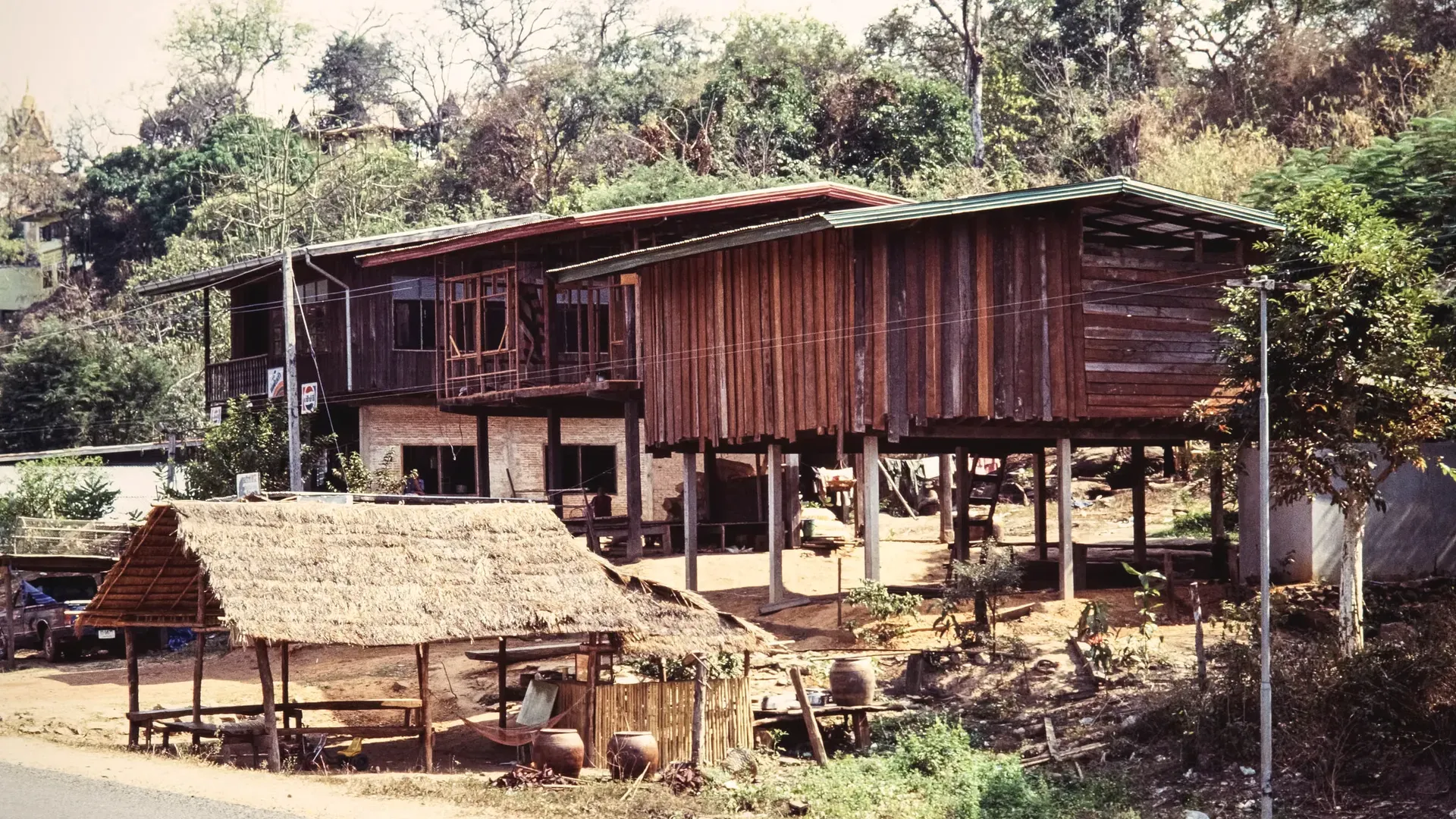
The same article lists the places most at risk from subterranean termites: wooden houses, farm buildings, animal pens, crop stores and places near water or on damp soil. A wooden house on stilts in the countryside and a townhouse with wooden floors near a canal are very different risks from a concrete unit on the 25th floor. Our guide to pest control in Thailand explains how pest risk changes with the floor you live on.
Ants or termites? Winged ants are easy to confuse with swarming termites. The US EPA gives a quick test: an ant's front wings are longer than its hind wings and its antennae bend at a ninety degree angle; a termite's wings are roughly equal in length and its antennae are straight, perhaps drooping. The EPA adds that termites rarely come out of the soil, the mud tubes or the wood they are tunneling through, so most people do not know they have them until they see a swarm or find damage.
How do you check a home for termites yourself?
The Nakhon Si Thammarat office gives five basic checks, and the EPA adds one:
- Earth trails. Brown lines of soil running along walls, pillars or concrete floors are a sign of subterranean termites.
- Knock on the wood. An unusually hollow sound can mean termites are eating it from the inside. The EPA suggests probing exposed wood for hollow spots with a flathead screwdriver or a similar tool.
- Droppings. Small pellets collecting under wooden furniture or door frames point to drywood termites.
- Swarmers. If you find large numbers of winged termites, check for termites straight away.
- Damp. Places with leaks or high moisture are often where termites live.
Where to look (our suggestions, not an official list): the bottom of door frames and the skirting along outside walls; inside and behind built-in wardrobes and kitchen cabinets; under the stairs; around pipes where they come through the floor; the roof space, if there is a hatch; and anything stored on the floor, such as cardboard boxes and books, especially on the ground floor. Photograph anything you find before you disturb it, because a pest control company and a landlord will both want to see it.
What does a pest control company do about termites?
The Nakhon Si Thammarat office matches the method to the kind of termite:
| Kind | Method | What the article says about it |
|---|---|---|
| Subterranean | Bait system | Eliminates the whole colony and uses little chemical; the article calls it safe for people and pets and says it prevents a return. Worker termites carry the bait back and share it with the nest; unable to molt, the colony gradually dies. |
| Soil injection | Chemical is injected into the soil around the building to make an underground barrier; suited to houses and buildings with a severe infestation. | |
| Remove their food | Clear scrap wood around the house, remove old stumps, and keep wood from touching the soil. | |
| Drywood | Spot treatment | Drill into the area where they live, inject liquid or powder, then plug the holes; suited to a limited infestation. |
| Fumigation | For a house or building infested in several places; reaches every corner of the wooden structure; must be done only by specialists. | |
| Replace the wood | Wood so damaged that it has lost its strength should be taken out and replaced at once. | |
| Dampwood | Fix the damp first | Repair roof leaks and broken pipes and improve drainage; remove rotten wood, old stumps and branches touching the building; use a wood preservative against future attack. |
How long soil chemicals last. A sheet on termite chemicals on the Royal Forest Department's forest products research website (undated, read 24 November 2026), citing a 1996 study, says termites cause 95 percent of the damage done to wood, processed or not, and that chemicals are used either to protect the wood itself (by brushing, dipping, soaking, spraying or pressure treatment) or poured into the soil so that termites cannot tunnel through it to the building. The department says it has studied how well termite chemicals work before they are sold. In more than 10 years of its tests, in almost every region of Thailand, Bifenthrin 240 EC and Permethrin 380 EC protected against termites for more than 8 years on average, and Fipronil for more than 7 years in both of the department's test methods. Those figures describe the chemicals in the department's tests, not any company's workmanship.
What the EPA adds. The EPA lists four kinds of treatment it approves in the United States: liquid termiticides applied to the soil, termite baits (cellulose baits containing a slow-acting insecticide), building materials impregnated with termiticide, and wood treatments such as borates sprayed on during construction. It also describes physical barriers built in during construction, such as steel mesh and sand of particular sizes. It warns that a soil barrier done improperly can contaminate the home and nearby drinking water wells and will not protect against termites, that many termiticides are highly toxic, and that a product which only claims to kill termites has not shown that it protects a structure. Ask how soon you can go back in after treatment: the EPA says the label sets that time.
What should you check before you hire a termite company?
Thailand's FDA regulates the chemicals, and through them the companies. Its press release of 13 August 2558 (2015) says that keeping hazardous substances in order to be hired to control insects and other animals falls under the Hazardous Substances Act B.E. 2535 (1992): a company holding type 3 hazardous substances must have an operating permit, and one holding type 2 substances must have a notification receipt, applied for at the FDA or the provincial public health office where the business is based. The company must also have a controller of hazardous substance use for hire, under a 2007 Ministry of Public Health notification: a person who has passed the required training and knowledge test, keeps up with refresher training and renews the certificate every 3 years.
The FDA's five steps for a consumer choosing a company to deal with termites, ants, insects or rats in a home, building or office:
- See the permit or notification receipt. It shows its number, the company's name and address, the name of the controller of hazardous substance use, and the names and registration numbers of the products it may use for the service.
- Read the service contract. It should list the chemicals used, with their warnings, the symptoms of poisoning and how to treat it.
- Check the products. Each must be labeled with a hazardous substance registration number, wor-or-sor, inside the FDA frame. A chemical decanted into another container must carry its name there too; ask to see the original label and read any safety leaflet.
- Watch the work. The workers should use the product for the purpose on its label, at the right mixing ratio, with the right tools and method.
- Leave during treatment. People and pets should stay out of the area until the application is finished and surfaces are free of the chemical.
A separate FDA infographic dated 7 May 2568 (2025) explains the number: household and public health products that control or kill insects and other animals, where the active ingredient is a type 2 or type 3 hazardous substance, must show wor-or-sor and a registration number inside the FDA frame. It adds that you can check a product on the FDA website or LINE @FDATHAI, and that a number shows the product is registered, not that its advertising is approved.
Questions worth asking for the quote (our suggestions, not an official list): which kind of termite they found and where; which method they propose, bait stations, soil injection or spot treatment, and why; the product name and registration number; how many follow-up inspections are included and how far apart; what they will do, and at whose cost, if termites come back within the period they promise; and whether drilling through floors or tiles is included and who repairs it. Our condo pest control checklist covers the permit rules for a condominium.
Who pays when a rented home has termites?
The Civil and Commercial Code does not mention termites. What it has are the general duties of a lessor and a tenant, read here in the English translation on ThailandLawOnline (a private publisher; the Thai text is the law):
| Section | What it says |
|---|---|
| 546 | The lessor is bound to deliver the property hired in a good state of repair |
| 550 | The lessor is liable for defects which arise during the contract and must make all the repairs which become necessary, except those which by law or custom are done by the tenant |
| 553 | The tenant must take as much care of the property as a person of ordinary prudence would take of their own, and do ordinary maintenance and petty repairs |
| 557 | When the property needs repairs by the lessor, or a preventive measure is needed to avoid a danger, the tenant must inform the lessor forthwith, unless the lessor already knows, and is liable for injury resulting from the delay if they do not |
| 562 | The tenant is liable for loss or damage caused by their own fault or that of people living with them or a sub-tenant, but not for damage from proper use |
Our reading, not legal advice and not a court ruling: termites in door frames, floors, stairs or roof timbers are a defect in the property, so sections 546 and 550 point to the owner for treatment and repair. A tenant who stores damp cardboard against an outside wall for a year, or who lets a leak run without saying anything, may face a section 562 or section 557 argument about the damage that followed. Section 557 is the one that bites in practice: the duty to tell the lessor forthwith covers exactly the case of a termite trail that will get worse if nobody acts.
What to do (our suggestions): photograph the trail or damage and send it to the landlord or agent the day you find it, in a dated message; do not break open the tubes or spray them first, because that can hide the evidence and scatter the termites; ask who will book the company and get the inspection report in writing; and move your own wooden furniture, books and boxes away from the affected wall. In a condominium, tell the juristic office too, because termites in one unit can be coming up through the building. Our guides to who pays for repairs in a Thai rental and tenant rights in Thailand cover the wider split, and bed bugs in a Thai rental applies the same sections to another pest.
What should you check for termites when buying a house?
Termite damage is easy to miss at a viewing and expensive after the transfer. The Nakhon Si Thammarat office lists wooden houses and places near water or on damp soil among those most at risk, and the EPA says most owners do not know they have termites until they see a swarm or find the damage. Before you sign (our suggestions, not an official list):
- Look for the signs in section 02 yourself at the viewing: earth trails at the base of walls and pillars, hollow door frames and skirting, sticking doors, pellets under built-in furniture, and fresh paint or new skirting in just one spot.
- Ask the seller in writing whether the house has had termites, when it was last treated, which company did it and with which method, and ask for the reports and invoices.
- Ask about bait stations or injection points. Bait stations set in the ground around a house, or small plugged holes along the floor next to the walls, suggest a treatment program; ask whether it is still running and whether it can be passed to you.
- Book an inspection by a pest control company with an FDA permit (section 04) before you pay the deposit, alongside the general building inspection.
- Put it in the contract. If termites are found, agree in writing who treats them and repairs the damage before transfer, or what comes off the price.
The Civil and Commercial Code has rules on a seller's liability for defects, with a time limit for claims; our guide to seller liability for property defects explains them. For the rest of the checks, see house purchase due diligence in Thailand and the property inspection checklist.
How do you keep termites out?
The Nakhon Si Thammarat office lists seven long-term habits:
- Inspect the house and outbuildings every 3 to 6 months.
- Do not keep scrap wood or wet straw close to the building.
- Keep the drainage working so that water does not pool.
- Use wood that has been kiln-dried or treated against termites.
- Install termite bait stations in areas at risk.
- Remove old stumps and roots around the house.
- Avoid wood touching the soil directly.
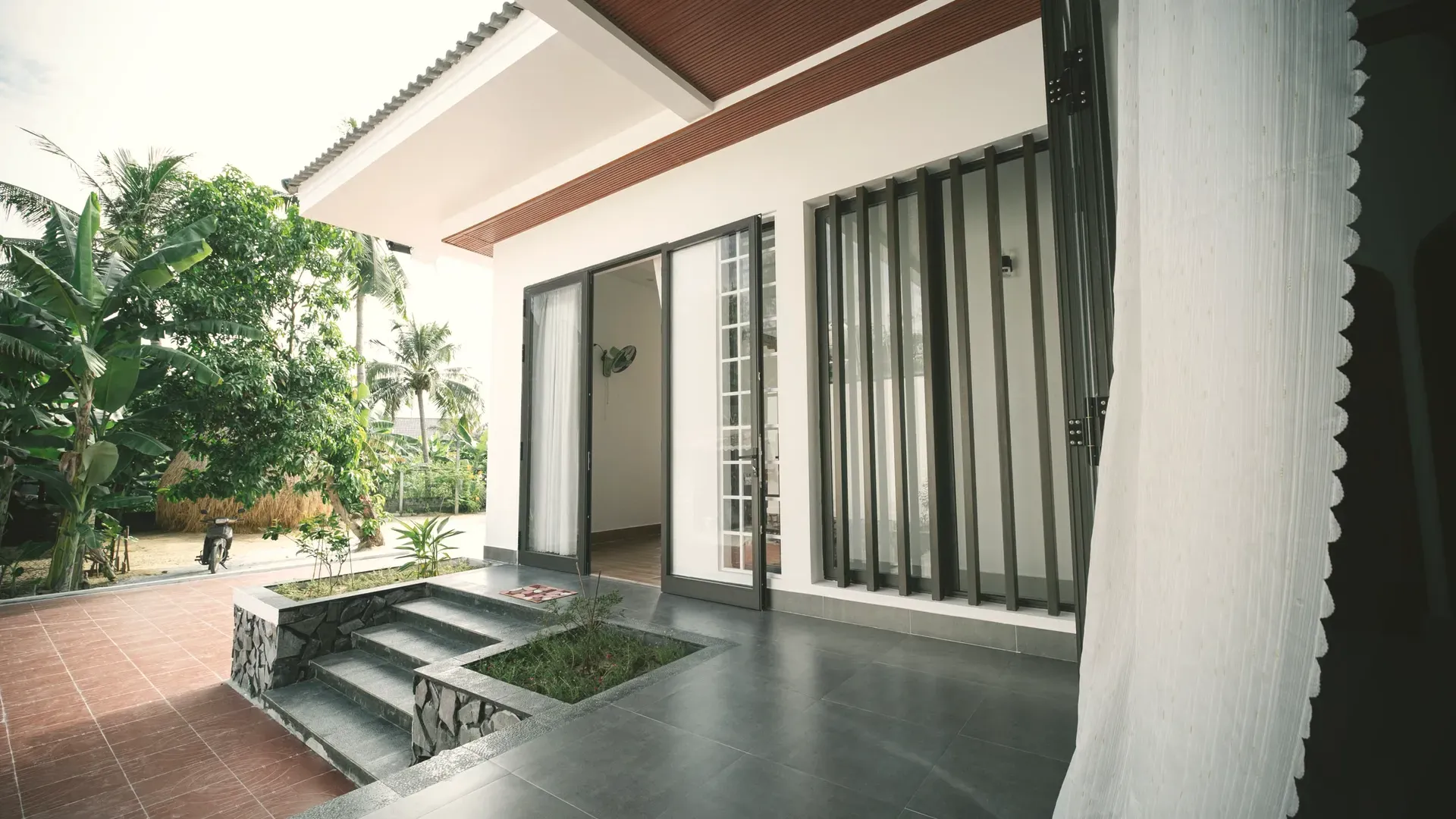
The EPA adds: during construction, use a concrete foundation and leave a ventilation space between the soil and the wood; afterwards keep the soil around the foundation dry, fill cracks in the foundation and gaps where pipes and cables pass through the wall, fix leaks immediately, keep vents clear, do not let trees and shrubs grow against exposed wood, and do not stack firewood or wood debris next to the house.
For a condo or townhouse (our suggestions): do not store cardboard boxes or paper on the floor against outside walls for months; keep wooden furniture a few centimeters off damp walls; report any leak to the landlord or juristic office quickly, since damp is what dampwood and subterranean termites need; and look behind the wardrobes when you move in and when you move out. Our guide to flooding and the monsoon season covers keeping a home dry in the rains, when the swarmers come out.
Frequently asked questions
For anything made of wood, yes. A Royal Forest Department sheet on termite control chemicals, citing a 1996 study, says termites cause 95 percent of the damage done to wood, processed or not. A 2026 article from the Nakhon Si Thammarat agriculture and cooperatives office says Thailand has more than 200 kinds of termite, of which only some damage homes, and that subterranean termites are the most common and the most damaging. A high-floor concrete condo is at far lower risk than a wooden house or a ground-floor home with wooden floors and built-in furniture.
The same article lists earth tubes running up walls, pillars or foundations; swarms of winged termites (maeng mao) flying out early in the rainy season; wood that is hollow inside or sounds hollow when you knock on it; and doors or windows that swell and no longer close properly. Drywood termites leave tiny pellets like pepper seeds or grains of sand under furniture or door frames, small holes in the wood and discarded wings near windows and lights. The US EPA suggests probing exposed wood with a flat screwdriver for hollow spots.
They may be. The Nakhon Si Thammarat office says swarmers fly out of subterranean nests early in the rainy season and that finding many of them is a reason to check for termites at once. Flying ants look similar. The EPA tells them apart this way: an ant's front wings are longer than its hind wings and its antennae bend at a right angle, while a termite's wings are roughly equal in length and its antennae are straight.
They do different jobs. In the Nakhon Si Thammarat article, a bait system is described as eliminating the whole colony with less chemical, because worker termites carry the bait back to the nest and the colony dies off as it fails to molt; soil injection puts chemical into the ground around the building to make an underground barrier and is described as suited to houses with a severe infestation. The EPA lists both, plus treated building materials and wood treatments, and warns that a barrier treatment done badly can contaminate the home and will not protect it. Drywood termites, which live inside the wood, are treated by injecting chemical into drilled holes or, for several spots, by fumigation done only by specialists.
No source gives a single answer for every product. In the Royal Forest Department's own tests, run for more than 10 years in almost every region of Thailand, Bifenthrin 240 EC and Permethrin 380 EC protected against termites for more than 8 years on average, and Fipronil for more than 7 years in both of the department's test methods. Those are test results for the chemicals, not a promise about any company's job, so ask the company in writing which product it will use, how often it will come back to inspect, and what it will do if termites return.
Yes, where it keeps hazardous substance products for the work. The FDA said in 2015 that a company holding type 3 hazardous substances to be hired for pest control needs an operating permit, and one holding type 2 substances needs a notification receipt, issued by the FDA or the provincial public health office. It must also have a controller of hazardous substance use for hire, trained and tested, who renews the certificate every 3 years. Ask to see the document: it shows the number, the company's name and address, the controller's name and the registered products.
The Civil and Commercial Code does not mention termites. Section 546 says the lessor must deliver the property in a good state of repair, and section 550 makes the lessor liable for defects that arise during the lease and for all necessary repairs, except those that law or custom leaves to the tenant. Section 553 leaves ordinary maintenance and petty repairs to the tenant, and section 562 makes the tenant liable for damage caused by the tenant's own fault. In our reading, termites in the structure point to the owner, but tell the landlord in writing as soon as you see them: section 557 makes a tenant who delays liable for the harm the delay causes.
We think so, especially for an older house, a house with wooden floors, stairs or roof timbers, or one near water or damp ground, which the Nakhon Si Thammarat office lists among the places at risk. Ask the seller for any treatment records, look for earth tubes and hollow-sounding wood yourself, and have a pest control company inspect before you pay the deposit. Our guide to seller liability for property defects explains what the Civil and Commercial Code lets a buyer claim after the sale, and its time limit.
Looking at houses?
Browse homes listed by partnered agents, and knock on the door frames before you sign.
General information only, not legal or pest control advice. Termite chemicals are hazardous substances: follow the product label and use a company with an FDA permit or notification receipt. Lease and sale terms vary by contract, so take legal advice on a dispute. BAANLYY never takes paid placement.
Sources
- Nakhon Si Thammarat Provincial Agriculture and Cooperatives Office (Ministry of Agriculture and Cooperatives), article dated 4 June 2569 (2026) on knowing each kind of termite to choose the right control (Thai; the office names a farming advice Facebook page as its source): more than 200 kinds of termite in Thailand; subterranean, drywood and dampwood termites, their habits and signs; five basic checks; bait systems, soil injection, spot treatment, fumigation and fixing damp; seven long-term prevention habits including inspecting every 3 to 6 months ↗Nakhon Si Thammarat Provincial Agriculture and Cooperatives Office · Accessed 24 November 2026
- Royal Forest Department, sheet on termite control chemicals on its forest products research site (Thai, undated): termites cause 95 percent of damage to wood, citing a 1996 study; wood treatment and soil treatment methods; in more than 10 years of the department's tests Bifenthrin 240 EC and Permethrin 380 EC protected for more than 8 years on average and Fipronil for more than 7 years in both test methods ↗Royal Forest Department · Accessed 24 November 2026
- Thai Food and Drug Administration, press release dated 13 August 2558 (2015) on choosing a company hired to eliminate termites, ants, insects and rats (Thai): operating permit for type 3 and notification receipt for type 2 hazardous substances under the Hazardous Substances Act B.E. 2535, issued by the FDA or the provincial public health office; a controller of hazardous substance use for hire under a 2007 Ministry of Public Health notification, renewing the certificate every 3 years; five checks for consumers ↗Food and Drug Administration, Ministry of Public Health · Accessed 24 November 2026
- Thai Food and Drug Administration, consumer potential development division, infographic dated 7 May 2568 (2025) on which products carry the FDA mark (Thai): household and public health hazardous substances of type 2 or 3, including products that suppress, prevent, control, repel or kill insects, show a wor-or-sor registration number inside the FDA frame; type 1 products such as citronella oil repellents show a notification number without the frame; check numbers on the FDA website or LINE @FDATHAI; a number does not mean the advertising is approved ↗Food and Drug Administration, Ministry of Public Health · Accessed 24 November 2026
- US Environmental Protection Agency, Termites: How to Identify and Control Them (last updated 8 October 2026): probing wood for hollow spots, ants versus termites, prevention during and after construction, non-chemical barriers, soil termiticides, baits, treated building materials and wood treatments, risks of improper barrier treatments, reading the label and re-entry time ↗US Environmental Protection Agency · Accessed 24 November 2026
- Civil and Commercial Code, Book III Title VI hire of property, sections 537 to 571, English translation published by ThailandLawOnline (a private publisher, not an official translation; the Thai text is the law): section 546 delivery in a good state of repair, 548 termination when delivered unfit for its purpose, 550 lessor liable for defects arising during the lease, 551 notice before termination for a remediable defect, 553 tenant's care and petty repairs, 557 tenant to inform the lessor forthwith, 561 presumption of good repair without a signed condition record, 562 tenant liable for damage caused by own fault ↗ThailandLawOnline (unofficial English translation) · Accessed 24 November 2026
Official primary sources are listed above with the date we last checked them. Thai rules, fees, thresholds and procedures change and can be applied differently by individual offices and embassies, confirm the current requirement with the responsible authority before relying on it. General information only, not legal, tax or medical advice. BAANLYY never takes paid placement in editorial content.