Which city fits you?
Answer 3 quick questions and see the Thailand city guide worth researching first.
Try it free →The complete starting point for Pattani — the seat of the old Patani Sultanate, 170 kilometres of Gulf coast and the intellectual centre of Malay-Muslim Thailand — with an overview, where to live, transport, heritage, relocation and a straight account of the security situation.
Read this first. Pattani is one of the three provinces of the South Thailand insurgency. As of August 2026 the Emergency Decree remains in force over five of its twelve districts under an extension running to 19 October 2026, and the UK, the US and Australia all carry standing travel advice about the province. BAANLYY publishes this guide because information about a place is more useful than silence about it, and because the province has a real resident and academic population — but nothing on this site is a recommendation to travel against your own government's advice. Section 02 below sets out the decree, the advisories and the published incident data in full. Check your own government's current advisory and your insurance before you plan anything.
Pattani is the seat of what was, for centuries, one of the great trading sultanates of the Malay world — and it is still the most distinctly Malay-Muslim province in Thailand. Roughly 88 per cent of the population is Muslim on the 2014 census, Pattani Malay (Yawi) is widely spoken alongside Thai, and the provincial motto opens with the phrase 'beautiful tricultural city', which is a fair description of a place where a mosque begun in the reign of King Naresuan, a Chinese shrine to Lim Ko Niao and a Buddhist temple holding the ashes of Luang Pu Thuat all draw pilgrims within thirty kilometres of each other. Twelve districts — Mueang Pattani, Kapho, Khok Pho, Mae Lan, Mai Kaen, Mayo, Nong Chik, Panare, Sai Buri, Thung Yang Daeng, Yarang and Yaring — 115 subdistricts, 629 villages, 170 kilometres of Gulf coastline, and an area given as 1,977 square kilometres by the province's encyclopaedia entry and 1,940.35 by the provincial government's own page, a discrepancy we print rather than settle. Forest is only 110 square kilometres, 5.6 per cent, and the highest ground is Khao Yai at 796 metres in the southern hills. The honest framing: this is not a retirement destination and this guide does not pretend it is. It is a province with a real, long-running security situation, three Western governments carrying standing travel advice, one of Thailand's highest poverty rates, and a foreign community small enough that the teachers' guide describes foreigners as still rare enough that people are curious. It is also the intellectual centre of Malay-Muslim Thailand, and for a specific kind of person — academic, development, fisheries, language — there is nowhere else like it.
 Photo: Frank van Dijk / Pexels
This section exists because leaving it out would be dishonest, and because the facts are specific enough to be useful rather than frightening. Pattani is one of the three provinces of the South Thailand insurgency, and the Emergency Decree first imposed in July 2005 is still partly in force: the Cabinet extended it from 20 July to 19 October 2026, reportedly the 85th renewal, exempting seven Pattani districts — Yaring, Panare, Mayo, Mai Kaen, Thung Yang Daeng, Kapho and Mae Lan — and leaving Mueang Pattani, Khok Pho, Nong Chik, Sai Buri and Yarang inside it. Three governments carry standing advice. The US State Department's Thailand advisory of 7 July 2026 rates the country Level 1 overall but tells travellers to exercise increased caution in Yala, Pattani and Narathiwat, and notes that US government employees need special authorisation to travel there. The UK FCDO, updated 30 June 2026 and still current on 21 August 2026, advises against all but essential travel to all three provinces and to four named districts of southern Songkhla, and to the Hat Yai–Padang Besar rail line through them. Australia's Smartraveller says reconsider your need to travel. On numbers: the Southern Border Provinces Administrative Centre's compensation-committee data, reported in January 2026, records 10,116 certified incidents and 5,999 deaths across the three provinces between January 2004 and December 2025 — 3,661 civilians and 2,338 state personnel — with 13,519 injured. The trend is downward. 2007 was the peak at 1,407 incidents and 892 deaths; 2020 the low at 57 and 36; 2025 recorded 150 incidents and 48 deaths, of which 38 were state personnel. Incidents have historically been more frequent in Narathiwat than in Pattani. The Ajarn.com region guide, written by a resident teacher and updated 7 February 2026, puts the lived reality better than any statistic: the situation still hangs over daily life even though incidents are rare, and it changes how people behave, especially after dark.
 Photo: Quang Nguyen Vinh / Pexels
Twelve districts sort into eight honest choices, and the practical answer for almost everybody is two of them. Pattani town centre — the tambon of Sabarang, Anoru and Chabang Tiko — is the provincial seat: the general hospital on Nong Chik Road, the provincial hall two hundred metres away, the Pattani Central Mosque, the Chinese-Peranakan shophouse street of the old town and the Lim Ko Niao shrine. Rusamilae, on the same district's western side, is the university quarter: Prince of Songkla University's Pattani campus, the province's only private hospital, the immigration office, and essentially the entire advertised rental market. After that the province opens out. Yaring and the bay shore hold Krue Se Mosque and the kolae fishing fleet; Nong Chik runs west toward Songkhla with the military airfield and the Triangle model-city designation; Khok Pho and Mae Lan are the only districts the railway touches and hold Wat Chang Hai and the Sai Khao waterfall; Panare is the open Gulf coast; Sai Buri, Mai Kaen and Kapho are the southern coast toward Narathiwat; and Yarang, Mayo and Thung Yang Daeng are the agricultural interior with the ancient city. Eleven of the twelve districts have nothing advertised for rent at all.
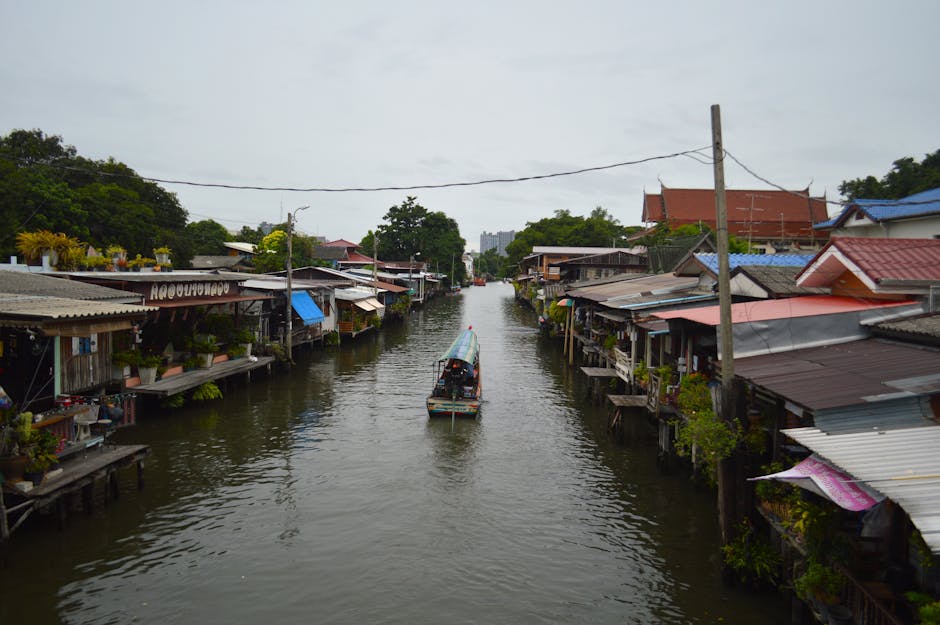 Photo: Valeria Drozdova / Pexels
There is an airport and you cannot fly into it; there is a railway station called Pattani and it is not in Pattani town. Both of those are true and both matter. Pattani Airport, IATA PAN, sits at tambon Bo Thong in Nong Chik district and is a Royal Thai Air Force facility supporting counter-insurgency operations, with no scheduled commercial service we could find for 2026. The route foreign residents actually use is Hat Yai International in Songkhla — about 108 kilometres and an hour and a half by road, or as the teachers' guide puts it, roughly ninety minutes in the air from Bangkok and then a two-hour drive. The State Railway's Southern Line does cross the province, but only its inland southwest: the class 1 station named Pattani is physically in Khok Pho subdistrict of Khok Pho district, opened in April 1917 under its original and more accurate name of Khok Pho, 1,009.209 kilometres from Thon Buri, with Na Pradu, Wat Chang Hai and Khlong Sai as class 3 stops nearby. Trains include the Thaksin Special Express from Bangkok toward Sungai Kolok. Note that the UK advisory specifically names the Hat Yai–Padang Besar line through these provinces. On the road, Highway 42 is the main artery and Highway 43 the bypass, both carrying Asian Highway 18, with Routes 409 and 410 running south to Yala. Inside the province the Ajarn guide is blunt: the motorbike is king, songthaews run a few main routes, taxis are rare and ride-hailing is unreliable, especially in the evenings.
Photo: Quang Nguyen Vinh / PexelsPatani was a tributary sultanate and a major regional port long before it was a Thai province. Siam conquered and sacked it in 1785–86, and in 1906 the region was broken into a set of mueang — Patani, Nong Chik, Raman, Ra-ngae, Saiburi, Yala and Yaring — several of which are now merely districts. One nuance worth getting right, because it is commonly muddled: the Anglo-Siamese Treaty of 1909 ceded Kedah, Kelantan, Perlis and Terengganu to British Malaya, and Patani was not part of that transfer; Siamese sovereignty here had been settled earlier under the 1826 Burney Treaty. The provincial seal shows the cannon Phraya Tani, cast in Pattani, taken to Bangkok in 1785 and now standing outside the Ministry of Defence — a provincial emblem that is physically nine hundred kilometres away. The provincial motto runs: beautiful tricultural city, excellent halal centre, people of faith, place of beautiful nature, Pattani the peaceful land of the South. The three cultures are findable within an afternoon. Krue Se Mosque, brick and unfinished, is generally dated to the reign of King Naresuan between about 1578 and 1593. The Pattani Central Mosque was built from 1954 and opened on 25 May 1963 by Field Marshal Sarit Thanarat. The Leng Chu Kiang shrine in the old town honours Lim Ko Niao, venerated by Pattani's ethnic Chinese as a goddess of filial piety, and local tradition ties her story to the mosque that was never completed. And Wat Chang Hai Rat Buranaram in Khok Pho, over three hundred years old and of unrecorded founding, holds the ashes of Luang Pu Thuat, whose amulets are among the most sought-after in Thailand.
 Photo: Quang Nguyen Vinh / Pexels
The standard Thai long-stay routes apply — retirement, marriage, DTV, education and LTR — and there is a provincial immigration presence, though we could not confirm it from the Immigration Bureau's own site. A widely-used expat directory gives 2/12 Pak Nam Road, tambon Rusamilae, Mueang Pattani, on 073-460-202, Monday to Friday 08:30 to 16:30. We did not open the government page behind that, so treat it as unverified and confirm before you plan a reporting trip. Beyond the paperwork, be realistic about what relocating here means. The advertised rental market is sixteen buildings in one district at ฿600 to ฿5,500 a month. There is one general hospital and one thirty-bed private hospital in twelve districts. There is no international-curriculum school anywhere in the province — we searched the national lists and the ISAT member directory and found none. There is no commercial airport. Three Western governments carry standing travel advice and part of the province sits under an Emergency Decree renewed to 19 October 2026. Against that: the cost of living is genuinely low, the Ajarn guide says rent for a basic apartment or small house is reasonable and local food is cheap, and Prince of Songkla University's Pattani campus gives the town a real intellectual life and the province's only concentration of English speakers.
 Photo: Marta Branco / Pexels
Pattani is cheap, and the reason it is cheap is not a happy one. The National Economic and Social Development Council's 2024 poverty report put the province's poverty rate at 25.39 per cent — third-highest of Thailand's 77 provinces, behind Mae Hong Son at 25.69 and Yala at 25.41, and ahead of Narathiwat at 21.07 — measured against a national poverty line of ฿3,078 per person per month. Reporting on that release noted Pattani has ranked among the country's five poorest provinces for at least fifteen consecutive years, which makes this a chronic structural position rather than a bad year. The 2022 Human Achievement Index scores the province 0.6149, in the 'low' band, ranked 70th of 77. We publish no gross provincial product figure: the only per-capita claim we found came from an AI-generated wiki with no primary source behind it, and we would rather leave the line blank than launder it. What we can say about housing costs is measured: sixteen advertised long-stay buildings at ฿600 to ฿5,500 a month, with the bulk between ฿2,300 and ฿4,900, and the ฿600–1,200 floor being a single dormitory-style room rather than a market rate. The cost-of-living guide is explicit about which lines are Pattani-specific and which are southern-regional benchmarks.
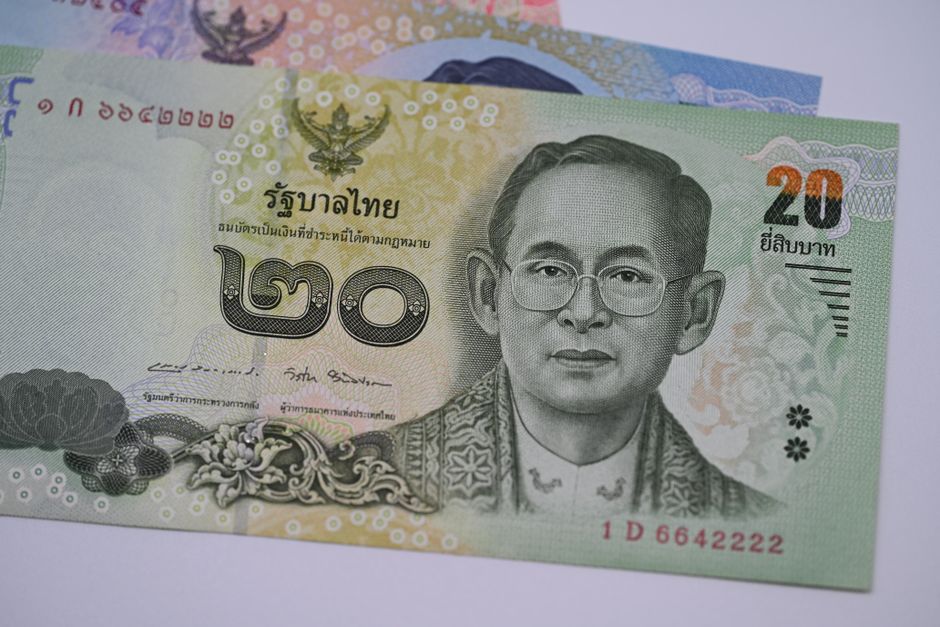 Photo: Qing Luo / Pexels
One general hospital and one private hospital for twelve districts, and the bed count for the first is genuinely disputed. Pattani Hospital stands at 2 Nong Chik Road in tambon Sabarang, Mueang Pattani, about two hundred metres from the provincial hall on a site of 25 rai 3 ngan 41.7 wa. Its own website documents 335 beds — nine general wards totalling 269 and three special wards totalling 66 — plus seven operating theatres, an eight-bed ICU, a fifteen-bed neonatal unit, an emergency department with four treatment and two observation beds, nineteen outpatient examination rooms and a five-bed dialysis unit. But that page was last edited in 2013 and describes a new six-storey inpatient building then under construction, and third-party health directories describe the hospital today as a Standard-level facility of 504 beds. We print both figures and flag the conflict rather than choose. The private option is Siroros Hospital Pattani at 30/10 tambon Rusamilae, described by its own site as the first private hospital in the province, on nine rai two ngan, with a thirty-bed inpatient ward, emergency department, operating rooms, dialysis centre and central laboratory, part of a three-hospital group also covering Yala and Narathiwat. What we could not find, and therefore do not publish: a per-district table of community-hospital bed counts, or a count of subdistrict health-promoting hospitals. For tertiary care the referral is out of the province — Hat Yai's hospitals are about an hour and a half away.
 Photo: RDNE Stock project / Pexels
Pattani has the oldest university campus in southern Thailand and no international school at all. Prince of Songkla University's Pattani campus at 181 Charoenpradit Road, tambon Rusamilae, was the university's founding site: the cabinet approved Rusamilae in the mid-1960s, building started in 1966, the institution took the name Prince of Songkla in September 1967 under an Act effective 13 March 1968, and staff and students moved onto the partly-finished campus in November 1968. Eight faculties run here — Education, Humanities and Social Sciences, Science and Technology, Islamic Science, Fine and Applied Arts, Communication Sciences, Political Science and Nursing — and the Faculty of Islamic Science gives the campus a standing across the Malay-Muslim world that no other Thai university holds. We publish no Pattani-campus enrolment number because we could not open one. Alongside the state system, Pattani is regionally known for a dense network of ponoh or pondok Islamic private schools; we found that documented in academic literature but could not verify a count from a primary source, so we publish no number. On international curricula the answer is a clean absence: we searched the national list of international schools in Thailand and the ISAT member directory, and no Pattani school appears in either. Families needing an international curriculum are looking at Hat Yai, about an hour and a half away.
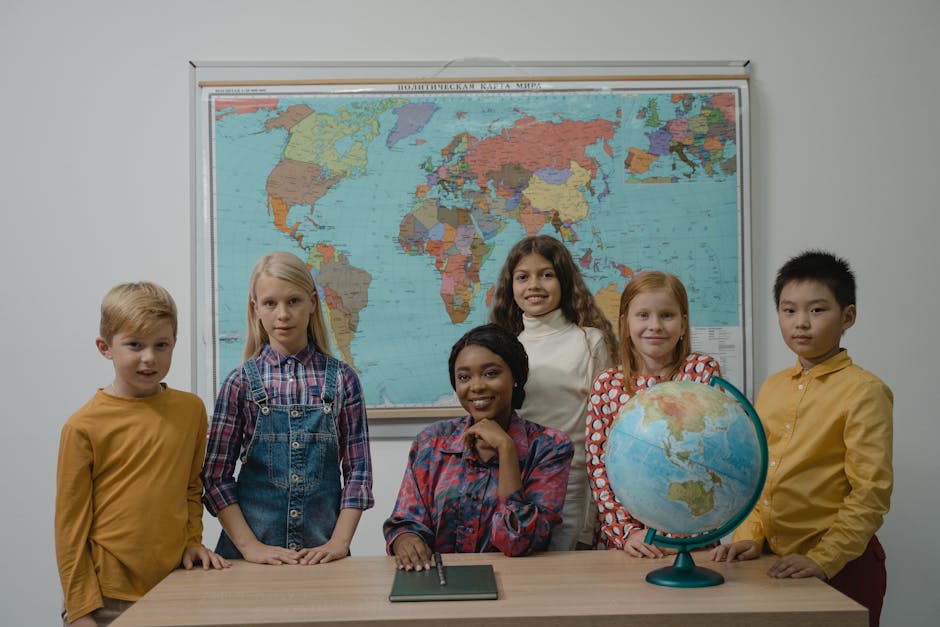 Photo: Tima Miroshnichenko / Pexels
One condominium project is advertised in the whole province and we can tell you its name, its developer and its starting price — and nothing else, because its own detail page would not render. CheckRaka's province index, which uses its own numbering (Pattani is province=31 there, not the Thai code 94), returned exactly one condominium project: Yensabaidee Condo Pattani, developer Greentree Enterprise, advertised from ฿1,150,000. We publish no year, no floor count, no unit count and no coordinate for it, because the project page returned an empty JavaScript shell. Meanwhile DDproperty's province-bounded for-sale route returned three properties — a house in Mayo at ฿1.5m, land in Nong Chik at ฿230,000 and a house in Sabarang at ฿11.5m — none of them typed as a condominium, on a page whose own FAQ block gave the total as three in one place and two in another, an inconsistency that belongs to the portal rather than to us. FazWaz returned a hard zero condos for sale for Pattani, and that zero is real rather than a dead route because its own house-for-sale page on the identical slug returned a full page of content. Hipflat and BaanFinder both returned empty JavaScript shells, so they are no source at all. For renting, RentHub's province index showed sixteen advertised long-stay buildings at ฿600 to ฿5,500 a month, with a district facet reading Muang Pattani (15) and no other district appearing. Rather than publish a building directory with unverified data, BAANLYY populates its Pattani records only as each one is verified.
 Photo: Pixabay / Pexels
Very small, and we publish no number because none exists that we could verify. What we have instead is the Ajarn.com Pattani region guide, written by resident teachers and last updated 7 February 2026, and it is refreshingly unromantic. Foreigners, it says, are still rare enough that people are curious. English-teaching opportunities are limited to say the least — a handful of government schools and a university that sometimes employs foreign teachers — and Pattani is not a place where jobs pop up on job boards; posts move through local networks. The guide states outright that Pattani only suits a small minority of expats looking for somewhere to call home. On the practical side it notes that rent for a basic apartment or small house is reasonable and local food is cheap, that a teacher's salary goes a long way if you live simply, and that the motorbike is king because taxis are rare and ride-hailing is unreliable in the evenings. The real international presence is academic: Prince of Songkla University's Pattani campus runs a student mobility programme, hosts exchange students and holds an International Day, which makes the university rather than any bar or club the place foreigners actually meet each other.
Editorial analysis compiled and periodically refreshed by BAANLYY’s research team — not a live data feed.
Analysis last reviewed August 2026.
The core Pattani relocation guides are below, with more being added. In the meantime, see the general Thailand visa and relocation guides too.
Pattani neighbourhood & areas guide →
Pattani Area Score — every area ranked & rated →
See our Thailand visa guides, then talk to us about relocating.
Primary and official sources are cited above. Government rules, fees and procedures in Thailand change over time and vary by office; always confirm current requirements with the relevant authority before relying on them. BAANLYY never takes paid placement in editorial content.
General information and indicative pricing, not legal, tax, immigration, security or financial advice. Hero photograph via Pexels. Security conditions, emergency-decree coverage and government travel advisories change — always check your own government's current advisory before travelling, and confirm hospital services, train times and immigration procedures with official sources or licensed professionals.

Free tools for this
Answer 3 quick questions and see the Thailand city guide worth researching first.
Try it free →Build a realistic monthly budget by lifestyle tier.
Try it free →