Which city fits you?
Answer 3 quick questions and see the Thailand city guide worth researching first.
Try it free →The complete starting point for Samut Songkhram — Mae Klong, the smallest province in Thailand, an hour down Rama II Road from Bangkok — with an overview, where to live, transport, heritage and relocation, honestly scoped.
Samut Songkhram is the smallest province in Thailand: 416.7 square kilometres at the mouth of the Mae Klong River on the Bay of Bangkok, with just three districts — Mueang Samut Songkhram, Amphawa and Bang Khonthi — subdivided into 36 subdistricts and 284 villages. Local people do not call it Samut Songkhram at all; they call it Mae Klong, after the river, and the province was Mueang Mae Klong until some point between roughly 1752 and 1756 when the present name first appears in the record. The name literally means war ocean, from the Sanskrit samudra and saṃgrāma. It is close to Bangkok — 63 kilometres on Rama II Road by the provincial sources, about 70 and an hour to ninety minutes in traffic by the expat guide we opened — and it is genuinely small in every dimension: 192,052 people at the 2020 count, down from a 1990 peak of 206,506, with only 30 square kilometres of forest. What it has instead of scale is density of things worth seeing per square kilometre, which is probably the highest in Thailand: a market that folds up eight times a day for a train, a floating market on a canal where a king was born, a Ramsar-listed sandbar made of razor shells, salt pans, a French Gothic cathedral in an orchard, and the most famous mackerel in the country.
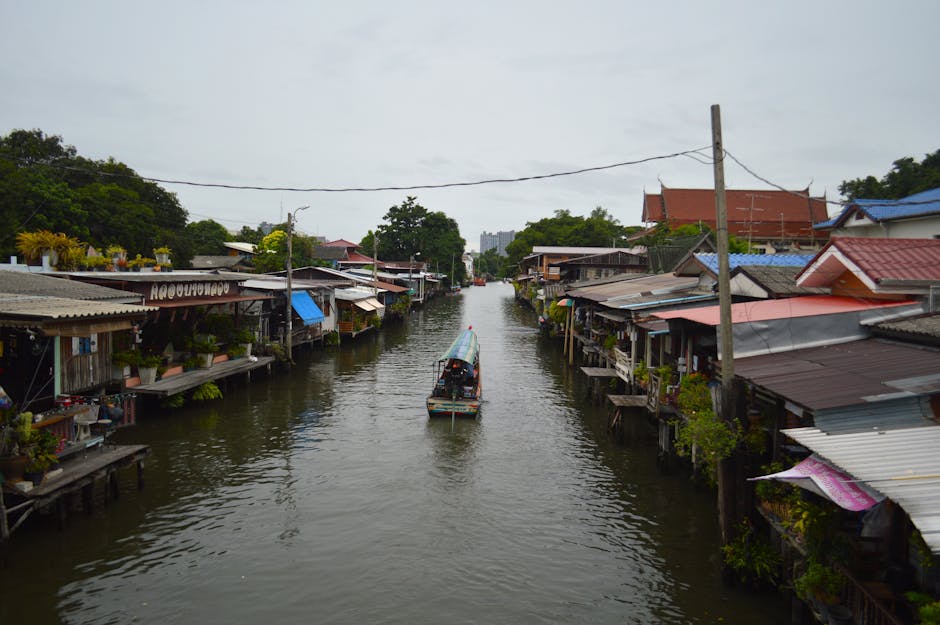 Photo: Valeria Drozdova / Pexels
Three districts sort into five honest choices. Mae Klong town is the capital in the capital district — the 282-bed provincial hospital, the provincial hall, the railway station, the umbrella-pulldown market and 25,623 municipal residents, and the only genuinely walkable place in the province. The coastal tambons below it — Bang Kaeo, Laem Yai, Khlong Khon, Lat Yai, Bang Chakreng — are the salt pans, the mangrove, the twelve export seafood factories and the Don Hoi Lot sandbar. Amphawa town is the canal town: the floating market that runs Friday to Sunday afternoons only, the King Rama II Memorial Park on the birthplace of Rama II, and the firefly boats. The rest of Amphawa district is orchard country out to the Phetchaburi and Ratchaburi borders, with the quieter Tha Kha floating market. And Bang Khonthi is the inland district: the 90-bed Napalai hospital at Kradangnga, the Catholic cathedral at Bang Nok Khwaek, Khai Bang Kung's Thonburi-era fort and the coconut sugar. The where-to-live guide compares all five.
 Photo: Valeria Drozdova / Pexels
Samut Songkhram has a railway and it is not a commuter railway — that distinction is the whole story. Rama II Road, Highway 35, is the trunk route: it starts on the Thonburi side of Bangkok, runs south to Phetchaburi and beyond, and puts the province 63 kilometres from the capital, or about 70 and an hour to ninety minutes in traffic on the expat account. Vans to Mae Klong and buses toward Damnoen Saduak leave from Victory Monument and the Southern Bus Terminal. The Maeklong Railway is the famous one: metre gauge, described in its own encyclopaedia entry as nearly 65 kilometres although its two sections are given as 33 and 34 — a conflict we print rather than resolve — and cut in two by the Tha Chin River at Samut Sakhon, where the only connection between the two halves is a passenger boat. Seventeen trains a day run each way on the Bangkok side; FOUR a day run between Ban Laem and Maeklong. The line averages 30 km/h and has no signals. Inside the province there are songthaews on set routes with no timetable you would recognise, motorbike taxis filling the gaps, no metered taxis and unreliable ride-hailing. In practice residents drive.
 Photo: Quang Nguyen Vinh / Pexels
This province is where Bangkok's dynasty came from. Amphawa — then Khwaeng Bang Chang, nicknamed Suan Nok, the outer garden, against Bangkok's Suan Nai — is the birthplace of King Buddha Loetla Nabhalai, Rama II, and of his mother Queen Amarindra, consort of Rama I. The year is disputed in our own sources: the provincial entry says 1767, the district entry says 1766, and we print both. Chang and Eng Bunker, the conjoined twins who gave the English language the phrase Siamese twins, were born here on 11 May 1811. Earlier still, the province was the ground King Taksin held against the Burmese at Bang Kung, where he gathered the people to build a fort — the site is now Khai Bang Kung in Bang Khonthi, with a shrine to the king. The provincial seal is a drum over a river flanked by coconut palms, because the Thai for drum is klong. Three religions are represented: well over a hundred Buddhist temples, two Christian churches — one of them the 1890 French Gothic cathedral at Bang Nok Khwaek, seat of the Roman Catholic Diocese of Ratchaburi — one mosque, and what is described as the oldest Chinese joss house and almshouse in Thailand, over 215 years old. Loy Krathong here is made from banana leaf-sheaf rather than the usual trunk sections, at Wat Phumarin Kudi Thong on the river.
 Photo: Quang Nguyen Vinh / Pexels
The standard Thai long-stay routes apply — retirement, marriage, DTV, education and LTR — and the province's own immigration office handles 90-day reporting and extensions: Samutsongkhram Immigration, 229 Moo 3, Tambon Lat Yai, Amphoe Mueang, Samut Songkhram 75000, phone 034-711-878, open Monday to Friday 08:30–16:30. An earlier version of this page said we could not verify one; we have since confirmed it directly from the office's own site and closed that gap. Beyond that, the province is an unusually easy soft landing in some ways and a hard one in others. Easy: Bangkok is 63 kilometres up one road, the general hospital is 282 beds with a 24-hour private hospital alongside it, the advertised rental band is ฿2,200 to ฿6,000 a month, and everything in the province is within half an hour of everything else. Hard: an expat teacher's guide describes it plainly as a place where most people speak little or no English, where farang are still stared at outside the market crowds, where there is no expat social scene at all, and where you need your own vehicle. There is no international school in the province that we could find.
 Photo: Marta Branco / Pexels
Samut Songkhram's economy is tiny in absolute terms and comfortable per head, which is exactly what a small population attached to a productive coast looks like. Gross provincial product was about ฿29.2 billion in 2022 — roughly ฿165,279 per person. The output split is unusually even: manufacturing 22.9 per cent, agriculture and fishery 21.6, trade 15.8, transportation 7.8, financial 6.5, construction 4.0. Of a 2024 workforce of 147,210, some 104,056 were employed in economic activity, 18,918 of them (18.2 per cent) in agriculture and fishing. The line that tells you most about the housing market is buried in the same table: real estate accounts for 3.0 per cent of output but employs 161 people in the entire province — 0.2 per cent of the workforce. Hotels and restaurants, by contrast, employ 11,667, or 11.2 per cent, on 1.8 per cent of output, which is what a weekend-tourism economy looks like from the inside. The statutory wage map agrees with the per-head figure rather than with the province's sleepy reputation, and it does so in a way no other province can claim: clause 6 of Wage Committee Announcement No. 14 — resolved 17 June 2025, in force 1 July 2025 — sets a minimum wage of ฿358 a day in Samut Songkhram and names no other province in that clause. It is the fifth-highest of seventeen bands nationally, ฿14 a day below Samut Sakhon next door on the same Rama II corridor, ฿42 below Bangkok, and ฿11 and ฿7 above Ratchaburi and Phetchaburi respectively — a ridge rather than a cliff. On housing costs we have ten advertised buildings running ฿2,200 to ฿6,000 a month once one wellness-residence outlier is removed, and an independent expat guide giving ฿3,000 to ฿6,000; against a full-time minimum-wage month of roughly ฿9,300 (our arithmetic, indicative), the cheapest advertised room is about a quarter of one wage. Cheap rent here is a thin-market signal, not a poor-wage one. Our cost-of-living guide is explicit about which lines are province-specific and which are central-regional benchmarks.
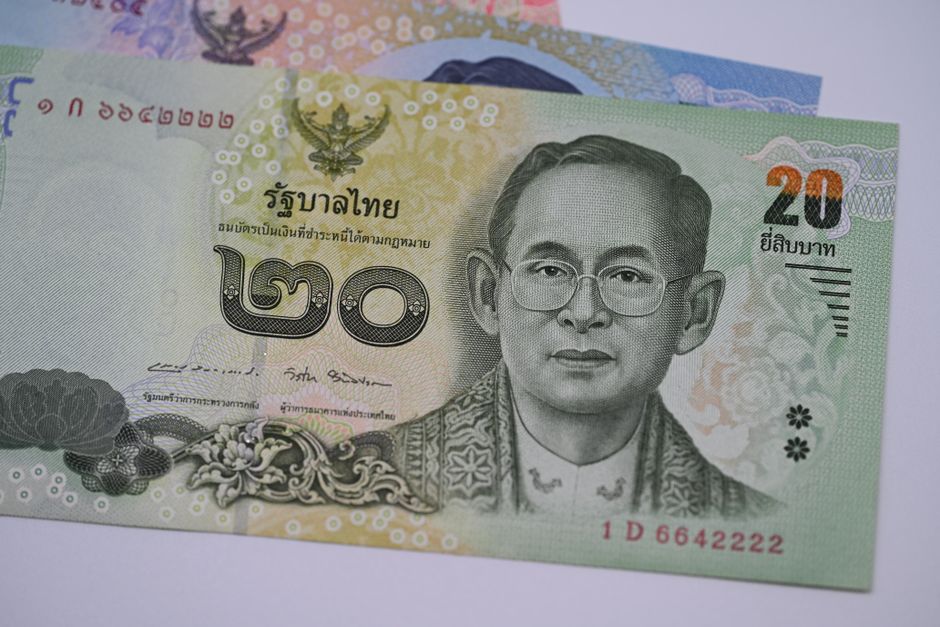 Photo: Qing Luo / Pexels
Three public hospitals for three districts, plus one private, and the arithmetic is better than it sounds. Samut Songkhram Hospital in the capital is the provincial general hospital at 282 beds. Napalai Hospital in tambon Kradangnga, Bang Khonthi, is a 90-bed community hospital — nearly three times the size of Amphawa Hospital at 33 beds. Also in the capital, on Rat Prasit Road, sits Mahachai Maeklong Hospital, the province's one private hospital, open 24 hours. Underneath sit 49 subdistrict health-promoting hospitals: 19 in Mueang Samut Songkhram, 17 in Amphawa and 13 in Bang Khonthi. That is 405 public hospital beds plus the private hospital, and 49 primary-care units, for a province of 192,052 people across 416.7 square kilometres — and because the province is small, no village in it is more than about half an hour from the general hospital by road, which is a genuinely unusual advantage. The gap is still at the top end: no published bed count or specialist list for the private hospital, and no university medical centre inside the province. For anything requiring one the referral is out — Ratchaburi and Phetchaburi are adjacent, and Bangkok is 63 kilometres up Rama II Road. Health-sector employment is 2,308 people, 2.2 per cent of the working population.
 Photo: RDNE Stock project / Pexels
There is more higher education in Samut Songkhram than the province is usually credited with, and — as far as we could establish — neither an international school nor an English-medium state track. Two institutions grant degrees here, not one. Suan Sunandha Rajabhat University's Samut Songkhram campus is at 111/1-3 Moo 7, tambon Bang Kaeo, in the capital district, per the university's own campus directory; it lists a College of Allied Health Sciences and a College of Nursing and Health, and its published number is 034-773902. It is a full campus, one of SSRU's two, which is why older material calls it the Samut Songkhram Education Centre — that is a former name, not an ambiguity. Less visibly, the Institute of Vocational Education Central Region 5, which awards the Bachelor of Technology through member colleges in four provinces, is headquartered here at 89 Moo 12, tambon Lat Yai, and teaches two of its degrees on that site at Samut Songkhram Technical College: Mould Technology, and Digital Business Technology. On vocational provision we have had to correct our own count: the province has three state colleges, not the two we listed. The third is Samutsongkhram Polytechnic College (วิทยาลัยสารพัดช่างสมุทรสงคราม), 122 Moo 12, tambon Lat Yai, on 034-716343, on an estate its own page gives as 11 rai 1 ngan 12 square wa — which puts all three of the technical college, the polytechnic and the degree-awarding institute's headquarters in the same moo of the same tambon, making Lat Yai the province's education quarter. A sarapat chang college exists to run short vocational courses for the general public, and this one publishes a standing short-course programme with an online application form and named subject pages for cookery, singing and computing, alongside ปวช. departments in Marketing, Automotive, Business Computing and Electronics. We could not open its founding order, which it publishes only as a PDF, so we give no establishment date. The technical college itself dates to 1941, when it opened as a carpentry school in two wooden buildings borrowed from Satthasamut School inside Wat Ban Laem, and in 2015 sent two machine-shop students to the WorldSkills final in São Paulo, who returned with a gold in CNC turning and an outstanding medal in automated manufacturing. On the school side, an expat teaching guide is blunt: plenty of schools, only a small number employ foreign teachers, most of those posts filled by Filipino teachers, several language centres, and students travelling into Bangkok for extra English — though some schools provide free accommodation for foreign teachers. We checked the narrower question too: the provincial secondary school, Satthasamut, advertises SMTE, Advanced Program and IPST special classrooms at M.1 and SMTE at M.4, and none of those is an English Program or Mini English Program. We name no international school because we found none, and we claim no English-medium track for the same reason.
 Photo: Tima Miroshnichenko / Pexels
One condominium listing exists in Samut Songkhram, and we can tell you exactly which one. DDproperty's province-bounded condo-for-sale route returned a single listing, with its own FAQ block repeating the number: a 32 square metre one-bedroom in Baan Ua-Athorn Mae Klong, tambon Bang Kaeo in the capital district, built 2010, freehold, at ฿529,000 — ฿16,635 per square metre — listed on 24 July 2026. Baan Ua Arthorn is the name of the National Housing Authority's affordable-housing programme, so the block is almost certainly an NHA scheme, but we did not open a registry record for this particular building and therefore publish no developer, floor count, unit count or coordinate for it. Everything else is Thai-market apartments and houses. RentHub's Samut Songkhram province index showed ten advertised long-stay buildings, nine of them rendering as cards, with a district facet reading Muang Samut Songkhram 8 and Amphawa 2 that sums exactly to the headline and leaves Bang Khonthi at zero. Strip out one wellness residence quoting ฿41,720–69,720 and the entire advertised range is ฿2,200 to ฿6,000 a month. Rather than publish a building directory with unverified data, BAANLYY populates its Samut Songkhram records only as each one is verified.
 Photo: Pixabay / Pexels
Small, and the best account of it we could open is refreshingly unromantic. Ajarn.com's Samut Songkhram region guide, community-edited by teachers who live there and last updated 8 January 2026, says it is unusual to see foreigners working in the province, that there is no place to meet other foreigners day or night, and — from a teacher living in the Mae Klong area — that there are about twelve foreign teachers in the province and he has never met one. It also records the opposite view from another resident who loves the coffee houses and riverside cafés and says the problem is finding time, not things to do. Both are printed here because both are true of the same place. Evenings revolve around eating early near the river or around Mae Klong market and then going home; after 9pm you get convenience stores and the odd café. Shopping is Lotus's and Big C locally, with Central Rama II the nearest mall — on the Bangkok side of the road that gets you home. We publish no foreign-resident count and no visitor number, because we could not verify one.
Editorial analysis compiled and periodically refreshed by BAANLYY’s research team — not a live data feed.
Analysis last reviewed August 2026.
The core Samut Songkhram relocation guides are below, with more being added. In the meantime, see the general Thailand visa and relocation guides too.
Where to live in Samut Songkhram →
Samut Songkhram neighbourhood & areas guide →
Samut Songkhram Area Score — every area ranked & rated →
Cost of living in Samut Songkhram →
Samut Songkhram rental market →
Condos & housing in Samut Songkhram →
Getting around Samut Songkhram →
Healthcare in Samut Songkhram →
Schools & education in Samut Songkhram →
See our Thailand visa guides, then talk to us about relocating.
Primary and official sources are cited above. Government rules, fees and procedures in Thailand change over time and vary by office; always confirm current requirements with the relevant authority before relying on them. BAANLYY never takes paid placement in editorial content.
General information and indicative pricing, not legal, tax, immigration or financial advice. Hero photograph via Pexels. Confirm current details — especially train and boat times, market days, hospital services and immigration procedures, all of which change — with official sources, individual listings or licensed professionals.

Free tools for this
Answer 3 quick questions and see the Thailand city guide worth researching first.
Try it free →Build a realistic monthly budget by lifestyle tier.
Try it free →