Which city fits you?
Answer 3 quick questions and see the Thailand city guide worth researching first.
Try it free →The complete starting point for Thailand's southernmost province — a capital laid out in the 1910s as a circle of radiating roads, a landlocked interior that is a third forest, and a mountain frontier with Malaysia at Betong — with an overview, where to live, transport, heritage, relocation and a straight account of the security situation.
Read this first. Yala is one of the three provinces of the South Thailand insurgency. As of August 2026 the Emergency Decree remains in force over four of its eight districts under an extension running to 19 October 2026, and the UK, the US and Australia all carry standing travel advice about the province. BAANLYY publishes this guide because information about a place is more useful than silence about it, and because the province has a real resident, academic and medical population — but nothing on this site is a recommendation to travel against your own government's advice. Section 02 below sets out the decree, the advisories and the published incident data in full. Check your own government's current advisory and your insurance before you plan anything.
Yala is Thailand's southernmost province and the strangest-shaped place in this rotation. It is landlocked — one of only two landlocked provinces in the entire south, the other being Phatthalung — so unlike Pattani and Narathiwat on either side it has no coast at all. What it has instead is mountain: the Sankalakhiri range, the northern end of the Titiwangsa chain, rises to 1,533 metres at Ulu Titi Basah on the Malaysian border, and forest covers 1,455 square kilometres or 32.5 per cent of the province against Pattani's 5.6. Eight districts — Mueang Yala, Betong, Bannang Sata, Than To, Yaha, Raman, Kabang and Krong Pinang — 56 subdistricts and 341 villages, across roughly 4,476 square kilometres. The name is the Thai transliteration of the Malay Jala, meaning net, itself from Sanskrit. Around 72 per cent of the population is Malay-speaking Muslim and mainly rural, with Thai and Thai Chinese Buddhists concentrated in the towns; Betong district inverts even that, with Thai Chinese and Thai Malay both outnumbering Buddhist Thais. The provincial motto is short and accurate: southernmost of Siam, the beautiful border city. Two things make Yala unlike its neighbours for anyone reading a relocation guide. The capital was planned — laid out in the 1910s as a circle of radiating and concentric roads around a Kilometre Zero marker, in a compact 19 square kilometres. And the province has real infrastructure: a regional hospital rather than a general one, a class 1 railway station in the capital where several Bangkok services actually terminate, an airport at Betong, and a border crossing into Perak. The honest framing: this is not a retirement destination and this guide does not pretend it is. Yala had the second-highest poverty rate of Thailand's 77 provinces in NESDC's 2024 report, half the province sits under an Emergency Decree, three Western governments carry standing travel advice, and there is no international school. It is also the best-served and most beautiful of the three Deep South provinces, and for the right person that is not nothing.
 Photo: Wei86 Travel / Pexels
This section exists because leaving it out would be dishonest, and because the facts are specific enough to be useful rather than frightening. Yala is one of the three provinces of the South Thailand insurgency, and the Emergency Decree first imposed in July 2005 covers exactly half of it: the Cabinet extended it from 20 July to 19 October 2026, reportedly the 85th renewal, exempting Betong, Yaha, Kabang and Krong Pinang and leaving Mueang Yala, Bannang Sata, Than To and Raman inside it. Three governments carry standing advice. The US State Department's Thailand advisory of 7 July 2026 rates the country Level 1 overall but tells travellers to exercise increased caution in Yala, Pattani and Narathiwat, and notes that US government employees need special authorisation to travel there. The UK FCDO, updated 30 June 2026 and still current in August 2026, advises against all but essential travel to all three provinces, to four named districts of southern Songkhla, and to the Hat Yai–Padang Besar rail line. Australia's Smartraveller says reconsider your need to travel. On numbers: the Southern Border Provinces Administrative Centre's compensation-committee data, reported in January 2026, records 10,116 certified incidents and 5,999 deaths across the three provinces between January 2004 and December 2025 — 3,661 civilians and 2,338 state personnel — with 13,519 injured. The trend is downward. 2007 was the peak at 1,407 incidents and 892 deaths; 2020 the low at 57 and 36; 2025 recorded 150 incidents and 48 deaths, of which 38 were state personnel. Yala's own worst-documented cluster in the encyclopaedic record is eight bombs over two days on 6–7 April 2014, which killed one person and injured 28. Historically incidents have been more frequent in Narathiwat than in Yala or Pattani. One further note that belongs on this page rather than buried: the province is separately the site of a completely different and now-finished conflict — the Malayan Communist Party's insurgency, whose tunnel complex at Piyamit in Betong district was dug in 1976 and which ended by negotiated settlement in 1989. Do not confuse the two.
 Photo: Quang Nguyen Vinh / Pexels
Eight districts sort into eight honest choices, and the practical answer for almost everybody is one of them. Yala city centre — the tambon of Sateng and Sateng Nok in Mueang Yala — is where the planned circular town, the regional hospital, the private hospital, the railway station, the Central Mosque, Yala Rajabhat University and all twelve advertised rental buildings are. Just outside it, Na Tham and the western capital district hold Wat Khuha Phimuk, the Srivijaya cave temple with a reclining Buddha dated to around 757 CE. After that the province opens out and gets steeper. Raman in the northeast is the seat of the old Reman mueang, with Bueng Nam Sai lake and the barred-ground-dove culture whose ASEAN contest has run here since March 1985. Bannang Sata holds the Bang Lang Dam. Than To is 648 square kilometres of rainforest corridor with the fewest people in the province. Betong town, 1,328 square kilometres of border district, is the second town and the only one with a visitor economy, an airport, a road tunnel and its own licence plate. Above it, Aiyoeweng and Tano Maero hold the sea-of-mist skywalk, the Piyamit tunnels and the hot springs. And Yaha, Kabang and Krong Pinang run west toward Songkhla as rubber and orchard country. Seven of the eight districts have nothing advertised for rent at all.
 Photo: Valeria Drozdova / Pexels
Yala is the best-connected of the three Deep South provinces and the only one where the trains actually stop where the name says. Yala railway station is in tambon Sateng inside the capital — a class 1 station, 1,038.744 kilometres from Thon Buri, opened in November 1919 as part of the Southern Line's Khlong Sai–Balo section, with the line extended to Su-ngai Kolok in September 1921 to meet the Malaysian railways. The point that matters is that several Bangkok services TERMINATE at Yala rather than passing through: the Diesel Rail Special Express 41/42 and Rapid 169/170 both run Bangkok–Yala–Bangkok, alongside the Thaksin Special Express 37/38 to Su-ngai Kolok and a set of rapid and local workings. Next door in Pattani, the class 1 station called Pattani is in a different district entirely. Note before booking that the UK advisory specifically names the Hat Yai–Padang Besar line through these provinces. By air the picture is messier and the getting-around guide sets it out in full: Betong International Airport, IATA BTZ, opened in March 2022 at a cost of 1.9 billion baht with a 1,800-metre runway, is 85 kilometres from Yala city and 12 kilometres from Betong town — and its scheduled service has started and stopped repeatedly. The airport most residents actually use is Hat Yai International in Songkhla, about 137 kilometres from Yala city by road. On the road, Route 410 is the spine, running from Pattani through Yala city and south through Than To to Betong and the Malaysian frontier at Bukit Berapit; the capital sits on Route 4106 and is about 1,100 kilometres from Bangkok.
Photo: Quang Nguyen Vinh / PexelsYala's history is Patani's history with a different ending, and one commonly-muddled point is worth getting right because it runs the opposite way to the province next door. Patani was a Malay sultanate paying tribute to Sukhothai and then Ayutthaya; when Ayutthaya fell to the Burmese in 1767 it became fully independent, and Rama I brought the area back under Siamese control in 1785. In 1808 Mueang Pattani was split into seven smaller mueang, two of which — Yala and Reman — are the ancestors of this province. Yala was then recognised as part of Siam by the Anglo-Siamese Treaty of 1909, the treaty under which Siam surrendered its claims to Kelantan, Kedah, Terengganu and Perlis. That is the reverse of the position for Pattani, whose sovereignty was settled earlier under the 1826 Burney Treaty and which the 1909 treaty did not cover; the two provinces are routinely and wrongly given the same story. Older than any of it is Wat Khuha Phimuk outside the capital, a Srivijaya-era cave temple whose reclining Buddha is dated to around 757 CE and whose site museum holds unbaked clay votive tablets excavated from the hill — physical evidence of a Buddhist maritime civilisation in a valley that is now overwhelmingly Muslim. The provincial seal shows a miner with hoes, crowbars and baskets, because Yala was a tin and tungsten mining town before it was anything else. The provincial tree is the red saraca, the flower the bullet wood, and the provincial fish the Khela mahseer, a rare species found only in the lower south which the provincial fisheries office has learned to breed. And the single most Yala thing in Thailand is the barred-ground dove: the first ASEAN zebra dove-cooing contest was held here in March 1985 with entrants from Malaysia, Singapore and Indonesia, and it still draws them.
 Photo: Quang Nguyen Vinh / Pexels
The standard Thai long-stay routes apply — retirement, marriage, DTV, education and LTR — and Yala has a provincial immigration presence, though we did not open the Immigration Bureau's own page for it and therefore publish no address or phone number rather than repeat one from a directory. Beyond the paperwork, be realistic about what relocating here means, in both directions. Against it: the advertised rental market is twelve buildings in one district at ฿1,700 to ฿5,000 a month; there is no international-curriculum school anywhere in the province, which we established by reading the national list in full; the Emergency Decree covers four of the eight districts to 19 October 2026 and three Western governments carry standing travel advice over all of them; and NESDC's 2024 report put Yala's poverty rate at 25.41 per cent, the second-highest of Thailand's 77 provinces. For it, and these are real: Yala Hospital is a REGIONAL hospital, a tier above what Pattani or most small provinces have, with a private hospital in the same town. The capital is genuinely walkable, which almost nowhere else in the Deep South is. There is a class 1 railway station in town with Bangkok services that terminate there. Yala Rajabhat University gives the town a student population and a concentration of English speakers. And the cost of living is among the lowest in the country. One thing we will not do is give you a foreign-resident count, because none exists that we could verify — and unlike Pattani next door, Yala has no resident-written teachers' region guide either. We read Ajarn.com's region-guide index in full in August 2026: it carries 47 provinces and towns including Pattani, Hat Yai, Songkhla and Phatthalung, and Yala is not among them.
 Photo: Marta Branco / Pexels
Yala is cheap, and the reason it is cheap is not a happy one. The National Economic and Social Development Council's 2024 poverty report, released in September 2025, put the province's poverty rate at 25.41 per cent — the second-highest of Thailand's 77 provinces, behind Mae Hong Son at 25.69 and ahead of Pattani at 25.39 and Narathiwat at 21.07 — measured against a national poverty line of ฿3,078 per person per month, with 3.43 million poor nationally or 4.89 per cent of the population. The report groups Yala among five provinces that recur among the country's poorest year after year, describing a long-standing poverty trap; note that the specific fifteen-consecutive-years claim in that release is made about Mae Hong Son and Pattani, not about Yala, and we do not extend it. Alongside that sits a figure we cannot reconcile and will not average away. Yala's 2022 Human Achievement Index is reported at 0.6617 with a rank of 11th of 77 in the 'high' band on a search rendering of the province's encyclopaedia infobox, and at 0.6650 ranked 9th on a Thai-language rendering of the underlying NESDC databook, which also gives 0.6602 ranked 8th for 2023. We could not open the NESDC databook itself. A province ranking second-poorest on the income measure and top-eleven on the composite human-development index is not impossible — the index also weighs health, education, housing and participation, all of which carry heavy state spending in the Deep South — but it is a startling spread and we print both ends of it rather than pick the flattering one. What we can say about housing costs is measured: twelve advertised long-stay buildings at ฿1,700 to ฿5,000 a month, clustering ฿2,000 to ฿3,500. We publish no gross provincial product figure at all, because no primary source for one was obtainable.
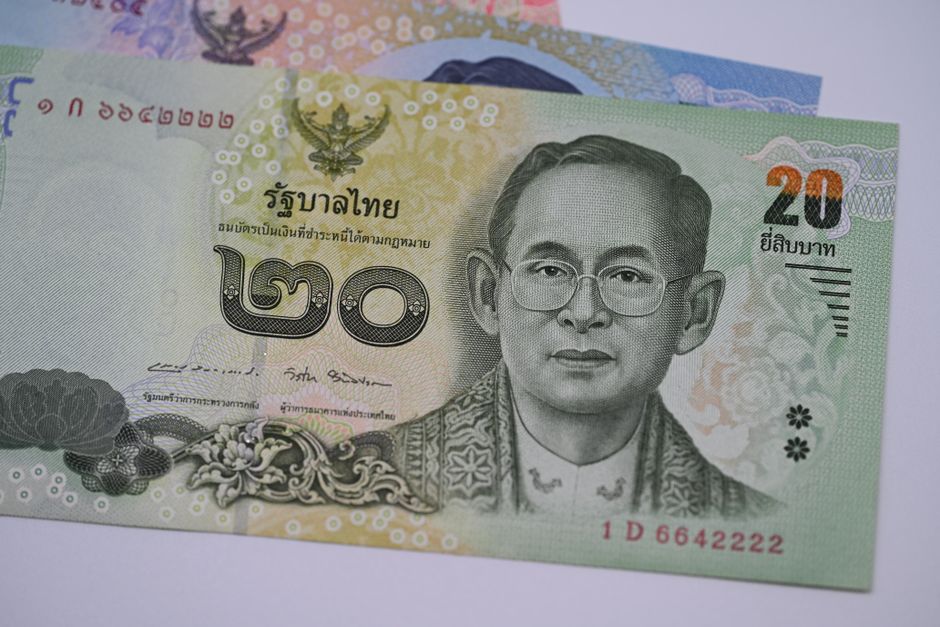 Photo: Qing Luo / Pexels
This is the section where Yala beats its neighbours outright. Yala Hospital, at 152 Siroros Road in tambon Sateng, Mueang Yala, is a REGIONAL hospital under the Ministry of Public Health — the tier above a general hospital, meaning it is the referral centre for the surrounding provinces rather than a place that refers everything onward. It was officially opened on 1 January 1949 and reached regional status on 15 July 1987. Its bed count is published as 513 in one place and 527 in another and we print both rather than choose. For comparison, Pattani next door has a general hospital whose own bed count is disputed between 335 and 504, and no province in this launch rotation with a comparable population has a regional hospital. The private option is Siroros Hospital Yala, on the same Route 4106 corridor through the town, part of a three-hospital group that also runs Siroros Pattani and Rajnara Narathiwat. Betong has its own district hospital serving the far south of the province, though we could not verify its bed count or service list from a source we would publish, so we describe it as present and characterise it no further. What we could not find, and therefore do not publish: a per-district table of community-hospital bed counts, a count of subdistrict health-promoting hospitals, any English-language international-patient department, any insurer direct-billing arrangement, or any interpreter provision at either hospital. Phone before you rely on any of those. For anything beyond regional capability the referral is to Hat Yai or to Prince of Songkla University's teaching hospital in Songkhla, roughly 137 kilometres away.
 Photo: RDNE Stock project / Pexels
Yala has a university, a nursing college, a community college, five state vocational colleges — and no international school at all. Yala Rajabhat University traces to a teacher-training school upgraded in 1963 to Yala Teachers' College, specifically to prepare teachers for the southern border provinces; it became Yala Rajabhat Institute and then, under the Rajabhat University Act of 2004, Yala Rajabhat University. It runs four faculties — Education, Humanities and Social Sciences, Science Technology and Agriculture, and Management Science — and we publish no enrolment figure because we could not open one. Boromarajonani College of Nursing Yala and Yala Community College are both in the capital, and all three institutions appear as facets on the rental portal, each tagged to all twelve advertised buildings. On international curricula the answer is a clean, enumerated absence: we read the national list of international schools in Thailand in full, and it contains no school in Yala, none in Pattani and none in Narathiwat. The nearest are in Songkhla — Bloomsbury International School Hatyai, Southern International School Hatyai and American Prep International School Hatyai — about 137 kilometres and roughly two hours away. Families needing an international curriculum are looking at Hat Yai, which is also where the nearest commercial airport with a reliable schedule and the nearest tertiary hospitals are. An international curriculum is not the same thing as an English-medium classroom, though, and on that second question the answer is better: Kanarasdornbumroong Yala School, the provincial flagship state secondary school, lists a full English Program and an Intensive Chinese English Program among its special classrooms on its own site — the Ministry curriculum taught in English, from M.1, around age twelve. We searched for a Mini English Program at primary level anywhere in the province and found none, so the English-medium ladder here starts at twelve rather than at three or six. Below the university there is also more technical provision than the capital suggests: five state vocational colleges operate in Mueang Yala, Raman and Betong, with a district training centre at Yaha, and Yala Vocational College has taught two bachelor's programmes in the province since 2017 as part of the Institute of Vocational Education, Southern Region 3. Alongside the state system, Yala shares the Deep South's dense network of ponoh or pondok Islamic private schools; we could not verify a count from a primary source and therefore publish no number.
 Photo: Tima Miroshnichenko / Pexels
One condominium exists in the province, and unlike Pattani's we can actually describe it. DDproperty's typed condo-directory route for Yala closed with 'Viewing 1 - 1 of 1 results': A.P.I. Condominium Yala, in Mueang Yala, freehold tenure, completion year 2020, eight floors, 77 total units, with aircon facilities, car park, CCTV and 24-hour security listed among its amenities. Its own project page records the developer as N/A, so we name no developer — and we publish no price per square metre or price range, because the portal shows none and its price-trend and rental-yield panels both read 'transaction data is not available'. The project publishes a structured coordinate of 6.5511869, 101.2787466, which lands about a kilometre north-northwest of the city centre and so passes its own internal cross-check. One route trap worth recording for anyone repeating this: the breadcrumb on the project page points at /condo-directory/search-condos/in-yala-th95, which falls back to a national list; the route that actually bounds the province is /condo-directory/in-yala-th95 without 'search-condos'. For renting, RentHub's Yala province index stated twelve advertised long-stay buildings, rendered all twelve on one page, and its district facet read Muang Yala (12) — the facet equalling the stated total, which licenses the inference that the other seven districts genuinely have nothing rather than a broken filter. Rents ran ฿1,700 to ฿5,000 a month. PropertyHub is not a second source: it is the same company as RentHub, Zimple Media, named in RentHub's own footer with PropertyHub links in its own header. Rather than publish a building directory with unverified data, BAANLYY populates its Yala records only as each one is verified.
 Photo: Pixabay / Pexels
Very small, and this time we do not even have the source that carried the last two launches. Ajarn.com, whose teacher-written region guides have been the one independent resident voice for Pattani and Samut Songkhram, has no Yala guide: we read its region-guide index in full in August 2026 and counted 47 entries covering everywhere from Ang Thong to Uttaradit, including Pattani, Hat Yai, Songkhla and Phatthalung — and Yala is not one of them. Neither is Narathiwat. That absence is itself informative about how far outside the expat map this province sits, and we would rather report it than substitute a guide written about somewhere else. What can be said with confidence is structural. The foreign presence in Yala is academic and institutional rather than social: Yala Rajabhat University, Boromarajonani College of Nursing and Yala Community College are the places English is spoken in quantity, and the capital's compact planned centre means the people who are here are findable in a way they are not in a sprawling province. Betong is the second, very different pole — a border town with a substantial Thai Chinese population, five Chinese organisations, a crossing into Perak and a Malaysian weekend visitor trade, which gives it an outward-facing character the rest of the Deep South does not have. On daily life: roughly 72 per cent of the province is Malay-speaking Muslim, so the rhythms are Friday prayers and Ramadan. We make no legal claim about alcohol beyond ordinary national Thai law — we found no Yala-specific rule — but fewer venues sell it and public culture is conservative, which is a practical reality rather than a regulation. We publish no foreign-resident count because we could not verify one.
Editorial analysis compiled and periodically refreshed by BAANLYY’s research team — not a live data feed.
Analysis last reviewed August 2026.
The core Yala relocation guides are below, with more being added. In the meantime, see the general Thailand visa and relocation guides too.
Yala neighbourhood & areas guide →
See our Thailand visa guides, then talk to us about relocating.
Primary and official sources are cited above. Government rules, fees and procedures in Thailand change over time and vary by office; always confirm current requirements with the relevant authority before relying on them. BAANLYY never takes paid placement in editorial content.
General information and indicative pricing, not legal, tax, immigration, security or financial advice. Hero photograph via Pexels. Security conditions, emergency-decree coverage, flight schedules and government travel advisories change — always check your own government's current advisory before travelling, and confirm hospital services, train times and immigration procedures with official sources or licensed professionals.

Free tools for this
Answer 3 quick questions and see the Thailand city guide worth researching first.
Try it free →Build a realistic monthly budget by lifestyle tier.
Try it free →