
Should I move to Thailand?
Answer a short set of questions and get a Move Score for cities we can actually back with data.
Try it free →The visa route from a US mission, Social Security abroad, why Medicare stays at home, the IRS filing duty, flights and shipping — a 2026 guide for American retirees. Unbiased, never paid placement.
← Retire in Thailand · Moving from the USA
From age 50, apply for a Non-Immigrant O-A (or look at O-X or LTR Wealthy Pensioner if the money fits). Keep filing a US tax return. Confirm Social Security on the SSA payments-abroad tool. Do not plan hospital bills around Medicare. The national lifestyle guide is Retire in Thailand.
The document your US post actually reads is the Washington O-A page (updated 1 September 2026, opened 2026-11-05). Age 50 or over on the day you apply. No work. Fee USD 200. Money test: a bank deposit of no less than 800,000 baht in the last three months, or monthly income of not less than 65,000 baht, or a combination totaling not less than 800,000 baht in one year. Health insurance for the whole stay, COVID-19 included, at no less than 3,000,000 THB or USD 100,000 sum insured per policy year, plus the outpatient / inpatient pair stated on the Chicago page. Apply through thaievisa.go.th at least 20 working days before you intend to travel; the page says the fee is non-refundable.
US missions also ask for an FBI certificate issued within three months (an online printout without an authorized signature is not accepted) and a medical certificate on the embassy form, valid not more than three months, showing you do not have the diseases listed in Ministerial Regulation No. 14 B.E. 2535. Those two documents have US-side lead times. Start them before you sell a car.
The same mission publishes a shorter Non-O (Retirement) 90-day visa (fee USD 80) that uses dollar statements of USD 30,000 or USD 2,500 a month — not a conversion of the O-A baht test. US nationals are on the O-X list; that product needs 3,000,000 THB in a Thai-located bank, or 1,800,000 plus 1,200,000 a year, and a Thai insurer. LTR Wealthy Pensioner is the BOI route at USD 80,000 passive income, or USD 40,000 plus USD 250,000 in named Thai assets (ltr.boi.go.th).
After you land, an in-country extension uses the Immigration Bureau handbook: deposit seasoned two months before a first filing and three months on renewal; fee 1,900 baht. Full comparison: the retire hub and /visas/retirement.
Title II Social Security (retirement, survivors, disability) is administered by the Social Security Administration, not by Thai Immigration. SSA's Payments Abroad Screening Tool is the official way to see whether your own payment continues, stops after six months, or has a country-specific restriction. Booklet Your Payments While You Are Outside the United States (EN-05-10137) is the long form. Run the tool for your claim type before you treat a monthly SSA deposit as a Thai budget line.
Private pensions, IRAs and 401(k) withdrawals follow the plan's own rules and US tax rules. A Thai bank will want a paper trail on a large inbound transfer; that same trail helps later if you buy a condo and must show the funds came from abroad. Keep at least one US checking account and a US mailing address. FATCA makes some Thai branches slower to onboard a US person — expect a W-9, not a refusal as the default.
Leaving the United States does not end the filing duty. The IRS page on US citizens and resident aliens abroad is the starting point: worldwide income, every year, plus FBAR and FATCA reporting when foreign accounts cross the published thresholds. The Foreign Earned Income Exclusion and the Foreign Tax Credit are the usual tools; a retired person with little earned income uses them differently from a remote worker. State residence (California is the example everyone cites) can survive a plane ticket.
The IRS publishes a 1996 United States–Thailand income tax convention and a 1996 technical explanation (that IRS page was reviewed 9 August 2026; we opened it 2026-11-05). The convention exists. It does not replace citizenship-based filing. This page does not pick articles or rates. A CPA or Enrolled Agent who has filed US–Thai returns is the person who does.
On the Thai side, 180 days in a calendar year makes you a Thai tax resident. From 1 January 2024, foreign-source income remitted into Thailand by a tax resident is assessable in the year it is brought in. That is a Revenue Department rule, walked through on Thai tax for expats and cited to rd.go.th. Seasoning an 800,000 baht deposit with money that was last year's IRA withdrawal is a tax event to model before the wire, not after.
Medicare.gov — travel outside the U.S. states that Medicare usually does not cover health care while you are traveling outside the United States. “Outside the United States” means anywhere other than the 50 states, D.C., Puerto Rico, the US Virgin Islands, Guam, the Northern Mariana Islands and American Samoa. The published exceptions are a foreign hospital closer than a US hospital in a US emergency, certain Canada–Alaska transit, and living in the US near a closer foreign hospital. A planned retirement in Chiang Mai or Hua Hin is none of those. Part D does not pay for drugs you buy in Thailand.
Buy cover that can issue the O-A certificate (foreign insurer plus the OIC form, or a Thai insurer on the long-stay list) before you apply. Thai private hospitals — Bumrungrad, Samitivej, Bangkok Hospital, Chiang Mai Ram — are the reason the gap is survivable, not a reason to skip the policy. See healthcare and insurance and section 06 of the retire hub.
There is no convenient nonstop from the US mainland to Bangkok. Plan one stop through Tokyo, Seoul, Taipei, Hong Kong, Doha or Dubai. West Coast routings are shorter; East Coast routings are a full day. Bangkok has two airports: Suvarnabhumi (BKK) for most long-haul, Don Mueang (DMK) for many low-cost domestic hops to Chiang Mai, Phuket or the gulf. Book the first month as a one-way plus flexible housing so you are not choosing a neighborhood from a listing photo. If you will hop to Hua Hin, the train and the road from Bangkok are the usual last legs.
Decide ship, sell or buy-fresh before you call a mover. Thailand is well stocked and many condos rent furnished. US household voltage is 110–120V; Thailand is 220V / 50Hz. Most US appliances are not worth the crate. Sea freight from a US coast takes several weeks; air-freight only a small essentials box. Used household effects can sometimes enter with customs relief when you are transferring residence on a long-stay visa — conditions and timing are Thai Customs rules, not a mover's slogan. Use a firm that has cleared Bangkok before, and keep the visa page with the inventory.
Pets are a separate permit. If a dog or cat is coming, start the titer and the Department of Livestock Development permit months out: pet relocation from the USA.
City budgets, the money test and the first-30-days list sit on the main guide.
General information only — not legal, immigration, tax or medical advice. Confirm current requirements with the Royal Thai Embassy or Consulate that will issue your visa, the IRS, SSA, Medicare and a licensed specialist before acting. BAANLYY never takes paid placement.
Last checked 5 November 2026
Primary and official sources are cited above. Government rules, fees and procedures in Thailand change over time and vary by office; always confirm current requirements with the relevant authority before relying on them. BAANLYY never takes paid placement in editorial content.
BAANLYY
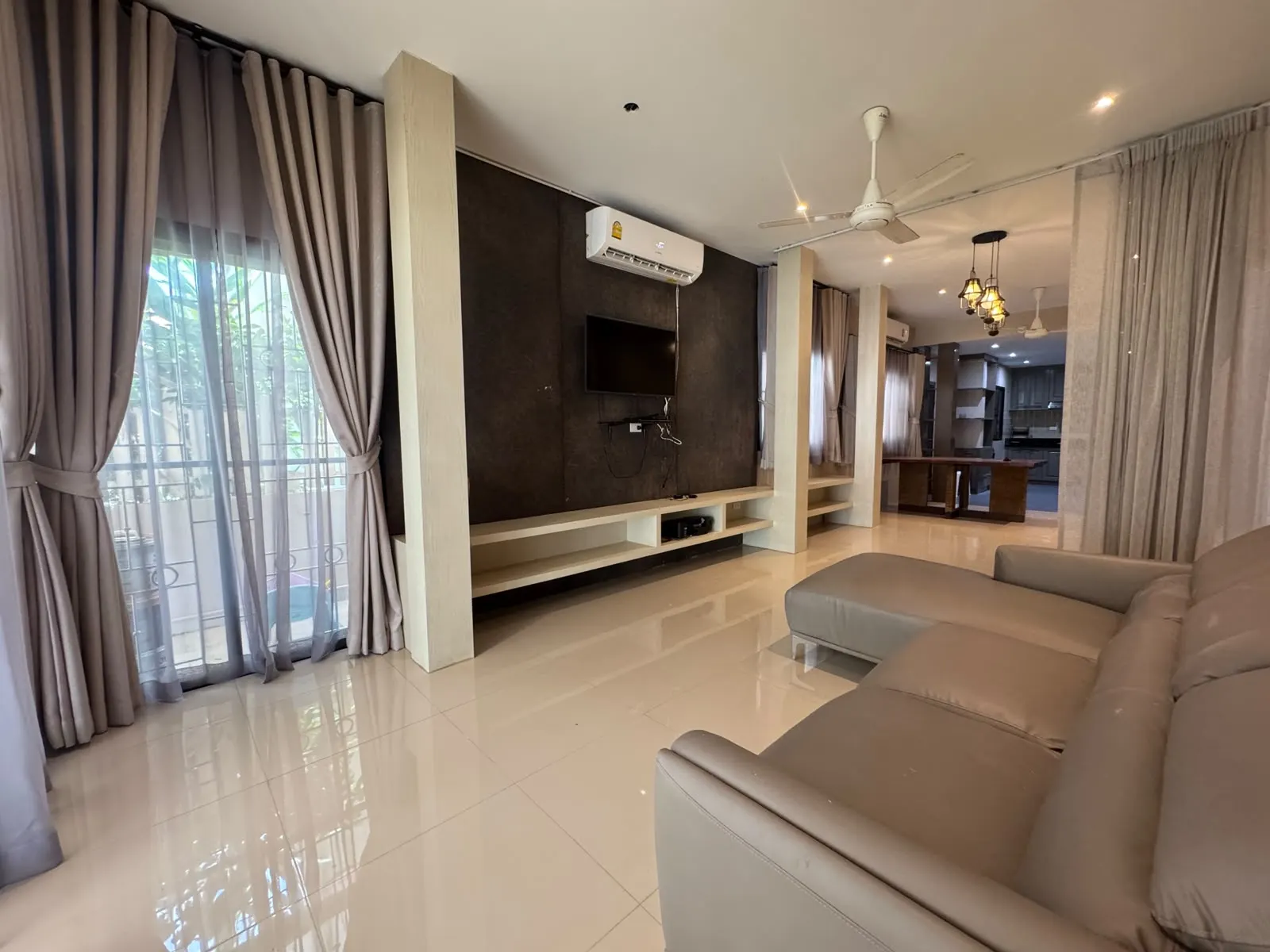
These homes are listed on BAANLYY right now. Each card shows a photo, the price and the bedrooms.






Free tools for this
Answer a short set of questions and get a Move Score for cities we can actually back with data.
Try it free →
A step-by-step checklist: city, visa, housing, budget and timeline, then the right guide for each.
Try it free →
Interactive, progress-tracked checklist from visa to first 30 days.
Try it free →