Which city fits you?
Answer 3 quick questions and see the Thailand city guide worth researching first.
Try it free →The complete starting point for Chai Nat — the northernmost province of the central plain, where the Asian Highway ends and the dam that waters seventeen provinces begins — with an overview, where to live, transport, heritage and relocation, honestly scoped.
Chai Nat is the northernmost province of Thailand's Central region — the last of the central plain before Nakhon Sawan and the lower North begin. The name means place of victory, from the Ayutthaya-era battles fought here, and the province sits on the left bank of the Chao Phraya about 188 kilometres from Bangkok, with eight districts, 53 subdistricts and 503 villages across 2,469.746 square kilometres. It is flat to an unusual degree even by central-plain standards: mean elevation 16.854 metres, about 99.06 per cent lowland, no mountains at all, and 1,219,669 rai — 79.02 per cent of the whole province — classified as agricultural land against 64 square kilometres of forest. 313,759 people were registered here in 2024, which is 131 per square kilometre and 69th of 77 on density. What Chai Nat has that no neighbour does is water infrastructure of national consequence: the Chao Phraya Dam at Sapphaya is the barrage that regulates the river for everything downstream. What it does not have is anything built vertically.
 Photo: Pixabay / Pexels
Eight districts sort into five honest choices. Mueang Chai Nat is the capital at Ban Kluai on the Chao Phraya, holding the provincial hall, the 500-bed general hospital, the province's one private hospital, the nursing college, the Immigration Office, the Bird Park and twelve of the thirteen advertised rental buildings. Sapphaya is the eastern dam district — the Chao Phraya Dam, the 1901 wooden police station, and the province's only advertised rental outside the capital. Sankhaburi is the south, where the province actually began, at the old town of Phraek Si Racha on the Noi River. Manorom and Wat Sing are the northern river districts, holding the province's only international school and Luang Pu Suk's temple. Hankha, Nong Mamong and Noen Kham are the western uplands, thin on services and empty of advertised housing. The where-to-live guide compares all five and covers every district.
 Photo: Valeria Drozdova / Pexels
There is no railway station anywhere in Chai Nat and no airport either. The State Railway's Northern Line runs through twelve provinces — Pathum Thani, Ayutthaya, Saraburi, Lop Buri, Nakhon Sawan, Phichit, Phitsanulok, Uttaradit, Phrae, Lampang, Lamphun and Chiang Mai — and Chai Nat is not among them; the line bypasses the province to the east through Lop Buri and rejoins the Chao Phraya corridor to the north at Nakhon Sawan. The SRT's own national station list contains no station named after this province. What Chai Nat has instead is the end of a motorway. Highway 32, the Asian Highway carrying AH1 and AH2, begins at Bang Pa-In in Ayutthaya, runs 150.545 kilometres north through Ang Thong and Sing Buri, and terminates inside Chai Nat by merging back into Phahonyothin Road at the Nakhon Sawan border. It has been six lanes and in places eight since the 2008–09 widening. Phahonyothin — Highway 1 — is then the spine of the capital itself, carrying the provincial hospital, the bus terminal and the technical college. Highway 340 runs south to Suphan Buri via Sankhaburi. In the capital you can walk. Everywhere else, you drive.
 Photo: Quang Nguyen Vinh / Pexels
Chai Nat's history is a town that moved and a river that was finally tamed. The original settlement stood on the right bank of the Chao Phraya at the mouth of Khlong Phraek Si Racha, in what is now Sankhaburi district — Mueang Phraek, or Mueang San, believed founded under Phaya Loethai of Sukhothai in the early fourteenth century and later a northern frontier post of Ayutthaya. A newer and larger town called Chai Nat grew up nearby, and under King Chulalongkorn the seat moved across to the left bank where the provincial hall stands today, leaving Mueang San to decline into an ordinary district. The provincial seal is a dharmachakra supported by a garuda with a river and a mountain behind it: the wheel is the one on the raised palm of Luang Pho Thammachak, the standing Buddha in the forbidding-the-relatives posture enshrined at Wat Thammamun Worawihan on the slope of Khao Thammamun, eight kilometres upriver from town and regarded as the province's guardian temple since the Ayutthaya period. Then, in the twentieth century, the other kind of monument: the Chao Phraya Dam, initiated as an idea by Rama V in 1903, shelved by the First World War, revived by the Royal Irrigation Department in 1948, funded on a World Bank loan negotiated in 1950 at a total budget of 1,160 million baht, foundation stone laid on 6 February 1953, and opened by King Bhumibol Adulyadej and Queen Sirikit on 7 February 1957.
 Photo: Quang Nguyen Vinh / Pexels
The standard Thai long-stay routes apply — retirement, marriage, DTV, education and LTR — and Chai Nat runs its own provincial Immigration Office rather than being administered from a neighbour. It is at 496 Moo 3, tambon Chai Nat in the capital district, telephone 0 5641 0802, and unlike several small central provinces it is not exiled to an outlying district. One caution: the office's own website carries procurement notices for the construction of a new Immigration Office building, so confirm the address before you drive to it. Beyond that, be clear-eyed. There is no railway station and no airport in the province, no browsable condominium market at all, and an advertised rental market of thirteen buildings on one portal with most of the listings years old. What Chai Nat does have that its neighbours do not is a genuine international-curriculum school inside the province — Manorom International Christian School, K to Grade 12, US High School Diploma, boarding available — plus three routes to a Thai bachelor's degree without moving: Chandrakasem Rajabhat University's 326-rai education centre at Sankhaburi, the Boromarajonani nursing college in the capital, and a Bachelor of Technology department inside Chainat Technical College. For a family that would otherwise rule out the whole upper-central plain, that one school is the difference.
 Photo: Marta Branco / Pexels
Chai Nat's economy is small in absolute terms and middling per head. Gross provincial product on the national planning board's chain-volume series was about ฿48.1 billion in 2024, roughly ฿168,716 per person — 59th of 77 provinces on the total but 22nd on the per-capita figure, which is what a small population attached to a large irrigated farming base looks like. The series has risen every year since 2021. Agriculture is the base: 79.02 per cent of the land is farmed, the province's white pomelo carries a registered Geographical Indication with 47 orchards meeting the standard, and irrigation canals off the Chao Phraya Dam reach across all eight districts. Set against that, the 2022 Human Achievement Index places Chai Nat 73rd of 77 in the low band, which is a real signal about incomes rather than a statistical quirk. The one hard wage number is the statutory minimum: ฿348 a day under clause 15 of Wage Committee Announcement No. 14 (in force since 1 July 2025), shared with Chaiyaphum, Phatthalung, Sing Buri and Ang Thong — not the ฿341 that a couple of secondary sources still circulate, one of them predating the announcement. On housing costs we have thirteen advertised prices for the whole province, ฿700 to ฿6,000 a month, and only two of the thirteen listings have been refreshed in the last two years. Our cost-of-living guide is explicit about which lines are Chai Nat-specific and which are central-regional benchmarks.
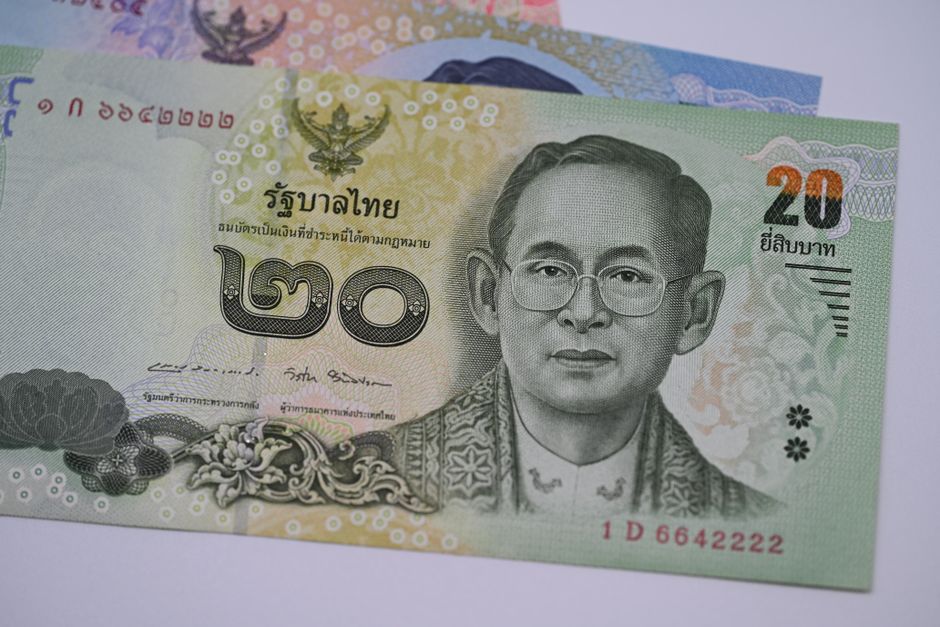 Photo: Qing Luo / Pexels
One general hospital, seven community hospitals, one private hospital, and a primary-care layer underneath. Chainat Narendra Hospital at 199 Phahonyothin Road in the capital is the Ministry of Public Health's service-level S general hospital for the province — designated at 500 beds, with 355 recorded as actually in use in the ministry's March 2025 facility data, on a site of about 70 rai. It opened as a 25-bed wooden ward in 1955 and admitted its first patients on 19 November 1956. Every one of the other seven districts has a community hospital: Sankhaburi is the largest at F1 grade and 60 beds, then Hankha 45, and Manorom, Wat Sing and Sapphaya at 30 each, Nong Mamong at 10, and Noen Kham whose bed count the registry does not record. The province's single private option is the 60-bed Ruamphaet Chai Nat in the capital. Underneath sit 65 subdistrict health-promoting hospitals on the ministry's own count — an aggregator gives 71, and we print both rather than pick. For anything requiring a regional or university centre the referral is out of province: Nakhon Sawan north, Lop Buri and Ayutthaya southeast, Bangkok about 188 kilometres away.
 Photo: RDNE Stock project / Pexels
This is where Chai Nat breaks the pattern of the small central provinces. It has an international-curriculum school — Manorom International Christian School at 164 Moo 3, tambon Khung Samphao in Manorom district, which teaches the American Accelerated Christian Education programme in English from kindergarten to Grade 12, ages three to eighteen, awards a US High School Diploma, offers boarding, caps classes at 22, and published fees of ฿129,300 to ฿175,100 for 2025/26. It was permitted in July 2014 and opened that month with four students, on the site of the Manorom Christian Hospital that had closed in 2007. It is the only Chai Nat entry on the national list of international schools. Above school level the province has three degree routes, not the one we used to list. Chandrakasem Rajabhat University runs its Chai Nat Education Centre on 326 rai 85 square wa at tambon Phraek Si Racha in Sankhaburi district, registered to the university by a Ministry of the Interior announcement gazetted on 24 March 2005 and given a status equivalent to a faculty on the university's own page, teaching Public Administration to bachelor's level in and out of office hours — though its news feed stops in October 2020, so confirm current intake on 056 482444. The Boromarajonani College of Nursing, Chai Nat, part of the Praboromarajchanok Institute under the Ministry of Public Health, awards a Bachelor of Nursing Science from a roughly 67-rai campus at tambon Chai Nat. And Chainat Technical College's own department list includes a Production Technology department awarding a Bachelor of Technology (ทล.บ.), so a ปวส. can continue to a degree at the same college. No university has its main campus here, and none of the three teaches in English. The state secondary system runs thirteen schools with 10,031 students between them as of November 2024 — Chainat Pittayakhom alone accounts for 2,552 — and that same school runs the province's state Mini English Program, admitting at Mathayom 1 and again at Mathayom 4, which is the only English-medium route here that is not private. Below Mathayom 1 we could find no state English-medium classroom at all, so a primary-age child effectively means Manorom or nothing — read the ladder on the schools guide before you commit. Vocational provision is the province's real post-eighteen capacity: three colleges, named on the schools guide from the provincial vocational office's own roster — Chainat Technical College in the capital, the Chai Nat College of Agriculture and Technology at Manorom, and the Noen Kham Industrial and Community Education College.
 Photo: Tima Miroshnichenko / Pexels
There is no condominium market in Chai Nat, and this is one of the better-evidenced zeros on the platform. Four commercial portals from four different corporate groups returned zero long-stay rental listings for the province, and each of them proved its own route works on the identical slug: DDproperty returned zero on all four of its Chai Nat rent routes while its province-bounded for-sale route returned 28; Hipflat returned zero for rent and 116 for sale with a district breakdown that sums exactly; Thailand-Property returned zero for rent and four for sale; BaanFinder returned nothing and then fell back to properties outside the province. CheckRaka's own province index — 10, not 18, because that portal uses its own numbering — returned zero new condominium projects. No page we opened names a single registered condominium building anywhere in Chai Nat, or states a developer, year, floor count or unit count for one. What exists is thirteen advertised Thai-market apartment buildings on RentHub at ฿700 to ฿6,000 a month, twelve of them in the capital district and one in Sapphaya. Rather than publish a building directory with unverified data, BAANLYY populates its Chai Nat records only as each one is verified.
 Photo: Pixabay / Pexels
Small, and we are not going to pretend to know how small. We could not verify a single visitor number, hotel-room count or foreign-resident figure for Chai Nat from a source we could actually open — the Ministry of Tourism and Sports publishes the provincial table only as a spreadsheet, the National Statistical Office's old tourism page no longer resolves, and the provincial tourism office's own site timed out. So this page publishes no tourism statistic at all, which is the honest version. What can be said from the ground up is that Chai Nat is a domestic-tourism province: the Straw Bird Festival and the White Pomelo Festival draw Thai visitors to the embankment in front of the provincial hall, the Bird Park and the dam are day-trip destinations from Bangkok and Nakhon Sawan, and the only foreign-facing institution of any size in the province is the international school at Manorom. There is no expat association we could verify and no English-language local media. In practice this is a place you live because of family, work, the school or the price, and you socialise in Nakhon Sawan, Lop Buri or Bangkok.
Editorial analysis compiled and periodically refreshed by BAANLYY’s research team — not a live data feed.
Analysis last reviewed August 2026.
The core Chai Nat relocation guides are below, with more being added. In the meantime, see the general Thailand visa and relocation guides too.
Chai Nat neighbourhood & areas guide →
Chai Nat Area Score — every area ranked & rated →
Condos & housing in Chai Nat →
See our Thailand visa guides, then talk to us about relocating.
Primary and official sources are cited above. Government rules, fees and procedures in Thailand change over time and vary by office; always confirm current requirements with the relevant authority before relying on them. BAANLYY never takes paid placement in editorial content.
General information and indicative pricing, not legal, tax, immigration or financial advice. Hero photograph via Pexels. Confirm current details — especially bus schedules, hospital services, school fees and immigration procedures, all of which change — with official sources, individual listings or licensed professionals.

Free tools for this
Answer 3 quick questions and see the Thailand city guide worth researching first.
Try it free →Build a realistic monthly budget by lifestyle tier.
Try it free →