Which city fits you?
Answer 3 quick questions and see the Thailand city guide worth researching first.
Try it free →The complete starting point for Uttaradit — the upper north's "port of the north" on the Nan River — with an overview, where to live, transport, heritage and relocation.
Uttaradit's name means "port of the north" — it grew from a landing on the Nan River where the water became too shallow to go further, and by 1887 that trading port had outgrown the old seat at Phichai. It sits in the upper north, 488km from Bangkok and 238km southeast of Chiang Mai, bordered by Phitsanulok, Sukhothai, Phrae, Nan and, to the east, Xaignabouli in Laos. This is an unhurried agricultural province rather than a hub: rice and fruit, 55.9% forest cover, a regional hospital, a Rajabhat university and two railway stations. What it offers a long-stayer is a very low cost of living, a real Thai town with genuine history, and the best rail connection of any province its size. What it does not offer is an airport, a condominium market or an expat community — and this hub says so plainly on every page.
 Photo: Quang Nguyen Vinh / Pexels
Uttaradit's living options split into five broad choices. The town centre in tambon Tha It is the only walkable, service-dense part of the province — City Hall, the Phraya Phichai monument, Uttaradit Hospital, the Rajabhat university and the original railway station. Sila At, about two kilometres north, is the working railway quarter around the Northern Line's Class 1 operations station and container yard, and the cheapest rooms in town. Laplae to the west is durian and orchard country in the foothills. Tron and Phichai to the south are flat rice districts on the road and rail run to Phitsanulok. And the northeastern uplands around Tha Pla and Nam Pat rise toward the Sirikit reservoir and the Lao frontier. The full where-to-live guide compares all five.
 Photo: Valeria Drozdova / Pexels
Rail is Uttaradit's strength. The State Railway's Northern Line runs through the province with two stations in the provincial town: the original Uttaradit station, and Sila At — a Class 1 station 487.52km from Bangkok, built in 1958 two kilometres north when the old station became overcrowded, and now the Northern Line's major container yard and a cluster of SRT operational departments. Day and overnight services run in both directions between Bangkok and Chiang Mai. There is no airport in the province; the nearest is in neighbouring Phrae. Locally there is no BTS, MRT or city bus — songthaews and motorbike taxis cover short trips in town, and everywhere else a motorbike or car is a requirement rather than a convenience.
 Photo: Quang Nguyen Vinh / Pexels
The province's defining figure is Phraya Phichai Dap Hak — the "Lord of Phichai with the Broken Sword" — who drove back the Burmese after the fall of Ayutthaya in 1767 and earned his title by shattering a sword in hand-to-hand fighting; his monument stands in front of Uttaradit City Hall. The provincial seal shows the mondop of Wat Phra Thaen Sila At in Laplae, raised over a laterite block believed to have been used by the Buddha. Laplae itself carries one of Thailand's best-known local legends — a "hidden city" that only a truthful person can find. The province is famous nationally for two fruits: langsat, celebrated with a festival each September, and Laplae's Longlaplae and Linlaplae durians, which lack the usual odour and have their own festival each June. Its motto names four things: Nam Phi iron, sweet langsat, Phraya Phichai, and the world's great teak.
 Photo: Pixabay / Pexels
Uttaradit suits long-stayers who want a genuinely inexpensive, genuinely Thai provincial base with a good train out of it, and who do not need an expat community, an international school or an airport. The standard Thai long-stay routes apply (retirement, marriage, DTV, education and LTR), with extensions, 90-day reporting and re-entry permits handled through the Uttaradit Immigration Office. The province does border Laos in the far northeast, but there is no international crossing open to foreigners there, so visa runs mean travelling to a border province with one. The rental market is thin and informal: rooms and small apartment blocks around the hospital and the Rajabhat university, and houses let directly by owners everywhere else. There is no agency-led sector, and no verified condominium market.
 Photo: Marta Branco / Pexels
Uttaradit is inexpensive by any national measure — an agricultural province with essentially no tourism and no expat-premium pricing. Community-contributed cost data for it is close to non-existent, because the price trackers that cover Phuket or Chiang Mai depend on foreign residents who are not here. Rather than publish false-precision figures, our cost-of-living guide gives clearly-labelled indicative ranges typical of an inexpensive upper-northern province and says where the uncertainty is. With no mass transit, a motorbike or car is a fixed line in almost every budget.
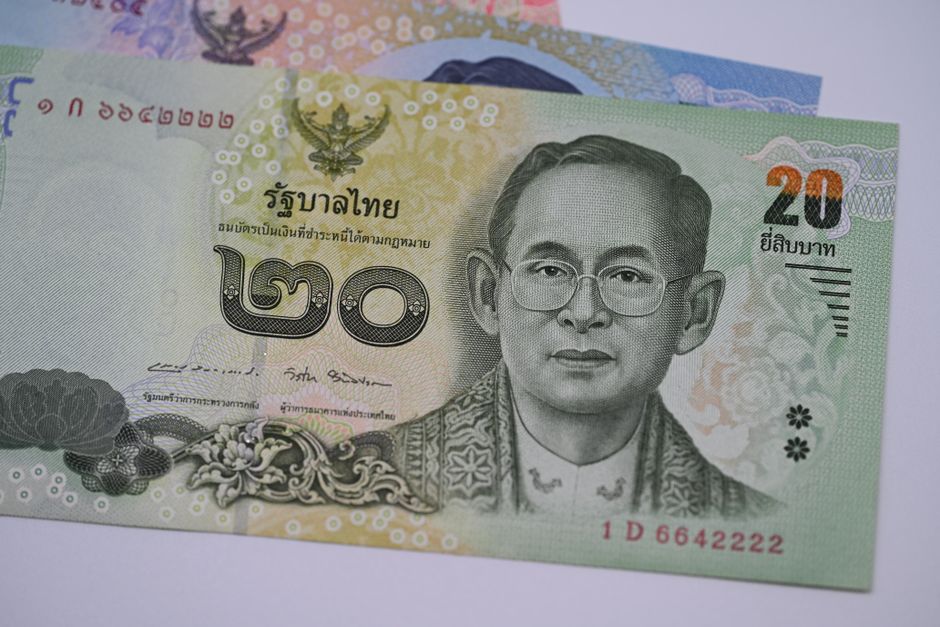 Photo: Qing Luo / Pexels
Uttaradit Hospital is the province's main facility — a Ministry of Public Health regional hospital, capable of tertiary care, whose construction began in 1940 and which opened on 12 April 1951. Since 1999 it has run a CPIRD medical education centre, acting as a clinical teaching hospital for Naresuan University's Faculty of Medicine and training around thirty rural-doctor students a year. That is a meaningful level of capability for a province this size. Below it sit the district hospitals in Laplae, Tron, Phichai, Tha Pla, Nam Pat and the rest. For the most specialised care, patients travel to Phitsanulok's tertiary hospitals to the south.
 Photo: RDNE Stock project / Pexels
Uttaradit Rajabhat University is the province's first and principal university, founded on 1 August 1936 as the Uttaradit Teachers College and upgraded to full university status in June 2004 when the Rajabhat Act passed. Alongside it sit vocational and technical colleges and the province's Thai government school network. There is no verified full international-curriculum school in Uttaradit, so families needing an English-medium international track should read the schools guide carefully — the realistic options are in Phitsanulok or Chiang Mai, and that is a decision to make before moving, not after.
 Photo: Tima Miroshnichenko / Pexels
The short version: Uttaradit is not a condominium market. BAANLYY has verified no registered condominium buildings in the province, and rather than publish a directory with developer, year, floor-count, unit-count and coordinate fields we have not individually confirmed, the housing page tells you honestly what actually exists — rooms above shophouses, small owner-run apartment blocks near the hospital and Rajabhat university, townhouses in town, and detached houses let directly by owners in every district. Anyone who specifically wants a modern condo with a pool and gym should look at Phitsanulok, about an hour and a half south, which has one.
 Photo: Pixabay / Pexels
There is no organised foreign community in Uttaradit, and it would be dishonest to imply otherwise. What exists is a small scattering of long-term residents — mostly foreign spouses in Thai families, plus the occasional teacher — with no verifiable clubs, meet-ups or English-language groups that BAANLYY can point you to. The nearest real network is in Phitsanulok, an hour and a half south, and the nearest large one is Chiang Mai. Anyone who needs a community around them should treat that as the deciding factor.
Editorial analysis compiled and periodically refreshed by BAANLYY’s research team — not a live data feed.
Analysis last reviewed August 2026.
The core Uttaradit relocation guides are below, with more being added. In the meantime, see the general Thailand visa and relocation guides too.
Uttaradit neighbourhood & areas guide →
Uttaradit Area Score — every area ranked & rated →
Condos & housing in Uttaradit →
See our Thailand visa guides, then talk to us about relocating.
Primary and official sources are cited above. Government rules, fees and procedures in Thailand change over time and vary by office; always confirm current requirements with the relevant authority before relying on them. BAANLYY never takes paid placement in editorial content.
General information and indicative pricing, not legal, tax, immigration or financial advice. Hero photograph via Pexels. Confirm current details — especially train schedules, which change — with official sources, individual listings or licensed professionals.

Free tools for this
Answer 3 quick questions and see the Thailand city guide worth researching first.
Try it free →Build a realistic monthly budget by lifestyle tier.
Try it free →