Mold is a moisture problem: clean it and fix the water behind it, or it comes back. Thailand's Department of Health says to open the windows without running a fan or the air conditioner, wear an N95 mask, goggles and rubber gloves, never wipe dry fluffy mold with a dry cloth, and finish with a mold-killing solution such as vinegar of at least 7%, alcohol at 60 to 90% or sodium hypochlorite mixed 1:10. Never mix bleach with ammonia. The US EPA says a patch under about 10 square feet is usually a job you can do yourself, and to keep indoor humidity below 60%, ideally 30 to 50%. In a rental, tell the landlord in writing the day you find it: the Civil and Commercial Code puts defects that arise during the lease on the lessor, and damage caused by the tenant's own fault on the tenant.
Why does mold grow so fast in a Thai home?
The US EPA puts it in one line: the key to mold control is moisture control. Molds reproduce through tiny spores that are invisible to the naked eye and float through outdoor and indoor air. They start growing indoors when they land on a wet surface, and there are many types of mold, none of which will grow without water or moisture. It is impossible to get rid of every spore indoors; what you can control is the water.
Thailand's rainy season supplies the water. The Thai Meteorological Department dated the start of the 2026 rainy season to 15 May 2026 (announcement data date 14 May 2569), when heavy, widespread rain fell over upper Thailand and the wind at about 1.5 kilometers turned southwesterly, carrying moisture from the Andaman Sea over the country continuously. Thailand's Department of Health says that in the rainy season or when there is a flood, mold often grows on these surfaces:
| Where | What the source says | Source |
|---|---|---|
| Surfaces in the home | Walls, ceilings, wooden floors under carpets, wardrobes, beds, pillows and furniture, in the rainy season or a flood | Department of Health |
| Where water gets in | Around leaks in roofs, windows or pipes, or where there has been a flood | CDC |
| Materials it feeds on | Paper, cardboard, ceiling tiles and wood; also dust, paints, wallpaper, insulation, drywall, carpet, fabric and upholstery | CDC |
| Hidden places | The back of drywall, wallpaper or paneling, the top of ceiling tiles, under carpets, inside walls around leaking or condensing pipes, wall surfaces behind furniture where condensation forms, inside ductwork, and roof materials above ceiling tiles | EPA |
| The most common indoor molds | Cladosporium, Penicillium and Aspergillus | CDC |
The CDC says mold looks like spots of many different colors and can smell musty, and that it comes in through open doors, windows and air conditioning, or on clothing, shoes, bags and pets. Condensation on windows, walls or pipes is a sign of high humidity, says the EPA, so dry it quickly and find its source. Our guide to flooding and the monsoon season covers the season itself.

Is mold dangerous to your health?
The CDC says exposure may cause a variety of effects or none at all, but some people react badly. The sources agree on who is most at risk:
| Question | What the source says | Source |
|---|---|---|
| Common effects | Exposure to damp and moldy places may cause a variety of effects, or none at all; for some people a stuffy nose, sore throat, coughing or wheezing, burning eyes or a skin rash | CDC |
| Allergies and asthma | People with asthma or a mold allergy may have severe reactions; molds can cause asthma attacks in people with asthma who are allergic to mold | CDC, EPA |
| Weakened immunity | Immune-compromised people and people with chronic lung disease may get infections in their lungs from mold | CDC |
| Irritation in anyone | Mold exposure can irritate the eyes, skin, nose, throat and lungs of both mold-allergic and non-allergic people | EPA |
| What mold produces | Allergens, irritants and, in some cases, potentially toxic substances (mycotoxins); dead mold may still cause allergic reactions | EPA |
| The evidence | In 2004 the Institute of Medicine found sufficient evidence linking indoor mold with upper respiratory symptoms, cough and wheeze in otherwise healthy people, and with asthma symptoms in people with asthma; the WHO issued guidelines on indoor dampness and mold in 2009 | CDC |
The CDC says three groups should not take part in cleaning up mold: people with allergies, people with immune suppression or underlying lung disease, and people with chronic respiratory diseases such as asthma or COPD. It adds that people with asthma, COPD or a weakened immune system should not stay in a moldy home, or even be there while it is being cleaned. If you have health concerns, the EPA says to see a health professional before you start. Our guide to air quality in Thailand covers the outdoor side, including PM2.5.
How do you clean mold? The Department of Health method
Thailand's Department of Health sets out nine steps for cleaning mold in the home in the rainy season or after a flood, repeated in its after-flood infographic with data from its Bureau of Environmental Health. In our own English:
- Air the house by opening doors and windows, without turning on a fan or the air conditioner, because that blows the spores around.
- Wear protection before you start: an N95 mask, goggles (the after-flood version says goggles without ventilation holes), rubber gloves and rubber boots.
- Take movable things outside to clean them.
- Throw away things that are hard to clean and heavily moldy, such as mattresses and pillows, wrapped in plastic so the spores do not spread.
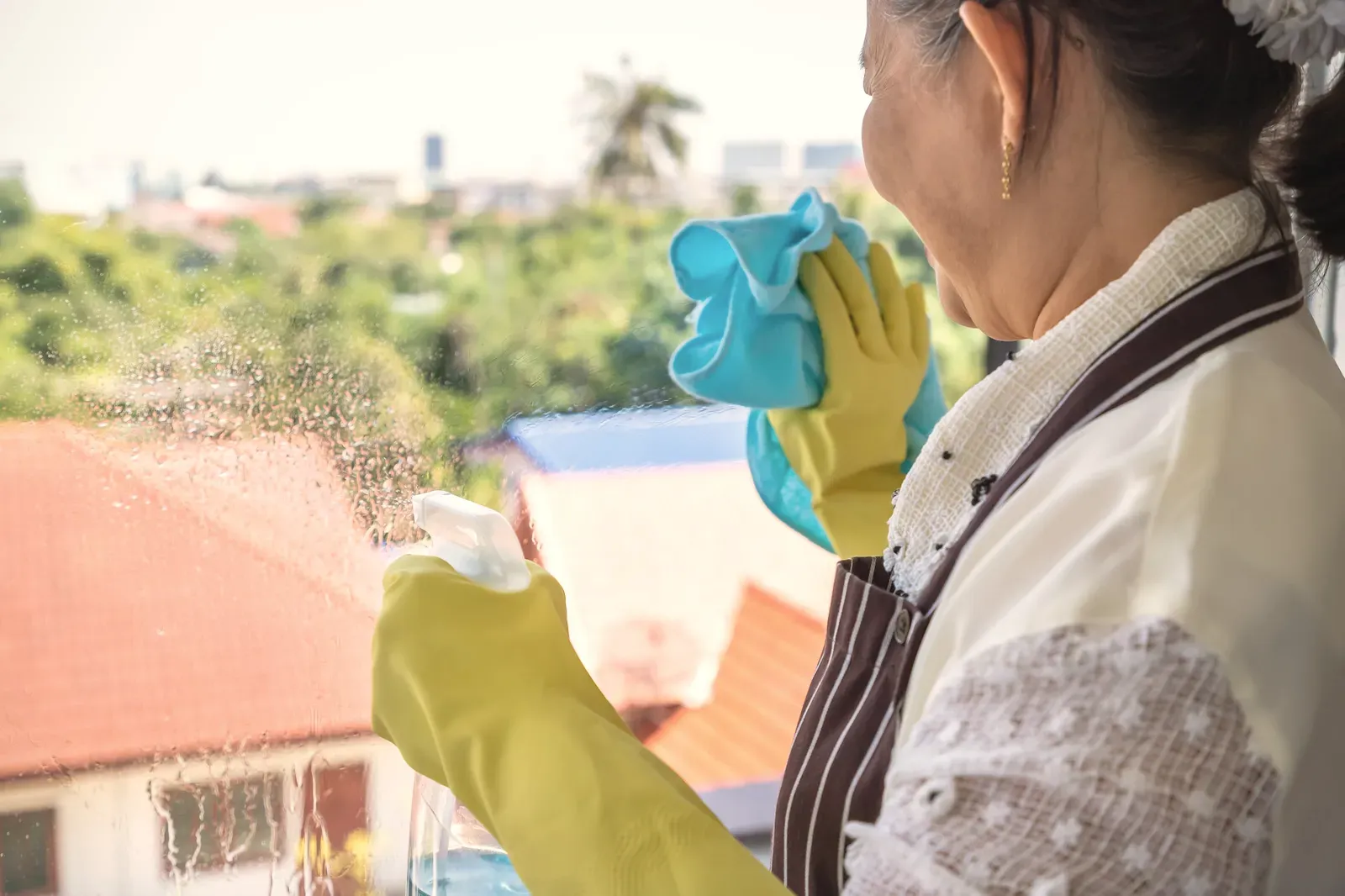
- First wipe: if the mold is dry and fluffy with visible threads, do not wipe it with a dry cloth. Use thick, large tissue or newspaper dampened with water, wipe in one direction only, never back and forth, and drop each sheet into a large garbage bag, opening and closing the bag gently and tying it tight when full.
- Second wipe: the same way, with water mixed with soap, dishwashing liquid or detergent.
- Third wipe: the same way, with a mold-killing solution.
- Dry in the sun until completely dry before use; sunlight also helps kill the mold.
- Watch for regrowth and repeat if needed, and cut down on anything that keeps moisture in the air for a long time, such as drying clothes indoors or boiling water indoors.
The Department of Health says to match the solution to the material:
| Solution | How the source says to use it | Source |
|---|---|---|
| Vinegar (mild) | Distilled or fermented, at least 7% concentration | Department of Health |
| Alcohol (strong) | Ethanol or isopropanol at 60 to 90%, left in contact for at least 5 to 10 minutes | Department of Health |
| Sodium hypochlorite (strong) | Mixed with water at 1:10; a chlorine compound that acts broadly and can destroy mold spores | Department of Health |
| Household bleach | No more than 1 cup of household laundry bleach in 1 gallon of water, with windows and doors open and rubber boots, gloves and goggles on | CDC |
| Detergent and water | Scrub mold off hard surfaces with detergent and water, and dry completely | EPA |
The two bleach figures are not the same. One cup in a gallon is about 1 part bleach to 16 parts water by our arithmetic, weaker than the Department of Health's 1:10, and the EPA goes further: it does not recommend chlorine bleach or other biocides as a routine practice, because a background level of spores will remain anyway and will not grow once the moisture problem is fixed. Our suggestion: follow the label of the product you buy, start with detergent on hard surfaces, and keep strong chlorine for what detergent does not shift. Two rules every source shares: never mix bleach with ammonia or other cleaners (the CDC says this produces a poisonous gas), and ventilate while you work.
What to throw away: the EPA says absorbent materials such as ceiling tiles and carpet may have to go, because mold can fill the spaces in porous materials and may be impossible to remove completely, and mold may leave stains that no cleaning removes. Do not paint or caulk over mold; clean and dry the surface first, because paint over mold is likely to peel.
When is it too big to clean yourself?
The EPA says the size of the problem is one deciding factor. If the moldy area is less than about 10 square feet (roughly 3 feet by 3 feet, a little under 1 square meter by our conversion), you can in most cases do it yourself. It suggests other help when:
- there has been a lot of water damage, or the mold covers more than 10 square feet;
- the water was sewage or otherwise contaminated, which calls for a professional experienced with buildings damaged by contaminated water;
- the air conditioning or ventilation system may be contaminated, for example with mold near its intake: do not run it, because it could spread mold through the building;
- you suspect hidden mold: a musty smell with no visible source, or known water damage plus health complaints. Removing wallpaper over mold can release a massive amount of spores, so the EPA suggests an experienced professional;
- the item is expensive or sentimental, where a restoration specialist may be the better call.
If you hire someone, the EPA says to make sure they have experience cleaning up mold, check references, and ask them to follow a recognized professional or government guideline. On testing, the CDC does not recommend mold testing: there are no set standards for an acceptable amount of mold in a home, good sampling can be expensive, and whatever the type, it has to be removed. The EPA agrees that if mold is visible, sampling is in most cases unnecessary.
The EPA's test for "done": the water or moisture problem is fixed, there is no visible mold and no moldy smell, the area shows no new water damage or growth when you check again shortly afterwards, and people can use the room without health complaints.
How do you keep humidity down and stop mold coming back?
Both US agencies give a humidity target. The EPA says keep indoor relative humidity below 60%, ideally between 30% and 50%, measured with a small, inexpensive humidity meter. The CDC says no higher than 50%, all day long, and that an air conditioner or dehumidifier will help. Their other prevention steps, with the Department of Health's:
| Step | What the source says | Source |
|---|---|---|
| Act within two days | Dry water-damaged areas and items within 24 to 48 hours of a leak, spill or flood; in most cases mold will not grow | EPA, CDC |
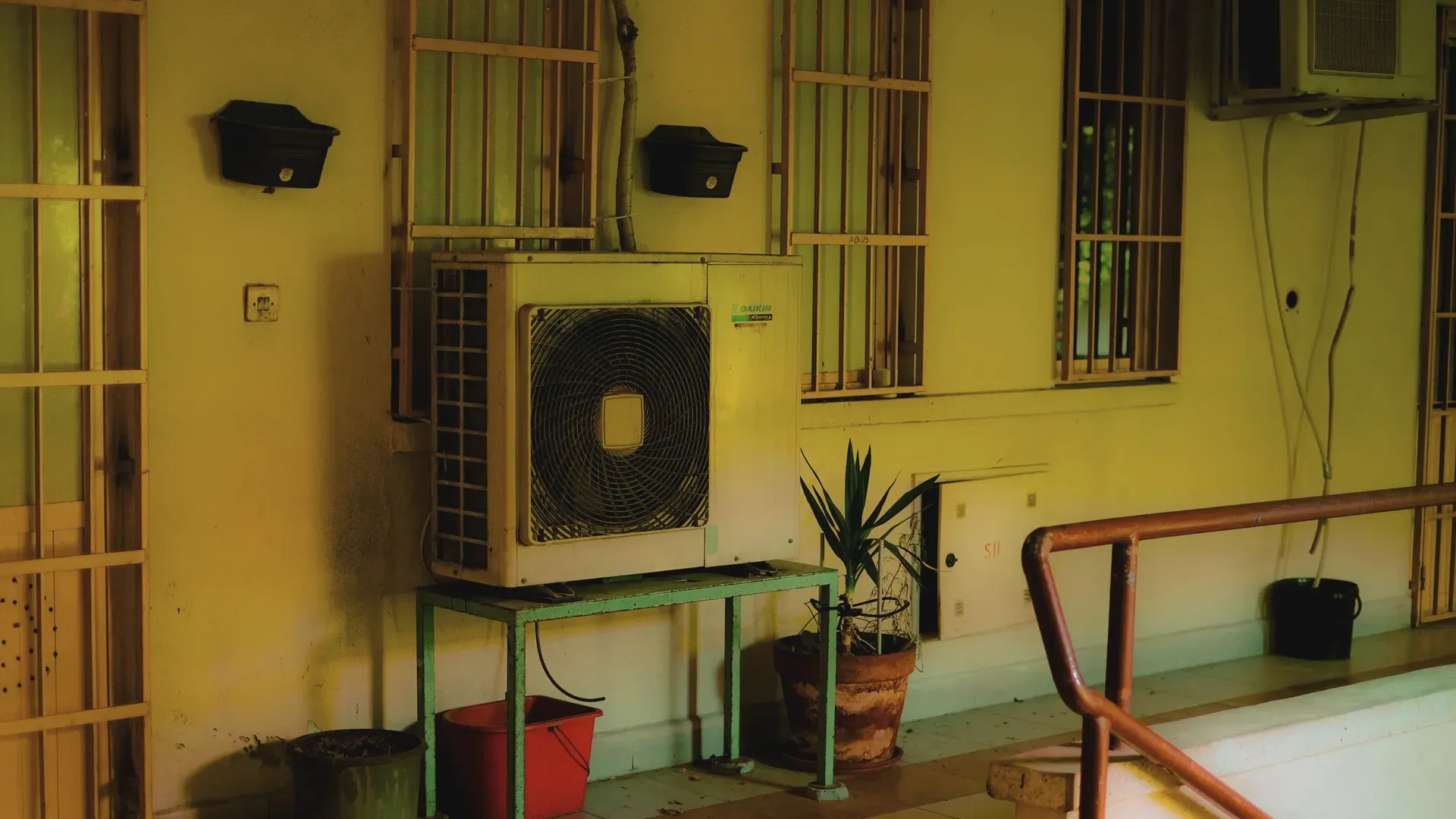
| Air conditioner care | Keep air conditioning drip pans clean and the drain lines unobstructed and flowing properly | EPA |
| Bathroom and kitchen | Run the bathroom fan or open the window when showering; use exhaust fans or open windows when cooking or washing dishes; for mold that keeps coming back in the shower, more ventilation and more frequent cleaning | EPA |
| Moisture indoors | Cut down on drying clothes indoors and boiling water indoors | Department of Health |
| Condensation | Reduce humidity, increase air movement, insulate cold surfaces such as cold water pipes | EPA |
| Leaks | Fix leaks in the roof, walls or plumbing; clean roof gutters; make sure ground slopes away from the foundation | CDC, EPA |
| Finishes | Add mold inhibitors to paint before painting; avoid carpet in bathrooms or other damp places; remove carpets and upholstery that were soaked and cannot be dried quickly | CDC |
For a Thai condo or house (our suggestions, not an official list):
- Leave nothing wet behind a closed door: wet towels, a damp gym bag or laundry drying in a closed bedroom raise the humidity in exactly the room you sleep in.
- Watch the wardrobe: check leather shoes, bags and belts kept in a closed wardrobe often, leave a gap between the wardrobe and an outside wall, and open the doors regularly.
- Before a long trip, ask whoever looks after the unit to air it, or leave the air conditioner on a timer or a dehumidifier running if your building allows it.
- Have the air conditioner serviced on schedule; our rental air conditioning maintenance checklist and air conditioning and cooling costs guide cover how often and what it costs to run.
- Fix the cause, not the stain: a spot that returns on the same ceiling after cleaning usually means water is still coming in from a pipe, a roof or the unit above.
Who pays for mold in a Thai rental?
The Civil and Commercial Code does not mention mold, so the general rules on hire of property apply, together with your contract. The sections that matter, from the English translation published by ThailandLawOnline (a private publisher; the Thai text is the law):
| Section | What it says |
|---|---|
| 546 | The lessor must deliver the property in a good state of repair |
| 547 | The lessor reimburses the tenant's necessary and reasonable expenses for preserving the property, except ordinary maintenance and petty repairs |
| 548 | If the property is delivered in a condition not suitable for the purpose it was let for, the tenant may terminate |
| 550 | The lessor is liable for defects that arise during the lease and must make the repairs, except those that law or custom leaves to the tenant |
| 551 | For a defect the lessor can fix, the tenant must first notify the lessor; if it is not fixed within a reasonable time and is serious enough, the tenant may terminate |
| 553 | The tenant must take the care a person of ordinary prudence takes of their own property, and do ordinary maintenance and petty repairs |
| 557 | When the property needs repairs by the lessor, or a preventive measure is needed to avoid danger, the tenant must inform the lessor forthwith, or is liable for harm caused by the delay |
| 561 | Without a written condition record signed by both, the tenant is presumed to have received the property in good repair and must return it that way |
| 562 | The tenant is liable for loss or damage caused by their own fault or that of people living with them, but not for damage from proper use |
Our reading, not legal advice and not a court ruling: what decides most mold disputes is where the water came from. A leaking roof, a failed pipe inside the wall, a cracked window seal or water from the unit above is a defect on the owner's side under sections 546 and 550. Mold that grew because the home was shut up wet for months, or because the tenant never had the air conditioner drain cleared when the lease made that the tenant's job, leans toward sections 553 and 562 and the tenant. Mold on day one points to section 548, but because of section 561 you need a signed move-in record with photos of ceilings, bathroom corners and the inside of the wardrobe to prove it.
What to do (our suggestions): send the landlord or agent a dated message with photos the day you find it, as section 557 requires, and say where you think the water is coming from; do not paint over it; keep receipts for anything you had to clean or throw away; and ask for the repair to be recorded in writing. The EPA gives renters the same first step: report all plumbing leaks and moisture problems to the owner or manager immediately. If your landlord rents homes out as a business, the 2025 consumer protection rules on residential leases also apply; our guide to tenant rights in Thailand explains them. In a condominium, water from a neighbor or the common pipes is also a matter for the juristic office: see who is responsible for a condo water leak and who pays for repairs in a Thai rental, and record the unit's condition with our inventory and condition report.
Frequently asked questions
Mold needs water. The US EPA says mold spores float in indoor and outdoor air everywhere and start growing when they land on a wet surface, and that none of the many types will grow without water or moisture. Thailand's rainy season brings that moisture: the Thai Meteorological Department dated the start of the 2026 rainy season to 15 May, when the wind at about 1.5 kilometers turned southwesterly and began carrying moisture in from the Andaman Sea. The Department of Health says that in the rainy season or a flood, mold often grows on walls, ceilings, wooden floors under carpets, wardrobes, beds, pillows and furniture.
The color does not tell you much: the EPA says molds come in many colors, and the CDC says you do not need to know the type of mold to remove it. For some people mold causes a stuffy nose, sore throat, coughing or wheezing, burning eyes or a skin rash; people with asthma or a mold allergy may have severe reactions, and people with weakened immune systems or chronic lung disease may get lung infections (CDC). If you see or smell mold, remove it and fix the moisture behind it.
Thailand's Department of Health lists three kinds of solution: a mild one, vinegar of at least 7%; and stronger ones, alcohol (ethanol or isopropanol) at 60 to 90% left on for at least 5 to 10 minutes, or sodium hypochlorite (a chlorine compound) mixed with water at 1:10. The US CDC says mold can be removed from hard surfaces with household products, soap and water, or a bleach solution of no more than 1 cup of laundry bleach in 1 gallon of water. Never mix bleach with ammonia or other cleaners: the CDC says this produces a poisonous gas, and the EPA says toxic fumes could be produced.
The US EPA says that if the moldy area is less than about 10 square feet (roughly 3 feet by 3 feet, a little under 1 square meter by our conversion), you can in most cases handle the job yourself. It suggests professional help when there has been a lot of water damage or the mold covers more than that, when the water was sewage or otherwise contaminated, and when mold may be hidden inside walls or ceilings. The CDC says people with allergies, weakened immune systems, lung disease, asthma or COPD should not take part in the cleanup.
The US EPA says to keep indoor humidity below 60%, ideally between 30% and 50%, and that a small humidity meter can measure it. The CDC says no higher than 50%, all day long, and that an air conditioner or dehumidifier will help. Thailand's Department of Health adds that you should cut down on things that keep moisture in the air, such as drying clothes indoors and boiling water indoors.
The Civil and Commercial Code does not mention mold, so the general lease rules and your contract decide. Section 546 says the lessor must deliver the property in a good state of repair, and section 550 makes the lessor liable for defects that arise during the lease, except repairs that law or custom leaves to the tenant. Section 553 makes the tenant take ordinary care and do ordinary maintenance and petty repairs, and section 562 makes the tenant liable for damage caused by the tenant's own fault. In our reading, mold from a roof leak, a burst pipe or a neighbor's water points to the owner; mold from never airing the room or a blocked air conditioner drain the tenant was meant to look after points to the tenant. Report it in writing as soon as you find it: section 557 makes a tenant who delays liable for the harm the delay causes.
No. The US EPA says not to paint or caulk moldy surfaces: clean up the mold and dry the surface first, because paint applied over mold is likely to peel. The CDC suggests adding a mold inhibitor to paint when you do repaint, and the EPA says dead mold may still cause allergic reactions, so it must be removed, not just killed.
Usually not. The CDC does not recommend mold testing: the health effects differ from person to person, there are no set standards for an acceptable amount of mold in a home, and whatever the type, you need to remove it. The EPA says that in most cases, if mold is visible, sampling is unnecessary, and that sampling should be done by professionals with specific experience if it is done at all.
Looking for a home that stays dry?
Browse homes listed by partnered agents, and check the ceilings and wardrobes at the viewing.
General information only, not medical, legal or building advice. Cleaning products, building conditions and lease terms vary. Follow the product label, ask a doctor if you have asthma, allergies or a weakened immune system, and take legal advice on a dispute with your landlord. BAANLYY never takes paid placement.
Sources
- Department of Health, Ministry of Public Health (Anamai Media), infographic on getting rid of mold in the home, data from the Bureau of Environmental Health (Thai, undated, read 24 November 2026): in the rainy season or a flood mold grows on walls, ceilings, wooden floors under carpets, wardrobes, beds, pillows and furniture; nine steps (air the house without fans or air conditioning, N95 mask, goggles, rubber gloves and boots, clean movable items outside, discard heavily moldy mattresses and pillows wrapped in plastic, never wipe dry fluffy mold with a dry cloth but use damp tissue or newspaper in one direction, then soap or detergent, then a mold-killing solution, sun-dry, cut indoor drying of clothes and boiling water); vinegar at least 7%, alcohol 60 to 90% with 5 to 10 minutes contact, sodium hypochlorite mixed with water 1:10 ↗Department of Health, Ministry of Public Health · Accessed 24 November 2026
- Department of Health, Ministry of Public Health (Anamai Media), infographic on cleaning mold in the home after a flood, from the Bureau of Environmental Health (Thai, undated, read 24 November 2026): the same nine steps, with goggles without ventilation holes, and the same three kinds of mold-killing solution ↗Department of Health, Ministry of Public Health · Accessed 24 November 2026
- US Environmental Protection Agency, A Brief Guide to Mold, Moisture and Your Home (last updated 18 February 2026): moisture control is the key to mold control; dry within 24 to 48 hours; health effects; cleanup under about 10 square feet; what to wear; when cleanup is finished; indoor humidity below 60 percent, ideally 30 to 50 percent; air conditioning drip pans and drain lines; renters report leaks immediately; sampling usually unnecessary; hidden mold; biocides not recommended as a routine practice; never mix bleach with ammonia; dead mold may still cause allergic reactions ↗US Environmental Protection Agency · Accessed 24 November 2026
- US Environmental Protection Agency, Mold Cleanup in Your Home (last updated 4 June 2026): who should do the cleanup, the 10 square feet guide, contaminated water, HVAC systems, choosing a contractor, tips and techniques, bathroom tips, floods ↗US Environmental Protection Agency · Accessed 24 November 2026
- US Centers for Disease Control and Prevention, Mold (page info as printed: published 15 May 2024, updated 7 February 2024, reviewed 26 September 2024): common indoor molds, possible health effects, prevention (humidity no higher than 50 percent, dry within 24 to 48 hours after a flood, mold inhibitors in paint), cleaning with no more than 1 cup of bleach in 1 gallon of water, CDC does not recommend mold testing ↗US Centers for Disease Control and Prevention · Accessed 24 November 2026
- US Centers for Disease Control and Prevention, Mold Clean Up Guidelines and Recommendations (page info as printed: published 21 April 2024, updated 6 February 2024, reviewed 16 February 2024): who should not clean mold, what to wear, using bleach safely, staying in a moldy home ↗US Centers for Disease Control and Prevention · Accessed 24 November 2026
- Thai Meteorological Department announcement, start of the rainy season of Thailand B.E. 2569 (data date 14 May 2026): rainy season from 15 May 2026 ↗Thai Meteorological Department · Accessed 23 November 2026
- Civil and Commercial Code, Book III Title VI hire of property, sections 537 to 571, English translation published by ThailandLawOnline (a private publisher, not an official translation; the Thai text is the law): section 546 delivery in a good state of repair, 548 termination when delivered unfit for its purpose, 550 lessor liable for defects arising during the lease, 551 notice before termination for a remediable defect, 553 tenant's care and petty repairs, 557 tenant to inform the lessor forthwith, 561 presumption of good repair without a signed condition record, 562 tenant liable for damage caused by own fault ↗ThailandLawOnline (unofficial English translation) · Accessed 24 November 2026
Official primary sources are listed above with the date we last checked them. Thai rules, fees, thresholds and procedures change and can be applied differently by individual offices and embassies, confirm the current requirement with the responsible authority before relying on it. General information only, not legal, tax or medical advice. BAANLYY never takes paid placement in editorial content.