The Surin Elephant Festival, known in English as the Elephant Round-up, is held in Surin town every November. In 2026 the elephant fair ran from 14 to 25 November at Sri Narong Stadium, more than 200 elephants paraded to the elephant buffet on 20 November, and the main elephant show ran on the mornings of 21 and 22 November at the Surin Elephant Show Ground. Reserved seats cost 250 or 350 baht and sold out; the main grandstand and the province's public stands were free, first come, first served. Outside the festival, the elephants live with Kuy families around Ban Ta Klang in Tha Tum district.
What is the Surin Elephant Round-up?
The festival's Thai name is Mahatsachan Ngan Chang Surin, "the wonder of the Surin elephant festival". Its official website, which names Surin Province and the Tourism Authority of Thailand as organizers, calls it "A Bond Through Time" and puts its theme in one line: in Surin, the elephant is a member of the family. It frames the festival in three lines, "more than a pet, more than a show, part of the family", and says the bond between people and elephants is many generations older than the show.
In practice the festival has three parts. A twelve-day fair at Sri Narong Stadium with a daily mini elephant show, market stalls, a main stage and a concert stage every night. The welcome and elephant buffet, when the elephants parade into town and are fed at a banquet table in the street. And the elephant show itself, two mornings of a staged performance in six acts at the Surin Elephant Show Ground on the bypass road. On the last night of the fair, 25 November in 2026, the Red Cross charity lottery is drawn on the main stage.
The Surin Provincial Administrative Organization says the province has the largest number of domestic elephants in the country. For the province itself, see our Surin province guide and things to do in Surin.
The Kuy: the elephant people of Surin
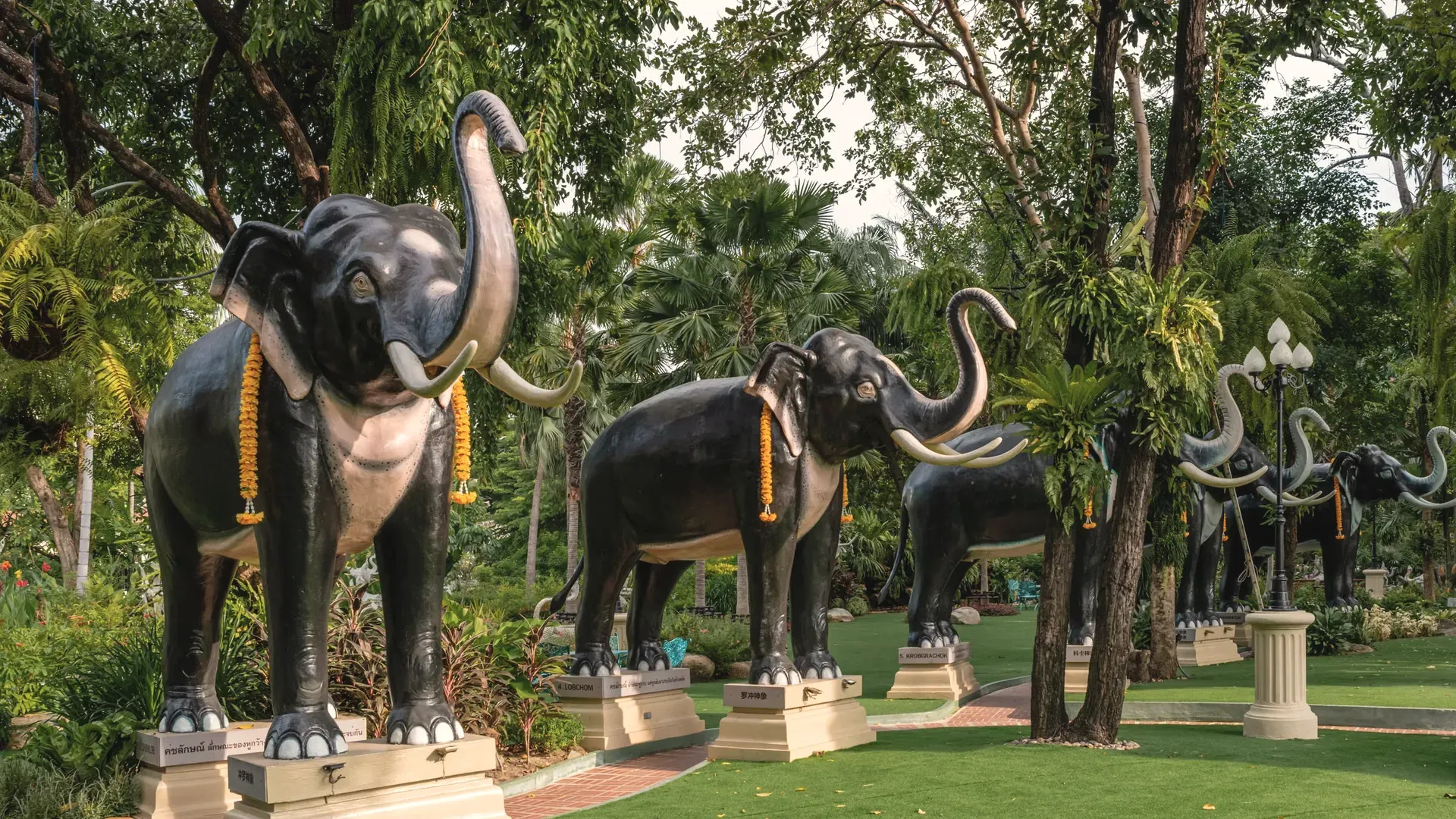
The elephants come from the Kuy. A Fine Arts Department article from the National Library in Nakhon Ratchasima (undated, read 23 November 2026) describes the Kuy as an ethnic group of lower Isaan and parts of the east, found today in Ubon Ratchathani, Sisaket, Surin, Buriram, Nakhon Ratchasima, Sa Kaeo, Prachinburi and Suphan Buri. Their name is spoken as Kuy, Kui, Kuai or Koi, and others have called them Suai. The Kuy name their own groups by livelihood: the Kuy Ajiang (Kuy Achiang) are the Kuy who raise elephants.
The Department of Cultural Promotion sums up the Kuy Ajiang as the Kuy who lived by catching, training and raising elephants, with ancient elephant rites that continue today, and lists their elephant lore (khotchasat) as including the rituals and beliefs about elephants and how to train and command them. The Fine Arts article gives the ranks of the Kuy elephant doctors, set by skill and by the number of wild elephants each had lassoed:
| Rank | Title |
|---|---|
| 1 (highest) | Kamluang Phuet |
| 2 | Kamluang (Kamluang Kaet) |
| 3 | Mo Sadam (Sadam) |
| 4 | Mo Sadiang (Sadiang) |
| 5 | Mo Cha (Cha) |
| 6 (lowest) | Ma Chang (Ma) |
The same article says that from 1960 (B.E. 2503) the Kuy of Surin no longer went out to catch wild elephants, so no one could be promoted through the ranks again, and that the last Kuy elephant doctor in Surin, Miu Salangam (Khru Miu), who held the rank of Mo Sadam, died in 2019 (B.E. 2562). Kuy families at Ban Ta Klang, Ban Sala and Ban Nong Bua in Krapho subdistrict, Tha Tum district, still raise elephants and keep the lore, and Kuy elephant lore was listed as national intangible cultural heritage in 2012 (B.E. 2555), the article says. The festival's website places the Kuy in the north of Surin, around Krapho in Tha Tum district and nearby Chumphon Buri. For the wider region, see Isaan culture.
How the elephant show began
The festival's website gives the history as a timeline:
| When | What happened |
|---|---|
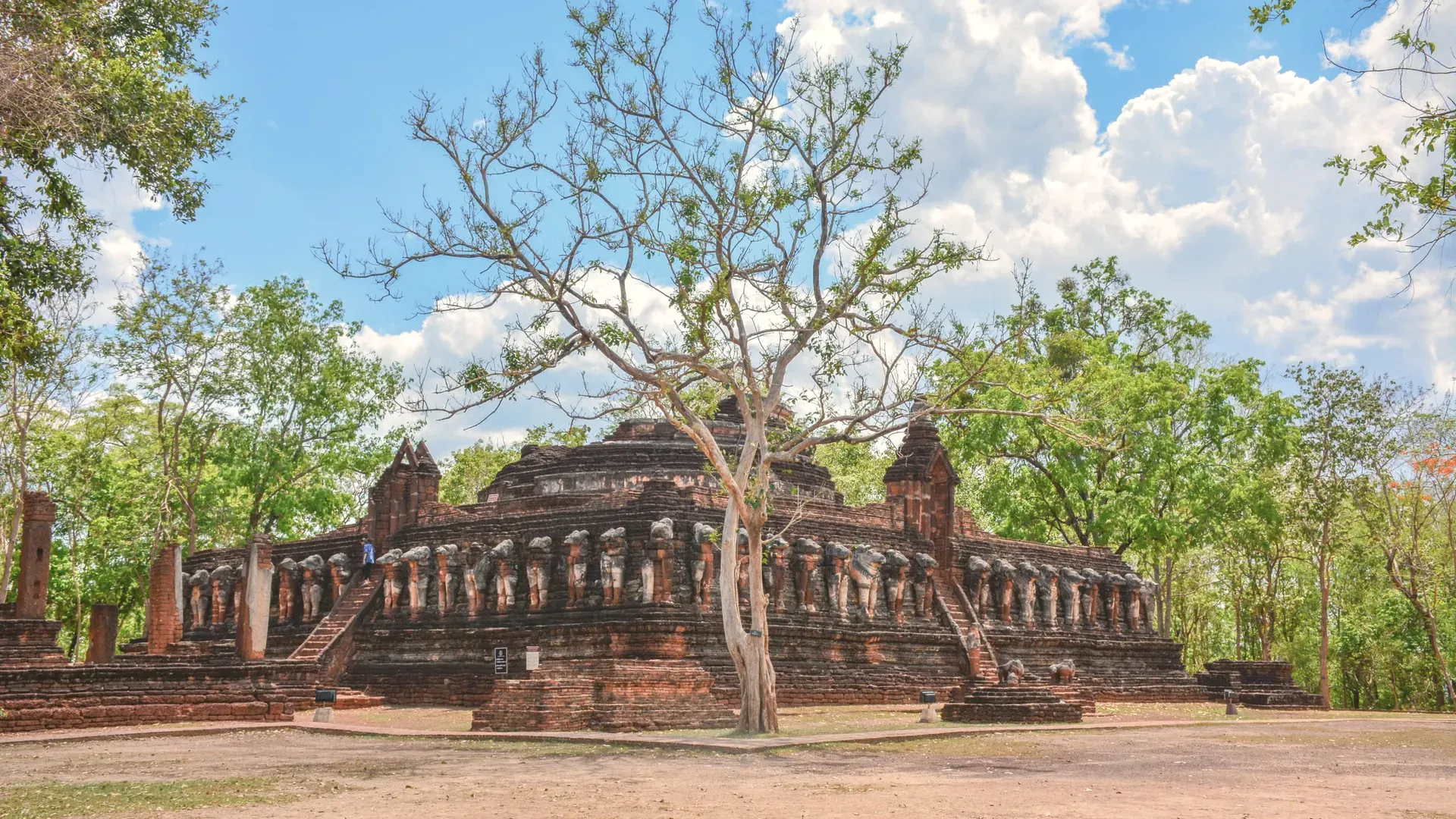
| 1955 | About 200 elephants were gathered in Tha Tum district, an initiative of the district chief, Winai Suwannakat. The sight gave rise to the idea of showing the elephants' skills and the mahouts' knowledge as a real show. |
| 19 November 1960 | Tha Tum held its first elephant show, to celebrate its new district office, on the old airfield that is now Tha Tum Pracha Soemwit School: an elephant procession, lasso demonstrations, elephant races, sports and entertainment. |
| 1961 | The Tourist Organization of Thailand, the forerunner of today's TAT, backed the event, sent staff to help train the elephants and promoted it at home and abroad. The second show was held in Tha Tum on 18 November 1961. |
| 15 May 1962 | The Cabinet approved the Surin elephant show as an annual national event. The same year the show moved from Tha Tum to the Surin provincial stadium. |
| 2026 | 66 years since the first show in 1960. |
Over the decades, the website says, the show grew from displays of skill into large productions about way of life, culture and history: grand processions, elephant sports, re-enactments of war elephants, and scenes of the bond between people and elephants, with the welcome, the elephant buffet and cultural events growing up around it. The Fine Arts Department article notes that the Cabinet set 13 March each year as Thai Elephant Day. For the longer history of the region, see Isaan history.
When is the Elephant Round-up?
The festival is held in November, and the first two shows were held on 19 November 1960 and 18 November 1961. Our reading of the 2026 calendar is that the fair runs for twelve days, from a Saturday to a Wednesday, with the welcome and buffet on the Friday and the two show mornings on the Saturday and Sunday in between.
| When | What | Source |
|---|---|---|
| 14 to 25 November 2026 | Elephant fair at Sri Narong Stadium, with a daily mini elephant show in front of the Phao Phaen Gymnasium | Festival website; Province (PRD) |
| 14 November, from 17:00 | Opening ceremony, main stage at Sri Narong Stadium | Festival website |
| 19 November, 08:00 to 12:00 | Full rehearsal of the elephant show, after a parade of 6 processions with 20 elephants from the Chaloem Phra Kiat public park in Nok Mueang to the show ground | Festival website; Province (PRD), 19 November 2026 |
| 20 November, from 07:00 | Elephant welcome and buffet at the monument to Phraya Surin Phakdi Si Narong Changwang | Festival website; Province (PRD), 20 November 2026 |
| 21 and 22 November, 08:00 to 12:00 | The elephant show at the Surin Elephant Show Ground | Festival website |
| 20 and 21 November, from 19:30 | "The Thousand-Year Legend of Prasat Sikhoraphum", free, at Prasat Sikhoraphum in Sikhoraphum district | Festival website |
| 25 November | Red Cross charity lottery draw, main stage | Festival website |
The province announces the dates each year, so treat any date for next year as unconfirmed until the festival website, the province or TAT prints it. For the time of year, see our guide to weather and seasons in Thailand.
The six acts of the show, and the fair around it
The 2026 show was staged in six acts, which the festival website names as follows:
- Prologue of the Land: the origins of Surin, its people, elephants, life and family, with traditional elephant capture.
- Surin, Land of Great Elephants: a "sea of elephants" in tribute to Her Majesty Queen Sirikit The Queen Mother.
- The Elephant Army of Prathai Saman.
- Surin's Local Arts and Culture: the procession of an ordination on elephant back.
- The Bond Between People, Elephants and the Land: games and activities that show the elephants' intelligence.
- The Heart of the Elephant City: the finale.
The fair. From 14 to 25 November the fair at Sri Narong Stadium had market stalls, a daily mini elephant show, a main stage from 18:00 to 24:00 and a concert stage from 20:00 to 24:00 every night, according to the website's calendar. The main stage ran a different contest or show each night, among them the Miss Surin Silk pageant on 15 November, a silk fashion show on 16 November, and local country-song and band contests. Surin's silk is a story of its own: the website lists Ban Tha Sawang, the royal brocade weaving village, and the Khwao Sinarin silver handicraft village among the places to see while you are in Surin.
Two cultures in the parades. The 19 November parade, the Provincial Public Relations Office reported, had six processions with 20 elephants: the city ruler (chao mueang), the Khmer, the Kuy, a sound-system procession, the Lao and the Thai-Chinese, which the office says reflect the history and the cultural mix of the people of Surin.
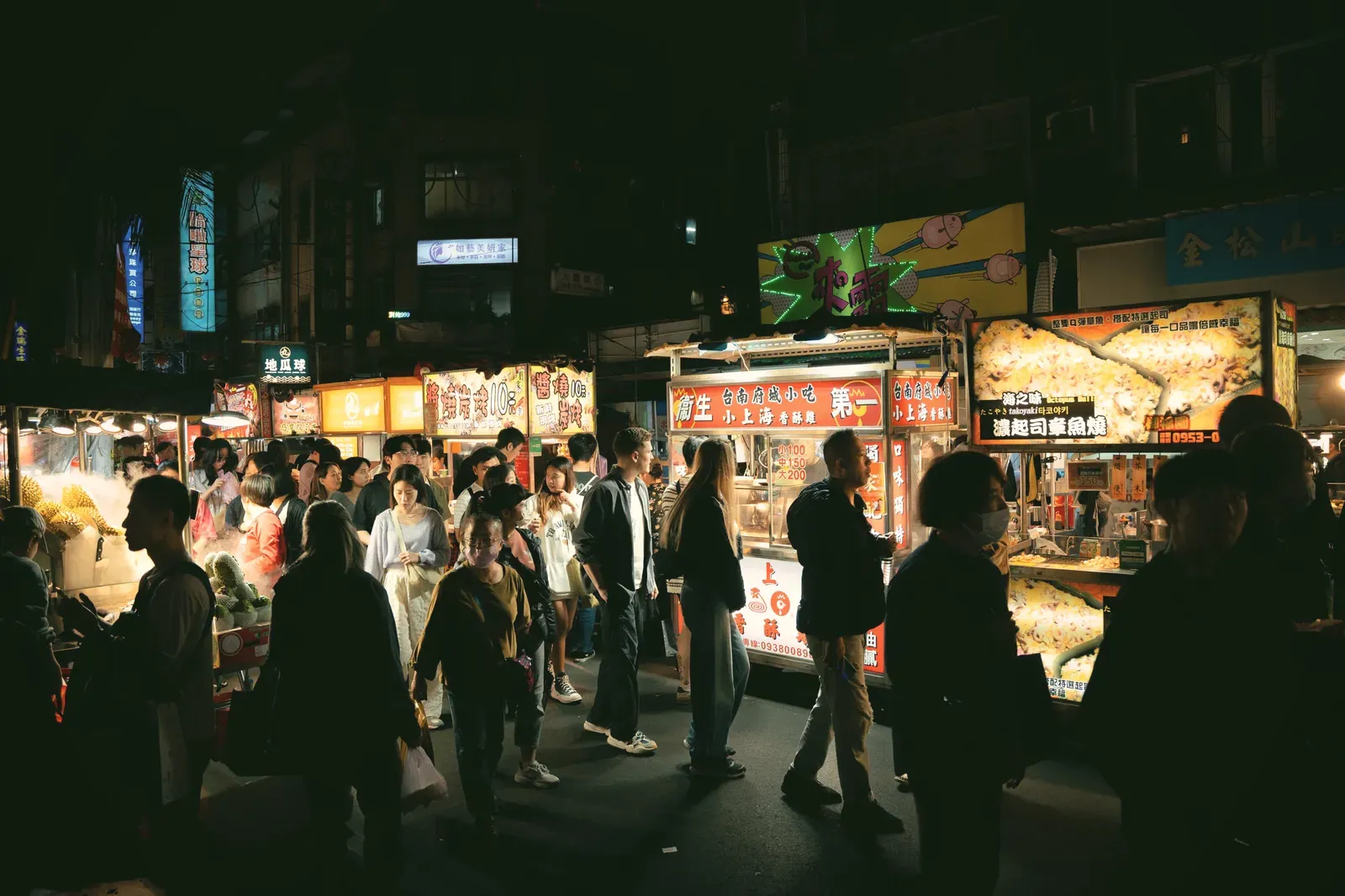
The welcome parade and the elephant buffet
The best-known picture of the festival is the elephants eating at a banquet laid out in the street. The Surin Provincial Public Relations Office report of 20 November 2026 describes the day:
- 08:09: the elephants set off from behind Surin railway station along Thanasan Road, turned left at the Prapa junction and went on to the monument to Phraya Surin Phakdi Si Narong Changwang, in 7 processions with more than 200 elephants.
- 09:00: elephant doctors from the Elephant Study Center at Ban Ta Klang performed the offering to the pakam shrine, the rite of the elephant people, for good fortune. The presiding guest then received the flag to lead the elephants into town from representatives of Tha Tum and Chumphon Buri districts.
- The buffet: a "Chinese banquet" table for the elephants more than 400 meters long, laid with many kinds of vegetables and fruit, where visitors could watch the elephants being fed up close.
The office says the welcome is held to receive the elephants coming to the festival and to show respect and gratitude to the elephant as the symbol of the province. The 7 processions had themes, among them the elephant lore of the Kuy, the white elephants, and a procession of crops for the elephants. An Elephant World notice shown on the Surin PAO page invited the public to a display of sample elephant food at the monument on the evening of 19 November, 16:00 to 20:00, and to the buffet around the monument and along Krung Si Nok Road on 20 November.
Our reading: the buffet is the one part of the festival that needs no ticket and puts you closest to the elephants, so come early, keep to where the marshals put you, and remember these are working animals with their mahouts, not pets. Feed them only where the organizers lay out the food.
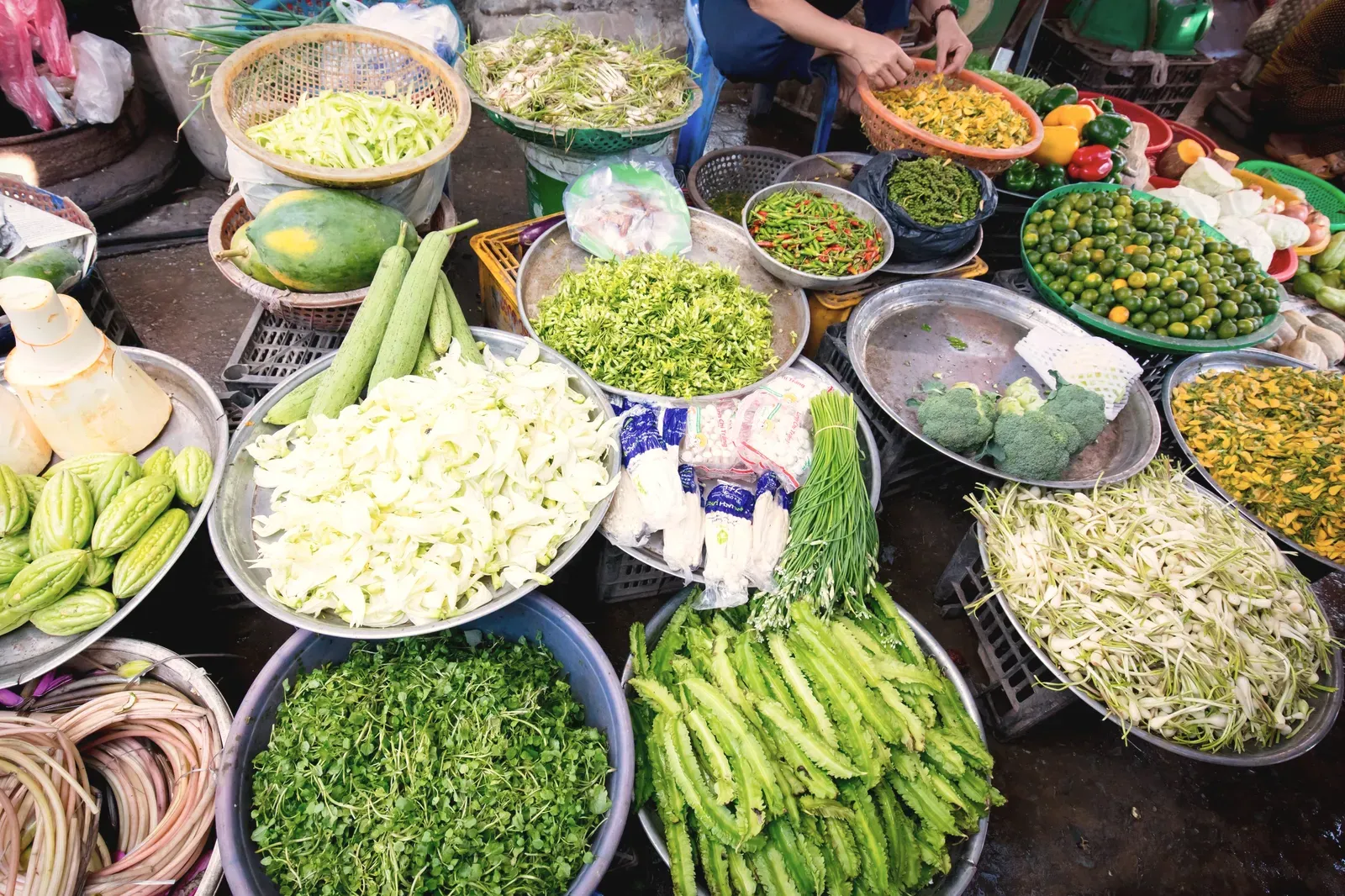
Tickets, the free stands, and getting there
Reserved seats. The festival website sold reserved, numbered seats for the 2026 show days through its own booking system:
| Seat | Price | What is included |
|---|---|---|
| Stands G to L and M to R | 350 baht | Numbered seat, snack, souvenir |
| Stands A to F and S to X | 250 baht | Numbered seat, snack, souvenir |
| Main grandstand | Free | No assigned seat, no snack or souvenir |
The website counted 1,420 reserved seats for each of the two show days, all booked, and online booking closed at 12:00 on 20 November 2026. Our reading: book as soon as the next year's booking opens.
No ticket? You can still watch. The website says the province opens 3 to 4 free public stands with more than 1,000 seats, no booking and no ticket, first come, first served, with the show starting at 08:00, so arrive early. Its seat map puts the free stands on the Gate 1 side. The show ground is at 410 Moo 5, Bypass Road, Nok Mueang, Mueang Surin.
The free tram. In 2026 the "Surin Smart Tram" ran free between the Mueang Surin District Office and the Tourism and Sports Office next to Sri Narong Stadium: Monday to Friday 16:00 to 22:00, Saturday and Sunday 10:00 to 22:00, and 07:00 to 22:00 on show days. On the show days, 21 and 22 November, it also ran from 07:00 to 12:00 between the District Office and the Elephant Show Ground.
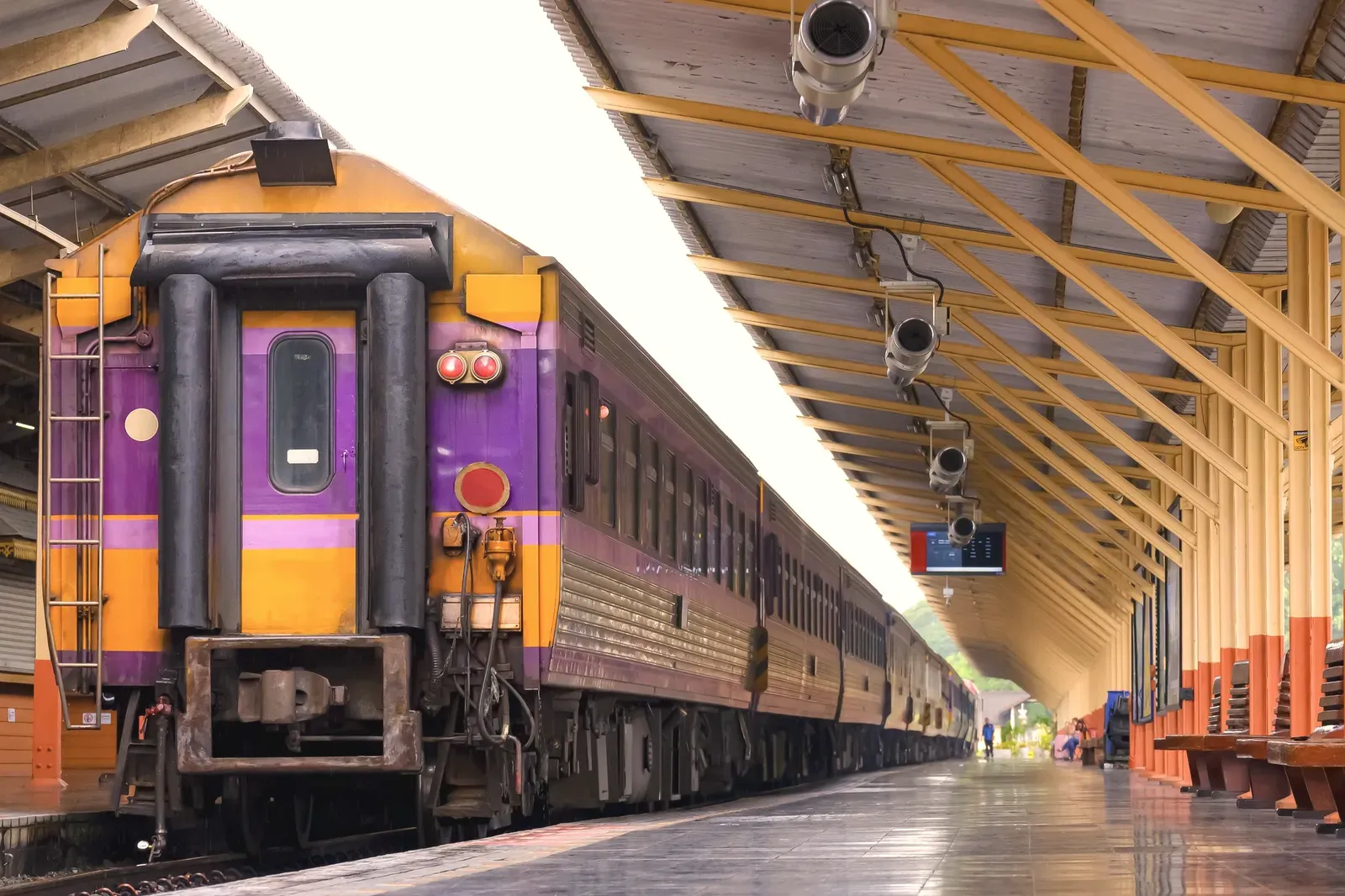
Getting to Surin. The buffet starts behind Surin railway station, and the train is one way to come: see trains and rail travel in Thailand. For buses, songthaews and getting around town, see the Surin getting-around guide; for flights to the region, domestic flights in Thailand.
Ban Ta Klang and Elephant World, the rest of the year
When the festival is over, the elephants go home, many of them to Ban Ta Klang in Krapho subdistrict, Tha Tum district, which the festival website calls the Kuy elephant village. There the province set up the Elephant Study Center (Sun Khotchasueksa), and the Surin Provincial Administrative Organization tells the story on its Elephant World page (undated, read 23 November 2026):
- In 1999 (B.E. 2542) the province took up the idea of bringing Surin's elephants home, so they no longer had to wander other provinces and city streets, and set up the Elephant Study Center at Ban Ta Klang as a place where they could live together. Management lapsed, and the province handed the center to the PAO.
- In 2017 (B.E. 2560) the PAO turned the bring-the-elephants-home project into "Elephant World", a learning center and elephant attraction, with a plan to develop more than 3,000 rai of the Dong Phu Din national reserve forest alongside the conservation of elephants and the Kuy way of life.
- It is open every day, including public holidays, with an elephant show twice a day, at 10:00 and 14:00.
Closed during the festival. A notice of 2 November 2026 shown on the same page closed the Elephant Study Center and cancelled the daily shows from 16 to 23 November 2026, because most of the elephants and mahouts were taking part in the welcome, the buffet and the show. Our reading: if you want to see the village itself, go before or after festival week, and check the PAO page first.
The festival website also lists the Surin National Museum (people, elephants and Khmer heritage) and Prasat Sikhoraphum, the five-tower Khmer brick sanctuary, among the places worth the trip. See our things to do in Surin for more.
Domestic elephants and the law
Domestic elephants in Thailand are registered like working animals. The Beasts of Burden Act B.E. 2482 (1939), published in the Royal Gazette on 6 November 1939 (volume 56, page 1492), defines "beasts of burden" as elephants, horses, cattle, buffalo, mules and donkeys that have, or must have, an identity document (tua rup phan), a document that records each animal's own markings. The registrar is the district chief (nai amphoe), a person acting for them, or a person the Interior Minister appoints.
Section 8 of the Act, in the copy on the Department of Provincial Administration site, lists when an animal must be registered, and the first case is an elephant entering its eighth year. Our reading: every elephant you see at the festival over that age should have one of these papers, held by its owner.
Our reading for visitors: the festival is a show, and how elephants are kept and trained is debated in Thailand and abroad. If you go, watch from the stands, follow the mahouts' and marshals' directions at the buffet, and do not try to touch, ride or feed elephants outside the organized feeding. For nature away from the crowds, see our guides to Khao Yai National Park and national parks in Thailand.
Living in Surin. If you are thinking of moving, the where to live in Surin and cost of living in Surin guides cover the neighborhoods and the costs. For the rest of the festival year, see our guides to Songkran, the Bun Bang Fai rocket festival, Phi Ta Khon and Loi Krathong and Yi Peng.

Frequently asked questions
In November. In 2026 the elephant fair ran from 14 to 25 November at Sri Narong Stadium in Surin town, the elephant welcome and buffet was on 20 November, and the main elephant show was on the mornings of 21 and 22 November at the Surin Elephant Show Ground, according to the festival's own website. The first show was held on 19 November 1960 and the second on 18 November 1961. Check the festival website or the province before you book.
In 2026 the festival website sold reserved, numbered seats at 350 baht (stands G to L and M to R) and 250 baht (stands A to F and S to X), each with a snack and a souvenir, and the main grandstand was free with no assigned seats. The 1,420 reserved seats for each show day were sold out, and online booking closed at 12:00 on 20 November. The website also says the province opens 3 to 4 free public stands with more than 1,000 seats, first come, first served.
The 2026 calendar on the festival website lists the show from 08:00 to 12:00 on both show days, and the full rehearsal from 08:00 to 12:00 on 19 November. The free stands go to whoever arrives first, so the website tells visitors to come early.
It is the welcome for the elephants coming to the festival. On 20 November 2026 more than 200 elephants paraded into town from behind Surin railway station to the monument to Phraya Surin Phakdi Si Narong Changwang, where a banquet table of fruit and vegetables more than 400 meters long was laid out for them, according to the Surin Provincial Public Relations Office.
The Kuy (also called Suai or Kui) are an ethnic group of lower Isaan. The Kuy Ajiang are the Kuy who lived by catching, training and raising elephants, and their elephant lore was listed as national intangible cultural heritage in 2012, according to the Fine Arts Department. Kuy families at Ban Ta Klang, Ban Sala and Ban Nong Bua in Krapho subdistrict, Tha Tum district, still raise elephants today.
Yes. The Surin Provincial Administrative Organization runs the Elephant World project at the Elephant Study Center in Ban Ta Klang, Krapho subdistrict, Tha Tum district, open every day including public holidays, with elephant shows at 10:00 and 14:00. Its notice of 2 November 2026 closed the center and cancelled the daily shows from 16 to 23 November 2026, because most of its elephants and mahouts were at the festival.
Domestic elephants are covered by the Beasts of Burden Act of 1939, which counts elephants among the animals that must have an identity document (tua rup phan). Section 8 requires one when an elephant enters its eighth year, and the registrar is the district chief.
Thinking of living in Surin?
Surin and the rest of Isaan are a different pace of life from the big cities. Browse homes for rent from partnered agents and compare neighborhoods before you move.
Sources
- Surin Elephant Festival 2026 official website, English page (organizers named: Surin Province and the Tourism Authority of Thailand): fair 14 to 25 November 2026 at Sri Narong Stadium, show days 21 and 22 November 08:00 to 12:00, the six acts, the daily calendar, seat prices of 350 and 250 baht and the free stands, the free Surin Smart Tram, and the history timeline from 1955 (undated page with a live seat counter, read 23 November 2026) ↗Surin Elephant Festival (Surin Province and Tourism Authority of Thailand) · Accessed 23 November 2026
- Surin Provincial Public Relations Office: "Surin holds the 2026 Surin elephant festival parade and opens the full rehearsal of the elephant show" (19 November 2026): 6 processions with 20 elephants, the festival dates 14 to 25 November and show days 21 and 22 November 2026 ↗Surin Provincial Public Relations Office, Government Public Relations Department · Accessed 23 November 2026
- Surin Provincial Public Relations Office: "Surin holds the 2026 elephant welcome and buffet, more than 200 elephants join the procession into town" (20 November 2026): 7 processions from behind Surin railway station, the pakam offering by Ban Ta Klang elephant doctors, the elephant banquet table of more than 400 meters ↗Surin Provincial Public Relations Office, Government Public Relations Department · Accessed 23 November 2026
- Surin Provincial Administrative Organization: Elephant World (Elephant Study Center, Ban Ta Klang) page (undated, read 23 November 2026): history from 1999 and 2017, open every day, shows at 10:00 and 14:00; with its embedded Elephant World notices of 2 November 2026 (center closed 16 to 23 November 2026) and 3 November 2026 (buffet invitation) ↗Surin Provincial Administrative Organization · Accessed 23 November 2026
- Department of Cultural Promotion, Ministry of Culture, intangible cultural heritage site: infographic "Kuy elephant lore: elephant doctors and knowledge handed down through the generations" (undated, read 23 November 2026) ↗Department of Cultural Promotion, Ministry of Culture · Accessed 23 November 2026
- Fine Arts Department, National Library of Thailand in Nakhon Ratchasima: "Isaan notes: the Kuy Ajiang elephant doctors, the Kuy who raise elephants" (undated article, read 23 November 2026): the six ranks of elephant doctor, the end of wild-elephant catching from 1960, national heritage listing of Kuy elephant lore in B.E. 2555 (2012), Thai Elephant Day on 13 March ↗Fine Arts Department, Ministry of Culture · Accessed 23 November 2026
- Royal Gazette, volume 56, page 1492 (6 November 1939): the Beasts of Burden Act B.E. 2482 as published, including the definitions of beast of burden, identity document (tua rup phan) and registrar ↗Royal Gazette (Secretariat of the Cabinet) · Accessed 23 November 2026
- Department of Provincial Administration: consolidated text of the Beasts of Burden Act B.E. 2482 (copy prepared by the Office of the Council of State, undated PDF, read 23 November 2026): section 8, when an identity document must be made, first case an elephant entering its eighth year ↗Department of Provincial Administration, Ministry of Interior · Accessed 23 November 2026
Official primary sources are listed above with the date we last checked them. Thai rules, fees, thresholds and procedures change and can be applied differently by individual offices and embassies, confirm the current requirement with the responsible authority before relying on it. General information only, not legal, tax or medical advice. BAANLYY never takes paid placement in editorial content.