The short answer
Two groups of sections in the Civil and Commercial Code decide the matter. Sections 144 to 146, in Book 1, say when a building is part of the land it stands on. Sections 1310 to 1314, in the chapter of Book 4 on the acquisition of ownership, say what happens when a person builds on land that belongs to someone else. The table gives the main points.
| Point | The rule | Source |
|---|---|---|
| A house and its land | A component part is a part that is essential to a thing and cannot be separated without destroying it, damaging it or changing its form or condition; the owner of a thing has ownership of its component parts | Civil and Commercial Code, s.144 |
| Building under a right in the land | A building or other structure that a person who has a right in another person's land builds on that land in the exercise of that right is not a component part of the land | s.146 |
| Building in good faith on another person's land | The owner of the land is the owner of the building, but must pay the builder the value of the land only so far as it has increased because of the building | s.1310, first paragraph |
| A land owner who was not negligent | May refuse the building and require the builder to remove it and restore the land; if that cannot be done at reasonable cost, may require the builder to buy all or part of the land at the market price | s.1310, second paragraph |
| Building in bad faith | The builder must restore the land and return it, unless the owner chooses to take it back as it is and pays, at the owner's option, the price of the building or the increase in the value of the land | s.1311 |
| A building that encroaches in good faith | The builder is the owner of the building, but must pay the land owner for the use of the land and register the right as a servitude | s.1312, first paragraph |
| A building that encroaches in bad faith | The land owner may require the builder to remove it and restore the land at the builder's expense | s.1312, second paragraph |
| Other structures, trees and crops | Sections 1310, 1311 and 1313 apply with the necessary changes | s.1314 |
Sections are from the Thai consolidated text of the Civil and Commercial Code on the Office of the Council of State law search, read on 15 November 2026. English wording is our own rendering.
The sections use two words that decide most cases: good faith (sutcharit in the Thai text) and bad faith. Section 6 of the Code says every person is presumed to act in good faith. Sections 1310 to 1312 do not define either word.
These sections are about ownership and money between private persons. A permit to build is a separate matter, covered in our guide to building permits in Thailand, and who may own land is covered in can foreigners own land in Thailand.
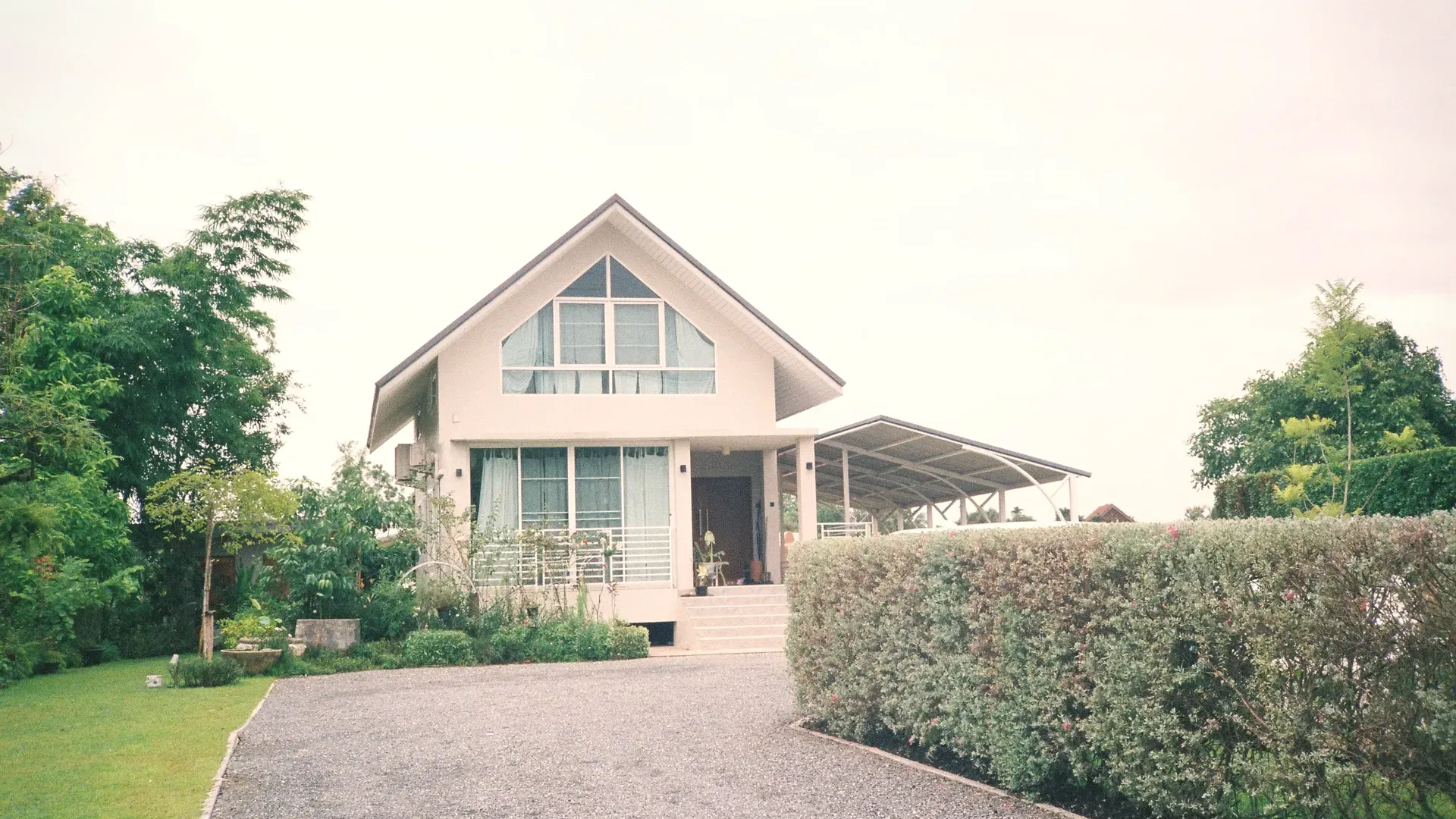
What makes a house part of the land?
The starting point is the idea of a component part, suan khuap in the Thai text. Section 144 defines it as a part which, by the nature of the thing or by local custom, is essential to the existence of the thing and cannot be separated from it without destroying it, damaging it or changing its form or condition. The second paragraph of section 144 then gives the rule that matters: the owner of a thing has ownership of its component parts.
Section 139 defines immovable property in a way that fits with this. Immovable property means land and things fixed to land permanently or forming one body with the land, and it includes real rights relating to the land or to things fixed to or forming one body with the land.
Sections 145 and 146 add four specific rules.
| Section | What it says |
|---|---|
| 145, first paragraph | Perennial trees are component parts of the land on which they grow |
| 145, second paragraph | Annual plants, and cereal crops that can be harvested once or several times a year, are not component parts of the land |
| 146, first sentence | Things fixed to land or to a building only temporarily are not regarded as component parts of the land or the building |
| 146, second sentence | The same applies to a building or other structure that a person who has a right in another person's land has built on that land in the exercise of that right |
Civil and Commercial Code, ss.145 and 146.
Section 1335 states the reach of land ownership: subject to the Code and other laws, the ownership of land extends above the surface and below it. Section 1336 gives the owner the right to use and dispose of the property, to take its fruits, to follow and recover it from a person who has no right to hold it, and to prevent others from interfering with it unlawfully.
Read together, these sections explain why the question of who paid for a house does not settle who owns it. Under section 144 the owner of a thing owns its component parts, and section 146 names two cases in which something fixed to land is not regarded as a component part of it. The next section looks at the second sentence of section 146.
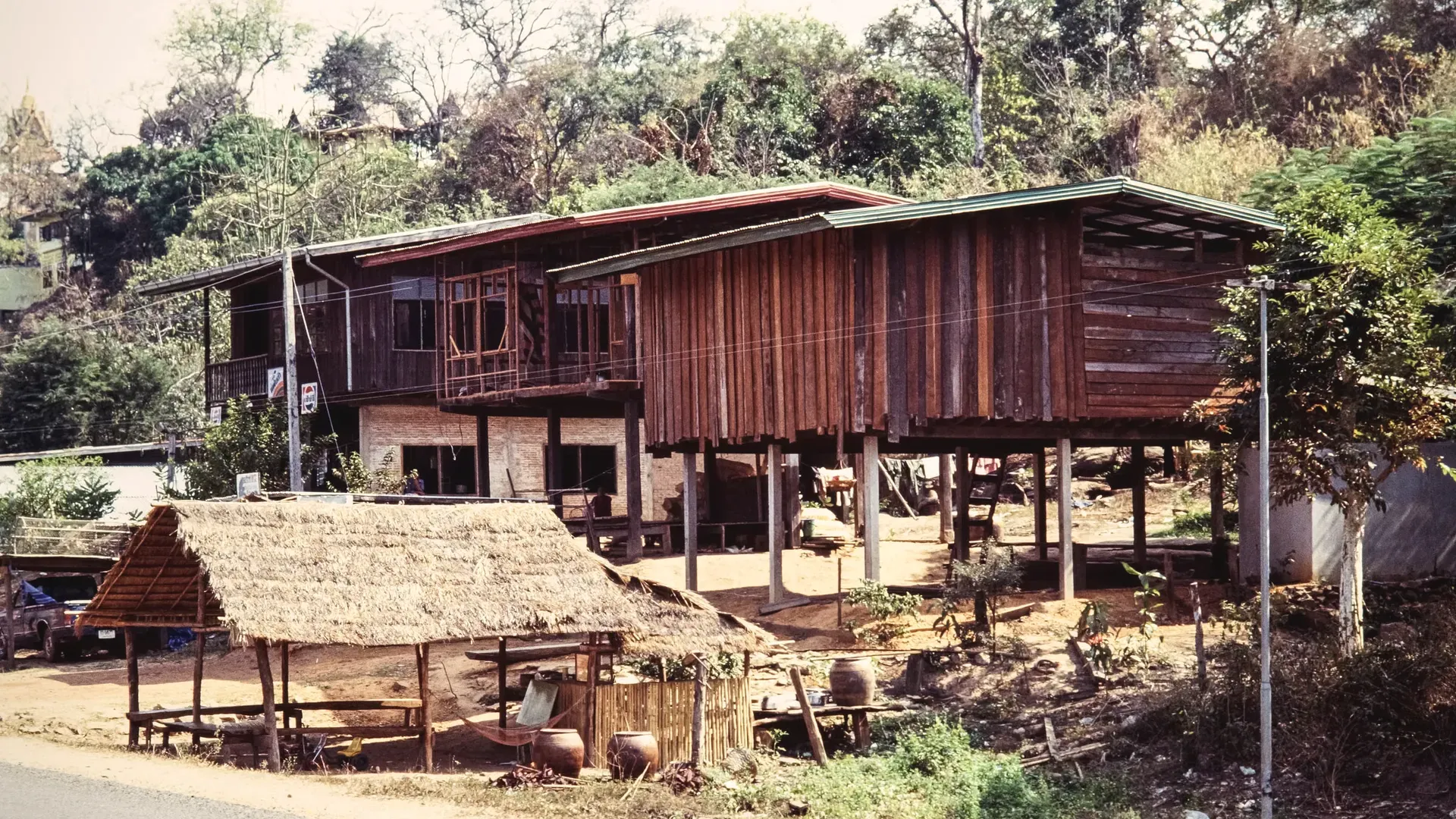
Building under a right in the land
The second sentence of section 146 is the route by which a building can belong to someone other than the owner of the land. It covers a building or other structure that a person who has a right in another person's land has built on that land in the exercise of that right. Such a building is not regarded as a component part of the land.
Section 146 does not list the rights it has in mind. The Code does describe one right in similar terms. Section 1410 says the owner of land may create a right of superficies (sitthi nuea phuen din) in favor of another person, giving that person the right to own buildings, structures or plantings on or under the land.
| Section | What it says about a right of superficies |
|---|---|
| 1410 | The land owner may create it in favor of another person, who then has the right to own buildings, structures or plantings on or under the land |
| 1411 | Unless the act creating it says otherwise, the right may be transferred and passes by inheritance |
| 1412 | It may be created for a fixed period, for the life of the land owner or for the life of the holder of the right |
| 1413 | If it has no fixed period, either party may end it at any time on reasonable notice; where rent is payable, one year's notice or one year's rent must be given |
| 1414 | The other party may end it if the holder fails to keep an essential condition in the act creating it, or fails to pay rent for two years in a row |
| 1415 | It does not end because the building, structure or planting is destroyed, even by force majeure |
| 1416 | When it ends, the holder may remove the buildings, structures and plantings but must restore the land; if the land owner will not allow removal and declares an intention to buy at the market price, the holder may not refuse without reasonable cause |
Civil and Commercial Code, ss.1410 to 1416.
A right like this has to be put on the register. Section 1299 says that, subject to the Code and other laws, an acquisition by juristic act of immovable property or of a real right relating to immovable property is not complete unless the act is made in writing and the acquisition is registered with the competent official.
This guide does not say whether a particular lease, a letter of permission or a family understanding is a right in the land for the purposes of section 146, because the section does not say and no court decision was read. Our guides to usufruct and other land rights and to how foreigners can buy a house in Thailand cover the registered rights that people use for this.
What happens when someone builds in good faith on another person's land?
Section 1310 deals with the person who builds a building (rong ruean in the Thai text) on land that belongs to someone else, and does so in good faith. Its first paragraph has two parts. The owner of the land is the owner of the building. And the owner of the land must pay the builder the value of the land only so far as it has increased because of the building.
The measure of the payment is the increase in the value of the land. The section does not mention the cost of materials or labor.
Suppose a plot would sell for 3,000,000 baht without the house and for 4,200,000 baht with it, and the house cost 2,500,000 baht to build. The increase in the value of the land because of the building is 1,200,000 baht. That increase, and not the 2,500,000 baht, is what the first paragraph of section 1310 describes. The figures are invented and the arithmetic is ours; the section gives no figures and does not say how the increase is to be valued.
The second paragraph gives the land owner a way out. If the land owner can show that there was no negligence on the owner's part, the owner may refuse the building and require the builder to remove it and restore the land to its former condition.
The same paragraph then deals with the case where removal is not practical. If removal and restoration cannot be done at reasonable cost, the land owner may require the builder to buy the whole of the land, or part of it, at the market price.
| Situation under section 1310 | Result |
|---|---|
| Builder in good faith; the land owner does not or cannot refuse the building | The land owner owns the building and pays the builder the increase in the value of the land |
| Land owner shows there was no negligence on the owner's part | The land owner may refuse the building and require removal and restoration of the land |
| Removal cannot be done at reasonable cost | The land owner may require the builder to buy all or part of the land at the market price |
Civil and Commercial Code, s.1310.
Section 1310 does not say what counts as negligence by a land owner, and this guide does not say how the courts read that word.
What happens when someone builds in bad faith?
Section 1311 is the mirror of section 1310 for the builder who acts in bad faith. That person must restore the land to its former condition and then return it to the owner.
The owner has a choice. The owner may choose to have the land returned as it is, with the building on it. If the owner makes that choice, the owner must pay for it, and the section gives the owner a second choice about the amount: either the price of the building, or the value of the land only so far as it has increased because of the building.
| Good faith (s.1310) | Bad faith (s.1311) | |
|---|---|---|
| Starting position | The land owner is the owner of the building | The builder must restore the land and return it |
| Who may choose a different outcome | A land owner who shows there was no negligence on the owner's part may refuse the building | The land owner may choose to have the land returned as it is |
| What the land owner pays if the building stays | The increase in the value of the land because of the building | At the owner's option, the price of the building or the increase in the value of the land |
| Buying the land | The land owner may require the builder to buy all or part of the land at the market price if removal cannot be done at reasonable cost | The section says nothing about a purchase of the land |
Civil and Commercial Code, ss.1310 and 1311.
Neither section sets a time limit of its own. A person who occupies land for long enough may also raise the rules on possession, which are a different part of the Code and are covered in our guide to adverse possession in Thailand.
What happens when a building crosses the boundary?
Section 1312 deals with a different situation: a building that encroaches on land that belongs to another person, such as the plot next door. If the builder acted in good faith, the first paragraph says the builder is the owner of the building that was built. Two duties follow. The builder must pay the land owner money for the use of that land, and the right must be registered as a servitude (phara cham yom).
Section 1387 says what a servitude is: immovable property may be subjected to a servitude by which its owner must put up with certain acts that affect the property, or must refrain from exercising certain rights of ownership, for the benefit of another immovable property.
The first paragraph of section 1312 ends with a rule about the future. If the building is later wholly destroyed, the land owner may require the registration to be canceled.
The second paragraph covers the builder who acted in bad faith. The land owner may require that builder to remove the building and restore the land to its former condition, and the builder bears the expense.
| Section | What it says |
|---|---|
| 1312, first paragraph | A person who in good faith builds a building that encroaches on another person's land is the owner of the building, must pay the land owner for the use of the land, and must register the right as a servitude; if the building is later wholly destroyed, the land owner may require the registration to be canceled |
| 1312, second paragraph | If the builder acted in bad faith, the land owner may require the builder to remove the building and restore the land at the builder's expense |
| 1397 | A servitude is extinguished if the servient property or the dominant property is wholly destroyed |
| 1399 | A servitude that is not used for ten years is extinguished |
Civil and Commercial Code, ss.1312, 1397 and 1399.
Section 1312 does not say how the payment for the use of the land is worked out, and it speaks only of a building. Section 1314, covered below, extends sections 1310, 1311 and 1313 to other structures, but it does not name section 1312.
A dispute like this usually starts with the question of where the line is. Our boundary survey guide and the boundary resolution checklist cover how the line is found, and the land access and servitude checklist covers servitudes on the register.
Conditional owners and undue enrichment
Section 1313 covers a person who is the owner of land subject to a condition, builds on it, and the land later passes to another person under the condition. In that case the section says the provisions of the Code on undue enrichment (lap mi khuan dai) apply.
Undue enrichment is Title 4 of Book 2. Section 406 states its principle: a person who acquires something without a lawful ground, through an act of performance by another person or in any other way, to the detriment of that other person, must return it. The sections that follow set out what is returned and what is paid for.
| Section | What it says |
|---|---|
| 413, first paragraph | A person who received property other than money in good faith must return it only in the condition it is in, and is not responsible for its loss or damage |
| 415 | A person who received property in good faith takes its fruits for as long as the good faith lasts; a person who has to return property is treated as being in bad faith from the time the return is demanded |
| 416 | Expenses properly incurred to preserve, maintain or repair the property must be reimbursed in full to the person who returns it, but that person cannot claim ordinary maintenance and repair expenses, or charges, for the time during which that person was taking the fruits |
| 417 | Other expenses can be claimed only if they were incurred while that person was acting in good faith and the property has increased in value because of them at the time of return, and only up to the amount of the increase |
| 418, first paragraph | A person who received the property in bad faith and altered or added to it must put it back in its former condition at that person's own expense before returning it, unless the owner chooses to have it as it is; the owner may then pay either the cost of the alteration or addition or a sum equal to the increase in value |
| 418, second paragraph | If it is impossible to put the property back in its former condition, or doing so would damage it, the property is returned as it is and no compensation may be claimed for the increase in value from the alteration or addition |
| 419 | No action for undue enrichment may be brought more than one year after the injured party knew of the right to claim, or more than ten years after the right arose |
Civil and Commercial Code, ss.413 and 415 to 419.
Section 1313 sends the reader to the undue enrichment provisions as a whole. It does not pick out which of them applies to a building, so this guide does not either.
Other works, trees and crops
Sections 1310 to 1313 speak of a building. Section 1314 widens three of them. It says sections 1310, 1311 and 1313 apply, with the necessary changes, to any construction that is fixed to land and to the planting of trees or cereal crops.
Its second paragraph makes a special rule for rice and other cereal crops that can be harvested once or several times a year. The land owner must allow the person who acted in good faith, or the owner of land subject to a condition who planted the crop, to stay in possession of the land until the harvest is finished, on payment of a sum worked out on the basis of the rent for that land. Or the land owner may take possession at once by paying compensation to the other party.
Section 1315 covers the reverse case: a person who builds a building or other construction fixed to land, or plants trees or cereal crops, on that person's own land with materials that belong to someone else. That person is the owner of the materials but must pay their value.
Trees at the boundary have rules of their own in sections 1346 and 1347.
| Section | What it says |
|---|---|
| 1346, first paragraph | A tree on the boundary line is presumed to belong jointly to the owners of the land on both sides; its fruits belong to them in equal shares, and so does the timber if it is cut down |
| 1346, second paragraph | Either owner may require the tree to be dug up or cut, with the cost shared equally; if the other owner gives up the right to the tree, the owner who wants it removed bears the cost alone; neither may require removal if the tree is a boundary marker and no other marker would be as suitable |
| 1347 | A land owner may cut roots that intrude from adjoining land and keep them; overhanging branches may be cut by the land owner after the possessor of the adjoining land has been told to cut them within a reasonable time and has not done so |
Civil and Commercial Code, ss.1346 and 1347.
Section 145 fits with these rules: perennial trees are component parts of the land they grow on, and annual plants and cereal crops are not.

Checks before building or buying
The sections above deal with what happens after a building is already in the wrong place or on someone else's land. The checks below follow from them. They are our reading of what the sections make important, not steps the Code lists.
- Find the boundary before the foundations go in. Section 1312 turns on whether a building encroaches on the next plot. Our boundary survey guide covers how the line is marked, and the directory of surveyors lists firms that do the work.
- Know whose name is on the title. Under section 144 the owner of a thing owns its component parts. Our guide to Thai title deeds explains what the document shows.
- If the house is to belong to the person who builds it, put the right on the register first. Section 146 speaks of a person who has a right in the land and builds in the exercise of that right, section 1410 describes the right of superficies, and section 1299 requires writing and registration for a real right acquired by juristic act.
- Keep the papers that show what each side knew. Sections 1310 to 1312 give different results for good faith and bad faith, and the second paragraph of section 1310 turns on whether the land owner can show there was no negligence on the owner's part.
- When buying a house, compare the building with the plot. A building that crosses the line may come with a claim under section 1312, in either direction. Our title deed encumbrance checks cover what a registered servitude looks like on the deed.
- Act on a neighbor's tree in the order the Code gives. Under section 1347 roots may be cut and kept; branches may be cut only after the possessor of the adjoining land has been told to cut them within a reasonable time and has not.
The Civil and Commercial Code was read in Thai in the latest consolidated text on the Office of the Council of State law search on 15 November 2026. The English wording is our own rendering and is not an official translation. No court decision was read, so the guide does not say how the courts decide good faith, negligence of a land owner, the payment for the use of land under section 1312, or which rights count under section 146. The guide does not cover building permits, who may own land or a house, land held without a full title deed, or land office fees.
Sections 1310 and 1311 decide what becomes of money spent on a house on another person's land. Before building, read our guide to the cost of building a house in Thailand and consider having a lawyer from the directory of lawyers in Thailand read the land papers.
Frequently asked questions
It depends on how the house came to be there. Section 1310 of the Civil and Commercial Code says that if a person builds a building on another person's land in good faith, the owner of the land becomes the owner of the building, but must pay the builder the amount by which the building has increased the value of the land. Section 146 says a building is not a component part of the land where a person who has a right in another person's land built it on that land in the exercise of that right.
Section 1310 of the Civil and Commercial Code says the land owner must pay the builder the value of the land only so far as it has increased because of the building. The section speaks of the increase in the value of the land. It does not speak of the cost of building.
Yes, in the case the second paragraph of section 1310 describes. If the land owner can show that there was no negligence on the owner's part, the owner may refuse the building and require the builder to remove it and restore the land to its former condition. If that cannot be done at reasonable cost, the land owner may require the builder to buy all or part of the land at the market price.
Section 1311 of the Civil and Commercial Code covers building in bad faith. The builder must restore the land to its former condition and return it to the owner, unless the owner chooses to have it returned as it is. If the owner makes that choice, the owner must pay, at the owner's option, either the price of the building or the amount by which the building has increased the value of the land.
Section 1312 of the Civil and Commercial Code says that a person who in good faith builds a building that encroaches on another person's land is the owner of the building, but must pay the land owner money for the use of the land and register the right as a servitude. If the builder acted in bad faith, the land owner may require the builder to remove it and restore the land at the builder's expense.
Section 1312 of the Civil and Commercial Code says that if the building is later wholly destroyed, the land owner may require the registration to be canceled. In the title on servitudes, section 1399 says a servitude that is not used for ten years is extinguished.
Section 6 of the Civil and Commercial Code says every person is presumed to act in good faith. Sections 1310 to 1312 use the words good faith and bad faith but do not define them, and this guide does not say how the courts apply them because no court decision was read for it.
Section 1314 of the Civil and Commercial Code applies sections 1310, 1311 and 1313, with the necessary changes, to any construction fixed to land and to the planting of trees or cereal crops. Section 1314 does not name section 1312, the section on a building that encroaches.
Section 1347 of the Civil and Commercial Code says a land owner may cut roots that intrude from adjoining land and keep them. For overhanging branches, the land owner may cut them after telling the possessor of the adjoining land to cut them within a reasonable time, if that person does not do so.
Section 1410 of the Civil and Commercial Code lets a land owner create a right of superficies in favor of another person, giving that person the right to own buildings, structures or plantings on or under the land. Section 1299 says an acquisition by juristic act of a real right relating to immovable property is not complete unless the act is made in writing and the acquisition is registered with the competent official.
Check the line and the title before you build
Read how a boundary is surveyed, or find a lawyer to read the land papers before money goes into the ground.
General information only, not legal advice. Rules are from the Civil and Commercial Code (sections 6, 139, 144 to 146, 406, 413, 415 to 419, 1299, 1310 to 1315, 1335, 1336, 1346, 1347, 1387, 1397, 1399 and 1410 to 1416) in the Thai consolidated text on the Office of the Council of State law search, read on 15 November 2026. English wording of the Thai text is our own rendering. The worked figures are invented and the arithmetic is ours. Have a lawyer read the land papers before acting.
Sources
Official primary sources are listed above with the date we last checked them. Thai rules, fees, thresholds and procedures change and can be applied differently by individual offices and embassies, confirm the current requirement with the responsible authority before relying on it. General information only, not legal, tax or medical advice. BAANLYY never takes paid placement in editorial content.