Which city fits you?
Answer 3 quick questions and see the Thailand city guide worth researching first.
Try it free →The complete starting point for Phetchaburi — Thailand's historic royal province between Bangkok and Hua Hin — with an overview, Phra Nakhon Khiri, Kaeng Krachan National Park, the Cha-am coast and relocation.
Phetchaburi is a historic royal province on the upper Gulf of Thailand, about 160km south of Bangkok along the Phetkasem Highway and the Southern rail line -- one of Thailand's oldest continuously inhabited towns, its name traditionally read as "City of Diamonds." Covering 6,225 km² across eight districts, from the working royal town of Mueang Phetchaburi to the beach resort of Cha-am and the rainforest interior of Kaeng Krachan, it offers a genuinely different relocation option from its better-known southern neighbour Hua Hin: slower-paced, more traditionally Thai, and generally cheaper, while sharing the same coastline and being closer to Bangkok. Provincial population was recorded at roughly 484,000 in 2024 -- far less internationally known than Hua Hin despite the proximity.
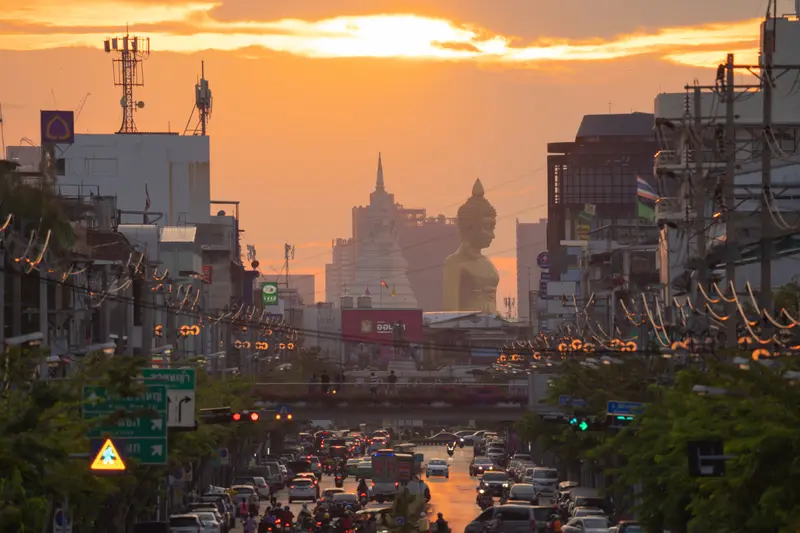
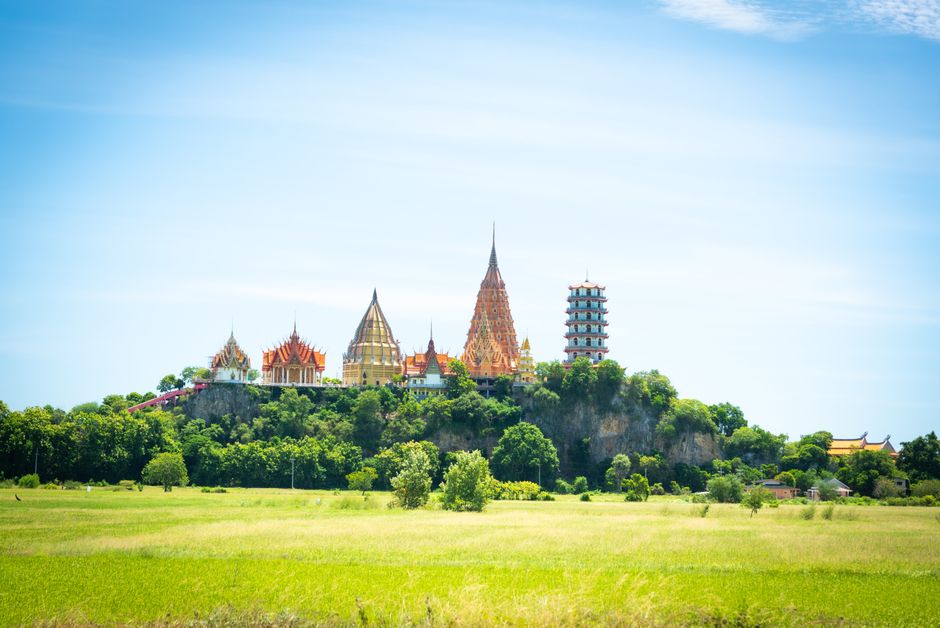 Photo: Tweesak C. / Pexels
Phetchaburi town's skyline is defined by Phra Nakhon Khiri, commonly known as Khao Wang ("Palace Hill") -- a hilltop palace complex built from 1859-1860 by King Rama IV (Mongkut) as a royal retreat, now a national historical park reachable by cable car as well as the original stairway on foot; at the summit sit the royal residence Phra Thinang Phetphum Phairot, a white chedi with sweeping views to the Gulf coast, and an observatory tower Rama IV once used himself as a keen amateur astronomer. A short walk below, Wat Mahathat Worawihan's five Khmer-style prangs (Phra Prang Ha Yod) rise over 40 metres at the tallest, rebuilt in the early Ayutthaya period and topped with the trishula of the Hindu god Shiva -- an unusually explicit Hindu-Buddhist crossover for an active Buddhist temple. Just north of town, Khao Luang Cave holds roughly 170 Buddha images where natural sunlight falls through the roof onto the gilded main Buddha, most dramatically in the mid-morning. Together with the town's genuinely lived-in cluster of teak shophouses along the Phetchaburi River, it gives Phetchaburi a heritage-tourism identity entirely separate from any beach-resort branding.
Kaeng Krachan National Park, covering roughly 2,915 km² across Phetchaburi's Nong Ya Plong, Kaeng Krachan and Tha Yang districts (plus a slice of Hua Hin district over the Prachuap Khiri Khan border), is Thailand's largest national park -- close to half the province's total land area. It's serious wilderness: dense evergreen rainforest, the Kaeng Krachan Dam and reservoir, and part of the wider Kaeng Krachan Forest Complex, which sits on Thailand's UNESCO World Heritage tentative list for its biodiversity. For anyone drawn to Thailand for nature and quiet rather than nightlife, it's one of the country's genuine wild spaces within day-trip reach of Bangkok.
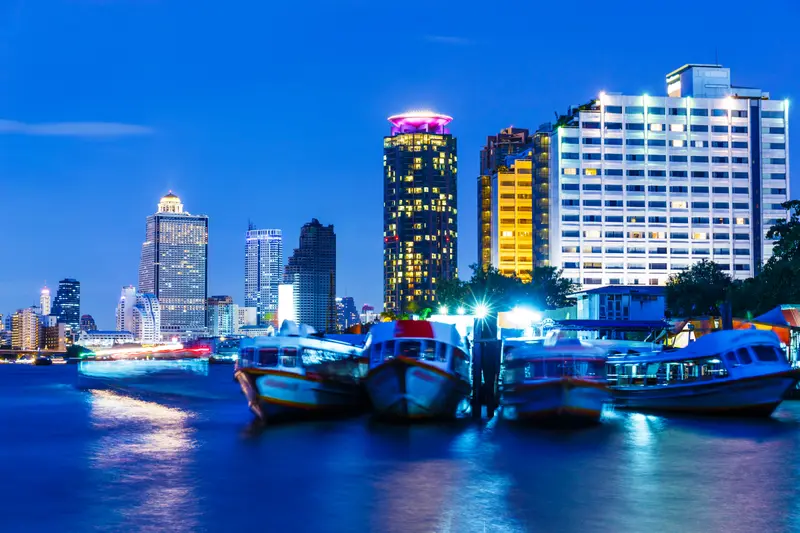
 Photo: Quang Nguyen Vinh / Pexels
Phetchaburi's own stretch of Gulf coastline runs through Cha-am district, a quieter, more Thai-oriented beach town than Hua Hin, roughly 25km south -- BAANLYY already covers Cha-am in depth as part of the Hua Hin area guide, given how closely the two towns' everyday life, transport and property markets overlap. What's distinctly Phetchaburi's own beyond Cha-am is Ban Laem district's working salt-pan and seafood coast and Tha Yang's agricultural markets -- a working coastline as much as a resort one.
 Photo: Siamways Individualreisen / Pexels
Phetchaburi has no BTS, MRT or airport of its own. Phetchaburi railway station, on the State Railway of Thailand's Southern Line, connects the province directly to Bangkok (roughly 2-3 hours) and south to Hua Hin (about an hour) and beyond, while the Phetkasem Highway is the main road link. For flights, most residents use Hua Hin Airport -- a small domestic field roughly 40km south in neighbouring Prachuap Khiri Khan -- or Suvarnabhumi International near Bangkok, about 160km away, for international connections.
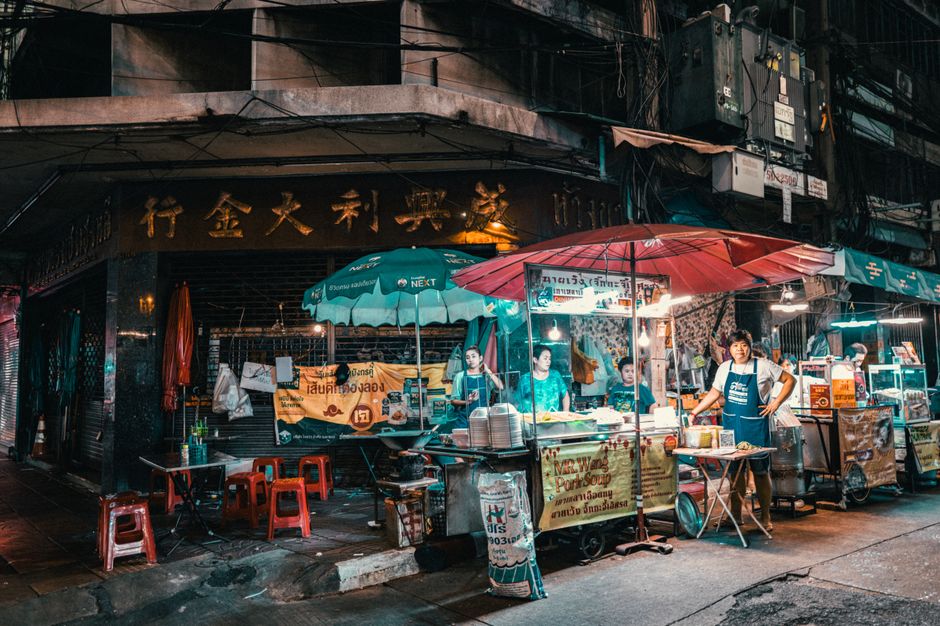 Photo: Tony Wu / Pexels
Phetchaburi suits long-stayers looking for a genuinely Thai, lower-cost alternative within the same Bangkok-Hua Hin corridor most relocation guides focus on -- the standard Thai long-stay visa routes (retirement, marriage, DTV, LTR, education) all apply here as everywhere in the country. Phrachomklao Hospital in Phetchaburi town is the province's main public general hospital, alongside the province's own private option, Bangkok Hospital Phetchaburi (part of the BDMS group) -- Hua Hin's larger private hospital network, about an hour south, is the realistic backup for anything more specialist. There's no international school inside the province, but one of Hua Hin's five international schools, Hua Hin International School, runs a door-to-door bus whose published catchment reaches into Phetchaburi -- a genuine relocation-planning fact most guides to this province miss. On rent: documented data is concentrated in Cha-am's condo market -- one-bedroom units from roughly THB 7,000/month and two-bedroom units around THB 55,000/month at the premium end for long-term stays -- while Phetchaburi town's own real listed apartments run far cheaper, from roughly THB 2,800/month for a studio, and the rural interior districts have only directional estimates. See the full rental-market and cost-of-living breakdowns below.
 Photo: Jakub Zerdzicki / Pexels
Phetchaburi is a quiet, historic provincial town with a much smaller tourist footprint than Hua Hin, and long-term residents consistently describe it as calm -- the real everyday risk is road traffic on the Phetkasem Highway rather than crime, plus a genuinely distinctive consideration if your plans include Kaeng Krachan National Park: wild elephants, leopards and snakes are present, and standing park guidance (never leave a campsite after dark, hire a guide for remote treks) is worth reading before you visit.
The full set of in-depth Phetchaburi guides below covers rental market, where to live, schools, healthcare, cost of living and more — each explicit about what's real, published data versus a directional estimate where the province's own listing data is thin. See the neighbouring Hua Hin hub for Cha-am's much larger, well-documented condo market, or the general Thailand visa and relocation guides for the country-wide picture.
Phetchaburi air quality guide →
Phetchaburi weather & best time to visit →
Phetchaburi government & immigration offices →
Phetchaburi visa run & border run guide →
Childcare & kindergartens in Phetchaburi →
Phetchaburi flood risk guide →
Thai language schools near Phetchaburi →
Phetchaburi healthcare guide →
Elderly & nursing care in Phetchaburi →
Living in Phetchaburi — day-to-day guide →
Temples of Phetchaburi — a documentary guide →
Restaurants & dining in Phetchaburi →
Food & grocery delivery in Phetchaburi →
Phetchaburi airport transfer guide →
Phetchaburi Rental Market Report 2026 →
Phetchaburi coworking spaces →
Cafes with wifi in Phetchaburi →
Internet & SIM cards in Phetchaburi →
Phetchaburi drinking water guide →
Phetchaburi real estate agencies →
Gyms & fitness in Phetchaburi →
Vets & pet care in Phetchaburi →
Pet relocation to Phetchaburi →
Domestic helpers & maid services in Phetchaburi →
Movers & relocation in Phetchaburi →
Compare it against Hua Hin, its better-known southern neighbour, then talk to us about relocating.
Primary and official sources are cited above. Government rules, fees and procedures in Thailand change over time and vary by office; always confirm current requirements with the relevant authority before relying on them. BAANLYY never takes paid placement in editorial content.
General information and indicative pricing, not legal, tax, immigration or financial advice. Hero photograph via Pexels. Confirm current details with official sources, individual listings or licensed professionals.

Free tools for this
Answer 3 quick questions and see the Thailand city guide worth researching first.
Try it free →