An honest, district-by-district guide to Thailand's historic royal province, the old town, the Cha-am coast and the rural interior around Kaeng Krachan National Park, who each area suits, what you will pay to rent, and the trade-offs. Rent figures are 2026 guide ranges in Thai baht (≈ THB 35–36 = USD 1).
Share
Overview
The short version, and an honest data note
Phetchaburi has one real rental market and several genuinely rural districts. Mueang Phetchaburi, the old royal town around Phra Nakhon Khiri, has by far the most listed apartments and is walkable, cheap and historic. The Cha-am coast is Phetchaburi's own beach district, but its condo market is already covered in depth on the Hua Hin hub's Cha-am area guide , this page cross-links rather than duplicates it. The rest of the province, Ban Laem's salt-pan coast, Tha Yang's farmland, Khao Yoi's highway town, Ban Lat's palm-sugar villages, Nong Ya Plong's park-edge countryside and the Kaeng Krachan district itself, has at most a thin room market (Khao Yoi's 13 listings are the largest) and no condo stock; this guide is explicit about that rather than inventing numbers. See the Phetchaburi cost-of-living guide for the fuller budget picture.
Phetchaburi's districts, matched to how you live
Seven districts cover where a foreigner could realistically base themselves in Phetchaburi outside the Cha-am coast. Each card below explains who the district suits, the honest pros and cons, and typical rent, or the lack of any published figures.
Mueang Phetchaburi (Old Royal Town)
Historic center
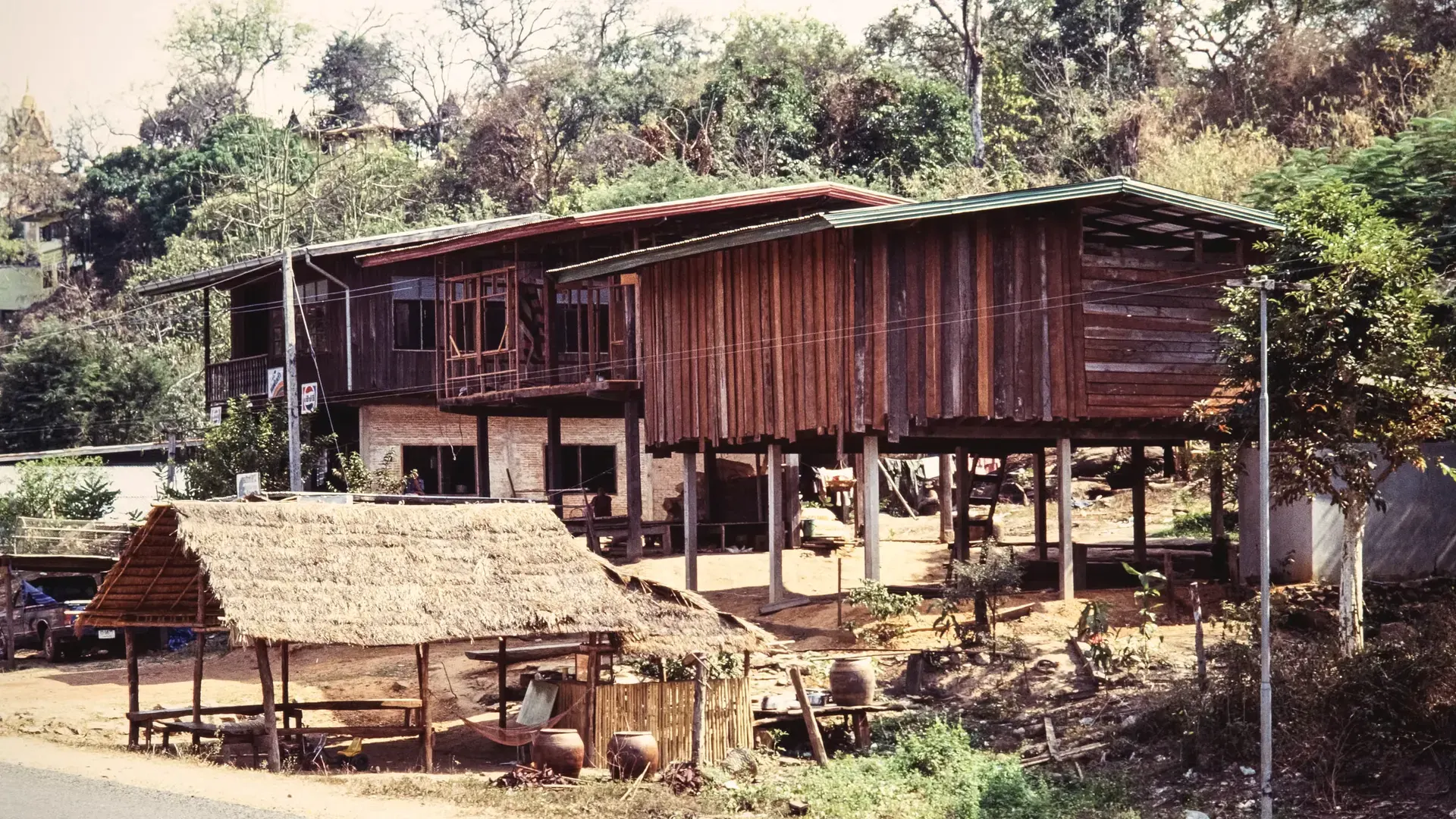
The provincial capital and the district with by far the deepest rental market: 53 apartments and dorms listed on RentHub on 13 November 2026, against 13 in Khao Yoi and a handful elsewhere. Life centers on the old quarter around Phra Nakhon Khiri (Khao Wang), the hilltop palace built by King Rama IV, and the Khmer-style prang of Wat Mahathat Worawihan nearby, a genuine cluster of teak houses and historic temples rather than a resort strip.
Typical rent: Listed rooms THB 1,000–5,400 a month, most 2,000–4,000 (RentHub, 13 Nov 2026) · 2–3-bed detached houses ~4,000–5,500 (indicative)
Best for: History buffs, retirees who want to walk everywhere, budget-conscious long-stayers and anyone who wants a genuinely Thai provincial town rather than a resort
Pros: Real listed apartment stock at low rents; walkable old quarter, night market and riverside restaurants; Phrachomklao Hospital and the train station both in town
Cons: Almost no modern condo stock; small, older rental buildings; thinner long-stay-friendly options than Hua Hin or Cha-am
Ban Laem
Working coast
A coastal district built around salt-pan farming (na kluea) and fishing rather than tourism. Phetchaburi's own stretch of working Gulf coast, distinct from the resort beaches further south. Only two monthly listings appeared on RentHub on 13 November 2026, so the figures below remain directional estimates in line with the province's rural interior.
Typical rent: 2 listings on RentHub (13 Nov 2026), est. studio/1-bed 2,000–5,000 (directional)
Best for: Anyone wanting a genuinely working Thai coastline over a resort beach, and a car-owning household happy to be off the main tourist map
Pros: Authentic coastal life, seafood straight off the boats, low cost of living, close to Mueang Phetchaburi
Cons: Almost no documented rental market to plan against; limited amenities; a car or motorbike is essential
Tha Yang
Agricultural corridor
An agricultural district on the Phetkasem corridor between the old town and the coast, with its markets serving the surrounding farmland and, on its western edge, touching the Kaeng Krachan National Park periphery. Only three monthly listings appeared on RentHub on 13 November 2026; figures remain directional.
Typical rent: 3 listings on RentHub (13 Nov 2026), est. studio/1-bed 2,000–5,000 (directional)
Best for: Long-stayers who want a rural, agricultural setting within easy reach of both the old town and the Phetkasem Highway toward Hua Hin
Pros: Central location between town and coast; genuine farm-town life; low cost of living
Cons: Only a handful of listings; thin on international-standard housing; car-dependent
Khao Yoi
Northern district
A district roughly 22km north of Phetchaburi town on the Phetkasem Highway and rail line, named for the limestone hill just off the highway, its cave temple holds a 16-meter reclining Buddha. The district (established 1897) is known for fruit and palm-sugar farming rather than any expat scene. It does have the province's second-largest listed room market after Mueang: 13 apartments and rooms on RentHub on 13 November 2026, in sub-districts such as Bang Khem, Thap Khang and Huai Tha Chang, but only one of them had been updated during 2026.
Typical rent: Listed rooms THB 1,500–5,000 (13 listings on RentHub, 13 Nov 2026; one 2026 update, Sun and Moon Home at 2,500–2,900)
Best for: Long-stayers who want the cheapest possible cost of living on the Bangkok–Hua Hin rail corridor and don't mind being off any beaten path
Pros: Good highway and rail links north toward Ratchaburi and Bangkok; low cost of living; the cave temple and agricultural markets give it its own character
Cons: A small, mostly stale room market and no expat community; a car or motorbike is close to essential
Ban Lat
Palm-sugar country
The district directly south of Mueang Phetchaburi, with its seat only about 7–8km from the old town in a straight line, bordered by Khao Yoi, Tha Yang, Kaeng Krachan and Nong Ya Plong. Originally called Tha Chang and renamed Ban Lat in 1939, it is 18 sub-districts of villages and orchards (about 50,000 people in 2007) whose specialty is palm sugar (nam tan puek) tapped from sugar palms. It is a day-trip district rather than a place with any foreign community.
Typical rent: No listings found on RentHub on 13 Nov 2026, est. house 3,000–5,000 (directional)
Best for: Long-stayers who want village life a short drive from the old town's hospitals and markets, and who are happy to find a house by asking around rather than online
Pros: Close to Mueang Phetchaburi without being in it; palm-sugar orchards and farm villages; very low cost of living
Cons: No documented rental market and no apartment blocks to compare; nothing within walking distance; a car or motorbike is essential
Nong Ya Plong
Rural / park edge
A sparsely populated district in Phetchaburi's northwest, split off from Khao Yoi in 1972, bordering Ratchaburi province. Part of it sits within the Kaeng Krachan National Park catchment for the Phetchaburi and Pranburi rivers, genuinely rural, with no municipal area at all.
Typical rent: No published listings, est. studio/1-bed 2,000–3,500 (directional)
Best for: Only long-stayers specifically seeking remote, off-the-map rural life adjacent to the national park, not a practical base for daily conveniences
Pros: About as quiet and rural as Phetchaburi gets; proximity to the national park's northern reaches
Cons: No documented housing market; minimal services; not realistic without a vehicle and a high tolerance for isolation
Kaeng Krachan
National park district
The district that gives its name to Kaeng Krachan National Park. Thailand's largest, covering close to half the province and including the Kaeng Krachan Dam and reservoir. This is a nature posting, not a suburb: wild elephants, leopards and snakes are present, and standard park guidance applies to anyone based nearby.
Typical rent: No published listings, est. studio/1-bed 2,000–3,500 (directional)
Best for: Nature and wildlife-focused long-stayers happy to live at the edge of a working national park, not families wanting conventional amenities
Pros: Direct access to Thailand's largest national park, the dam and reservoir, and genuine rainforest scenery
Cons: No documented rental market; least amenities of any Phetchaburi district; wildlife safety awareness is not optional
Cha-am is Phetchaburi's own stretch of Gulf coastline, roughly 25km south of Phetchaburi town, a quieter, more Thai-oriented beach town than Hua Hin, its neighbor just down the coast. Because Cha-am's day-to-day life, transport links and property market overlap so closely with Hua Hin's, BAANLYY covers it inside the Hua Hin hub rather than duplicating that research here. Real listed condo rents there run from roughly THB 7,000/month for a one-bedroom to about THB 55,000/month for a premium two-bedroom, see the Cha-am area guide for the full breakdown.
Quick comparison
A side-by-side of Phetchaburi's districts on the things that matter most when deciding where to base yourself. Only Mueang Phetchaburi and Cha-am have a meaningful number of published listings; Khao Yoi has a small room market, and the listing counts below are from RentHub on 13 November 2026.
Area
Best for
Typical rent
Walkable?
Mueang Phetchaburi (old town)
History, retirees, budget long-stayers
53 listings, rooms 1,000–5,400
Yes
Cha-am coast (see Hua Hin hub)
Beach, condo living
1-bed from ~7,000 to 2-bed ~55,000
Mostly
Ban Laem
Working coast, salt-pans, seafood
2 listings, est. 2,000–5,000
No
Tha Yang
Farmland between town and coast
3 listings, est. 2,000–5,000
No
Khao Yoi
Cheapest cost of living, highway/rail town
13 listings, rooms 1,500–5,000
No
Ban Lat
Palm-sugar villages just south of town
No listings, est. house 3,000–5,000
No
Nong Ya Plong
Remote, park-edge countryside
No data, est. 2,000–3,500
No
Kaeng Krachan
Nature, national park access
No data, est. 2,000–3,500
No
How to choose your area
Start with whether you want to live without a car. Only Mueang Phetchaburi's old quarter is genuinely walkable, with real, low-cost apartment listings, temples, the night market and the train station all close by. If you want a condo and beach lifestyle instead, the honest answer is to look at Cha-am on the Hua Hin hub rather than treat it as a separate Phetchaburi search, the market, transport and amenities are shared with Hua Hin. Everything else, Ban Laem, Tha Yang, Khao Yoi, Ban Lat, Nong Ya Plong and Kaeng Krachan , is genuinely rural, with little or no documented rental market, and suits only long-stayers who specifically want farmland, a working coast, or national-park proximity and are comfortable driving everywhere.
If you are unsure, base yourself in Mueang Phetchaburi for a season first, it is the only district with dozens of listed rooms to compare in person, then explore the rural districts or Cha-am once you know which trade-off you actually want. See the getting-around guide for how the districts connect.
Inside the town
Which part of Mueang Phetchaburi: five pockets and what anchors them
Mueang Phetchaburi is small, but where you rent inside it decides whether your daily walk is to a hospital, the university or the old-town markets. The table groups the listings RentHub showed on 13 November 2026 by sub-district, with the landmark that anchors each pocket. Rents are the landlords' own asking ranges for rooms, with the month each listing was last updated; treat them as indicative and confirm in person.
Pocket
What anchors it
Named listings and asking rent (THB/month)
Suits
Pho Rai Wan / Na Wung (Hat Chao Samran road)
Phetchaburi Rajabhat University, 38 Moo 8 on the road out to Hat Chao Samran beach; RentHub tags 35 listings as near the campus
The cheapest rooms in town, teachers at the university, anyone heading to the beach road
Ton Mamuang (Phetkasem Road)
Bangkok Hospital Phetchaburi, 150 Phetkasem Road, the province's private hospital; RentHub tags 25 listings as near it
eim 2,300–2,500 (Nov 2026); W-Town Apartment 2,800 (Sep 2026); Tip Inn 1,000–1,500 (Aug 2026); Sasimanus Mansion 4,000 (Nov 2025)
Anyone who wants the private hospital close by and quick access to the highway toward Cha-am and Hua Hin
Khlong Krasaeng
Phrachomklao Hospital, the 447-bed provincial public hospital at 53 Rotfai (Railway) Road
ChomwangMS Apartment 4,000–4,100 (Nov 2026)
People who want the main public hospital and the railway side of town
Thong Chai (Khiri Rattaya Road)
The foot of Khao Wang (Phra Nakhon Khiri) and the old-town temples
Baan Samsook 3,500–4,000 (Jul 2026); Kireeya Place 3,500–4,500 (Jun 2024)
History lovers who want to walk to the hill palace, temples and markets
Tha Rap
A residential sub-district of the town itself
181 Apartment 1,500–2,500 (Nov 2026)
Budget long-stayers happy with a basic room
Two honest caveats. First, most of the 53 Mueang listings are old: only eight had been updated during 2026, so a building that has not been touched since 2021 may have changed prices or closed. Second, RentHub's landmark tags overlap (one building can count toward both the university and a hospital), so the tag counts are not additive. For deposits, lease terms and the house market see the Phetchaburi rental-market guide, and for the hospitals themselves the Phetchaburi healthcare guide.
FAQ
Where-to-live questions
Which is the best area to live in Phetchaburi?
It depends on what you want. History buffs, retirees and budget-conscious long-stayers who want to walk everywhere and the deepest listed rental market in the province choose Mueang Phetchaburi, the old royal town. Anyone wanting condo-style beach living picks the Cha-am coast, covered in depth on the Hua Hin hub. Everyone else, Ban Laem, Tha Yang, Khao Yoi, Ban Lat, Nong Ya Plong and Kaeng Krachan, is genuinely rural farmland or national-park country with little or no documented rental market, suited only to long-stayers who specifically want that. There is no single best area; it comes down to whether you want the walkable old town, the coast, or true rural Thailand.
Is Cha-am part of Phetchaburi?
Yes. Cha-am is a coastal district within Phetchaburi province, but BAANLYY's detailed Cha-am coverage lives inside the Hua Hin area guide, because the two towns share day-to-day life, transport and property markets so closely. See the Cha-am area guide for rents, areas and the full picture; this page does not duplicate it.
Where should retirees live in Phetchaburi?
Most retirees who choose Phetchaburi over Hua Hin settle in Mueang Phetchaburi, the walkable old royal town around Phra Nakhon Khiri, where daily life, temples and the night market are all within reach on foot. It suits low living costs and a slower, more traditionally Thai pace rather than an established international retiree scene. Phetchaburi's foreign community is small, and Hua Hin's larger network and private hospitals are about an hour away by train or road.
Do you need a car to live in Phetchaburi?
Not in Mueang Phetchaburi's old quarter, which is walkable and cyclable. Everywhere else in the province, Ban Laem, Tha Yang, Khao Yoi, Ban Lat, Nong Ya Plong and Kaeng Krachan, is rural and effectively requires a car or motorbike, since shops, hospitals and the town center are typically a drive away rather than a walk.
Is it safe to live near Kaeng Krachan National Park?
Phetchaburi overall is a quiet province with a much smaller tourist footprint than Hua Hin, and everyday crime is not the main concern. The genuinely distinctive risk around the Kaeng Krachan district and the Nong Ya Plong park edge is wildlife, wild elephants, leopards and snakes are present, and standard park guidance (never leave a campsite after dark, hire a guide for remote treks) applies to anyone based near the park. See the full Phetchaburi safety guide for details.
Which part of Phetchaburi town is closest to a hospital?
It depends which hospital you want. Bangkok Hospital Phetchaburi, the province's private hospital, is at 150 Phetkasem Road in Ton Mamuang sub-district, and RentHub tagged 25 apartment listings as near it on 13 November 2026, including rooms at roughly THB 1,000–4,000 a month. Phrachomklao Hospital, the 447-bed provincial public hospital, is at 53 Rotfai (Railway) Road in Khlong Krasaeng sub-district on the other side of the old town. If a private hospital nearby matters most, look in Ton Mamuang first.
Is Ban Lat a good place to live?
Only for a specific kind of long-stayer. Ban Lat is the district directly south of Phetchaburi town, about 7–8km from the old town in a straight line, made up of villages and orchards known for palm sugar. It has no apartment blocks listed online (none on RentHub on 13 November 2026) and no foreign community, so you would be renting a house found by asking around and driving into Mueang Phetchaburi for hospitals, banks and shopping. If that is the life you want, it is close and very cheap; if not, live in town and visit.
Primary and official sources are cited above. Government rules, fees and procedures in Thailand change over time and vary by office; always confirm current requirements with the relevant authority before relying on them. BAANLYY never takes paid placement in editorial content.
Tell us how you want to live, a walkable room in the old royal town or a rural base near Kaeng Krachan, and BAANLYY will match you to the right area and the right rental.
Hero photo by pierre matile on Pexels. General information and indicative rent ranges, not legal, tax or immigration advice, confirm current details with official sources, individual listings or licensed professionals.