Which city fits you?
Answer 3 quick questions and see the Thailand city guide worth researching first.
Try it free →The complete starting point for Uthai Thani — the quiet river province between the upper central plain and a World Heritage forest — with an overview, where to live, transport, heritage and relocation, honestly scoped.
Uthai Thani is the province people drive past. It sits about 200km north-west of Bangkok, just off the road between the capital and Chiang Mai, and almost nothing about it announces itself. It is 6,647 square kilometres — 30th largest — with 320,445 registered residents in 2024 at 48 people per square kilometre, which ranks it 73rd of 77 on density. Its capital is a town of roughly 17,500 people on the right bank of the Sakae Krang River, a few kilometres above where that river joins the Chao Phraya, and a good number of its households live on the river itself, in moored raft houses, raising giant gourami in floating baskets beside their front doors. Behind the town the plain runs west into rice and cane and cattle country, then climbs into limestone, and then stops entirely at the edge of one of the most important protected forests in Southeast Asia. BAANLYY covers Uthai Thani because it is one of the genuinely liveable small provinces in central Thailand — and because what it does not have needs saying as plainly as what it does.
 Photo: Valeria Drozdova / Pexels
The province's eight districts sort into five honest choices. Uthai Mai is the town: one subdistrict that contains the entire town municipality, the raft houses, the provincial hall on Wongsarot Road, Uthai Thani Hospital, the technical college and five of the six advertised rentals in the province. Nam Suem, Sakae Krang and Tha Sung are the riverside immediately downstream, holding Wat Tha Sung's hundred-metre mirrored vihara and the province's private hospital. Thap Than, Nong Chang, Sawang Arom and Nong Khayang are the farming plain — cheap, quiet, and with nothing at all advertised for rent. Lan Sak and Huai Khot are the western uplands and the collapsed sinkhole valley at Hup Pa Tat. And Ban Rai is the big western district that runs up to the Huai Kha Khaeng boundary. The where-to-live guide compares all five and covers every district.
 Photo: Pixabay / Pexels
The single most important practical fact is a negative one: there is no railway station anywhere in Uthai Thani province and no airport either. The State Railway's Northern Line runs east of the Chao Phraya through Nakhon Sawan, and the stations people are told to use for Uthai Thani — Nong Pho among them — are in Nakhon Sawan province, not this one. On the 2022 Human Achievement Index the province ranks 68th of 77 on the transport dimension, its worst score by a distance, and that ranking is not an abstraction. What Uthai Thani has instead is road, and reasonable road at that: it is about 200km from Bangkok, roughly an hour by local bus from Nakhon Sawan with departures about hourly, and a bus terminal in the town. Within the town you can walk. Beyond it, with eight districts spread over 6,647 square kilometres and no rail, a vehicle stops being a convenience.
 Photo: Quang Nguyen Vinh / Pexels
Mon and Lawa people settled this area first. The first Thai settlement was Mueang U Thai in the Sukhothai period, and it was abandoned when the river changed course; the Patabeut people, of Karen ethnicity, revived it at its present site during the Ayutthaya kingdom, where it served as a fort on the kingdom's boundary. Its place in Thai history, though, is dynastic: Uthai Thani is the hometown of Thongdee, the father of King Rama I, and it was Rama I who changed the old name Uthai to Uthai Thani. The provincial seal shows the pavilion on Khao Sakae Krang that houses Thongdee's statue and a Buddha footprint, with the hill behind it. King Chulalongkorn attached the area to Monthon Nakhon Sawan in 1892 and formed the province in 1898. The living tradition to know is Tak Bat Thewo at the end of Buddhist Lent, when hundreds of monks walk down the steps of Khao Sakae Krang to receive alms in the grounds of Wat Sangkat Rattana Khiri below.
 Photo: Quang Nguyen Vinh / Pexels
The standard Thai long-stay routes apply — retirement, marriage, DTV, education and LTR — with one local wrinkle that matters more here than the paperwork. Uthai Thani does not appear to run its own immigration office: third-party visa services describe the province as falling inside the Nakhon Sawan Immigration service area, together with Kamphaeng Phet, which would put 90-day reports and extensions about an hour's drive away rather than in town. We could not verify that against an Immigration Bureau page, so confirm it before you rely on it — but plan for a trip rather than a walk. Beyond that, be clear-eyed about scale. There is no residential university campus in the province, no international-curriculum school, one private hospital, and an advertised rental market of six buildings. What there is, is a small river town that is genuinely pleasant to live in, an hour from a full-size provincial city and two and a half hours from Bangkok.
 Photo: Marta Branco / Pexels
Uthai Thani's 2022 Human Achievement Index score of 0.6369 ranks it 44th of 77 and classifies it as "average" — which, for a province this small and this far off the trunk routes, is a better result than most people would guess. The sub-scores are more interesting than the headline: the province ranks 12th in the country on the housing dimension and 18th on participation, against 68th on transport and 57th on family. Provincial GDP was about ฿29 billion in 2019. On housing costs specifically we have six advertised prices for the entire province, running ฿2,500 to ฿5,000 a month, all in the capital district. Our cost-of-living guide is explicit about which lines are Uthai Thani-specific and which are central-regional benchmarks, because inventing precision from a sample of six would be worse than useless.
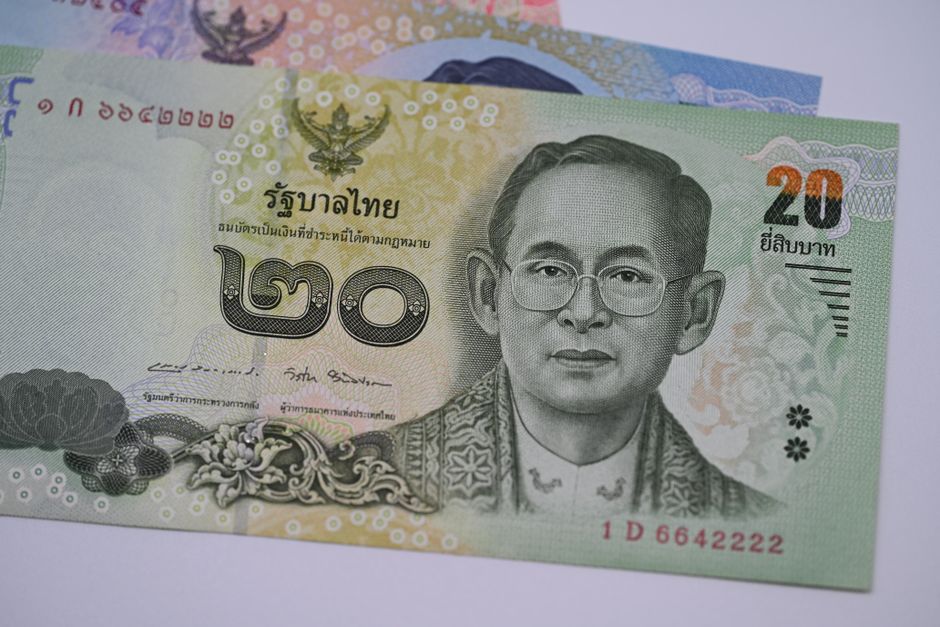 Photo: Qing Luo / Pexels
Uthai Thani Hospital in tambon Uthai Mai is the Ministry of Public Health general hospital for the province and the referral centre the seven district community hospitals feed into. Unusually for a province this size, there is also a private option: Princ Uthai Thani Hospital at 256 Moo 2 in tambon Sakae Krang, part of the Principal Healthcare group, which bought a closed hospital here as a distressed asset, renovated it and reopened it. It publishes fourteen departments of its own, including a haemodialysis unit and a trauma and emergency centre — and, just as importantly, no cardiology, oncology, neurology, ophthalmology or psychiatry. Mental health in the province is one weekday outpatient service at the public hospital, 08:30 to 16:00, with no out-of-hours clinic. Anything tertiary is referred to Sawanpracharak Hospital in Nakhon Sawan, a Ministry of Public Health regional hospital and a Siriraj-affiliated teaching hospital, about an hour east; Bangkok is three hours south. We do not publish a bed count for either local hospital, because the figures that circulate on directory sites could not be verified against an official register.
 Photo: RDNE Stock project / Pexels
Post-secondary education in Uthai Thani is mostly vocational, but it is not only vocational, and there is more of it than this page used to say. Five institutions, not two. Uthai Thani Technical College sits at 58 Moo 2 on Wongsa Road in tambon Uthai Mai, was raised to technical-college status in 1981, and teaches a Bachelor of Technology in automotive and electronics technology conferred by the Institute of Vocational Education: Northern Region 4 in Nakhon Sawan. Uthai Thani Polytechnic College is at 45 Moo 3 in tambon Nam Suem and Uthai Thani College of Agriculture and Technology at 27 Moo 5 in tambon Nong Kae, both in the capital district. Uthai Thani Community College, at 7 Moo 2 in Huai Haeng subdistrict out in Ban Rai district, was converted from Ban Rai Vocational College on 22 December 2004 and awards associate degrees under the Institute of Community Colleges. And there are two universities teaching here: Ramkhamhaeng lists Uthai Thani among its 23 regional campuses, and Mahachulalongkornrajavidyalaya runs the Uthai Thani Buddhist College at Nong Chang, which publishes three bachelor's degrees and a master's. What the province does not have is a residential secular campus with a student quarter around it. There is also no international-curriculum school anywhere in Uthai Thani that we could identify — no IB, no Cambridge — and the nearest options are in Nakhon Sawan or further. For a family that needs an international curriculum, that is a decisive fact and we would rather put it on the hub page than let you find it later.
 Photo: Tima Miroshnichenko / Pexels
There is no condominium market in Uthai Thani. DDproperty's province-bounded condo directory for Uthai Thani returned "We didn't find anything this time" — zero entries — and FazWaz returned zero condo units with a trends box that agreed with its own empty grid at ฿0 median and ฿0 per square metre. The rental picture is thin but real: RentHub's Uthai Thani index displayed six advertised long-stay buildings in August 2026, all six in the capital district, at ฿2,500–5,000 a month, and across all six its own amenity filter records exactly one building with a lift. The second portal we checked, Hongpak, does not list Uthai Thani among the twenty Central provinces in its own index at all. Rather than publish a building directory with unverified developers, years, floor counts or coordinates, BAANLYY populates its Uthai Thani records only as each one is verified.
 Photo: Pixabay / Pexels
Small, quiet and mostly married in. Uthai Thani has no expat association we could verify, no English-language local media, no international school and no immigration office of its own, and it is not on any of the well-worn foreign-resident circuits — it has neither a beach, a mountain scene, a university nor a border crossing to organise one around. The foreigners who are here tend to be married into Thai families in the town or the farming districts, plus a thin scatter of retirees and people whose work is conservation-adjacent. What the province does offer is a genuinely walkable town, an hour to a full-size city with a mall, an airport-free but easy road to Bangkok, and the kind of anonymity that some people move to Thailand specifically to find.
Editorial analysis compiled and periodically refreshed by BAANLYY’s research team — not a live data feed.
Analysis last reviewed August 2026.
The core Uthai Thani relocation guides are below, with more being added. In the meantime, see the general Thailand visa and relocation guides too.
Where to live in Uthai Thani →
Uthai Thani neighbourhood & areas guide →
Uthai Thani Area Score — every area ranked & rated →
Cost of living in Uthai Thani →
Condos & housing in Uthai Thani →
See our Thailand visa guides, then talk to us about relocating.
Primary and official sources are cited above. Government rules, fees and procedures in Thailand change over time and vary by office; always confirm current requirements with the relevant authority before relying on them. BAANLYY never takes paid placement in editorial content.
General information and indicative pricing, not legal, tax, immigration or financial advice. Hero photograph via Pexels. Confirm current details — especially bus schedules, sanctuary access permissions and immigration procedures, all of which change — with official sources, individual listings or licensed professionals.

Free tools for this
Answer 3 quick questions and see the Thailand city guide worth researching first.
Try it free →Build a realistic monthly budget by lifestyle tier.
Try it free →